dailynewsnblog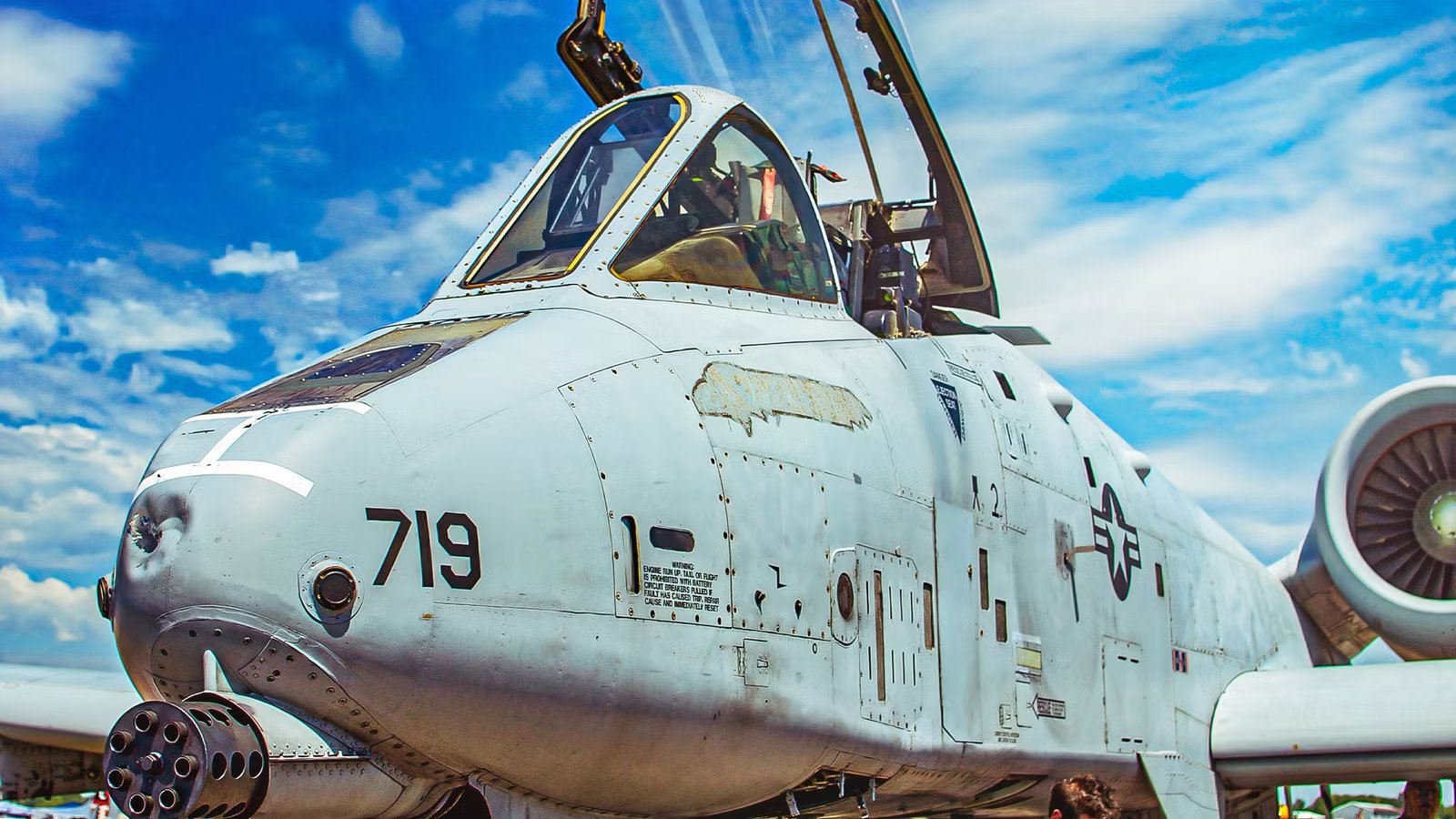
One of the most iconic aircraft of modern history is, without a doubt, the Fairchild Republic A-10 Warthog. It is an unmistakable aircraft, one that most people, military and non-military alike, will easily recognize. Its generally unglamorous, rugged appearance, along with its large twin turbofan engines protruding from its fuselage and, of course, its unmistakable seven-barreled GAU-8 Gatling gun positioned prominently beneath its nose, make it stand out on the airfield.
The aforementioned features also create a large profile in a hostile sky over any potential battlefield. While this would be an issue for any average close-air-support aircraft, it is less of an issue for the A-10. This warbird was tailor-made to obliterate tanks and other ground vehicles. Given its ability to fly low and slow over a battle space, it is ideal for fire missions in support of ground forces, and it was designed to take substantial punishment in the process and still fly home.
The Dire Need For A Tough Ground Attack Aircraft

Over the course of ten years of heavy involvement in Vietnam (1965-1975), approximately 5,000 US aircraft (this number being roughly divided between fixed-wing aircraft and helicopters) were brought down. The need to reduce aircraft vulnerability was particularly glaring as a large number of the aforementioned aircraft were rendered combat losses by small arms fire, anti-aircraft weaponry, and surface-to-air missiles.
American ground forces needed an aircraft that could provide them with superior supporting fire, while at the same time not being as vulnerable to enemy return fire, such as the thin-skinned UH-1 helicopter (Huey) or the F-4 Phantom and F-100 Super Sabre.
As a result of this experience, the A-10 Warthog was purpose-built to withstand the rigors of direct fire and keep flying, with the goal of enhancing pilot safety at its core. So much so that it was the first fixed-wing aircraft designed from the wheels up to the canopy, in compliance with a rigid set of survivability requirements. To this point, an MIT report detailing Survivable System Architecture states that, in order to “…fill the need for survivable long-loiter aircraft for close air support, the A-10 was developed as a heavily armored aircraft incorporating over 100 vulnerability reduction features…”
Adding to this, the Air Force Center for Systems Engineering states that the A-10 was “…designed to fly with one engine, one tail, one elevator and half a wing torn off.” The motivation for the development of such a rugged aircraft that can take such a high level of punishment was a direct result of the experiences of US armed forces during the Vietnam War.

How Many A-10 Warthogs Are Left?
These aircraft still play a key role in the United States Air Force.
Encased In Titanium

One of the most heavily reported aspects regarding the survivability of the A-10 is the 1,200-pound “titanium bathtub” that the pilot is seated in. This tough metal enclosure, which is nearly an inch-and-a-half thick in some areas, is manufactured using high-grade titanium. The bathtub represents a key safety feature in what is known as the dead man zone (DMZ), officially termed the High Velocity Diagram.
Generally speaking, the DMZ is an area in which a safe emergency landing cannot be guaranteed if the engine(s) fail. In terms of striking ground targets or close-air support, the DMZ is a bubble in low altitude airspace where an aircraft is particularly susceptible to being hit from small arms fire or anti-aircraft weaponry.
Thus, the bathtub is capable of withstanding a wide range of medium-caliber projectiles, from standard infantry weapons to the heavier 12.7mm (.50 caliber) armor-piercing rounds, up to 23mm anti-aircraft shells, and 57mm shell fragments. If the bathtub takes a hit from one of the above-listed shells, the projectile will deform or shatter on impact, therefore dissipating its kinetic energy before it affects the pilot or vital systems. Such projectiles are commonly found in the arsenals of non-Western nations or militia groups operating in developing nations with weak or permissive governments.
The A-10’s Amazing Redundancy
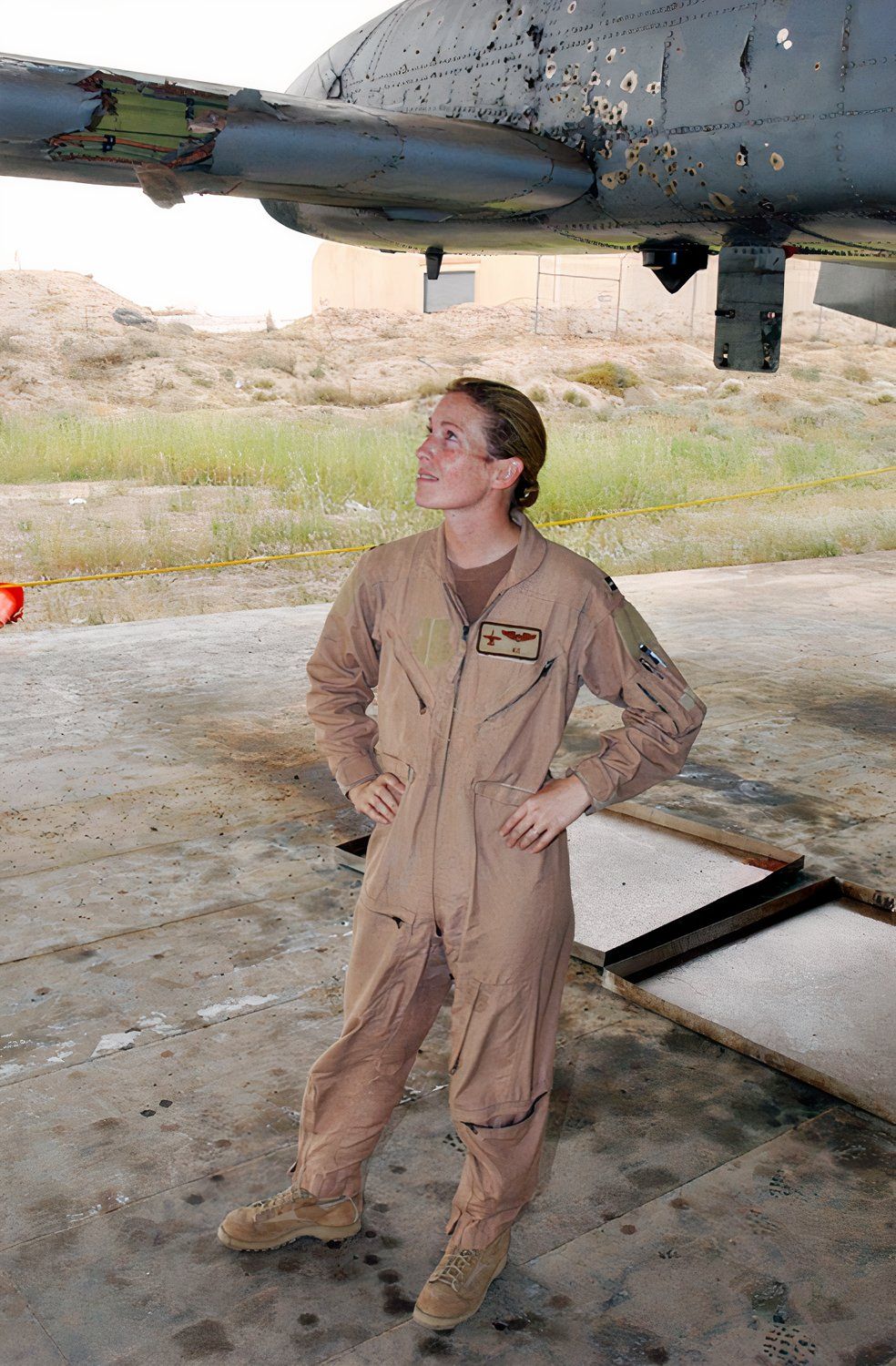
A key feature of the A-10 which provides the aircraft with redundancy is its Manual Reversion Flight Control System (MRFCS). This emergency control option consists of a system of cables, pulleys, and mechanical linkages that allow the pilot to manually control the aircraft if both independent hydraulic systems have been compromised. MRFCS connects the control stick and rudder pedals to the flight control surfaces, giving the pilot another chance to make it back to a friendly air base.
A well-known example of a pilot engaging the MRFCS was then Captain Kim Campbell, deployed with the 332nd Air Expeditionary Wing during Operation Iraqi Freedom. Campbell, initially tasked with targeting a concentration of vehicles, was then called in for an emergency close-air-support mission for an infantry unit that was being engaged by a group of insurgents.
|
A-10 Specifications |
Related Data |
|
Primary Function |
Close air support, airborne forward air control, combat search and rescue |
|
Contractor |
Fairchild Republic Co. |
|
Power Plant |
Two General Electric TF34-GE-100 turbofan engines |
|
Thrust |
9,065 pounds each engine (4,112 kilograms) |
|
Length |
53 feet, 4 inches (16.16 meters) |
|
Height |
14 feet, 8 inches (4.42 meters) |
|
Wingspan |
57 feet, 6 inches (17.42 meters) |
|
Speed |
420 miles per hour (675.92 kilometers per hour) |
|
Ceiling |
45,000 feet (13,636 meters) |
|
Maximum Takeoff Weight |
51,000 pounds (22,950 kilograms) |
|
Range |
800 miles (1,287.48 kilometers) |
|
Crew |
One |
|
Date Deployed |
March 1976 |
|
Unit Cost |
$9.8 million (fiscal 98 constant dollars) |
|
Inventory |
Total Force – approximately 281 |
After making her final rocket pass, the captain was maneuvering her A-10 off-target when she felt a large explosion at the aft-end of her aircraft. She was told by her flight lead that she had hundreds of bullet holes in the fuselage and tail section on the right side, along with a football-sized hole on the right horizontal stabilizer.
With her hydraulics compromised and experiencing a loss of control due to her inability to control her airbrakes, Campbell engaged the manual reversion. The aircraft immediately responded, and she was able to land the damaged aircraft safely. This story is a testament to the incredible engineering of the A-10.

The US Air Force’s Top 10 Military Aircraft By Fleet Size
A ranked list of USAF’s largest fleets of aircraft by model.
Self-Sealing Fuel Tanks

As the threat of ground fire is an ever-present issue confronting A-10 pilots, self-sealing fuel tanks add another layer of security, ensuring that the aircraft can stay in the air. These special fuel tanks are composed of internal and external layers of foam. The Defense Systems Analysis Center states that when “…a ballistic impact breaks the cells, the reactants flow together and begin to rapidly polymerize. The reaction forms a solid foam material that expands within seconds to seal the damaged area.”
Having such technology present in and around the fuel tank prevents not only leaks, which could force a dangerous emergency landing or pilot ejection, but the risk of explosion is greatly diminished. If the A-10’s fuel tanks did not have this protective technology, a ballistic impact could create a highly flammable mist or a puddle near hot engines, exhaust or electrical sparks, causing a catastrophic explosion.
One Engine Is Down, Not A Problem

The A-10 is equipped with two General Electric TF34-GE-100 turbofan engines, and the aircraft is designed to fly with only one of them, in a worst-case scenario. To protect against individually operated anti-aircraft missiles (MANPADS), the A-10’s engines have a first line of defense, the vertical stabilizers. These shield the exhaust from the side.
If an engine sustains an impact, they are isolated from the airframe by firewalls, and they have their own fire detection and suppression systems to contain and prevent engine fire from spreading. Additionally, each engine has its own independent oil system (tank, pump, cooler and oil lines). This ensures that if one engine is rendered inoperable, the other will not overheat.
As the A-10 is designed to operate in austere environments, the engines are mounted high on the airframe. This feature makes the engines much less susceptible to sucking in debris on the runway. As such, the A-10 has the lowest probability of foreign object damage than any other aircraft in the US inventory. Other fighters with lower mounted engines are at greater risk of ingesting debris into their engines, risking damage or possibly a failure.

This Is The Oldest Fighter Jet In The US Air Force Still Flying
We are now in the final chapter of an iconic aircraft as it prepares for retirement from active duty.
The A-10, An Aircraft That Refuses To Accept An “Exit Stage Left” Request

The US Air Force intends to retire 162 A-10s in fiscal year 2026, in what is to be the first phase of a larger divestment program of the entire fleet of 340 aircraft.
The USAF’s argument is that the A-10 is designed for low-threat environments and not an optimal choice for hostilities with peer adversaries. Additionally, if the USAF can retire its A-10s, this will free up funding for its F-35s, F-15EXs and simplify logistics, training and sustainment. To this point, the USAF is set to acquire 1,743 F-35As, about 300 of them would replace the A-10.
An option that has been discussed, would be to transfer the remaining or a portion of the USAF’s A-10 fleet to the US Army. Once transferred, the Army could configure the aircraft to its requirements, and integrate it within its helicopter units for a more cohesive air support capability. Additionally, despite the fact that the fleet is over thirty years old, they do not have that many flying hours, meaning that they will be available for many years to come.