dailynewsnblog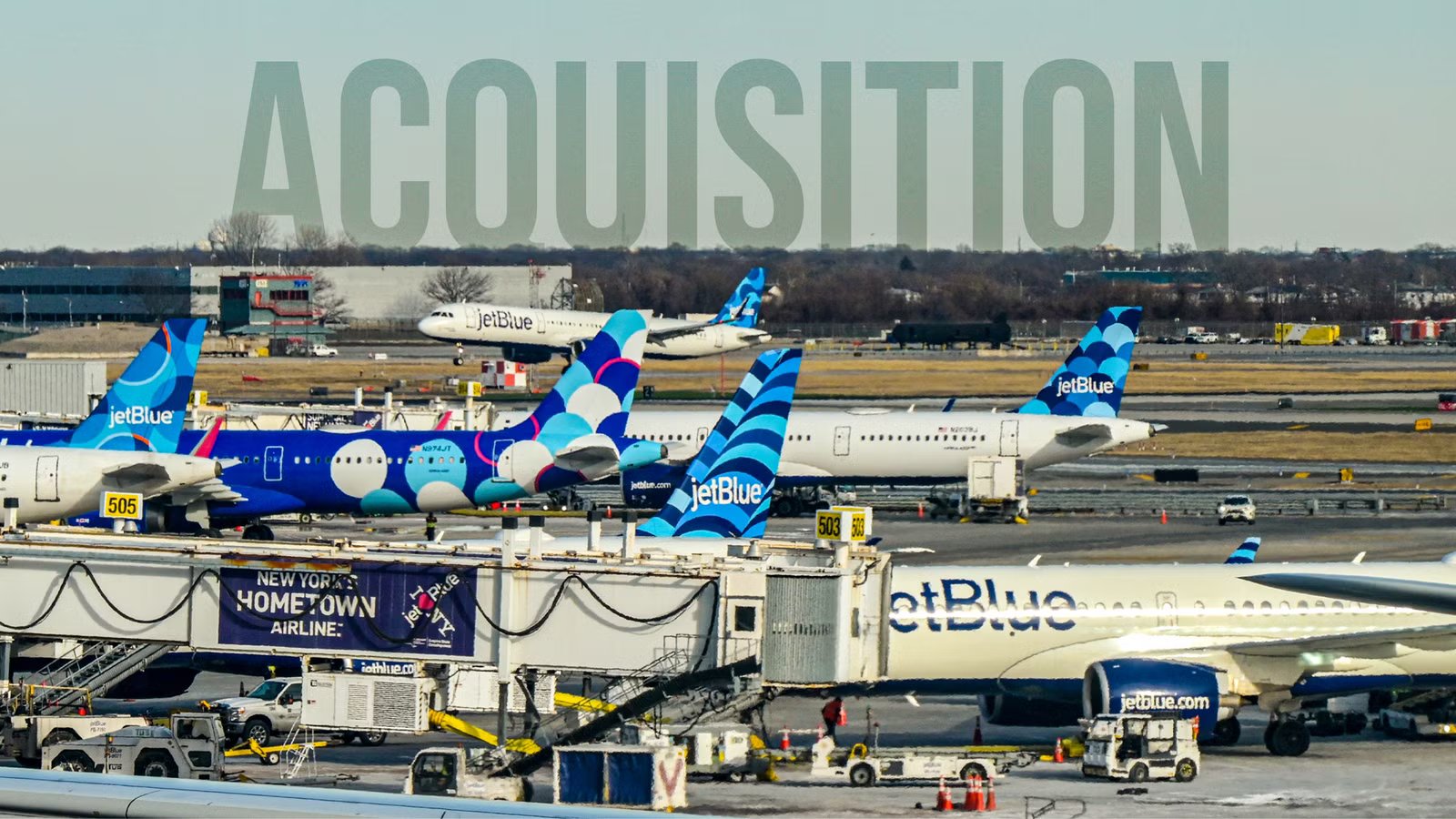
US-based low-cost carrier JetBlue Airways has been very quick to deny that any kind of sales process is underway, but management continues to emphasize the airline’s overall multi-year JetForward turnaround plan. The renewed takeover chatter, however, highlights a much more important point. Specifically, analysts and observers alike have been quick to comment that JetBlue remains one of the most strategically interesting assets in US aviation. Rumors have indicated that the airline has explored how combinations with United, Alaska, or Southwest might fare with regulators, even as JetBlue publicly stresses organic recovery. That tension is what makes the story even more compelling. JetBlue is not attractive because it is financially dominant today.
Rather, the airline is attractive because it controls assets that are hard to replicate, especially in a handful of constrained coastal markets where scale, slots, gates, and overall customer relevance matter the most. At the center of that appeal is New York City. The carrier has a massive presence at JFK, with a base at Terminal 5 and connectivity only continuing to grow at Terminal 6. Its Blue Sky partnership with United further underscores the value of its dynamic and growing New York footprint. Once you add in the carrier’s well-regarded Mint premium brand, its Airbus narrowbody fleet, and its Airbus A321XLR strategy for long, thin premium routes from Boston and New York, JetBlue begins to look much less like a struggling standalone airline and more like a rare strategic puzzle piece for a larger buyer trying to fill network gaps quite quickly.
What Exactly Are JetBlue’s Operational Assets?

JetBlue’s core operational assets are concentrated in places and platforms that are exceptionally hard for rivals to replicate quickly. For starters, there is geography. The airline has a deeply entrenched East Coast position, with major strength at New York’s  John F. Kennedy International Airport (JFK),
  Boston Logan International Airport (BOS), and multiple facilities in Florida. This gives the airline a unique level of exposure to business-heavy Northeast-to-Florida travel flows, as well as solid Caribbean and Latin American flying.
At JFK in particular, the airline is continuing to build out its unique Terminal 5 base, with planned integration with the new Terminal 6, and the slot and gate access tied to that footprint make the carrier especially valuable to any airline trying to scale in New York without waiting years to build organically. JetBlue itself describes the carrier as New York’s hometown airline, a title we have extensively debated at Simple Flying. The airline is also undeniably a leading carrier in Boston and Fort Lauderdale, with a unique focus on renewed growth emerging in that second market.
A second major asset owned by the carrier is its unique product-and-fleet platform built around an Airbus-focused operation. JetBlue’s A320 family jets (now increasingly joined by A220 models) offer the advantages of fleet commonality, while Mint provides a differentiated premium offering on transcontinental and transatlantic routes. The A321LR already underpins that premium long-haul strategy, and JetBlue’s A321XLR plans matter because they extend the same model to longer, thinner routes from Boston and New York that larger carriers often struggle to serve profitably.
Continuing Financial Difficulties Could Make A Merger Attractive

JetBlue’s continuing financial challenges are a key reason it still has to prove it can turn a promising turnaround into durable profitability while managing a heavy debt burden and high interest expenses. The airline posted a larger-than-expected fourth-quarter 2025 loss, guided to roughly $580 million in interest expense for 2026, and said its 2026 outlook still assumes a mid-single-digit average number of aircraft grounded due to Pratt & Whitney GTF engine issues.
At the same time, the management team has been balancing liquidity preservation with extensive deleveraging. JetBlue said last month that it planned to pay down around $800 million of debt in 2026 while also raising roughly $500 million through aircraft financing, even as JetForward is only gradually building toward its targeted $850 million to $950 million of incremental EBIT by the time 2027 comes around. This is a key reason why a sale could look attractive.
A buyer would not be purchasing JetBlue for its near-term earnings strength, but rather for the strategic value of assets that are difficult to recreate organically, including constrained New York access, an entrenched East Coast network, Mint system, and a fleet or platform that can be plugged into a larger system. Thus, a consolidation could allow shareholders to monetize these assets rather than waiting years for JetForward to fully work, which explains why share prices have jumped aggressively after reports that JetBlue had tapped advisers to evaluate possible deals.

JetBlue’s Debt Could Reach $9 Billion This Year & United Isn’t Interested In It, Founder Says
JetBlue’s founder warns of mounting financial strain as the airline’s debt could climb towards $9 billion, raising questions about its stability.
Not JetBlue’s First Attempt At A Sale

The most noteworthy prior attempt to merge by JetBlue occurred in 2022, when the airline sought to acquire struggling budget carrier Spirit Airlines. JetBlue offered a premium over Frontier’s earlier offer and argued that buying Spirit would allow it to grow faster in a market dominated by the four major carriers (  American Airlines,
  Delta Air Lines,
  United Airlines, and
  Southwest Airlines). Nonetheless, that logic ran straight into antitrust resistance. The Justice Department sued to block the acquisition, arguing that eliminating Spirit would remove a major ultra-low-cost competitor and lead to higher fares for price-sensitive travelers.
Starting in January 2024, a federal judge agreed and blocked the deal. By March, the two airlines had been forced to terminate the transaction. That failed pursuit matters because it showed both JetBlue’s strategic need for scale and the regulatory difficulty of achieving it through a consolidation. Before Spirit, JetBlue had also attempted to buy Virgin America in 2016, but it ultimately lost a bidding war to Alaska Airlines.
That episode reinforced the longstanding theme that JetBlue has repeatedly relied on acquisitions to accelerate growth and deepen its relevance in constrained coastal markets, while building a stronger national network than it could through organic expansion alone. Spirit’s collapse also unfolded against the backdrop of regulators attacking JetBlue’s Northeast Alliance with American, which sharpened the perception in Washington that JetBlue’s consolidation moves could reduce competition.
Who Would JetBlue’s Most Likely Buyers Be?

At this time, the most likely JetBlue buyer appears to be United Airlines. The carrier has a clear strategic rationale. JetBlue would offer United a far stronger position in New York, especially at JFK, a facility where United has long been trying to build scale. The existing Blue Sky partnership already links the two airlines commercially, and JetBlue has agreed to provide United with up to 7 daily JFK round-trips beginning in 2027, suggesting that the companies have already found a workable strategic framework.
Analysts have also said that United was one of the specific potential buyers that JetBlue had modeled with advisers. The biggest obstacle remaining is thus going to be antitrust regulators. A United-JetBlue combination would draw immense scrutiny due to the carriers’ massive positions in the New York and Boston markets. Another key potential buyer is Alaska Airlines, which has a strong overall network fit: Alaska is West Coast-heavy, while JetBlue remains the strongest on the East Coast.
This leaves overlap to be relatively limited, and the combined carrier could look a lot more pro-competitive than a United-JetBlue consolidation. The problem here is the timing of the deal. Alaska is still digesting the acquisition of Hawaiian Airlines, and even now, it is hitting major integration milestones. Southwest thus looks the least likely of the three.

Why Doesn’t Southwest Airlines Fly To Newark Or New York-JFK?
The carrier has a minimal presence in the New York Area.
Is It Actually Likely That We Will See A JetBlue Merger This Year?

It is somewhat unlikely that JetBlue will complete a merger in 2026 because the biggest obstacle for the carrier is not finding interested buyers, but rather getting a deal through Washington and actually closing it on a semi-realistic timetable. JetBlue’s failed Spirit transaction continues to serve as fresh evidence that regulators view airline consolidation skeptically, and the company’s reported outreach to advisors appears exploratory.
A signed deal appears nowhere nearby. Recent reports have explicitly argued that the company has not entered formal negotiations. The company is very much still in an assessment stage. The bigger issue for JetBlue is that significant buyer-specific friction is holding back this type of deal.
A United deal would invite especially heavy scrutiny because of the airline’s concentration in New York and Boston, and the political climate remains quite hostile to larger airline mergers, according to ch-aviation. Even this week, President Trump publicly opposed another potential mega-airline tie-up on competition grounds.
Does Any Airline Want To Take The Risk?
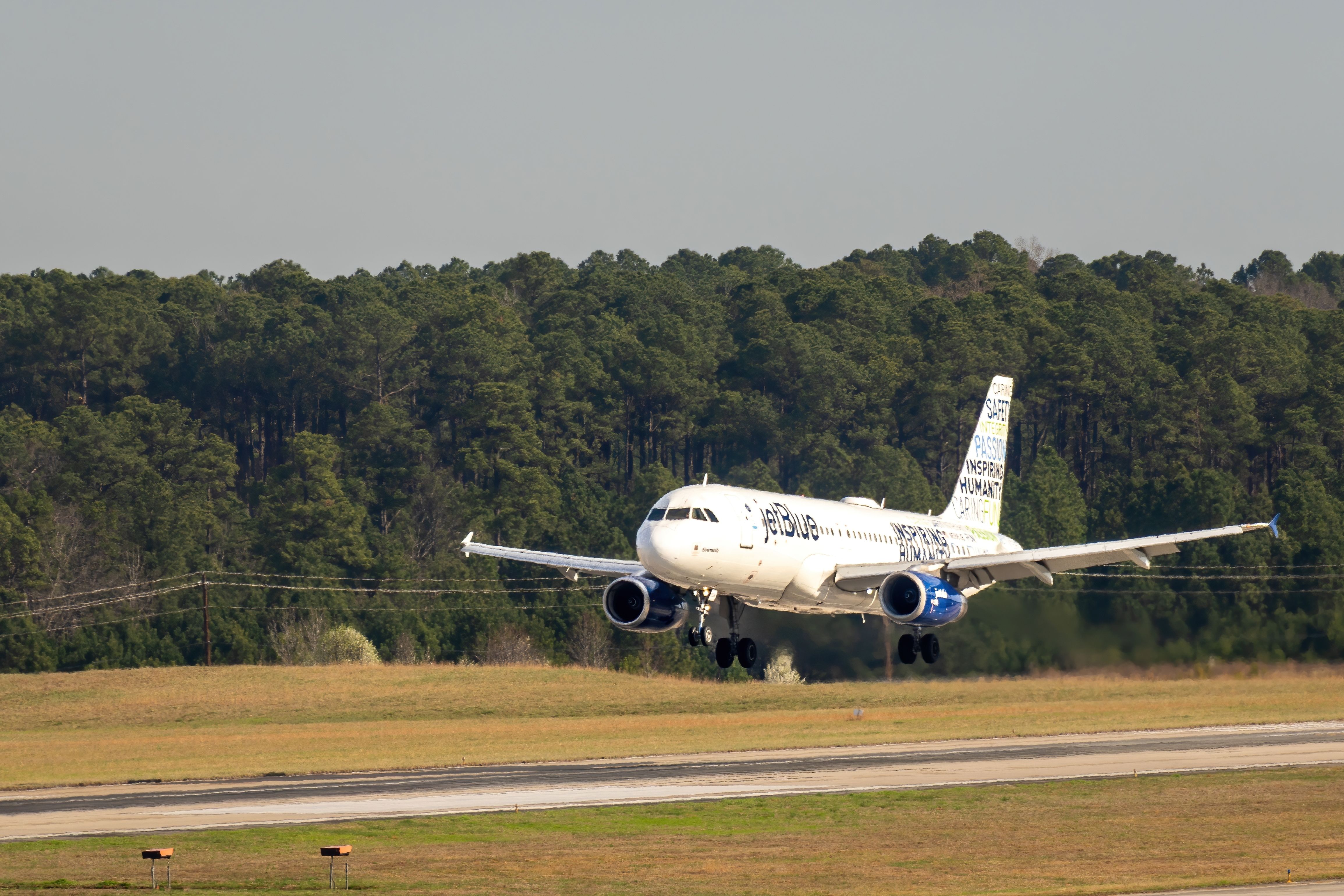
At the end of the day, JetBlue’s competition story is just one piece of a much more complicated merger landscape in the US aviation industry. Consolidation has continued to fuel growth across the sector in recent years, but it often comes at the expense of higher consumer prices.
JetBlue also faces many challenges on its own, and a merger deal may not be the get-out-of-jail-free card investors think it is. There are endless reasons mergers could be rejected, and why no airline might want to take on the risk of absorbing JetBlue into its network.
Therefore, although JetBlue may look reasonably attractive on paper, there are key financial barriers that would prevent any airline from actually acquiring the company. From a poor balance sheet to significant regulatory risk, a merger would require shareholder support.

![easyJet Announces 18 New Routes Including Longest Flight Ever [Full List]](https://dailynewsnblog.com/wp-content/uploads/2026/04/easyjet-airbus-a320neo-taxiing-custom-thumbnail.jpg)