dailynewsnblog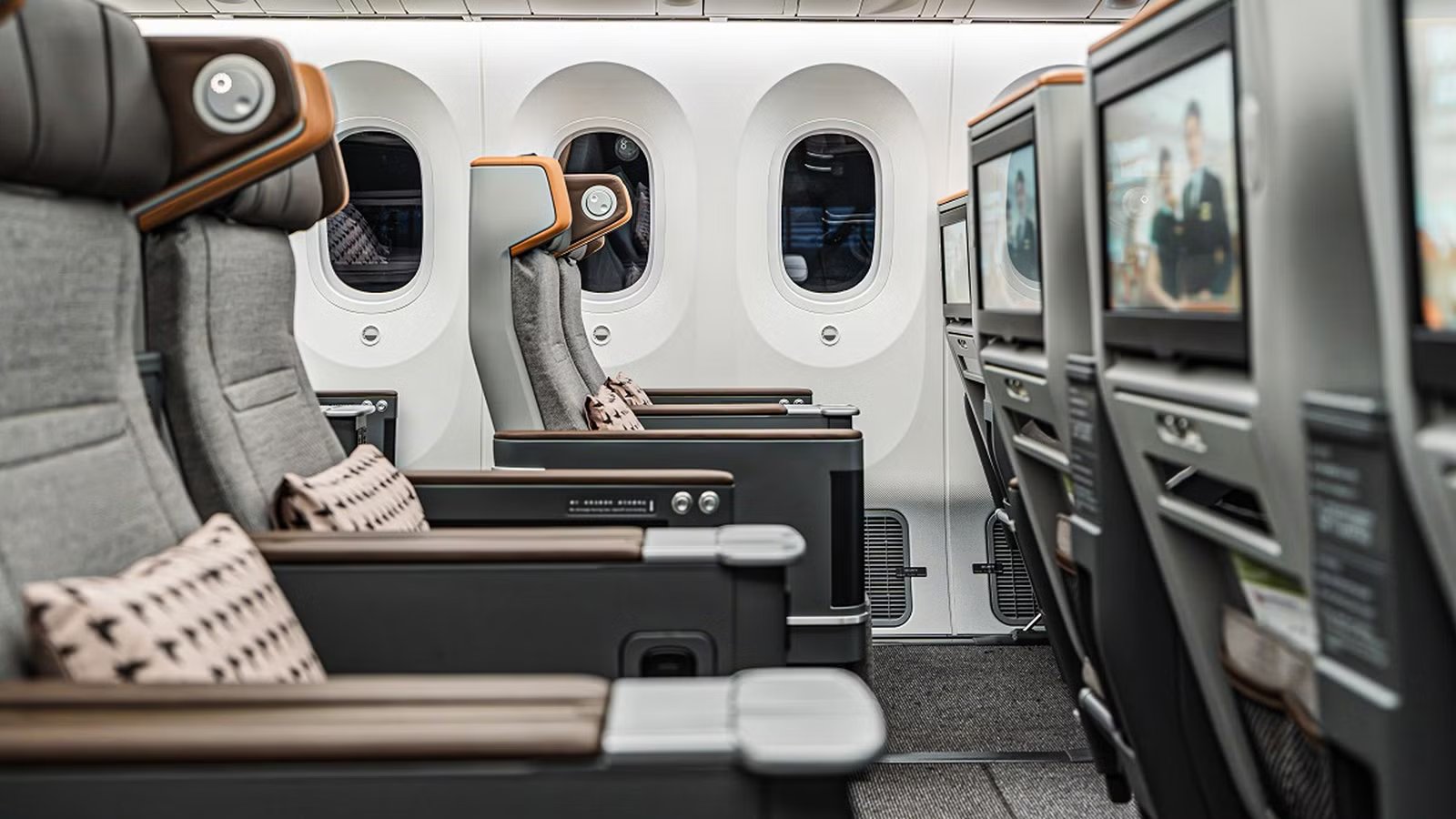
People flying ultra-long-haul have an important choice to make if they want to upgrade from economy: they can either pay a little more to get premium economy, or spend substantially more to sit in business class. The differences go far beyond simply the price point. While using business class, you can expect a larger seat, a quieter cabin, and better service.
Meanwhile, on the ground, you will have access to a relaxing lounge, which is only occasionally available to premium economy passengers. In this article, we will go into detail on these differences, and explore why, despite the clear superiority of business class, airlines and passengers alike continue to lean towards premium economy.
Larger Seat Dimensions & Lie-Flat Capabilities

The most important and obvious difference between long-haul premium economy and business class is that passengers in business class will usually be able to lie flat. This is due to the enormous amount of space provided in business-class suites, allowing passengers to get a comparable level of sleep to what they would get at home. That means business travelers are in a fit state to work once they touch down, rather than needing to spend time recovering from their travel. They can also be incredibly productive while they are traveling.
The standard seat dimensions for business class aviation are typically in the region of 21 inches (53.3 cm) of width and around 70 inches (178 cm) of pitch, allowing for a full recline to lie flat. Some leading airlines have bespoke business class suites that well surpass this industry standard. An example is All Nippon Airways (ANA) and its ‘The Room FX’. Passengers flying with this carrier’s business class can enjoy a waist-area width of 27 inches and a lie-flat bed length of 76.5 inches (194 cm).
Premium Economy seats have significantly improved dimensions compared with economy, but are not close to business class. Depending on the airline and aircraft that you are flying on, there will usually be between 38 and 42 inches of pitch (96.5 to 106.7 cm) of pitch and around 19 inches (48.3 cm) of width. Passengers can also expect around seven to eight inches (17.8 to 20.3 cm) of recline.
Reduced Seating Density

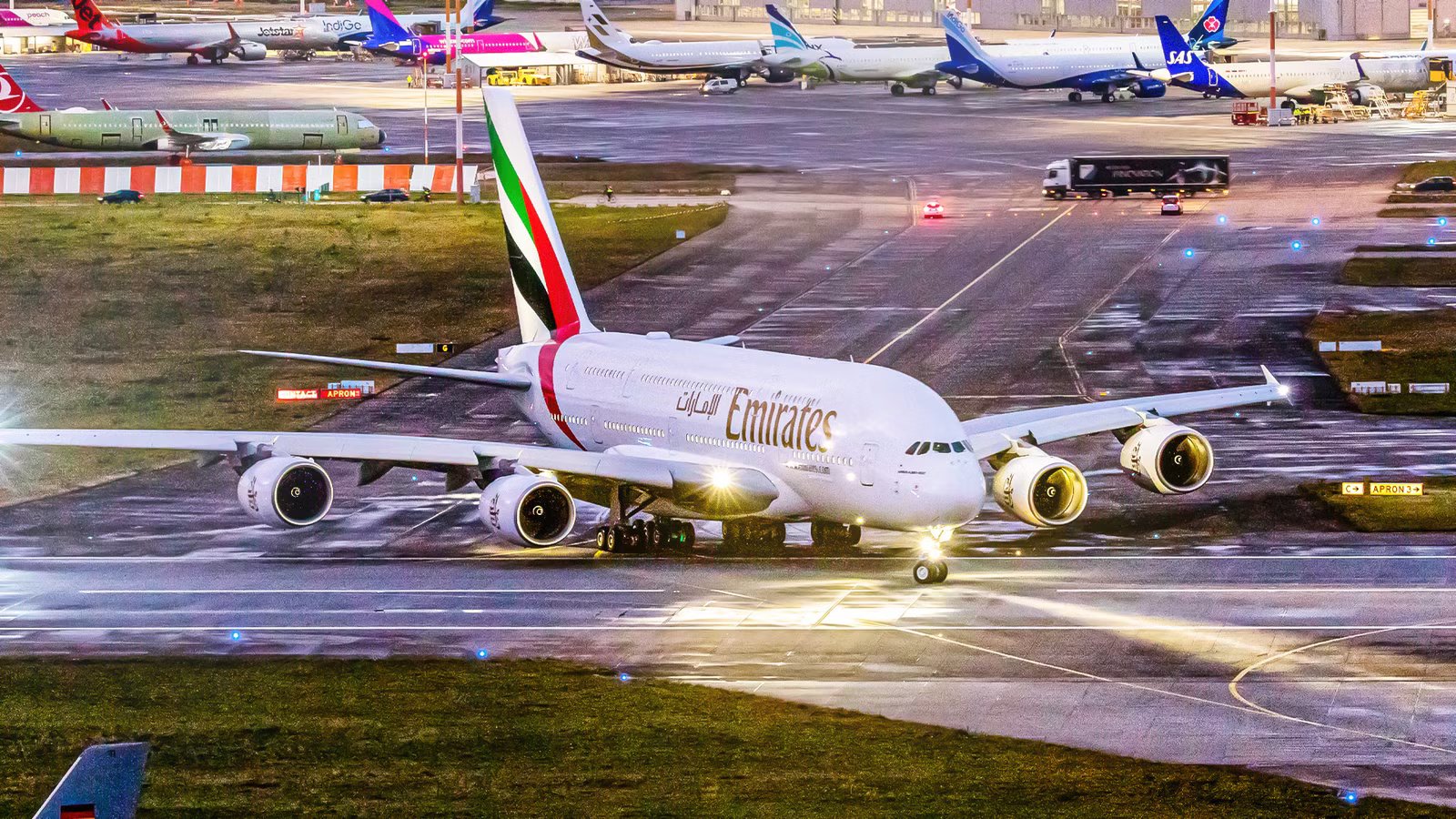
Another striking difference is the incredibly low density that business class passengers expect. Emirates offers its premium economy passengers 2-4-2 and 2-3-2 layouts depending on the aircraft. This is a much lower density than economy, but around half of the passengers in the premium economy cabin don’t have direct aisle access. Meanwhile, long-haul business class usually offers direct aisle access to all passengers, with a 1-2-1 layout now being the standard on widebodies.
The premium economy seats are sometimes in a separate cabin. That yields a sense of exclusivity and the ability to access guaranteed luggage space in the overhead bins. They may also have exclusive lavatories. However, such advantages are always available in business class. The small size of this cabin also means there are more cabin crew per passenger, improving the quality of service.

Here’s How Much More Spacious Premium Economy Is Compared To Economy Class
Premium Economy delivers 5–8 more inches of legroom, wider seats, and deeper recline—offering a calmer, more comfortable upgrade from standard Economy
On The Ground

Business class passengers can expect high-quality and personalized service while on the ground. For example, while flying on British Airways’ long-haul business class, Club World, passengers use a dedicated check-in desk at most airports. While flying from London Heathrow Airport (LHR), London Gatwick Airport (LGW), and New York JFK Airport (JFK), passengers have access to fast-track security. Priority boarding is also standard.
The premium economy on-the-ground product, meanwhile, varies greatly between airports. You can expect to usually have to go through standard security, but you could also benefit from exclusive check-in lines and priority boarding. That makes the boarding experience more exclusive and less stressful, and helps you to get settled before the flight takes off.
The gap between on-the-ground experiences is closed a little by the growth in the number of airlines offering lounge access to premium economy passengers. One example is ANA, which offers the service to premium economy passengers on international flights from select locations. Airports that have dedicated ANA lounges include Tokyo Narita Airport (NRT), Osaka Kansai Airport (KIX), and Honolulu International Airport (HNL).
Business Class Lounges

As stated above, premium economy passengers can sometimes access lounges. Yet, this is far from standard, so lounge access remains a central differentiator for business class. These are exclusive spaces where business class passengers can relax, eat, drink, and work before their flights. Each major carrier has lounges in its main hubs and customizes them with amenities that they think will attract customers to business-class aviation.
Examples include showers, viewpoints across the tarmac, and even Peloton stationary bikes and gyms for customers who want some exercise before they have to sit down for several hours for their long-haul flight. According to Skytrax’s 2025 Best Business Class Airline Lounge awards, the best lounge in the world is Qatar Airways’ Al Mourjan Business Lounge, which is called The Garden. This lounge is truly enormous, occupying 79,545 square feet (7,390 square meters) and able to accommodate 707 passengers.
The airline’s designers focused on making the lounge a calm, nature-inspired space with plenty of natural light. This is particularly impressive as the fluorescent and artificial light in most airports makes travel an unpleasant experience. The Al Mourjan Business Lounge is packed with impressive and unique facilities. The lounge has a range of wellness services, including a spa with seven treatment chairs, a gym, and stations to get a manicure or pedicure.
There are dedicated quiet rooms for business passengers who need to get some work done or travelers who need a moment away from the airport’s bustle. These quiet rooms, available as both singles and doubles, are available free of charge for the first six hours. There is also an impressive amount of dining choices, with customers able to enjoy hot and cold buffets, salads, and sushi. There is also à la carte dining, and a dedicated coffee and pâtisserie bar offering fresh brews and pastries.

Lounge Review: The Star Alliance Lounge At Amsterdam Schiphol Airport
Unraveling the Secrets of Schiphol’s Star Alliance Sanctuary
Airlines Continue To Invest In Premium Economy

When money is no object, it is clear that premium economy is less compelling than business class, offering passengers denser cabins, less room in their seats, and a less exclusive service both in-flight and on the ground. However, premium economy is going from strength to strength, with airlines around the world engaged in an arms race to offer their passengers the best premium economy products. The reasoning behind this investment is that carriers can achieve the best revenue per square foot given to them on the aircraft.
The seats require a little more space than economy, but nowhere near as much as lie-flat business class, and allow carriers to charge a much higher price. Australian Frequent Flier ran the numbers on United Airlines’ Boeing 787-8s, and found that, on the nine-hour route from Chicago to Munich, tickets cost £929 ($1,247) in economy, £3,514 ($4,719) in premium economy, and £5,303 ($7,121) for the best seats. That meant United was earning 278% more than the economy for its premium economy passengers.
However, these passengers received just 43% more room in the cabin. Meanwhile, the business class passengers pay 51% more than premium economy passengers, but receive double the cabin space. The investment in premium economy also comes down to the consistent demand for premium economy among passengers. Research in the IOSR Journal of Economics and Finance found that business class demand was elastic, varying greatly depending on the price. Meanwhile, demand for premium economy was inelastic.
The Differences Between Economy & Premium Economy On Long-Haul Flights

There are also striking differences between economy and premium economy on long-haul flights. Economy class seating is incredibly dense, with carriers packing in as many passengers as is feasible. For example, Emirates’ Boeing 777s use a 3-4-3 layout, while its Airbus A350s are in a 3-3-3 configuration. The seats themselves have smaller dimensions, and, even among the world’s best airlines, economy seat pitch is usually only between 32 inches (81.3 cm) and 34 inches (86.36 cm).
Meanwhile, economy class seat width can be as little as 17 inches (43.2 cm). Finally, the recline of the economy seat is often five inches (12.7 cm) or less, and you have to be careful not to invade the personal space of the passenger behind you. The on-the-ground experience is also substantially worse when traveling in economy, as you have limited baggage and no separate check-in lane or priority boarding services. The one advantage of economy class, which makes it consistently popular among passengers, is that it is much cheaper.
Indeed, an economy fare can be around 50 to 80% cheaper than a premium economy fare, although that can jump to 100% for ultra-long-haul routes, for those who can withstand the discomfort for 10 hours or more. There are also some instances with the world’s most in-demand routes, such as  London Heathrow Airport (LHR) to New York JFK Airport (JFK), when the cheapest economy fares are said to be 500% cheaper than premium economy seats.