dailynewsnblog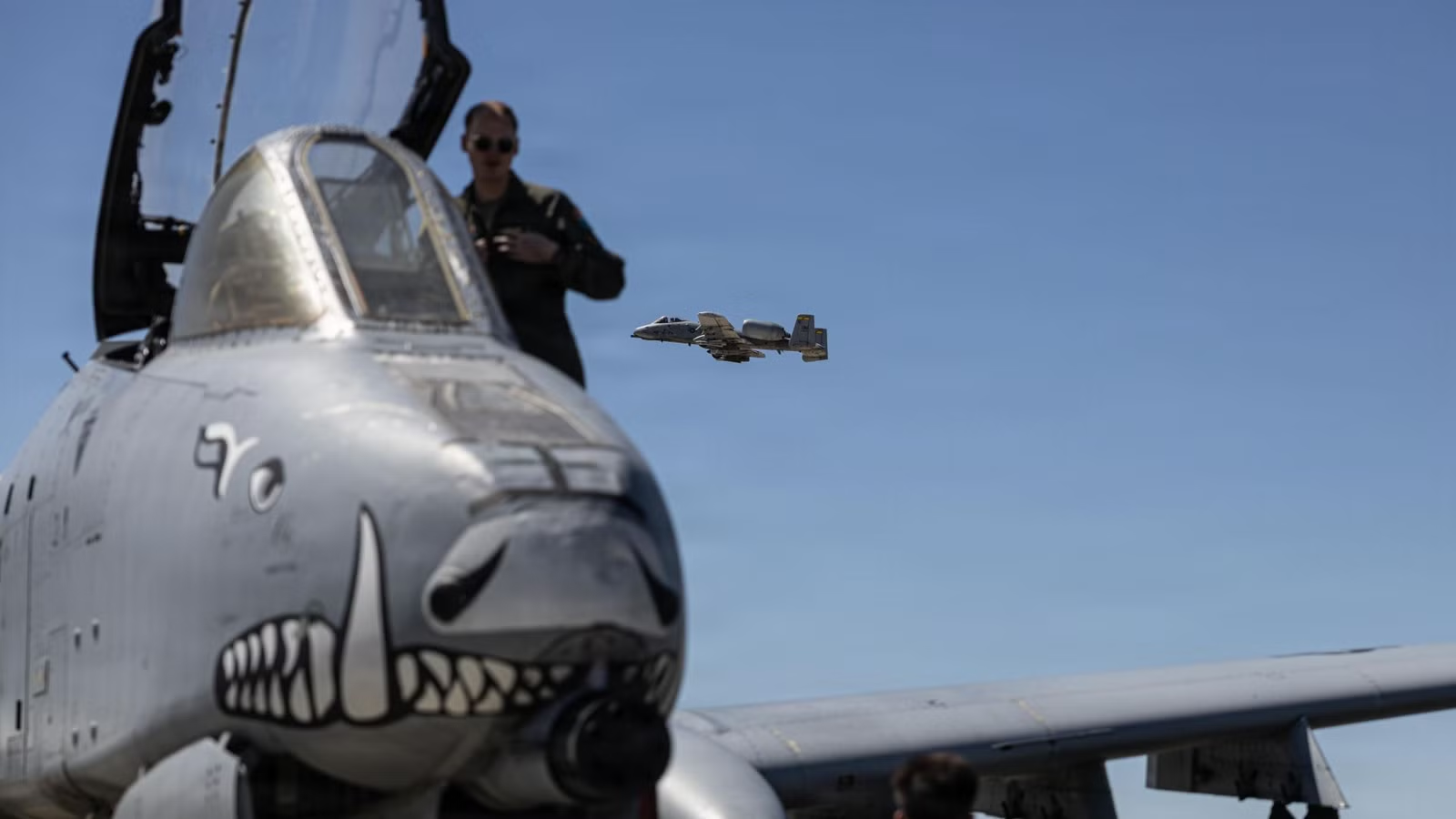
As early as 2024, the much-loved Republic A-10 Thunderbolt II has been using a modernized 2.75-inch rocket system combined with laser guidance to shoot down drones in the Middle East. The War Zone initially reported on this system’s development in 2019 and while it’s unclear whether combat engagements began last year or the year before, but now US Air Force A-10 Warthogs have been seen with Shahed silhouette kill markings on their noses illustrating their combat success.
The addition of the advanced Precision Kill Weapon System II rockets has delayed the retirement of the A-10 from 2026 to potentially 2030, according to a statement by the Secretary of the Air Force on April 21. The system was also developed to be used on the Boeing F-15E Eagle and Lockheed Martin F-16 Fighting Falcon. The A-10 is the lowest and slowest flyer of the three, which makes it a uniquely well-suited platform to take down propeller-driven drones like the Iranian Shahed.
The Warthog Rides Again: Operation Epic Fury

Since the United States launched its joint attack on Iran in support of Israel, the A-10 fleet has seen a surge in activity. It has reportedly flown a diverse range of missions which includes drone hunting of course but also striking maritime targets and combat search and rescue. The US has also relied on it to defend US personnel and embassy facilities in the region including Iraq where it provided close air support against Iranian-backed militias.
The A-10’s survival is increasingly tied to its ability to adapt to modern threats that more advanced jets struggle to address cost-effectively. The new APKWS II is a low-cost, laser-guidance kit that converts unguided 2.75-inch Hydra 70 rockets into precision-guided munitions.
The Secretary of the Air Force emphasized the value of the plane in his statement that announced the delayed retirement:
“We will EXTEND the A-10 ‘Warthog’ platform to 2030. This preserves combat power as the Defense Industrial Base works to increase combat aircraft production.”
Budget Air Support: The Flying Tank Back in Action

A laser-guided rocket system was originally designed for air-to-ground strikes, and it was repurposed as an air-to-air weapon with the anti-drone mission in mind. Because the A-10 lacks an internal radar, it relies on its targeting pod or external data links to find and laser the drones for the APKWS seeker to track. The full system also increases the aircraft’s flying magazine capacity because the rockets are so small compared to a conventional air-to-air missile which occupies a full hardpoint per munition.
A rocket pod with seven projectiles can be mounted on the same hard point that a single missile occupies. A single rocket costs between $25,000 and $40,000, compared to the $1 million+ price tag of an AIM-120 AMRAAM. The A-10 equipped with APKWS II allows the US to counter drone swarm tactics without exhausting expensive missile inventories, as the war zone explains. There is even talk of an upgrade to make the system capable of ‘fire and forget’ simultaneous targeting.
The F-15E Eagle can even mount three rocket pods on one hard point and carry over six times the number of munitions for the anti-drone mission than it can in a conventional anti-air configuration. Newer variants featuring a passive infrared sensor alongside the laser seeker are being developed. Dual-mode capability will allow for a laser hand-off. The pilot initially lasers a drone to orient the rocket, but the infrared seeker then takes over for terminal guidance.

How The Fairchild Republic A-10 Warthog’s Titanium Bathtub Protects Pilots From Ground-Level Ballistics
The story behind America’s flying tank buster.
Running Out of Missiles: America’s Defense Industrial Crisis

The A-10 and APKWS II are critical platforms in the strategy to preserve the US defense industrial base, which has been strained by the massive expenditure of high-end munitions during Operation Epic Fury in early 2026. The conflict revealed a cost-exchange crisis where expensive, low-inventory missiles were being depleted to counter cheap Iranian drones.
During the initial air campaign, the US and its allies expended nearly $30 billion in munitions and operations over just three weeks. America has used approximately 45% of its Precision Strike Missiles, 50% of its THAAD interceptors, and nearly 50% of its Patriot missiles in just seven weeks of fighting.
Replacing these complex missiles like the PAC-3 or SM-3 can take 3 to 8 years due to slow production lines. Unlike specialized interceptors, APKWS kits are built by adding a guidance section to existing, mass-produced Hydra 70 rockets. By using the APKWS for low-speed drone threats, the US also reserves its limited stocks of AIM-9X and AIM-120 missiles for high-end threats like manned fighters and cruise missiles.