dailynewsnblog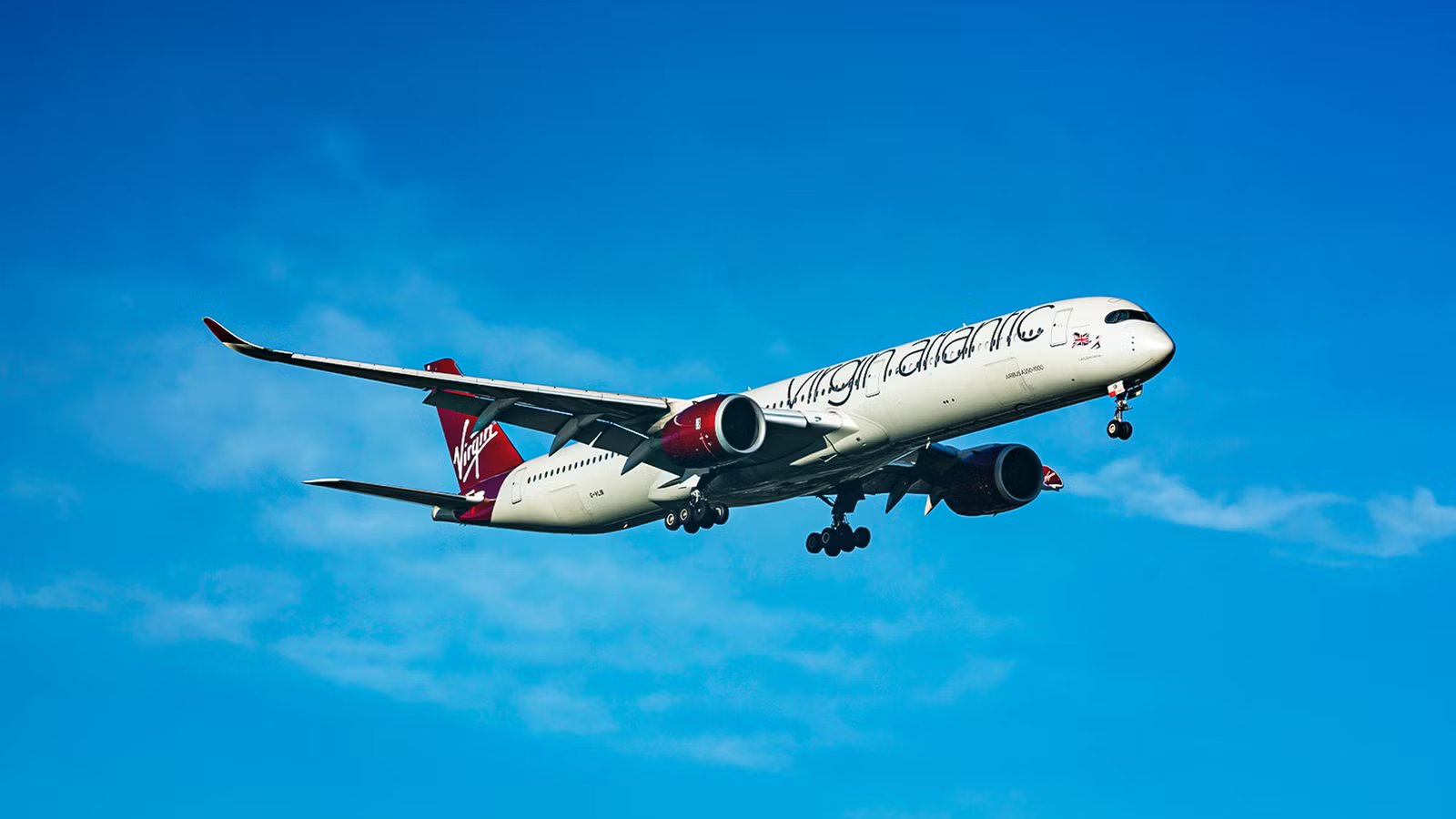
Every time you watch an Airbus A350-1000 lurch forward at the start of its takeoff roll, you are witnessing one of the most fuel-intensive moments of the entire flight. That brief, thunderous sprint from brake release to liftoff demands maximum thrust from two of the most powerful and efficient turbofan engines ever bolted onto a commercial airliner. So how much fuel does the Airbus A350-1000 actually burn during takeoff? It turns out the answer is surprisingly precise, deeply fascinating, and tells us a great deal about how modern widebody aviation has evolved.
To answer this properly, we need to think beyond the familiar cruise burn numbers and zoom in on a phase of flight engineers call “the takeoff and initial climb segment,” spanning from brake release at the runway threshold all the way to 1,500 feet above ground level. During that window, the aircraft’s two Rolls-Royce Trent XWB-97 engines are running at or near maximum rated thrust, consuming fuel at a rate that would astonish most frequent flyers. This article will break down the numbers, explain the variables that shift them in real-world operations, compare the A350-1000’s performance against its rivals, and highlight what operators and engineers say about managing this critical phase.
How Much Fuel Does The A350-1000 Actually Burn During Takeoff?

The short answer is approximately 1,760 to 2,645 lbs (800 to 1,200 kg) of Jet-A fuel consumed during the full takeoff phase, from the moment the brakes release to the point the aircraft clears 1,500 feet (457 meters) above the runway. At a standard maximum takeoff weight of around 696,660 lbs (316,000 kg), each of the two Trent XWB-97 engines develops up to 97,000 lbf (431 kN) of thrust. The A350-1000 burns approximately 15,200 lbs (6,900 kg) of fuel per hour in cruise, but during the takeoff roll, the fuel flow per engine climbs to roughly three to four times that figure, translating to a combined flow of around 660 to 1,100 lbs (300 to 500 kg) per minute across both engines at full power.
The takeoff roll itself, from brake release to rotation, typically lasts between 40 and 55 seconds for a heavily loaded A350-1000. Once the nose lifts and the aircraft climbs away from the runway, the engines usually remain at TOGA (Takeoff / Go-Around) thrust or transition to FLEX/DERATED thrust for about another 90 to 120 seconds until the crew begins the power reduction at the acceleration altitude. Adding these phases together, the complete takeoff segment burns somewhere in the 1,760 to 2,645 lb (800–1,200 kg) window, depending heavily on aircraft weight, airport elevation, and temperature.
To put that number in perspective, a single takeoff event burns enough fuel to drive an average family car approximately 6,200 to 9,300 miles (10,000 to 15,000 km). On a typical 15-hour ultra-long-haul mission where the A350-1000 might carry around 210,000 to 243,000 lbs (95,000 to 110,000 kg) of fuel at departure, the takeoff phase alone consumes roughly 1% to 1.5% of the total fuel load. That may sound small in percentage terms, but for an airline operating dozens of A350-1000 rotations per day, it quickly becomes a number worth scrutinizing.
What Factors Influence Takeoff Fuel Burn On The A350-1000?

Several variables can push the A350-1000’s fuel burn at departure meaningfully higher or lower than the baseline estimate. Understanding these factors is key to appreciating how airlines manage their cost-per-trip on the most fuel-intensive phase of the journey.
The most significant variable is the aircraft’s actual takeoff weight. The A350-1000 has a maximum takeoff weight of 696,660 lbs (316,000 kg) and a usable fuel capacity of 274,800 lbs (124,650 kg), or 41,944 gallons (158,790 liters).
A fully loaded departure demands far more thrust, and therefore, far more fuel than a lightly loaded short-to-medium sector. Airport elevation and ambient temperature are equally critical, as both reduce air density, forcing the engines to work harder to produce the same net thrust. Hot-and-high airports like those in the Middle East or the Bolivian altiplano can push fuel flow noticeably higher during the takeoff run. Finally, the use of full TOGA versus a reduced-thrust (FLEX) setting matters: FLEX takeoffs, which are standard practice whenever runway length and obstacle clearance permit, can meaningfully reduce the fuel burned per departure and also extend engine life.
Rolls-Royce notes that most engine wear on the Trent XWB-97 occurs during takeoff and climb phases, when operating temperatures are at their highest. This is a reminder that the takeoff burn is the moment of maximum thermal stress on the entire powerplant, which is why airlines work closely with both Airbus and Rolls-Royce to optimize thrust settings on every route.

Why The Airbus A350-1000 Has Such An Insane Fuel Burn Advantage
The Airbus A350-1000 cuts fuel burn by 25% thanks to ultralight design, Trent XWB engines and smooth aerodynamics — a real game-changer for long-haul.
What Do Operators And Engineers Say About This Phase Of Flight?

For airlines, the takeoff phase carries outsized operational importance precisely because it is where the engines live hardest. Rolls-Royce engineers designed the Trent XWB-97 from the outset to be the most efficient large turbofan in its thrust class, and those design goals shape how operators approach every departure.
Jason Sutcliffe of Rolls-Royce described the XWB-97 as “our most powerful engine,” adding that a vast amount of technology was inserted to provide power while making it “the world’s most efficient large aero engine,” with the engine alone expected to save a customer up to $2.5 million per aircraft per year in fuel, according to Aerospace Global News.
In practice, airline flight operations teams pay close attention to assumed temperature (FLEX) takeoff techniques, which allow the crew to program a higher-than-actual outside air temperature into the thrust management computer. The computer then calculates a reduced-thrust setting appropriate for that fictitious condition, still providing ample safety margins for the actual runway length and obstacle clearance requirements.
On routes where the A350-1000 operates at less than its maximum structural weight, which includes the majority of intra-regional or medium-haul sectors, FLEX takeoffs can cut the fuel consumed in this phase by 10% to 20% compared to a full TOGA departure. Even during thrust-intensive phases, the combination of efficient engines and a lightweight airframe limits excessive fuel burn, and when airlines run those savings across hundreds of rotations annually, cumulative yearly savings often amount to hundreds of tons of fuel and millions of dollars in operating expenses avoided.
The XWB-97’s extremely high bypass ratio and modern core aerodynamics translate into better propulsive efficiency, meaning more thrust for less fuel, with advanced materials including ceramic matrix composites and 3D aero blading delivering thermal efficiency gains that lower specific fuel consumption throughout the takeoff and climb envelope. For operators doing the math, that translates directly into measurable savings every time the aircraft lines up on a runway.
How Does The A350-1000’s Takeoff Burn Compare To Its Rivals?

The A350-1000 competes most directly with the Boeing 777-300ER and, increasingly, the Boeing 777X. On this metric, the differences are real and commercially meaningful. The 777-300ER is powered by the GE90-115B, which produces a colossal 115,300 lbf (513 kN) of thrust per engine. That raw power advantage means the 777-300ER delivers impressive takeoff performance at extreme weights, but its older turbofan architecture carries a substantially higher specific fuel consumption than the Trent XWB-97.
Industry analysts consistently cite that the A350-1000 burns roughly 25% less fuel than a comparable 777-300ER mission, and that gap does not close during the takeoff phase. The A350 offers about 25% better fuel efficiency than older-generation aircraft like the Boeing 777-200ER and Airbus A340-300.
For the Boeing 787-10 Dreamliner, the comparison is closer. The 787-10 is lighter but also shorter-ranged, and its GEnx or Trent 1000 engines deliver roughly 76,000 to 78,000 lbf (338 to 347 kN) per engine, significantly less than the XWB-97. As a result, a similarly loaded 787-10 would burn less fuel in absolute terms during its shorter, lighter takeoff roll, but would also be carrying far fewer passengers and less cargo. The combined thrust of the A350-1000 is 194,000 lbf (863 kN), meaningfully more than the Dreamliner’s combined thrust of 152,000 lbf (676 kN) across all three variants, and the A350’s larger, more powerful engines and bigger wing help it become airborne around 600 feet (183 meters) before the 787.
|
Aircraft |
Engine (Thrust per Engine) |
Estimated Takeoff Fuel Burn |
Maximum Takeoff Weight (MTOW) |
|---|---|---|---|
|
Airbus A350-1000 |
Rolls-Royce Trent XWB-97 (97,000 lbf / 431 kN) |
~1,760–2,650 lb (800–1,200 kg) |
697,000 lb (316,000 kg) |
|
Boeing 777-300ER |
GE90-115B (115,300 lbf / 513 kN) |
~2,870–3,970 lb (1,300–1,800 kg) |
775,000 lb (352,400 kg) |
|
Boeing 787-10 |
GEnx-1B / Trent 1000 (~76,000 lbf / 338 kN) |
~1,210–1,760 lb (550–800 kg) |
560,000 lb (254,000 kg) |
|
Airbus A330-900 |
Rolls-Royce Trent 7000 (~72,000 lbf / 320 kN) |
~990–1,540 lb (450–700 kg) |
553,000 lb (251,000 kg) |
The critical difference is efficiency per passenger. The A350-1000 burns more fuel in absolute terms during takeoff than a 787-10, but it does so while lifting significantly more people into the sky in the same motion. On a per-seat basis, it remains competitive with or superior to every other twin-aisle competitor currently in production.

Why The Airbus A350 Has Such An Exclusive Engine
One Engine, One Aircraft: A Match Made in Aviation Heaven
Are There Exceptions That Can Change This Picture?

The figures above represent standard operating conditions, but aviation is never a world of perfectly standard conditions. Several real-world scenarios can shift the takeoff fuel picture quite significantly. The most dramatic outlier is a departure from a hot-and-high airport at or near maximum structural weight — think  Johannesburg Airport (JNB),
  Mexico City International Airport Benito Juárez (MEX), or Bogotá El Dorado International Airport(BOG) on a summer afternoon. In these situations, reduced air density means engines must run closer to TOGA thrust for longer, the ground roll stretches, and the initial climb rate is reduced, all of which push the overall fuel burn for this phase noticeably above the baseline.
Engine health and age also play a role. The higher thrust of the XWB-97 results in elevated operating temperatures, which can accelerate wear, particularly in hot and sandy regions such as the Middle East, and this has drawn criticism from some operators, most notably Emirates. As an engine accumulates cycles, small increases in specific fuel consumption across the takeoff power setting can add up across a large fleet. This is precisely why Rolls-Royce’s digital health monitoring programs and on-condition maintenance strategies are so important to operators: keeping the XWB-97 close to its certified performance spec means keeping takeoff fuel burn predictable and controlled.
Runway length restrictions present another edge case worth flagging. The A350-1000 typically requires around 9,186 feet (2,800 meters) of runway at maximum takeoff weight under ISA sea-level conditions, and even small increases in takeoff distance can influence payload planning, fuel loads, and departure decisions at airports with limited runway options. At short-runway airports, the aircraft may need to depart at a reduced weight, which paradoxically can reduce takeoff fuel burn while increasing the number of sectors needed to complete a given routing, ultimately burning more fuel overall.
What Is The Overall Takeaway On A350-1000 Takeoff Fuel Consumption?

Coming back to the original question: the Airbus A350-1000 burns approximately 1,760 to 2,645 lbs (800 to 1,200 kg) of fuel during a standard takeoff phase, covering the ground roll and initial climb to 1,500 feet (457 meters). That figure is driven by the two Trent XWB-97 engines running at or near their 97,000 lbf (431 kN) maximum thrust rating for a combined duration of roughly two to three minutes. The exact number shifts depending on takeoff weight, ambient conditions, runway constraints, and the thrust management strategy chosen by the crew, but the ballpark of one short ton (roughly one metric ton) per departure is a solid working reference for anyone trying to understand this aircraft’s energy footprint.
For the aviation industry, the deeper takeaway is that the A350-1000 manages to keep this number competitive despite being one of the largest twin-aisle jets in service. A standard A350-1000 can typically fly for 17 to 18 hours before requiring a refueling stop, covering its advertised range of approximately 8,700 to 9,000 nautical miles while carrying a near-full load of passengers and cargo.
In the future, the numbers will only improve. Rolls-Royce has publicly committed to ongoing enhancement packages for the XWB family, including software and hardware updates that incrementally lower specific fuel consumption across all power settings, including the all-important takeoff setting. As the A350-1000 fleet matures and Sustainable Aviation Fuel (SAF) blends become more widely available at major hub airports, the story of this aircraft’s departure burn will evolve from one of impressive efficiency to one of transformational sustainability — a fitting next chapter for the most capable widebody Airbus has ever built.