dailynewsnblog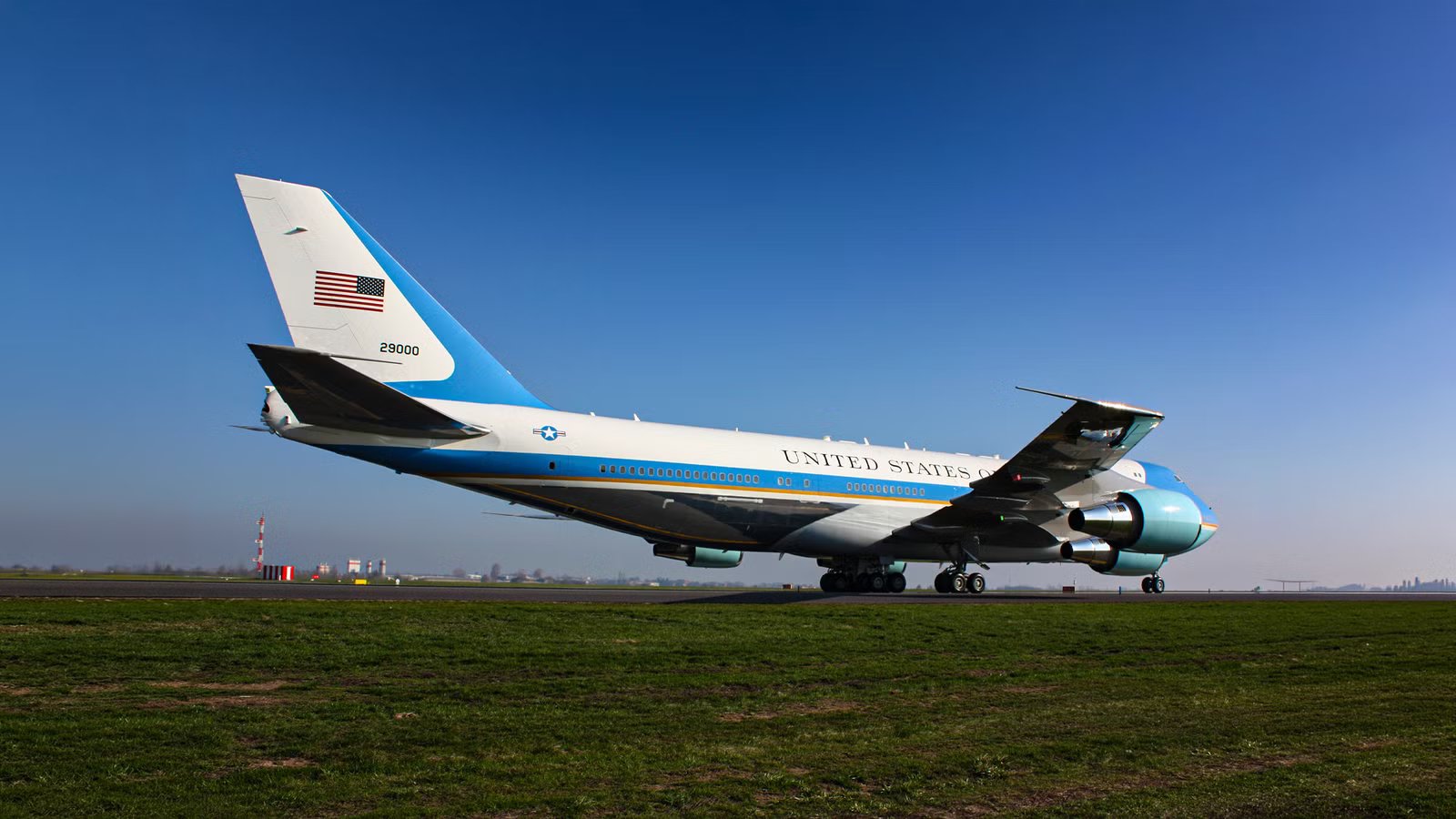
Air Force One, we all know, carries the US president around the world, and, in fact, is not a single plane but two heavily modified Boeing VC-25 aircraft (tail numbers 28000 and 29000), based on the Boeing 747-200. This aircraft remains one of the most technologically advanced and survivable aircraft in service today, largely due to its classified communications and defense systems. With 238 miles of onboard wiring, three segregated communication networks, and military-grade countermeasures such as the AN/ALQ-204 infrared jammer, the aircraft is designed to ensure uninterrupted presidential command — even during nuclear or global conflict scenarios. According to the technical breakdowns from various sources, including the USAF and prior reporting from Simple Flying, our article examines how these systems transform Air Force One into a flying command center.
The aircraft’s incredible capabilities remain directly tied to national security and continuity of government, particularly as the next-generation VC-25B, which is based on the more modern Boeing 747-8, is expected to enter service later this decade. The ability to maintain secure communications with the Pentagon, coordinate with agencies such as the Department of Defense, and withstand advanced missile threats underscores why Air Force One is far more than a presidential transport. We are going to analyze the following areas, ranging from communications architecture and defensive systems to nuclear survivability and endurance, which define the classified systems on board that make this aircraft so unique.
A Flying White House: The Hidden Infrastructure Beneath The Cabin

Air Force One’s interior is often associated with luxury and presidential comfort, but its true complexity lies beneath the surface, in the intricate mechanical and electronic systems you won’t find on a standard airliner. The aircraft, based on the heavily modified Boeing 747-200B, known as the VC-25 platform, contains nearly 238 miles of wiring, which is almost double that of a standard Jumbo Jet. This extensive electrical backbone supports an astonishing range of systems, from communications and security to navigation and mission-critical operations.
According to SlashGear, the aircraft is equipped with 85 telephones, 19 televisions, and a network of radios, fax machines, and computers. These are not simple commercial-grade systems; they are part of a carefully segmented architecture designed to handle varying levels of classified information, comparable to those of the White House or a military bunker. Three separate onboard networks, ranging from non-secure to top secret, allow the President and staff to operate easily across different communication channels without compromising security.
Basically, this infrastructure effectively turns the aircraft into a mobile extension of the White House. Officials can conduct secure meetings, transmit sensitive intelligence, coordinate military or diplomatic actions, and even organize press conferences in real time. The redundancy embedded throughout ensures continuity even in the face of attack or system failure, reinforcing the aircraft’s role as a survivable command node.
The Telecommunications Core: Staying Connected At All Times

At the heart of Air Force One’s mission capability is its dedicated telecommunications center, located on the upper deck. This section functions less like an aircraft cabin with comfy business-class seats and more like a compact military communications headquarters, akin to those on board AWACS platforms, staffed by specialists responsible for maintaining constant global connectivity.
Unlike conventional aircraft systems, Air Force One relies on a layered approach to communication. Satellite links provide global reach, while UHF and VHF radios ensure reliable line-of-sight communication with military assets. As detailed by HowStuffWorks, these systems are complemented by secure data links and encrypted telephony, ensuring that conversations and information exchanges remain protected at all times.
The aircraft’s three-tiered network structure plays a crucial role here. Non-secure systems allow routine communication and media operations, while higher-tier classified networks enable sensitive discussions and the transmission of intelligence. This segmentation ensures operational flexibility without compromising national security. In effect, the President can remain fully engaged in global affairs, such as coordinating with allies, addressing emerging crises, or issuing military directives — all without interruption.

Why The E-4B Nightwatch & VC-25B Air Force One Are Critical To US National Security
Air Force One and the Doomsday aircraft are both designed as Presidential transports and command centers (for times of peace and emergencies).
Defensive Systems: The Invisible Shield Around The Aircraft

Perhaps the most intriguing and heavily classified aspect of Air Force One is its defensive suite. Although official details remain limited, enough has been disclosed to confirm that the aircraft is equipped with sophisticated countermeasures designed to defeat modern missile threats.
Among these systems is the AN/ALQ-204 Matador infrared countermeasure system, which disrupts incoming heat-seeking missiles by masking or distorting the aircraft’s engine signature. According to our previous reporting, the aircraft also deploys chaff and flares. These are small but highly effective decoys that mislead radar and infrared-guided weapons. This feature is frequently used on fighter jets during dogfights and to avoid SAMs, but remains uncommon on board passenger aircraft. Interestingly, the only widely known exception to this rule is the Israeli airline EL AL, which uses similar advanced anti-missile systems on all its aircraft, as reported by Airways Magazine.
What makes these defenses particularly effective is how they are integrated. Detection systems identify incoming threats, countermeasures deploy automatically or on command, and electronic warfare tools may further degrade an adversary’s targeting capability. While the full extent of these systems remains classified, it is widely believed that Air Force One incorporates advanced technologies comparable to those used on frontline military aircraft.
This layered defense strategy ensures that the aircraft is not reliant on a single system, but rather a coordinated network of protective measures. The result is a survivability level that far exceeds that of any civilian aircraft and rivals that of specialized military platforms.
Hardened For The Unthinkable: Nuclear Survivability

One of the most critical features of Air Force One is its ability to operate in the aftermath of a nuclear event. This requirement, rooted in Cold War-era planning, ensures that the United States retains command-and-control capabilities even in the most extreme scenarios.
The aircraft’s electronics are shielded against electromagnetic pulse (EMP) effects, which can otherwise disable unprotected systems over vast distances. As explained by HowStuffWorks, this hardening allows avionics, communications, and mission systems to remain operational even after a nuclear detonation.
Beyond shielding, redundancy is key. Critical systems are duplicated to ensure that failures do not compromise the aircraft’s functionality. Structural reinforcements further enhance resilience, enabling the aircraft to withstand shockwaves and other environmental stresses associated with such events.

US Air Force Begins Modifying Qatar-Gifted Boeing 747-8 For “Executive Airlift” Use
Trump’s personally styled Air Force One has started its makeover.
Endurance Without Limits: In-Flight Refueling And Self-Sufficiency

Another defining feature of Air Force One is its ability to remain airborne for extended periods through aerial refueling. Even though it is rarely exercised in routine operations, this feature ensures the aircraft can remain airborne as long as necessary during a crisis, potentially for days with proper tanker support. This capability proved crucial during the events of September 11, 2001, when the aircraft remained airborne as President George W. Bush coordinated the national response from the sky.
This endurance is supported by a range of onboard facilities designed for long-duration missions. According to Encyclopedia Britannica, the aircraft includes two full galleys capable of preparing up to 100 meals simultaneously, ensuring that passengers and crew are well-supported. The presence of a dedicated medical suite, complete with emergency equipment and an onboard pharmacy, adds another layer of self-sufficiency.
Comprehensive Overview Of Air Force One’s Known Systems
|
Category |
Key Features |
|
Electrical Infrastructure |
238 miles of wiring, supports all onboard systems |
|
Communications |
SATCOM, UHF/VHF radios, encrypted networks, 85 phones, 3 secure tiers |
|
Defensive Systems |
AN/ALQ-204 Matador, chaff, flares, electronic countermeasures |
|
Survivability |
EMP hardening, redundant systems, reinforced structure |
|
Endurance |
Aerial refueling capability, extended mission duration |
|
Onboard Support |
Two galleys (100 meals), medical suite, pharmacy, crew facilities |
Crew rest areas and operational spaces further enhance the aircraft’s ability to sustain prolonged missions. Together, these features transform Air Force One into a self-contained environment, the one that can function independently of ground-based support for extended periods.
However, it is worth mentioning that the newer VC-25B will no longer have the aerial refueling capability. This decision reflects the significantly increased range of the 747-8 platform and the fact that midair refueling is almost never used on the VC-25A fleet. In effect, the improved efficiency and extended range of the new GEnx engines eliminate the need for one of the most distinguished features of the current aircraft.
Beyond The Known: The Classified Frontier Of Presidential Air Travel

Despite the wealth of information available, the most advanced systems onboard Air Force One remain highly classified. This secrecy is not precautionary, as it is essential to maintaining the aircraft’s strategic advantage. By limiting public knowledge, the United States ensures that adversaries cannot easily develop countermeasures, exploit vulnerabilities, or simply create similar upgrades to their leaders’ aircraft.
What is known already paints a picture of extraordinary capability. Air Force One is not simply a means of transport but a fully integrated command platform, more like a flying fortress, capable of sustaining leadership and operations under virtually any conditions. Its combination of communications, defense, survivability, and endurance places it in a category of its own.
Looking toward the future, the next-generation VC-25B aircraft is expected to introduce even more advanced systems. Improvements in cybersecurity, satellite communications, and defensive technologies will likely further enhance its capabilities, ensuring that Air Force One remains a cornerstone of US strategic mobility for decades to come.
Finally, Air Force One is defined not by what is seen, but by what remains hidden. It is a flying embodiment of resilience, designed to ensure that leadership endures, no matter the circumstances.