dailynewsnblog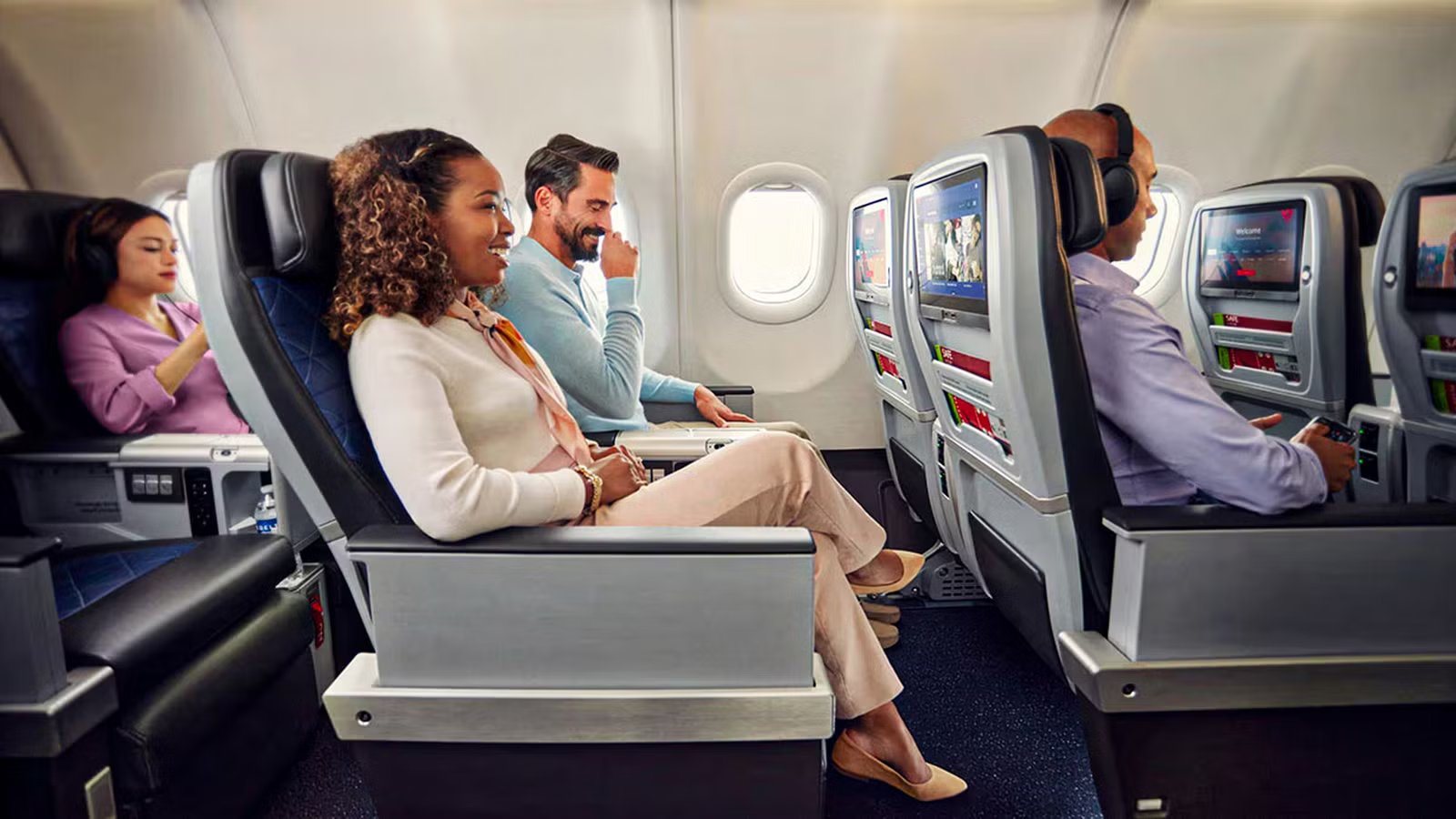
 Delta Air Lines is quietly but decisively reshaping what long-haul travel looks like for millions of passengers, and at the center of that change is its expanding Premium Select cabin. What used to be seen as a nice extra between economy class and business class is now becoming a core part of how the airline designs, sells, and profits from its international flights.
This shift is not happening in isolation. It is being driven by a wave of new aircraft orders, a steady move towards Airbus widebody standardization, and a clear understanding that today’s long-haul passenger is far more willing to pay for incremental comfort than they were a decade ago. In many ways, Premium Select is becoming one of the most important cabins in Delta’s entire network strategy.
Premium Select Becomes A Strategic Pillar

For years, Premium Select sat in a somewhat awkward middle ground. It was better than economy, but not quite business class, and it often felt like a cabin that existed more for completeness than for strategy. That is no longer the case.
Delta has been increasingly clear about where it sees growth coming from, and it is not just in the traditional economy cabin. With more than half of its revenue now generated outside the main cabin, the airline is leaning heavily on premium cabins as a core driver of profitability. Premium Select sits right in the middle of that shift, offering a product that attracts passengers who want more space and better service without paying Delta One prices that can easily reach around $5,000 on long-haul routes.
What makes this change more significant is how deliberately Delta is scaling it, as this is not just a limited rollout on select aircraft. Instead, Premium Select is being built into the very structure of the airline’s long-haul fleet planning, especially as new Airbus aircraft enter service over the next decade. It also reflects a broader industry reality in which the old two-cabin long-haul model is no longer sufficient to properly segment demand, especially on flights that routinely exceed ten hours and carry a wide mix of leisure, visiting friends and relatives, and premium corporate passengers.

Why US Carriers Are Doubling Down On Premium Cabins
Airline luxury is going mainstream.
A Widebody Fleet Built For More Premium Seats

The backbone of this expansion is Delta’s growing Airbus widebody fleet. The airline has placed a firm order for 20 A350-1000 aircraft, with options for 20 more, alongside additional commitments for 16 A330-900neo aircraft and 15 A350-900 aircraft. Taken together, this represents one of the most significant widebody investment cycles in Delta’s modern history.
The key detail here is not just the aircraft types, but how they are being configured. These new aircraft will feature roughly 15% more premium seating than the aircraft they replace, a clear signal that Delta is shifting capacity away from traditional economy and toward higher-yield cabins like Premium Select and Delta One. That shift matters because it changes the entire revenue profile of each departure, effectively increasing earnings potential without requiring more flights or additional airport slots.
The A350-1000, in particular, is central to this strategy. It is a long-range, high-capacity aircraft that gives airlines greater flexibility in cabin design, especially on transpacific routes where demand for premium seating is strong but uneven. Alongside it, the A330-900neo and A350-900 ensure that Delta can standardize Premium Select across multiple long-haul platforms, rather than limiting it to a single aircraft type. This also helps reduce passenger confusion, since frequent flyers begin to associate Premium Select with a consistent onboard experience regardless of route or aircraft.
What Premium Select Actually Delivers Onboard

Delta Air Lines | Simple Flying
At its core, Premium Select is designed to feel like a proper step up from economy, not just a slightly improved version. The most obvious difference is space. Seats are wider, typically around 18.5 to 19 inches, and offer noticeably more legroom, which becomes increasingly valuable on flights that stretch beyond 10 hours. That extra space alone often becomes the deciding factor for travelers who are weighing cost against comfort on overnight journeys.
But the product is not just about seat width, as the  SkyTeam carrier has built in a range of service upgrades that help set it apart from the main cabin experience. Meal service is upgraded and served on real tableware rather than standard economy trays, which immediately changes the cabin’s feel. Passengers also receive TUMI amenity kits and Sky Priority boarding, which make the airport experience smoother from check-in to the gate. Even small touches like dedicated cabin service pacing and improved beverage offerings help reinforce the sense that this is a distinct product rather than a variation of economy class.
Pricing is where Premium Select becomes particularly important: while Delta One sits firmly in the premium business class bracket, Premium Select is positioned as a more accessible upgrade, especially for leisure travelers or corporate flyers with tighter budgets. It offers a clear middle ground: significantly more comfort than economy, without the steep jump into business class pricing. In many cases, passengers see it as the sweet spot for long flights where arriving well-rested matters, but fully lie-flat seating is not essential.

Why Premium Economy Isn’t Always Worth It
The poor value proposition behind many premium economy tickets, and why this is the case.
Premium Select Moving Beyond International Long-Haul

One of the more interesting developments is how Delta Air Lines is beginning to extend Premium Select beyond traditional international routes. A good example is the planned return of nonstop service from  Boston Logan International Airport (BOS) to Honolulu Daniel K. Inouye International Airport (HNL) in December 2026, operated on A330-300 aircraft configured with Delta One, Premium Select, Comfort+, and economy. That alone shows how the airline is redefining what counts as a long-haul experience, even within the US.
Flights to Hawaii from the US East Coast can easily exceed 10 hours, and Delta is now treating them with the same cabin structure as transatlantic or transpacific services. This effectively elevates certain domestic leisure routes into the same product category as international flying, which has implications for pricing, expectations, and even loyalty behavior among frequent travelers.
Looking ahead, the airline is also preparing a four-class A321neo subfleet that will include Delta One lie-flat suites, Premium Select, Comfort+, and economy. This is particularly notable because it brings widebody-style cabin segmentation to a narrowbody aircraft, opening the door to premium-heavy configurations on transcontinental US routes like  John F. Kennedy International Airport (JFK) to
  Los Angeles International Airport (LAX). It also suggests that Delta is preparing for a future in which passengers expect differentiated seating even on shorter flights that used to be almost entirely economy-focused at the back of the aircraft.
If fully realized, this would blur the line between domestic and international premium flying even further, with Premium Select becoming a standard feature not just on global routes, but on some of the longest and most lucrative domestic services in the system. That kind of consistency across both domestic and international networks is something airlines have historically struggled to achieve, but Delta appears increasingly willing to design its fleet specifically around it.

Delta Air Lines Reportedly Plans New Premium-Heavy Airbus A330-900 Debut To London
Delta may be preparing its most premium-heavy Airbus A330-900 yet.
Competitive Pressure & The Rise Of The Middle Cabin

Delta is not operating in a vacuum, and every major US carrier, including  American Airlines and
  United Airlines, has been investing in premium economy products, but the pace and scale of Delta’s rollout stand out. Rather than treating premium economy as an optional extra, the airline is embedding it into its long-haul strategy and aircraft planning.
The reason is simple: demand has shifted, and passengers are increasingly willing to pay for comfort on long flights, but many are unwilling to pay business class fares. That gap has become one of the most valuable spaces in aviation today, and Premium Select is designed specifically to capture it. It is also a response to how passengers now book travel, often comparing cabin experience in detail before looking at the schedule or loyalty benefits.
By increasing the number of premium seats across its new Airbus fleet, Delta is effectively betting that demand will continue to grow. More premium seats per aircraft also give the airline greater flexibility in managing pricing and load factors, especially on long-haul routes where demand can fluctuate significantly depending on season, market conditions, and corporate travel trends. It also allows Delta to avoid overreliance on the business class cabin, which can be more sensitive to downturns in corporate spending.
Just as importantly, the consistency of the Airbus fleet means that Delta can roll out Premium Select uniformly across its network, strengthening the product in the eyes of travelers who now often choose airlines based on cabin experience rather than just loyalty or schedule.
Revenue Driving The Expansion

At the heart of all of this is a clear financial reality – Delta has shifted to a business model in which premium cabins and non-main-cabin products account for more than half of total revenue. That fundamentally changes how aircraft are designed and how seats are valued.
Premium Select sits at the center of that strategy because it captures a large and growing segment of passengers who want more comfort but are price-sensitive compared to business class passengers. It effectively expands the airline’s ability to monetize long-haul demand without relying solely on high-yield corporate business class passengers.
As new A350 and A330neo aircraft enter the fleet and as Premium Select becomes more widely available across routes, the long-haul experience on Delta flights is increasingly structured around three clear tiers rather than two. Economy class still serves volume, business class serves the top end, but Premium Select is now doing a lot of the heavy lifting in between. It is also quietly influencing how airlines think about aircraft interiors, pushing the industry toward denser, more segmented premium layouts where every square foot of cabin space is designed with revenue optimization in mind. What was once a quiet middle cabin is quickly turning into one of the most important parts of Delta’s long-haul future.