dailynewsnblog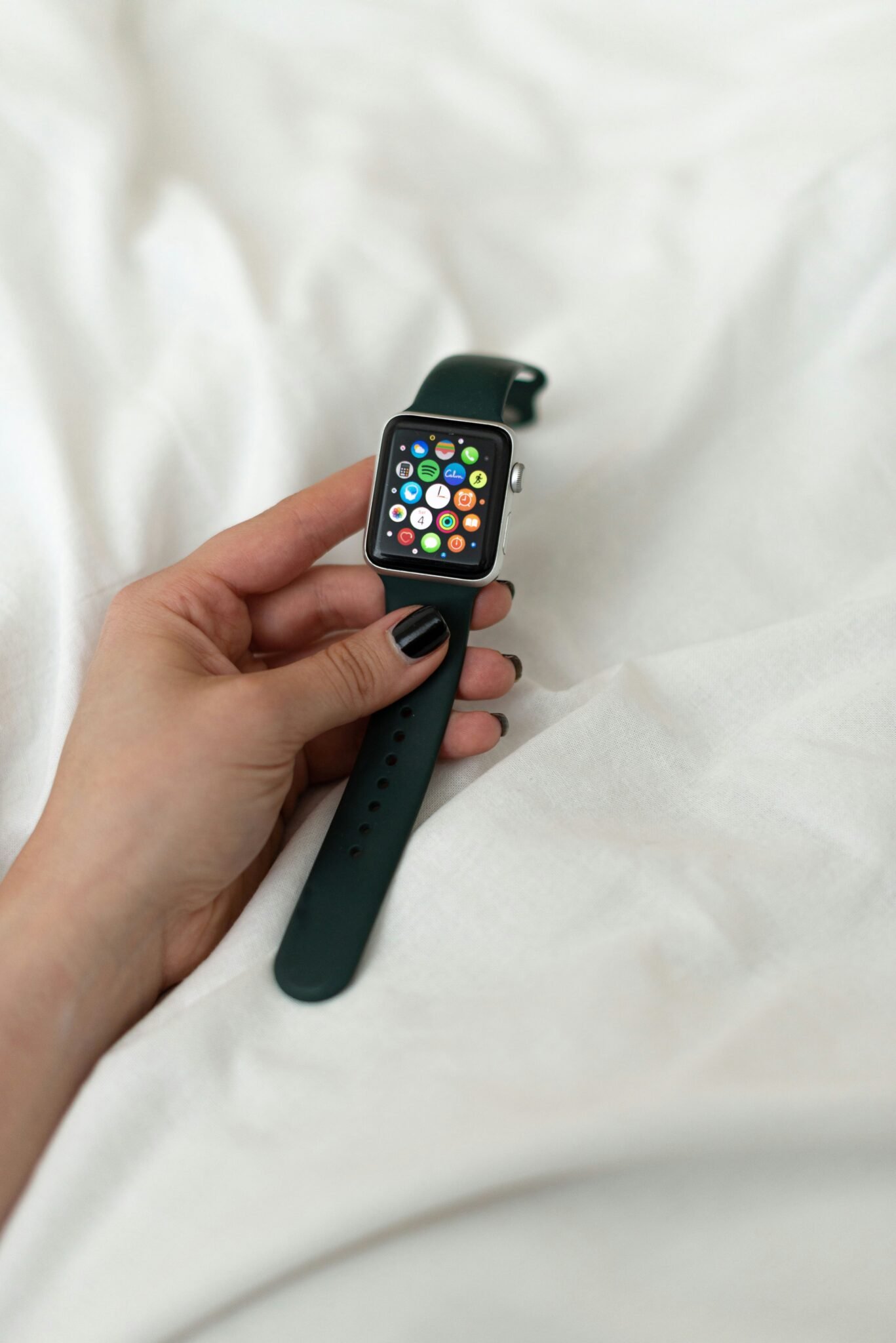
A few years ago, I wore a Whoop fitness tracker. The slim band around my wrist tracked my heart rate and offered me data like heart rate variation (HRV) and recovery score each morning. And it gave personalized insights into how I could improve the way I worked out, slept, and lived.
But a year or two ago, I took it off. Not because I replaced it with a different fitness tracker, but because I wasn’t interested in tracking at all anymore. It was one of the best decisions I ever made for my wellness.
“Basically, we’re all kind of done with tracking and optimizing everything.”
Earlier this year, the Global Wellness Summit (GWS) published its annual Wellness Trends Report, naming the top ten biggest wellness trends they predict for the year ahead. Number two on this year’s list: The Over-Optimization Backlash.
Basically, we’re all kind of done with tracking and optimizing everything.
When I wore the Whoop, it did give me some helpful insights. I could see how intense my workouts were, how many hours I was actually sleeping, and, based on the surveys you fill out daily, what lifestyle factors affected my recovery — like spending time in nature, eating sugar, having sex, or drinking alcohol.
But on countless mornings, I was left with, instead of clarity, more confusion. What’s a girl to do when her low sleep score doesn’t correspond to her totally fine-feeling body? (Or vice versa.)
“What’s a girl to do when her low sleep score doesn’t correspond to her totally fine-feeling body?”
The app lets you join up with other friends who have Whoops to see each other’s metrics — breeding healthy competition for some, but comparison for me. I worried my sleep scores were always worse, my strain not as high even on days I pushed myself. (And for what it’s worth, the days when my strain was highest were the days I’d go out dancing til 1:00 a.m.)
After a year and a half of wear, the fitness tracker hadn’t done much more than make me feel disconnected from my body. And frankly, the trade-off of giving up a good night of recovery for an evening of gabbing with friends over a bottle of wine is one I’ll make over and over.
To be clear: The Whoop can be a fantastic fitness tracking device if that’s what you’re looking for — 24/7 monitoring, insights, and advice pertaining to your fitness routines and lifestyle. That’s great if you’re an athlete training for your next Iron Man. But do we all need that?
Our health tracker-centric wellness culture can make it feel that way. But you needn’t necessarily know your sleep score or your daily strain or even how high your heart rate got during your last workout to have the healthiest body you’ve ever had. You can be that person with an analog lifestyle, if you so choose.
The less-than-optimal effects of optimization
According to a 2023 study, almost one in three American adults uses a wearable device to track health and fitness. I have no doubt some of those folks are the healthiest versions of themselves.
But in recent years, researchers at Rush University Medical College and Northwestern University’s Feinberg School of Medicine saw a growing phenomenon of people being so concerned with the quality of sleep tracking data that it negatively impacted the quality of their sleep — they coined this orthosomia. Your standard-issue self-fulfilling prophecy.
“Researchers … saw a growing phenomenon of people being so concerned with the quality of sleep tracking data that it negatively impacted the quality of their sleep.”
Our editor recently covered how her wellness tech — in this case, a meditation app — made her feel worse, not better. Optimization of wellness became yet another stressor for her, and she shares tips on how she’s returned to her inner voice when it comes to wellness tools.
“These signals reveal the limits of an optimization model that treats the body like a programmable system. Humans are relational, sensory, and inherently non-linear,” says author Jessica Smith in the GWS’s Over-Optimization Backlash trend report.”Optimization can fine-tune performance, but it cannot satisfy deeper needs for connection, agency, and emotional coherence.”
“Health technology continues to expand and innovate — an amazing thing in a clinical setting. But in an individual setting, it’s not all positives.”
Health technology continues to expand and innovate — an amazing thing in a clinical setting. But in an individual setting, it’s not all positives. There might be a cap to how healthy it is to know absolutely everything you can know about your body, from your sleep score to your glucose levels to your biological age.
“Much of the last decade’s wellbeing culture has been built around discipline, self-improvement and individual optimization — asking people to fix themselves rather than feel safe, supported or connected,” says Smith. “The result is not resilience, but rigidity.”
We aren’t products that need to keep optimizing to increase our value. We’re just human beings. And I want to feel like a person, not a piece of tech.
The performance (and hamster wheel) of optimization
Wellness tech takes us out of our bodies and into the screens of our phones, contracting out the labor of feeling to our little boxes and turning our affections into a constant stream of numbers. This constant info stream might even be a net bad — Smith notes that “outsourcing cognition, like outsourcing bodily intuition, weakens internal regulation over time.” How am I feeling? Let me check my phone.
“Wellness tech takes us out of our bodies and into the screens of our phones.”
Fitness tracking takes on the flavor of self-surveillance, an iteration of our (increasingly) normalized surveillance culture. Other manifestations include filming your morning routine or perfect vacation to post it on TikTok, or tracking the whereabouts of everyone you know on Find My. Most of us do these things — they just might be worth some scrutiny.
“What began as empowerment has quietly slid into self-surveillance,” says Smith. It’s also slid into pressure, and performance, and never-good-enough, and, in the darkest versions of wellness tech, Brian Johnson-esque aggrandizement. “Instead of delivering motivation, optimization culture now carries the weight of obligation: routines to maintain, standards to uphold, and visible proof of ‘doing wellness right,’” says Smith.
“In this world of wellness optimization, even relaxing becomes a chore. Meditate for 10 minutes? Check. Read 15 pages? Check.”
Even when I’m not performing wellness for a social media audience, sometimes I’m still performing it for myself — for that judgmental big sister-esque woman in my head who is, presumably, me from the future, a fully optimized wellness goddess of sorts. In this world of wellness optimization, even relaxing becomes a chore. Meditate for 10 minutes? Check. Read 15 pages? Check. And health becomes a state to achieve, not a living practice.
We can’t keep feeling like we’re all one cold plunge or colostrum powder or sunrise alarm clock or NAD supplement or positive affirmation away from reaching health nirvana. Lately, “wellness” feels more like a hamster wheel that I want to step off of.
And here’s the cold, hard fact of the matter: Wellness tech optimization is a manifestation of a society in the throes of an individualistic view of health. No protein powder can remove the PFAS from our water supply. No weighted vest will give us universal healthcare. We can’t have true individual wellness without community wellness.
“Wellness tech optimization is a manifestation of a society in the throes of an individualistic view of health.”
So in my anti-optimization view of wellness, health is something to strive for, not to finally enter into. I won’t someday achieve my peak wellness, my fitness zenith — health, to me, is waking up every day and choosing to prioritize doing right by my body. Some days have to take a back burner, and that’s ok. Health is a mindset, not a goal.
“The [optimization] backlash is not about abandoning routines, but about reclaiming agency — and redefining what wellness is meant to support,” says Smith.
Finding the balance that works for you
Wellness should boost our day-to-days, not strain them. A good routine is like software running in the background of your life that makes it feel easier to wake up, work, enjoy hobbies, and show up for your loved ones.
“Wellness should boost our day-to-days, not strain them.”
What makes me feel good about my body and beyond: Working out often but not every day, eating seasonal foods that I cook at home, keeping my screentime low, biking to work, getting up early, getting outside, reading, and drinking wine and eating cheese with my friends. These are my things. Maybe yours are different.
While everyone’s basics might vary, the fundamentals of a healthy life are no-brainers that we don’t need fed to us from a wearable or an app or an influencer. Exercise, eat well, sleep well, and socialize. I’m through complicating it.
Natalie Gale is a Boston-based freelance journalist. Since 2022, she has been reviewing the top sustainable home, wellness, fashion, and beauty products, sharing her honest opinion on the best finds. When she’s not writing about art, food, or sustainability, you can find her biking to the farmers’ market, baking, sewing, or planning her next Halloween costume. Say hi on Instagram!