dailynewsnblog
When examining the scale of American aviation, the conversation usually centers on the frantic passenger counts at  Hartsfield-Jackson Atlanta International Airport (ATL) or the heavy widebody traffic flowing through
  Los Angeles International Airport(LAX).
However, measuring a facility by its total land area reveals a completely different hierarchy of power. In the USA, where land is a precious commodity near urban centers, the airports that secured massive footprints decades ago are now leading the transition to the next generation of sustainable, high-capacity flight operations.
7
Chicago O’Hare International Airport
7,627 acres

Despite being boxed in by the dense urban sprawl of Chicago,  O’Hare International Airport (ORD) maintains a massive footprint of 7,627 acres (30.8 square kilometers). This land area is critical for supporting what is often cited as one of the most complex runway systems in the world. As a primary hub for both
  American Airlines and
  United Airlines, the airport must manage a constant stream of narrowbody and widebody traffic across its eight active runways, a feat that requires every available square inch to be utilized to its full potential.
The airport has undergone a multi-phase modernization program designed to transition from a confusing web of intersecting runways to a more efficient parallel system. This reconfiguration was only possible because of the strategic land acquisitions and relocations that defined the airport’s growth over the last two decades. With this growth, O’Hare has significantly reduced delays and improved safety during the harsh winter months that frequently impact the Great Lakes region.
As of early 2026, the facility continues to evolve with the Global Terminal project, which will further densify the existing footprint. It may be the smallest on this specific list, but the intensity of operations at O’Hare is unmatched. According to OAG data, the airport is ranked second in the world for seat totals, a massive increase from its seventh place just one year ago.
6
Salt Lake City International Airport
7,700 acres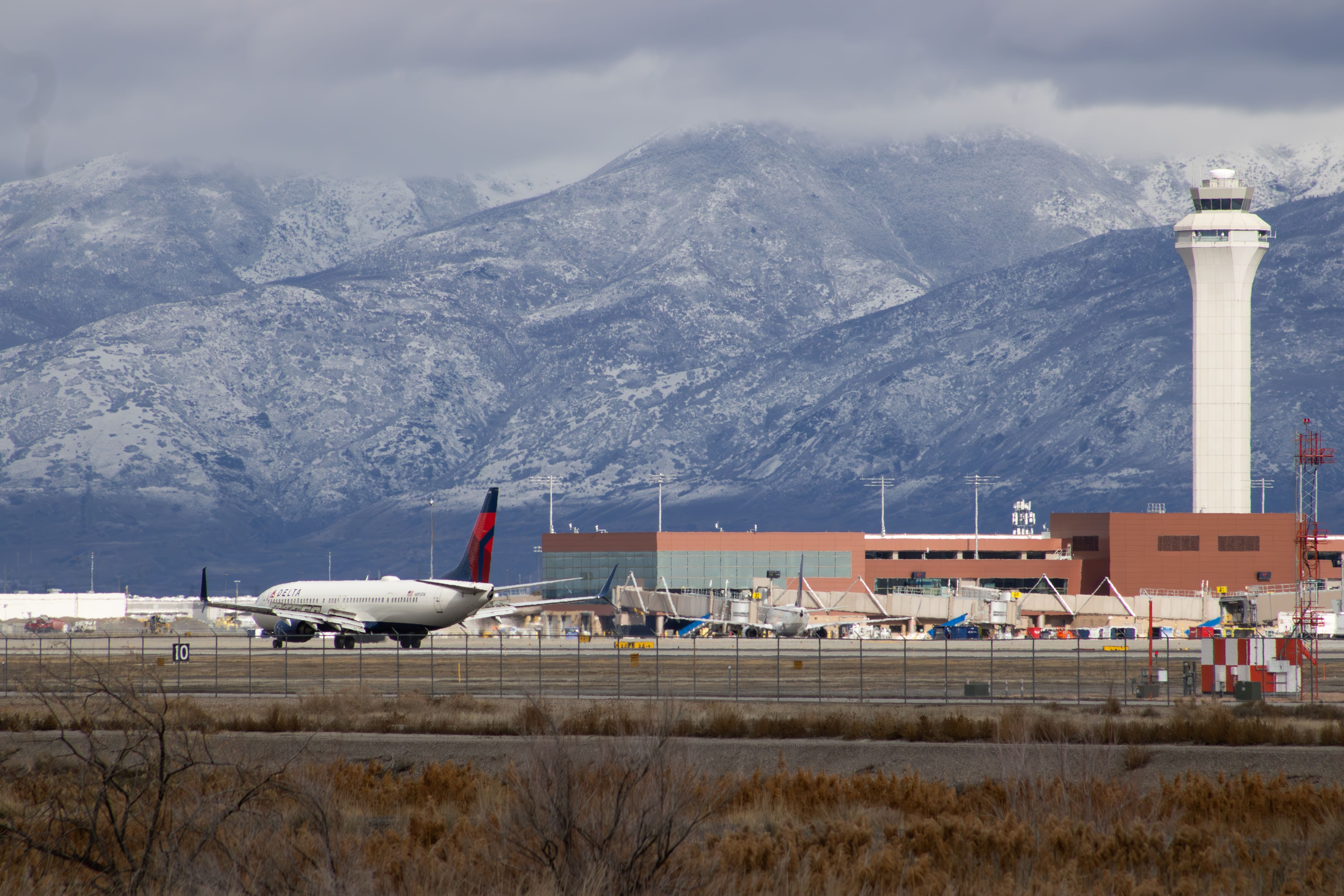
Salt Lake City International Airport(SLC) covers approximately 7,700 acres (31.1 square kilometers), making it a dominant physical presence in the Mountain West. Its vast landmass allows for a strategic layout that minimizes taxi times while providing ample buffer zones against the surrounding Great Salt Lake and urban developments. This acreage is essential for maintaining operational stability in a region known for its dramatic weather shifts.
The recent multi-billion-dollar New SLC redevelopment project has revolutionized how this land is utilized. Replacing aging terminals with a streamlined, linear concourse design, the airport has optimized its footprint to handle a higher volume of narrowbody traffic. This efficiency is critical for a hub that experiences significant seasonal spikes during the winter tourism months, ensuring that the infrastructure can absorb thousands of additional passengers daily. When compared with ORD, SLC has only slightly more land area but a fraction of total movements. This means the airport has plenty of room for growth and could easily become one of the world’s busiest airports.
|
Airport |
Land Area (Acres) |
Annual Flight Movements (2025 data) |
|
O’Hare (ORD) |
7,627 |
857,392 |
|
Salt Lake City (SLC) |
7,700 |
~331,000 |
Where SLC stands out is in its future proofing; the airport land area provides a roadmap for future growth, including the potential for additional runways and concourse extensions. As a major  Delta Air Lineshub, SLC uses its 7,700 acres (31.1 square kilometers) to balance passenger comfort with high-frequency flight operations. This foresight ensures it remains a vital link in the transcontinental aviation network for the next three decades.

Is Salt Lake City Becoming The Next Growing Hub For Delta Air Lines?
Delta Air Lines recently announced a surprising new destination from its hub in Salt Lake City. Starting December 4, the Utah capital will receive non-stop flights to Lima, Peru, for the first time. It is the second new intercontinental destination for Salt Lake City this year, following Delta’s first flight between SLC and Seoul, South Korea. With all of this happening, it gave me a feeling that Delta will start to make its first serious expansion in Salt Lake City in quite a while.
Before this, Delta opened a pilot training center at the airport back in December last year, which indicates its commitment to growing its Utah hub. While Delta has already been expanding in Seattle with the introduction of flights to Barcelona and Rome, as well as opening an A350 base there, Salt Lake City has been quite stagnant. But with the addition of Seoul and now Lima, it seems that there could be momentum for the future, and possibly result in Salt Lake City finally becoming a serious rival to Uni
5
George Bush Intercontinental Airport
10,000 acres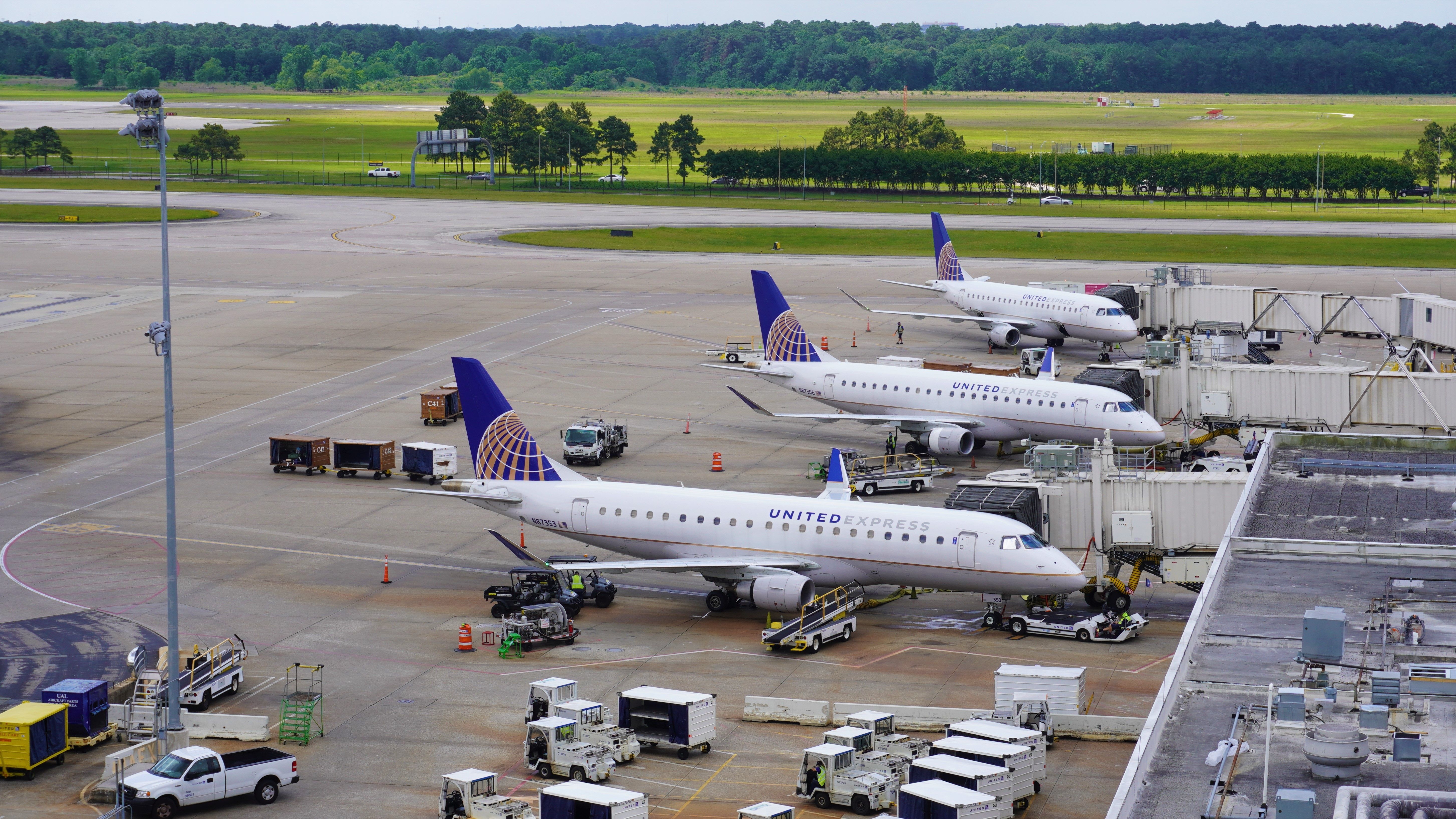
 George Bush Intercontinental Airport(IAH) in Houston spans approximately 10,000 acres (40.4 square kilometers) in the Piney Woods region, serving as a true gateway to the US South. This massive footprint allows the facility to operate five runways simultaneously, ensuring it remains a vital engine for the Texas economy. The expansive layout provides a critical buffer against the noise of heavy widebody departures, while ensuring that capacity remains unstrained.
As a premier gateway for United Airlines, IAH uses its acreage to support an extensive network of international flights, particularly to Latin America. The airport land area is also home to massive cargo hangars and logistics centers that handle thousands of tons of freight annually, essential for maintaining Houston’s status as a global trade hub in 2026.
The airport master plan has effectively helped build on the available space effectively to separate terminal operations from maintenance zones. This geographical breathing room allows for the ongoing expansion of Terminal B without disrupting current flight schedules. With plenty of undeveloped land remaining, IAH is well-positioned to adapt to the changing needs of commercial aviation over the next century. As long as United is still operating here, Houston is an airport with major growth potential, especially with rising airlines like Starlux planning to commence operations here.
4
Orlando International Airport
12,264 acres

Shutterstock
Spanning 12,264 acres (49.6 square kilometers),  Orlando International Airport(MCO) is a sprawling testament to Florida’s status as a global vacation destination. Originally serving as McCoy Air Force Base, the facility has transitioned from a strategic military installation into one of the busiest commercial hubs in the USA. This massive land area encompasses vast protected wetlands and buffer zones that allow the airport to coexist with the sensitive Central Florida ecosystem while managing a constant influx of international traffic.
The year 2026 marks a significant milestone for MCO with the continued expansion of Terminal C, a project that utilizes the airport’s southern acreage to accommodate a surge in widebody operations. This expansion includes four new multimodal gates designed to handle high-capacity aircraft like the Airbus A350 and Boeing 787. Additionally, the fully integrated Brightline high-speed rail station now serves as a central artery, connecting the airport directly to South Florida and solidifying MCO’s role as a primary multi-modal transport center for the entire state.
Strategic land use remains at the heart of Orlando’s growth plan, with recent developments focusing on the $253 million Gate Link Replacement Project to modernize the automated people mover systems. As major carriers like  Southwest Airlines and JetBlue continue to expand their footprints, the airport is also seeing a rise in long-haul connectivity with GOL Linhas Aéreas launching flights to Rio de Janeiro in 2026. This geographical breathing room ensures that even as passenger numbers climb toward 60 million annually, the facility has the physical space to innovate, whether through new sustainable terminal designs or expanded cargo logistics zones.
3
Washington Dulles International Airport
13,000 acres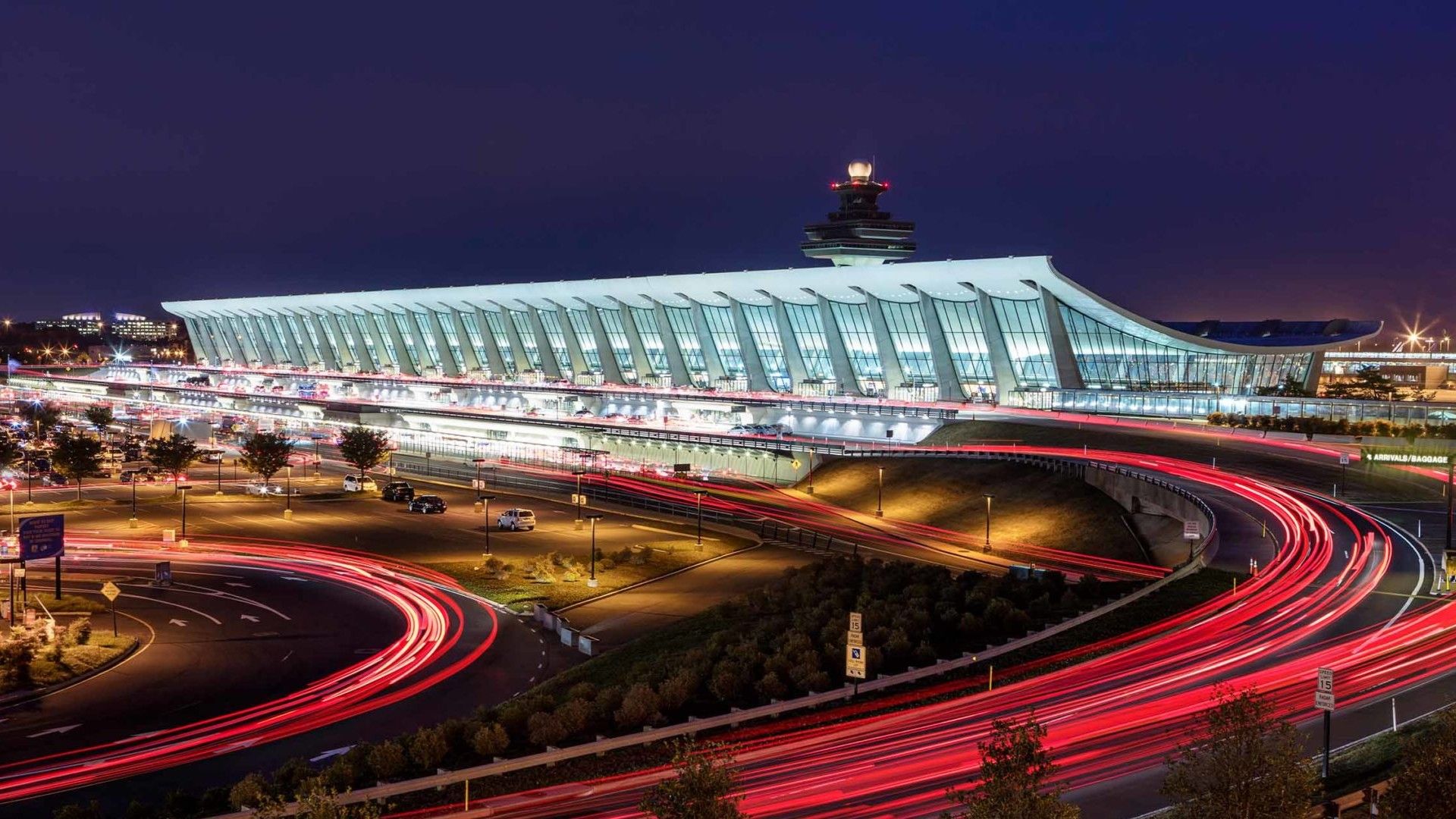
Washington Dulles International Airport(IAD) occupies a massive 13,000 acres (52.6 square kilometers) in Northern Virginia, serving as the primary international hub for the capital region. This expansive site, which originally opened in 1962, was designed with significant room for growth, a feature that is being fully utilized in 2026. The airport’s land area is now the staging ground for a multi-billion-dollar transformation aimed at modernizing the passenger experience and increasing capacity.
It is a landmark year for IAD as well, with the scheduled opening of the new Concourse E in the fall. This 435,000-square-foot (40,412.8 square meters) facility will provide 14 new gates specifically for United Airlines, replacing aging regional gate structures with a high-tech, sustainable terminal. The project is a key component of the broader Dulles master plan, which envisions the airport handling up to 90 million passengers annually. Furthermore, the airport has broken ground on a massive 835-acre (3.4 square kilometers) solar project, the largest of its kind at any USA airport, which will provide renewable energy to the facility and the local grid.
Reflecting the airport’s strategic focus on the East Asian market, IAD is seeing a surge in new long-haul connectivity this year. Air Premia is ready to launch a new nonstop service to  Seoul Incheon, followed by EVA Air’s highly anticipated route to Taipei Taoyuan in June. These additions, alongside established service from All Nippon Airways to Tokyo, solidify Dulles as a premier gateway for trans-Pacific travel. With the Silver Line Metro now fully integrated, the airport serves as a seamless multi-modal link between the global economy and the heart of the American government.

The 10 Largest Airline Megahubs In 2025
How many of the airports on the list do you know?
2
Dallas/Fort Worth International Airport
17,183 acres

 Dallas/Fort Worth International Airport (DFW) is a colossal infrastructure marvel spanning 17,183 acres (69.5 square kilometers), a landmass larger than the island of Manhattan. This immense territory allows the facility to operate seven active runways and maintain its own zip code, police force, and fire department. As the primary mega-hub for American Airlines, the airport uses its massive footprint to facilitate seamless connections across the USA and beyond.
In 2026, DFW is currently undergoing a monumental $9 billion transformation that leverages its vast land area for significant modernization. A key highlight is the construction of the new $1.6 billion Terminal F, which recently reached a major milestone with the installation of modular megastructure buildings. This innovative approach minimizes operational disruption while preparing the airport to handle a surge in passenger volume, especially with the expansion of nine new gates in Terminal C scheduled for completion this year.
Starting in March 2026, American Airlines boosted its premium seating capacity to  Tokyo Haneda by more than 45%, utilizing the Boeing 777-300ER to meet rising demand for luxury long-haul travel. With additional new summer routes to Athens and Zurich, DFW continues to lead the industry in both physical scale and international connectivity.
1
Denver International Airport
33,531 acres

 Denver International Airport (DEN) dominates the landscape with a staggering 33,531 acres (135.7 square kilometers) of space, making it twice the size of the next largest USA airport and the second-largest on earth. This massive footprint was a visionary choice during construction in the early 1990s, intended to provide virtually limitless room for expansion and noise mitigation. Today, that foresight is paying off as the facility manages record-breaking passenger volumes while remaining the primary economic engine for the Rocky Mountain region.
This year is a transformative period for the airport as the DEN master plan moves into high gear. United Airlines is currently executing a massive expansion, adding dozens of new daily departures and cementing Denver as its primary mid-continent mega-hub for both narrowbody and widebody operations. Simultaneously, the multiphase Great Hall project is reaching new milestones, with the completion of the advanced security checkpoints at the West Entry significantly reducing wait times for the millions of travelers passing through the iconic peaked roof.
The airport is leveraging its vast acreage to support the growing demand for trans-Pacific and transatlantic travel. This international surge is supported by the addition of 39 new gates across all three concourses, a project that was only possible because of the original layout. With its combination of physical space and technological modernization, Denver remains the best of the best for large-scale aviation infrastructure in North America.