dailynewsnblog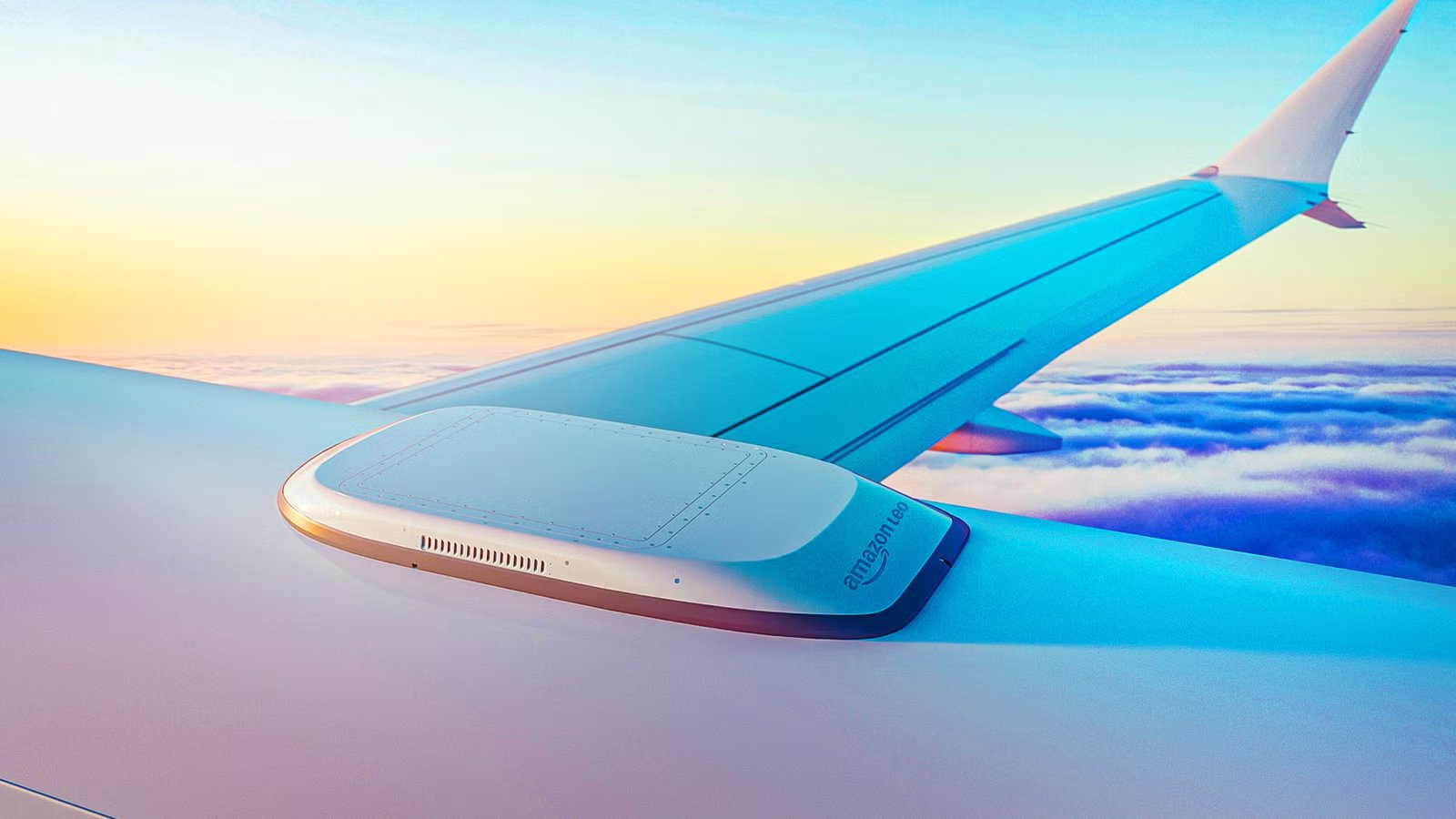
 Delta Air Lines’ decision to pivot away from Starlink and align itself with Amazon’s low Earth orbit (LEO) satellite network represents one of the most consequential connectivity shifts in modern commercial aviation. For years, airlines have searched for a solution that could balance speed, reliability, ease of installation, and long-term scalability, often forced to compromise on at least one of those variables as passenger expectations steadily increased and onboard connectivity became less of a novelty and more of a baseline requirement across both domestic and long-haul operations. Against that backdrop, Delta Air Lines’ move signals a belief that the next generation of inflight WiFi will not simply be faster, but fundamentally more integrated into the airline’s broader digital and operational ecosystem.
The partnership also reflects a deeper shift in how airlines view connectivity itself, no longer treating it as a standalone passenger amenity but instead as a core layer of operational and commercial infrastructure that touches everything from flight planning to inflight entertainment. With Amazon’s rebranded Project Kuiper, now positioned as a dedicated aviation connectivity platform, entering the market with purpose-built hardware and tight integration into cloud services, Delta appears to be positioning itself at the forefront of a transformation that extends far beyond the cabin and into the technical backbone of its fleet.
A Strategic Pivot From Starlink

Delta’s decision to forgo Starlink is striking not because Starlink lacks capability, but because it has already established itself as a leading solution within the aviation sector, with multiple carriers adopting the system and promoting its performance as a step-change improvement over legacy geostationary satellite connectivity. Instead, the  SkyTeam carrier’s choice highlights a strategic preference for ecosystem alignment over immediate maturity, suggesting that long-term integration and scalability outweighed the benefits of joining a network already in widespread use across competing fleets.
Amazon’s offering presents a fundamentally different value proposition, one that goes beyond bandwidth and latency metrics and instead emphasizes how connectivity interacts with airline systems as a whole. By leveraging its broader technological portfolio, Amazon can offer a solution that connects aircraft not just to satellites but to a global network of cloud infrastructure, data services, and digital platforms that can be customized and scaled over time to meet operational requirements.
This distinction is particularly relevant for an airline operating a diverse fleet that includes aircraft such as the Airbus A321 on high-frequency domestic routes and widebody types like the A350-900 on long-haul international services. Each of these platforms presents different connectivity demands, from short sectors with high passenger turnover to ultra-long-haul flights where consistent global coverage is essential, and Delta appears to be prioritizing a system that can scale seamlessly across both ends of that spectrum. The legacy carrier’s mainline fleet comprises a variety of aircraft types, according to ch-aviation.
|
Aircraft |
Number In Fleet |
Number On Order |
|---|---|---|
|
Airbus A220-100 |
45 |
– |
|
Airbus A220-300 |
36 |
64 |
|
Airbus A319 |
57 |
– |
|
Airbus A320 |
45 |
– |
|
Airbus A321 |
127 |
– |
|
Airbus A321neo |
87 |
102 |
|
Airbus A330-200 |
11 |
– |
|
Airbus A330-300 |
31 |
– |
|
Airbus A330-900 |
39 |
16 |
|
Airbus A350-900 |
40 |
19 |
|
Airbus A350-1000 |
– |
20 |
|
Boeing 717 |
80 |
– |
|
Boeing 737-800 |
77 |
– |
|
Boeing 737-900ER |
163 |
– |
|
Boeing 737 MAX 10 |
– |
100 |
|
Boeing 757-200 |
55 |
– |
|
Boeing 757-300 |
16 |
– |
|
Boeing 767-300ER |
37 |
– |
|
Boeing 767-400ER |
21 |
– |
|
Boeing 787-10 |
– |
30 |
|
Total |
987 |
351 |
The Aviation Antenna & Hardware Simplicity

At the heart of Amazon’s aviation connectivity solution is its newly introduced Aviation Antenna, a piece of hardware designed specifically to address many of the pain points airlines have faced with previous generations of satellite equipment. The antenna’s low-profile form factor, measuring 58 inches long, 30 inches wide, and just 2.6 inches high, allows it to be installed with minimal aerodynamic impact, reducing drag that can translate into higher fuel burn over time, particularly on longer sectors operated by widebody aircraft.
More importantly, the antenna uses full-duplex phased-array technology, eliminating the need for mechanical movement to track satellites. Traditional systems often rely on physically steered antennas, which introduce complexity, weight, and maintenance requirements that can become significant liabilities when deployed across large fleets operating a high number of sectors. By contrast, electronically steered arrays provide continuous connectivity with fewer failure points, aligning well with airline priorities around reliability and cost control.
The system’s performance figures are equally notable, with Amazon targeting simultaneous download speeds of up to 1 Gbps and upload speeds of up to 400 Mbps. These speeds represent a meaningful leap forward in what passengers can realistically expect onboard, particularly as usage patterns shift toward bandwidth-intensive applications such as streaming, cloud-based work platforms, and real-time communication tools.

Here’s When Delta Air Lines Plans To Debut The Largest Boeing 787 Dreamliner
Delta’s Dreamliners will serve long-haul routes across the globe.
Installation Efficiency & Fleet Integration

One of the most compelling aspects of Amazon’s offering is its approach to installation, an area that has historically been a bottleneck for airlines attempting to roll out new connectivity systems at scale across varied aircraft types. Retrofitting aircraft with satellite equipment can require significant downtime, often taking multiple days depending on the system’s complexity and the certification requirements for each aircraft, which in turn affects scheduling flexibility and revenue generation.
Amazon’s Aviation Antenna is designed with simplicity in mind, featuring an integrated modem and a streamlined architecture that allows for installation in as little as a single day. This represents a significant operational advantage for Delta, particularly when considering the breadth of its fleet and the scale of its planned rollout, which will involve hundreds of aircraft entering modification programs over a relatively compressed timeframe beginning in 2028.
The implications of this efficiency extend beyond initial deployment, as simpler systems tend to be easier to maintain and upgrade over time. With no moving parts and fewer components requiring regular servicing, the antenna reduces the long-term maintenance burden, allowing Delta to maintain higher aircraft utilization rates while minimizing disruptions. For an airline operating complex schedules across domestic and international networks, including a major hub at the world’s busiest airport,  Hartsfield-Jackson Atlanta International Airport (ATL), even marginal improvements in installation and maintenance efficiency can translate into substantial operational and financial benefits.

Alaska Airlines Accelerates Starlink Wi-Fi Rollout After Strong Early Performance
Passengers are in for a surprise as this airline fast-tracks a game-changing upgrade.
Cloud Integration & Operational Connectivity

Perhaps the most transformative element of Amazon’s aviation connectivity platform lies in its integration with the company’s cloud infrastructure, enabling connectivity that goes far beyond passenger internet access. By linking aircraft directly to cloud-based systems, the network facilitates real-time data exchange between the aircraft and ground operations, creating new opportunities for efficiency, safety, and service personalization.
This connectivity can support a wide range of operational use cases, from real-time aircraft health monitoring to dynamic flight path optimization based on weather and air traffic conditions. Continuous data streams allow airlines to enhance predictive maintenance programs, identifying potential issues before they escalate into operational disruptions, while also improving fuel efficiency through more informed decision-making.
In the cabin, this integration enables more personalized passenger experiences, as onboard systems can access and process data in real time, tailoring content and services to individual preferences. For Delta, which has invested heavily in digital platforms and loyalty integration, the ability to connect inflight systems directly to cloud infrastructure represents a significant step forward in delivering a seamless, end-to-end travel experience that extends well beyond the flight itself, regardless of whether the flight is operated by an A220-300 or an A330-900neo.
Competitive Pressure In The LEO Connectivity Market

Delta Air Lines | Simple Flying
The carrier’s partnership with Amazon also intensifies competition in the rapidly evolving low Earth orbit satellite market, where multiple players are vying to become the preferred provider of aviation connectivity. Starlink has already secured agreements with several major airlines, creating a strong presence that Amazon will need to challenge as it scales its own network and builds credibility within the industry.
Amazon’s entry introduces a new dimension to this competition, bringing not only satellite capabilities but also deep expertise in cloud computing, data management, and large-scale infrastructure deployment. This combination has the potential to reshape the competitive landscape, encouraging innovation and driving improvements in both performance and cost efficiency as providers seek to differentiate themselves in an increasingly crowded market.
For Delta Air Lines, aligning with Amazon provides an opportunity to shape the platform’s development to meet its operational needs, rather than adopting a standardized solution. As the system is deployed and refined, its performance will be closely watched by other airlines evaluating their own connectivity strategies in an environment where passenger expectations continue to evolve. Interestingly, rival carrier  United Airlines has already begun installing Starlink on its aircraft.

All The Airlines Installing Starlink WiFi & How Soon They’ll Go Live
Some aircraft already have the system up and running.
Scaling To 500 Aircraft & The Passenger Impact

Delta’s plan to deploy Amazon’s connectivity system across 500 of its aircraft underscores the scale of its commitment and highlights the central role that inflight connectivity is expected to play in the airline’s future. Beginning in 2028, the rollout will span multiple fleet types, requiring careful coordination to ensure consistent performance and integration across different aircraft configurations, from short-haul domestic jets to long-haul international widebodies. Meanwhile, fellow SkyTeam member Virgin Atlantic has opted to deploy Skylink on its aircraft.
From a passenger perspective, the impact of this deployment is expected to be significant, particularly as Delta continues to position its onboard WiFi as a complimentary service for SkyMiles members. The increased bandwidth and lower latency offered by Amazon’s system will enable a broader range of applications, from high-definition streaming to real-time collaboration tools, aligning with the growing expectation that inflight connectivity should mirror the experience available on the ground.
As passengers increasingly rely on connectivity for both work and leisure, the ability to deliver fast, reliable internet access throughout the journey will become a defining feature of the modern airline experience. By investing in Amazon’s platform and committing to a large-scale fleet rollout, Delta is effectively signaling that connectivity will remain central to how it competes, differentiates, and evolves in an increasingly digital aviation landscape.