(Bloomberg) — US President Donald Trump said he’ll send representatives to Pakistan for talks to end the Iran war on Monday evening, while again threatening to strike civilian infrastructure if Tehran doesn’t agree to a deal.
Most Read from Bloomberg
“We’re offering a very fair and reasonable DEAL, and I hope they take it because, if they don’t, the United States is going to knock out every single Power Plant, and every single Bridge, in Iran,” he said in a social media post early Sunday.
The US leader told Fox News that Special Envoy Steve Witkoff will head to Islamabad for talks on Tuesday that could last until Wednesday. The New York Post reported that Trump’s son-in-law Jared Kushner will also participate in the talks to end a war that’s killed thousands. The announcement came after Iran reversed its decision to reopen shipping through the Strait of Hormuz in response to a US blockade.
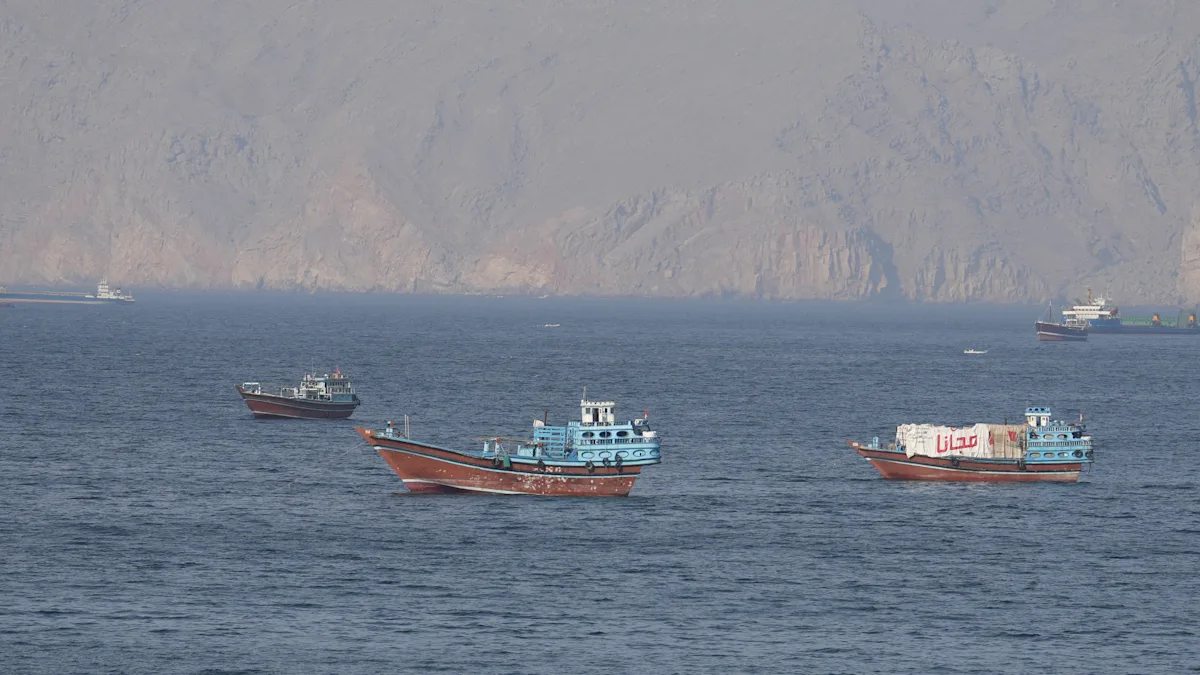
The standoff over Hormuz — through which about a fifth of the world’s oil flowed before the US-Israeli war on Iran — threatens to deepen the global energy crisis and undermine expectations of an imminent peace deal. Hormuz is one of several unresolved issues in peace talks, including Iran’s nuclear program and Israel’s ongoing invasion of Lebanon.
“Ships are awaiting instructions from Iran’s armed forces to determine whether they can pass through the route,” Iran’s semi-official Mehr news agency reported on Sunday.
Still, late Saturday, Iran’s Parliament Speaker Mohammad Bagher Ghalibaf, who led the Iranian delegation in talks with the US earlier this month in Pakistan, said that while gaps “remain significant,” the negotiations are making progress. He added that Iran’s armed forces are prepared to act even as discussions take place.
“It is impossible for others to pass through the Strait of Hormuz while we cannot,” he said in a televised address, referring to the US naval blockade.
Meanwhile, the US military is preparing to board Iran-linked oil tankers and seize commercial ships in international waters in the coming days to pressure Iran into reopening Hormuz, the Wall Street Journal reported Saturday, citing anonymous American officials. The White House didn’t immediately respond to a request for comment about the Journal’s reporting.
The Islamic Revolutionary Guard Corps’ Navy issued a statement Saturday afternoon warning vessels not to leave their anchorages in the Persian Gulf and the Sea of Oman, and that approaching the strait “will be considered cooperation with the enemy, and the violating vessel will be targeted.”
“They wanted to close up the strait again like they’ve been doing for years and they can’t blackmail us,” Trump told reporters Saturday about Iran, although the strait was fully open until the US and Israel began their bombing campaign seven weeks ago. “We’ll have some information by the end of the day, you know. We’re talking to them. We’re taking a tough stand.”
Whiplash
The developments of the last 72 hours illustrate the unpredictable nature of the conflict as well as the erratic — and sometimes contradictory — nature of Trump’s comments.
The president on Friday said a deal with Iran was all but agreed to, including concessions Tehran has never publicly made, signaling he was ready to sign and move on to domestic issues. He even told ABC News that he trusted the Iranians, a group whose civilization he just recently threatened to wipe out.
But crucially, Trump left a blockade of the strait in place until an agreement was finalized.
Iran called the blockade a ceasefire violation and moved to close the waterway again. That prompted Trump’s latest diatribe, in which he renewed threats on Iran’s civilian infrastructure if they didn’t cut a deal.
There were also signs the ceasefire in Lebanon — linked to Iran’s decision to allow Hormuz traffic — may be fraying. The Israel Defense Forces said it struck “saboteurs” approaching its troops in violation of the truce.
Momentum for a lasting peace had been building late last week, but cracks began to emerge Saturday with Iran’s criticism of the continued US blockade.
The UK Navy soon after said a tanker was approached by IRGC gunboats before being fired at, adding that the vessel and its crew were safe. A container ship was hit by an unknown projectile in a separate incident off the coast of Oman, it said.
Iran’s Supreme Leader Mojtaba Khamenei said the country’s “navy stands ready to make enemies taste the bitterness of new defeats” in a statement marking National Army Day. It wasn’t clear if his message was in direct response to developments surrounding Hormuz.
Iran is in control of the strait and will secure its rights “either at the negotiating table or in the field,” Iranian First Vice-President Mohammad Reza Aref said, according to the semi-official Mehr news agency.
“While a deal appears to be in sight that may bring an end to the current round of US-Iran hostilities and relief to energy markets, it’s unlikely to result in a full or lasting peace,” Bloomberg Economics analysts including Jennifer Welch wrote in a report. “We assess any deal will be limited and fragile.”
GLOBAL REACT: US-Iran Deal in Sight — Lasting Peace Still Remote
Oil, fuel and natural gas prices plunged on hopes that the latest developments would mean an end to the war and more energy supplies could transit safely through Hormuz. Brent crude dropped 9% on Friday to around $90 a barrel. Diesel prices in the US and Europe also fell.
In a notable shift, real-world oil prices also eased significantly alongside headline futures prices. On Friday, dated Brent, the world’s most important physical price, fell below $100 a barrel for the first time since March 11. Stocks extended their rally on speculation the war would soon end.
One proposal under discussion is for the US to release $20 billion in frozen Iranian funds in return for Tehran giving up its stockpile of enriched uranium, Axios reported, citing two US officials and two other unidentified sources briefed on the talks.
Trump pushed back on that idea in a phone interview with Bloomberg on Friday, repeatedly saying “no” when asked if he would release the $20 billion.
–With assistance from Weilun Soon, Sara Gharaibeh, Kate Sullivan, Omar Tamo, Valentine Baldassari and Patrick Sykes.
(Updates with Trump comments.)
Most Read from Bloomberg Businessweek
©2026 Bloomberg L.P.


 dailynewsnblog