dailynewsnblog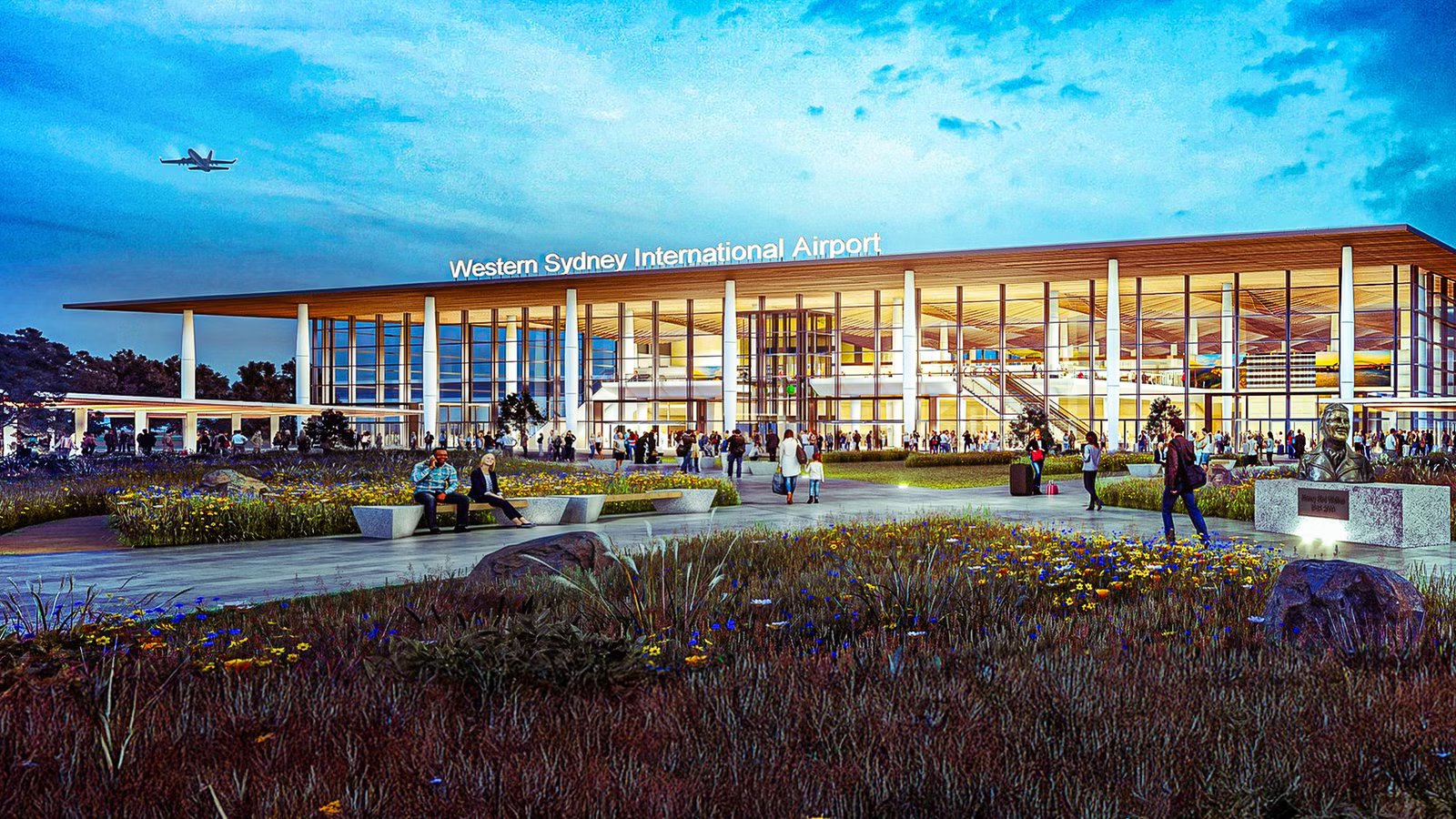
Western Sydney International Airport (WSI) is months away from welcoming its first passenger flight, but the airport’s new scheduling policies are already changing how airlines view Sydney. That is what makes the facility’s story much more than another tale of well-managed municipal infrastructure. WSI is not just adding extra runway space to Australia’s largest city. Rather, it is introducing something that Sydney has never really had at scale in the jet era. The city will now have a major 24-hour airport with no curfew and no movement cap. In a market where  Sydney Kingsford Smith Airport (SYD) has always been limited by operating restrictions that have long shaped wave patterns, aircraft utilization, and late-night scheduling, that difference is commercially meaningful before the first full season of service even begins.
The clearest proof here is that  Singapore Airlines, a major international carrier, is already positioning WSI to be host to its fifth daily Sydney service, using the airport’s curfew-free model to schedule a late-night departure that creates new connection options into Singapore the next morning. That is ultimately the central story of this airport. The airport is not just opening in late 2026; it is also offering operational freedom that is fundamentally reshaping airline networks, fleet deployment, and competitive strategy. With launch commitments from Qantas, Jetstar, Singapore Airlines, Air New Zealand, and others, an initial capacity of 10 million annual passengers, room to grow beyond 80 million, and a cargo precinct expected to massively improve Sydney’s freight capacity by a third, WSI is arriving as both a scheduling release valve and a long-term structural challenge to the old Sydney model.
What Exactly Is WSI?

Few airports have as unique a profile as WSI. The site, which is officially known as Western Sydney International (Nancy-Bird Walton) Airport, is Sydney’s long-awaited second major airport and one of the most consequential aviation projects in Australia in decades. A facility located at Badgerys Creek in the city’s west, the airport is designed to relieve pressure on Sydney Kingsford Smith while creating an entirely new aviation gateway for a fast-growing part of the metropolitan region.
When launched, WSI will open a single runway and an integrated domestic-international terminal, built to handle about 10 million passengers per year. In just as important a fashion, it has been planned from the start as a scalable airport, with future development intended to increase capacity to more than eight million annual passengers. What makes WSI different is not only its newness, but also its schedule and unique operating timetable.
Unlike Kingsford Smith, WSI will be operational 24 hours a day, seven days a week, without the curfew and movement caps that have long constrained scheduling flights to and from the largest city in Australia. Cargo flights are set to begin in July 2026, with passenger operations beginning in October 2026, positioning WSI as both a new passenger airport and a principal logistics platform for the entire region.
Qantas & Jetstar Will Be WSI’s Core Domestic Players

Like any major airport, Western Sydney International will have a core set of domestic carriers, all from the Qantas Group. Both national flag carrier Qantas and Jetstar are set to establish the airport’s largest initial presence. This is not just a symbolic plan. The Group has said it intends to base up to 15 narrowbody aircraft at WSI within the first year of operations, including 10 Jetstar aircraft and five Qantas aircraft.
That is expected to eventually support more than 25,000 annual flights and carry roughly four million passengers through the airport in the first year of operational service alone. Early route indications have centered on large-volume trunk and leisure markets such as Melbourne, Brisbane, and the Gold Coast, which makes strategic sense for an airport that wants to prove immediate relevance in a crowded Sydney market. In just as important a manner, the split between Qantas and Jetstar gives WSI a dual identity from day one.
Qantas brings the full-service domestic business traveler to the table, while Jetstar gives the airport a low-cost growth engine capable of stimulating fresh demand from Western Sydney’s huge catchment. In practical terms, that means WSI is not operating as a niche overflow field. Rather, the facility is opening with a ready-made domestic schedule structure, one anchored by Australia’s largest airline group and designed to generate meaningful traffic immediately rather than waiting years for scale to emerge.

When Do The Highest Number Of Boeing 787 Flights Arrive & Depart At Sydney Airport?
Simple Flying identified that more than 600 Boeing 787 aircraft are destined for Australia’s busiest airport this month.
Singapore Airlines & Air New Zealand Will Be Flagship International Carriers

On the international side of the market, Western Sydney International’s first wave of international services is still smaller but fundamentally noteworthy. Singapore Airlines stands out because it is not just committed to the airport. Rather, it has already turned WSI into a key scheduling advantage for its diverse global network. The airline will launch daily nonstop service between Singapore and WSI on November 23, 2026, using A350-900 jets.
Return flights depart Western Sydney just before midnight. That timing is exactly the kind of operation Sydney Kingsford Smith cannot easily accommodate under its curfew, which is why this route has become the clearest early example of WSI reshaping airline network planning before services even start. Air New Zealand’s services also add a different but equally important layer to this discussion.
These Western Sydney to Auckland International (AKL) services are scheduled to begin on October 26, 2026, operating three times a week and providing WSI with an early trans-Tasman link, broadening its overall appeal beyond just domestic traffic. Together, those two carriers are doing more than just adding destinations to the airport’s map. Rather, they signal that WSI’s first international role will be built around practical high-utility services. One such service will connect Western Sydney to a primary Asian hub with onward global links, while the other will tie the airport directly into the heavily traveled New Zealand market.
What Other Airlines Are Likely To Expand At WSI?

Looking ahead, the most plausible additions at Western Sydney International are airlines that stand to benefit most from schedule freedom rather than prestige alone. Virgin Australia feels like the obvious domestic candidate here. Qantas and Jetstar are already building out bases at WSI, and even some recent Australian aviation coverage has noted that it is hard to imagine Virgin Australia wanting to leave its rivals with an uncontested position at the new Sydney airport.
On the international side, Gulf carriers such as Emirates and Qatar Airways stand out because WSI’s 24/7 curfew-free model is unusually well-suited to their operational networks, where very late-night departures from Sydney and early-morning arrivals into hub airports can materially improve onward connectivity to Europe and the UK. That logic is already evident in Singapore Airlines’ decision to use WSI for a fifth daily Sydney flight timed to avoid curfew.
Beyond that, the strongest medium-term candidates are likely to be value-focused Asian carriers such as Vietnam Airlines, Vietjet, and Cebu Pacific, all of which have been cited in industry reporting as logical WSI prospects. The common thread is extremely simple. WSI is most attractive to airlines that want lower-friction growth, late-night flexibility, and access to Western Sydney’s large catchment without the operating constraints of Kingsford Smith, according to One Mile At A Time.

One Stop To The US: Air New Zealand Set To Become Western Sydney’s 1st International Airline
The long-awaited Western Sydney International Airport is set to lure in airlines with its lack of curfew.
How Much Did This New Airport Cost?

Like any major municipal development project, this facility was not cheap. Western Sydney International costs around $3.8 billion to build, and that is just the cost of the airfield itself. That is the clearest standalone figure provided by the facility for the proper airfield, covering the core airport project but not the broader transportation network that will be built around it.
However, the total investment tied to making the airport work is far larger once one considers the surrounding rail and road links that will have to be constructed. The Sydney Metro-Western Sydney Airport line is expected to cost about $7.9 billion, while the M12 motorway adds roughly $1.4 billion to the mix.
Collectively, the wider airport-linked infrastructure story runs to more than $12.2 billion, which is the more accurate figure when discussing the full scale of investment associated with opening Sydney’s new aviation gateway. Thus, the clearest way to frame this discussion is that WSI itself costs around $3.8 billion, but the broader airport ecosystem will cost well over $12.2 billion once all is said and done.
What Is Our Bottom Line?

At the end of the day, Western Sydney International matters because it is not just giving Sydney another airport. Rather, it is giving the market a fundamentally different kind of facility. For decades, airlines serving Sydney have had to build schedules around curfews, movement restrictions, and the operational limits of Kingsford Smith.
WSI changes that equation before its first full season ever begins. A 24/7 operating model with no curfew gives airlines greater flexibility to schedule departures, improve aircraft utilization, add late-night services, and create connection windows that were previously much harder to achieve. That is why the airport is already influencing network planning, most clearly through Singapore Airlines’ decision to add a fifth Sydney flight tied to WSI’s unconstrained schedule.
Backed by Qantas, Jetstar, Singapore Airlines, and Air New Zealand, and supported by billions in infrastructure investment, WSI offers more than just a relief valve for Sydney airport congestion. It is a structural shift in how airlines can serve Australia’s largest city and a long-term competitive challenge to the old operating model.