dailynewsnblog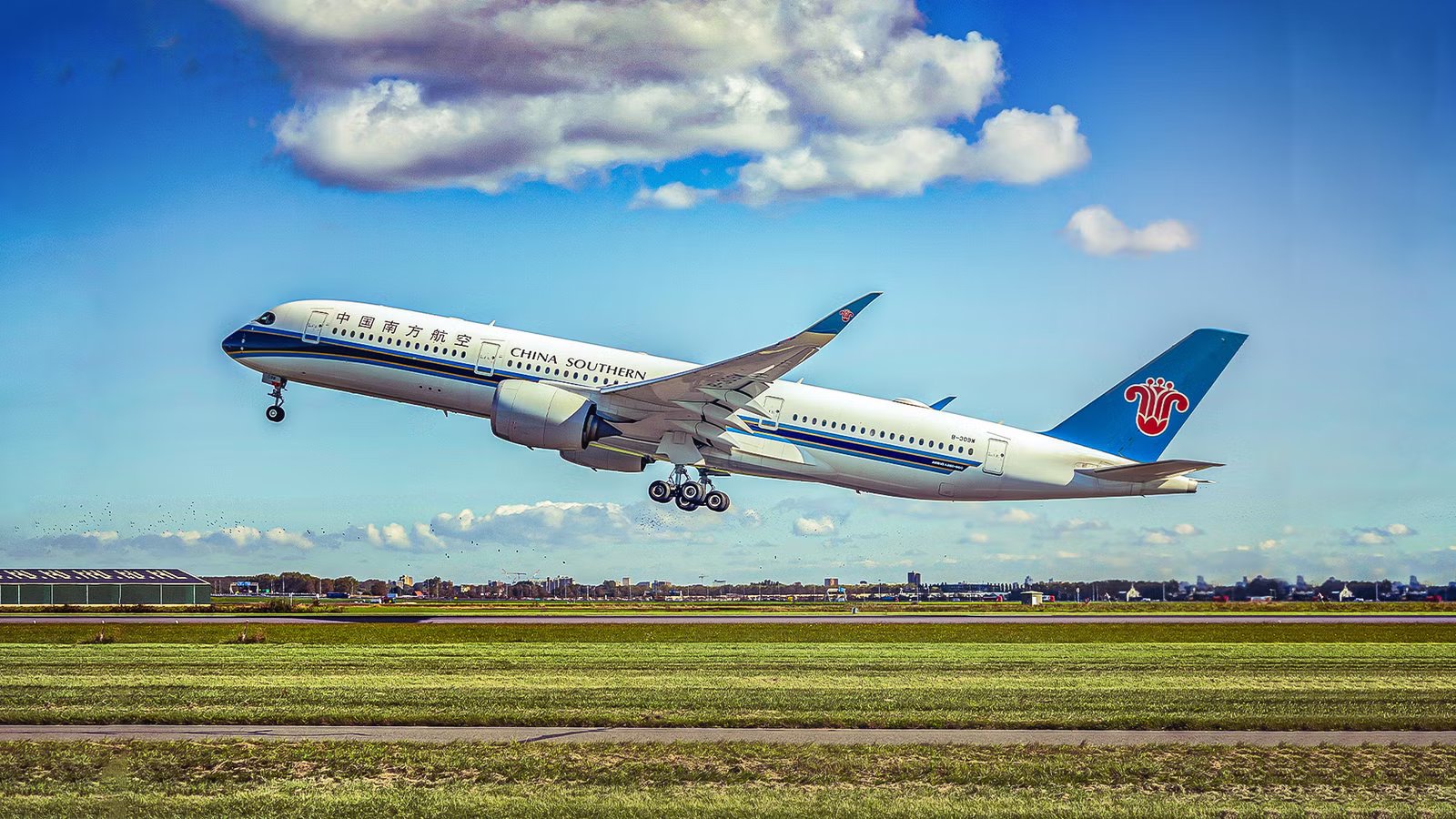
In one of the most definitive moments of the modern era of commercial flying, the Boeing 787 Dreamliner debuted in 2011 and completely surprised Airbus with its host of cutting-edge new technologies. The European plane maker was not prepared to compete with a clean sheet Next Generation widebody. In the decade and a half that followed, Boeing’s head start allowed the 787 to become the best-selling widebody in history. However, the Airbus A350 has enjoyed great praise and an impressive career since its launch in 2015.
Each of these next-generation twin-aisle jetliners boasts a very impressive fuel comparison compared to their legacy predecessors. The most notable difference is that the A350 delivers these impressive fuel consumption savings in a much larger airframe by comparison. It is true that the 787 has sold more jets, largely owing to the smaller variants of the three-model family tree. On the other hand, the A350 has proven to be a very powerful competitor to both the 787-10 and the unreleased Boeing 777X.
Innovation In Every Millimeter: The A350 Advantage

The most important engineering element that has made the A350 so incredibly fuel-efficient for its colossal size is the extensive use of carbon fiber reinforced plastic throughout the fuselage, wings, and other structures in the airframe. Airbus was able to cut the weight by somewhere between 15% and 30%, or as much as 20 tons, compared to a traditional aluminum construction method. Compounding that is its highly fuel-efficient, tailor-made Rolls-Royce turbofan engines.
Unlike older jetliners that use aluminum barrels to construct the primary cabin fuselage, the A350 has a four-panel design of carbon fiber pieces. Because it is built in four distinct panels, engineers can vary the thickness. The top and bottom panels are made thicker to handle heavy flight loads, while the side panels are kept thinner to save weight. These panels are baked in a massive autoclave, which solidifies the resin and carbon into a structure that is lighter than aluminum but stronger than steel.
A lighter plane reaches rotation speed faster. This reduces the duration of the High Thrust phase of takeoff, which is the most fuel-intensive part of any flight. Because the aircraft is lighter, it can climb more steeply to its optimal high-altitude thin air faster, where engines operate at peak efficiency sooner. The lightweight A350 even flies flatter, significantly reducing the fuel needed to maintain speed because a heavier plane must fly at a higher angle of attack to hold a level profile, which creates drag.
Hearts On Fire: Rolls-Royce’s Trent XWB Turbofans

Rolls-Royce makes two specially engineered variants of its high-bypass Trent XWB powerplants for the A350-900 and A350-1000. While both engines share the same 118-inch fan diameter and basic three-shaft design, they differ internally to optimize efficiency for their specific airframes. Some of the key differences include the 5% larger core in the XWB-97 on the -1000’s engine, which also runs at a 6% faster fan speed.
Last year, Rolls-Royce even improved the performance of the XWB-84, of the smaller and more popular -900, with a 1% reduction in fuel consumption through design optimization upgrades. The maker redesigned the compressor and turbine sections to allow the engine to run cooler and achieve more fuel efficiency in the cruise flight profile. Meanwhile, Rolls-Royce is currently in the midst of a multi-year program to enhance the XWB-97, but with a focus on durability instead.
The Scandalous Clean Sheet Affair: Boeing Versus Airbus

Digging into the annals of aviation history, the origin story of both the A350 and its leading competitor, the Boeing 787, is mired in controversy over the practices that led to the development of each. The European Union filed a lawsuit against the United States in 2005 as part of a larger, decades-long dispute at the World Trade Organization (WTO) in which both parties claimed to have given illegal subsidies to Airbus and Boeing, their respective aircraft manufacturers.
A WTO panel found in 2011 that Boeing had obtained at least $5.3 billion in illicit subsidies, including support for specialized NASA and DoD research. The WTO also found that Airbus received even larger amounts of illegal, low-interest, repayable loans dubbed launch aid for its A380 and A350 programs, resulting in hundreds of lost sales for Boeing.
The disagreement culminated in billions of dollars in retaliatory tariffs imposed by the United States and the European Union on a variety of items, including airplanes, wine, cheese, and whiskey. After a decade of litigation and appeals, the WTO’s findings were complicated and found fault with both parties. In 2021, the two sides ultimately agreed to a truce, suspending tariffs for five years to seek a long-term resolution.

Here’s How Much More The Airbus A350-1000 Costs Compared To The A350-900
The price difference between the two variants.
By The Numbers: Next Gen Widebodies Head-To-Head

The larger, longer-range equivalent of the top Boeing Dreamliner, the 787-10, is the Airbus A350-1000. The A350-1000 is a larger aircraft intended for high-demand, ultra-long-haul routes, but both are contemporary, fuel-efficient wide-body aircraft with sophisticated composite airframes. Size is important when it comes to widebody jets, and the European airline consistently outperforms its American counterpart.
The A350-1000 has a much higher Maximum Takeoff Weight of 351 tons compared to the 787-10’s 280 tons. This extra muscle allows it to carry more fuel and heavier cargo over much greater distances.
The A350-1000 typically has a better cost per seat mile on very long routes because it spreads its fuel burn over more passengers and flies further without needing a fuel stop. The 787-10 often has a lower cost per aircraft mile because it is lighter and requires less total fuel to fly the plane from point A to point B.
|
Metric |
A350-1000 Versus 787-10 |
|---|---|
|
Length |
The A350-1000 is about 5.5 meters (18 feet) longer than the 787-10. |
|
Wingspan |
The A350-1000 has a wingspan that is 4.7 meters (15 feet) wider. |
|
Capacity |
The A350-1000 can carry significantly more passengers, especially in high-density layouts:480 vs 440 maximum seats. |
|
Weight |
The A350-1000 has a much higher maximum takeoff weight, reflecting its larger overall size and greater capabilities. |
|
Width |
The A350 cabin is slightly wider, by about 12 cm (5 inches), which can translate to slightly wider seats for passengers, although actual seat width depends on airline configuration. |
However, the 787’s lower upfront cost compared to the A350 is more critical for many customers. The most common model, the 787-9, can carry approximately 290 passengers in a normal configuration, making it better suited to the heart of many carriers’ networks than the larger A350-900. Airlines have frequently chosen the 787 because it is a highly adaptable and efficient platform, or as the common saying goes: ‘the right plane at the right time.’

Is A Boeing 787-9 Bigger Than An Airbus A330-900neo?
Two top widebodies go toe-to-toe.
A350-2000: The Next Big Airbus Yet To Be

Since the A350 debuted, rumors that an even more extended version of the A350-1000 is being considered began circulating shortly after it went into active service. The A350-1000 has proven features that could be combined with a few minor changes, like stronger landing gear and more powerful powerplants, to support an even larger variant.
To meet safety regulations, adding fuselage plugs towards the center of the aircraft would most likely necessitate the installation of additional emergency exit doors. The A350-2000 could compete directly with the Boeing 777X on high-demand routes, providing a more efficient, high-capacity long-haul aircraft with a potentially larger cabin. The proposed variant would never be realized because Airbus could not establish a sufficient business case to begin production.
Airlines that prioritize sheer capacity are the target market for Boeing’s 777-9, the flagship model of the 777X family. If introduced, the A350-2000 would offer airlines a long-legged, composite substitute with the advantages of the current A350 platform nearly as large as the 777-9.
Range is where the A350-1000, and potentially the -2000, make the biggest difference. It is better suited for extremely long missions because it can fly more than 1,600 nautical miles farther than the 777-9 at a distance of about 8,900 nautical miles.

737 MAX 10 Solution: Boeing’s Bold Move To Get Its Largest Narrowbody Certified
The American planemaker is on course to the finish line.
Whispers Of A Flying Giant: Airbus’ Market Dilemma

Since the 2025 Paris Air Show in June, numerous online sources and aviation news outlets, such as Aviation A2Z have reported that Airbus hinted at the potential for the A350-2000 to finally move beyond theory. The absence of the A380 has left a vacancy at the top end of capacity in the Airbus lineup. Its most loyal customer, Emirates, has even proposed launching a refreshed A380neo model, but with no other prospective customers, it has not happened.
With a roughly 40-seat jump up from the A350-1000, that would put an all-economy (one class) -2000 around 520 seats, and pushing into A380 seat numbers. The 777-8 and 777-9 seat 395 and 426 respectively, meaning that a -2000 would be directly competitive with the stretched 777X.
Ultimately, it is hard to say if it will happen in the near future, but the business case certainly seems to have developed into a much more favorable market environment. Airbus is playing its cards close, but with the 777X delayed and the 747 and A380 out of the game, an opening appears to be growing.