dailynewsnblog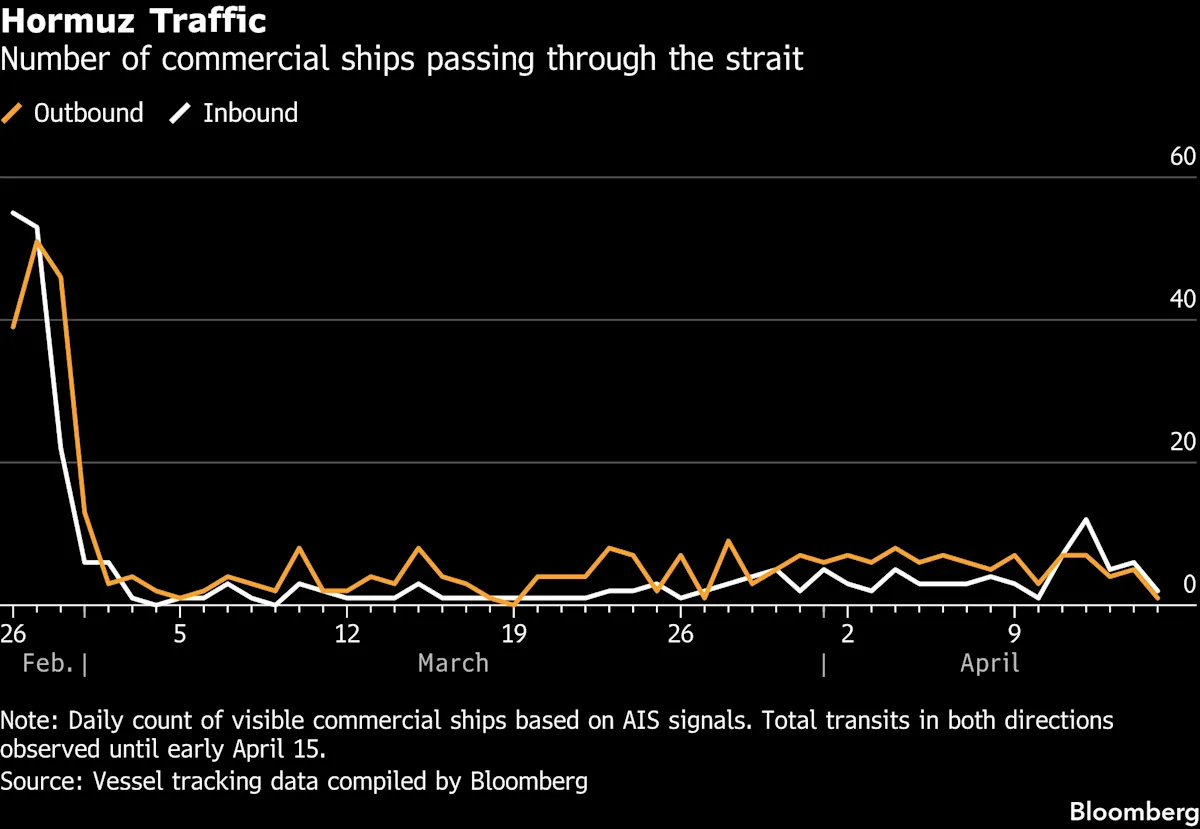
(Bloomberg) — Oil steadied on signs the US and Iran may extend a ceasefire and restart talks to end the war that’s rocked energy markets.
Brent was stable below $95 a barrel after ending Wednesday barely changed, while West Texas Intermediate was near $91. Washington and Tehran are considering a two-week ceasefire extension to allow more time to negotiate a peace deal, according to a person familiar with the matter.
In the Strait of Hormuz — which connects the Persian Gulf to global markets — movements remain all-but paralyzed as the conflict approaches the end of its seventh week. The US has set up a blockade to cut off Iranian traffic, while Tehran is keeping the critical waterway closed to most other ships.
Iran sees a prolonged US blockade as a prelude to a breach of the ceasefire, according to Ali Abdollahi, commander of Iran’s joint military headquarters. The armed forces “will not permit any exports or imports” in the Persian Gulf, the Sea of Oman or Red Sea if the blockade continued, he warned.
The crude market has been upended by the conflict, which triggered an unprecedented supply shock that’s lifted inflationary pressure while hurting economic growth. Finance chiefs gathered in Washington this week are uneasy about the lack of clarity over what comes next, and the war “has made the whole world poorer,” New Zealand Finance Minister Nicola Willis said.
Still, while crude contracts remain about a third higher than before the war, they are well below peaks seen in the opening weeks of the conflict, as well as other markers such as Dated Brent, a key gauge of real-world barrels. At present, the forward curve is failing to show the true magnitude of the crisis, said Kaes Van’t Hof, chief executive officer of Diamondback Energy Inc.
“The oil futures market doesn’t fully reflect the reality of the physical market, instead it is increasingly pricing in de-escalation,” said Warren Patterson, head of commodities strategy at ING Groep NV. “However, with any ceasefire likely to be fragile, and with US and Iran demands far apart, there are clear upside risks for the market as we head into further potential talks.”
Oil market disruptions look set to deepen with the US blockade in place, according to Commonwealth Bank of Australia. That’s because the naval action puts at risk the roughly 3.8 million barrels of crude and products carried through the waterway last month, analyst Vivek Dhar said in a note.
Across the Asia-Pacific, the fallout has been acute given the reliance on the Persian Gulf for flows. Thailand is racing to secure shipments of oil and fertilizer, with Foreign Minister Sihasak Phuangketkeow in Oman to negotiate emergency supplies and press for safe passage of vessels.