dailynewsnblog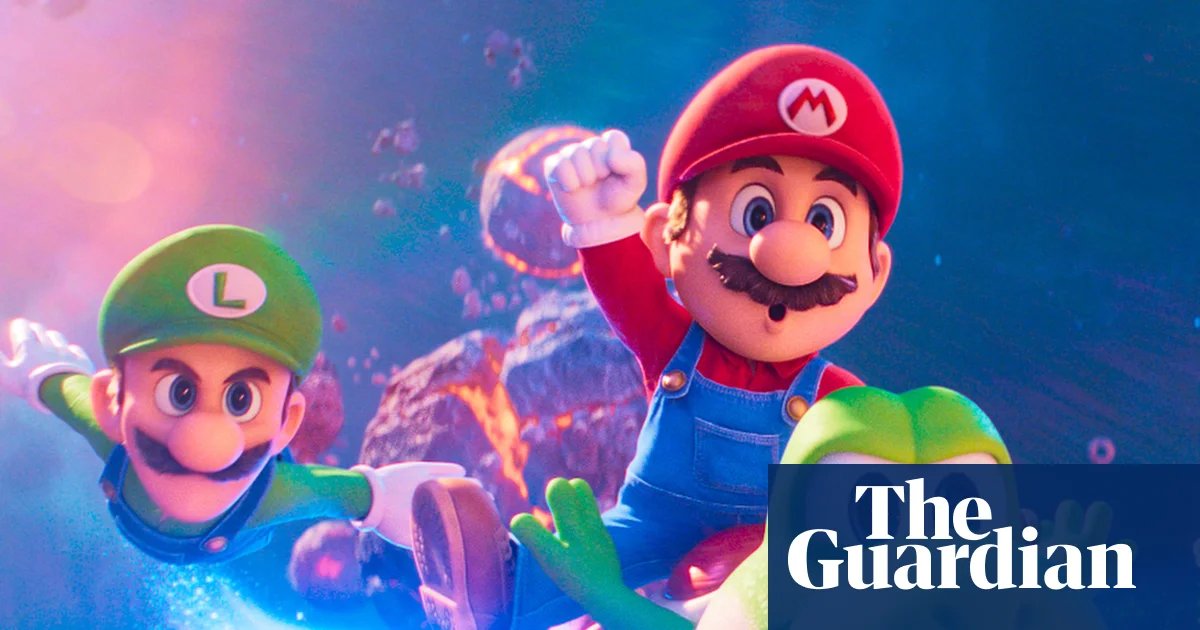
I was bracing myself for the worst when I headed into the cinema with my children to watch the new Super Mario Galaxy movie over the Easter break. The reviews have been memorably dire. The Guardian’s Peter Bradshaw called it worse than AI; Empire deemed it a “humourless, hysterical trudge”. It’s been vilified even more than the first Mario movie, which film critics also hated.
I am a lifelong Nintendo fan, though – I literally wrote the book on the company – so even if it was terrible, there was a possibility that the Mario-loving child within me might temporarily take over my critical faculties and get me through it. That’s what happened with the first Mario movie, which I found to be perfectly OK. I was not actively offended by it, as the film critics seemed to be; audiences seemed to land mostly in my camp, if the huge discrepancy between its audience ratings and review ratings were any indication. Could the sequel really be that much worse?
Here’s the thing: it’s not great. Instead of developing anything that happened in the first Mario movie, which was extremely light on plot already, it pretty much launches straight into an unrelated caper in which Mario, Luigi and Peach – now accompanied by Yoshi, voiced by Donald Glover, not that you’d be able to tell from the 30 variations of “YOSHI!” that comprise his dialogue – zoom through the galaxy in search of star princess Rosalina. It is powerfully bright and colourful: almost every scene is an action sequence in which someone kicks a bunch of Koopa-kingdom ass. There aren’t really any jokes, and the main comic asset of the first movie – Jack Black’s take on Bowser – has been disappointingly defanged.
My children truly loved it. Any Nintendo-appreciating child would; this is not an audience that needs to be sold on the innate appeal of Mario and friends. But I was less willing to forgive this film’s extreme shallowness the second time around. The first movie at least had a fresh Mario origin story to offer. This has nothing I hadn’t seen before. Indeed, it seemed desperate to show me things I had seen before, in the hope that I would seal-clap at the brief appearance of the Pikmin or Birdo and forget about how bland the film felt.
If you had no affection for the Mario universe and no knowledge of its characters, I can see that this film would be completely intolerable, a barrage of inconsequential events that would be impossible to care about. But this film does not exist to set up Nintendo characters or to plumb their depths: frankly, Nintendo characters have no depths to plumb (with the possible exception of Link and Zelda – fingers crossed for that movie). It assumes that you are walking into the theatre already knowing who all these weird guys are. Given that Mario has sold almost a billion games over the past 40 years, that is a reasonable assumption.
Indeed, the only evident humanity in this film lies in its sincere affection for the Mario universe. There’s precious little humanity in the dialogue or performances – Seth Rogen’s phoned-in Donkey Kong has been replaced here with even more bored-sounding cameos. But the people who made this, including a great many from Nintendo itself, care enough about the Mario games to ensure that the details are right: that everything looks and sounds as it should, from those spinning star-launchers from the Galaxy games to the cute 2D sequences that are straight out of Super Mario Bros 3 (or a particularly evil Mario Maker creation). There is love here, if you look for it. I have seen this film compared to the hypnotising childslop that is Cocomelon, but Cocomelon venerates nothing. For all its faults, this movie cannot be accused of being lazy with its source material.
What really offends me is when companies take the love that we feel for video games, or really any art that we connect with, and then uses it to manipulate us. I felt somewhat exploited by the endless barrage of Pokémon 30th anniversary stuff, for instance, which felt like an attempt to weaponise millennial nostalgia in order to sell £570 Lego sets.
Nintendo walks a fine line with this. It is not afraid to mine its back catalogue, resell us things we’ve bought before and monetise the everliving heck out of its successful characters. But it is also careful not to overdo it. The company masterfully merges play with capitalism, and the delight that its straightforwardly wonderful and innovative games inspire does a lot to offset any sense that, as a player, you are being exploited.
This movie, however, veered dangerously close to an advert. It did make me feel exploited. One character cameo embodies this: Fox McCloud, from the long-dormant series Star Fox, who shows up for a few scenes. There is no reason for Fox McCloud to be in this film except to advertise something. I can only assume that Nintendo has a Star Fox announcement coming, and wanted to introduce younger audiences to an almost-forgotten character.
And that’s the other thing: I am a grown adult. Little kids are a lot easier to exploit, and I don’t think that this Mario movie respects little kids’ curiosity and intelligence like the Mario games do. It is passive and anaesthetising where the games are active and engaging. Children deserve good stories and good films as much as adults do – indeed more than adults do – and these Mario movies are falling short. It feels more Paw Patrol than Pixar.
Sometimes, a vociferous reaction to a video game adaptation from movie critics carries the whiff of cultural snobbery. But even if Nintendo experts and film reviewers might differ on exactly why the Mario Galaxy movie is bad, this time we can align. I would love a future Nintendo movie to feel as enriching as a Nintendo game for young minds.