dailynewsnblog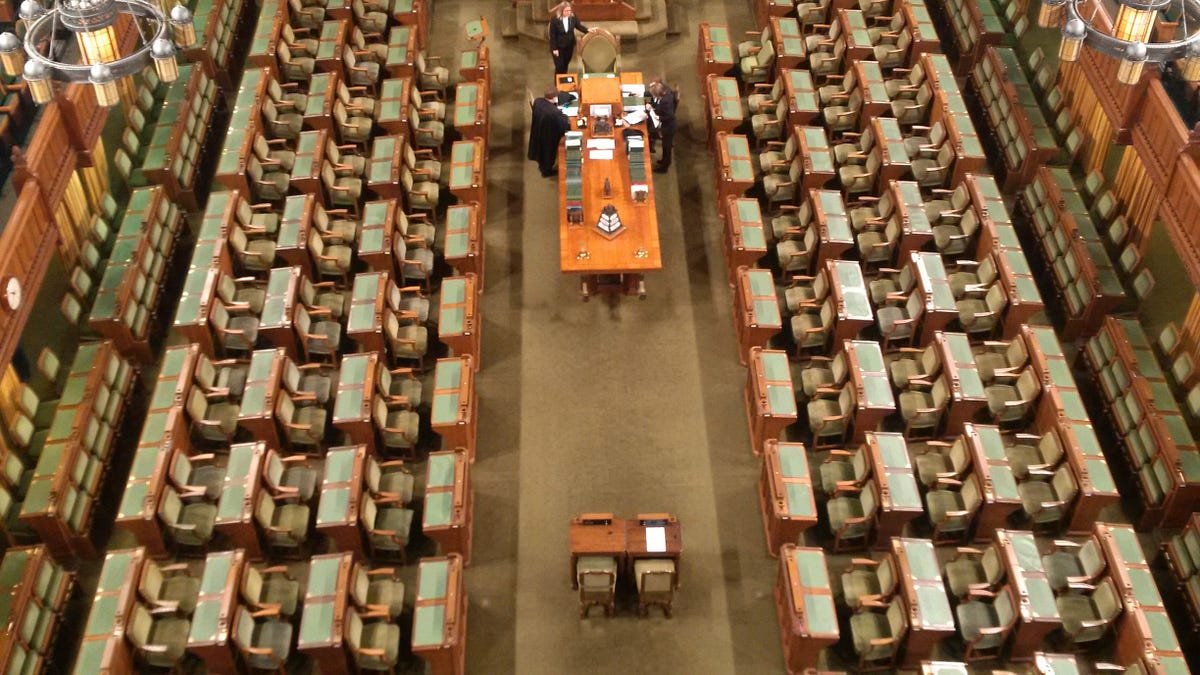
Having a Citizens Assembly on electoral reform solves the wrong problem. Creating one with a mandate specifically to bring in proportional representation devalues the unfocused solution further. We already have a permanent national citizens assembly in Canada. In fact, we have two of them.
The first is elected: the House of Commons. It exists to bring representatives of every local community together to solve our common problems and guide the country, with renewable mandates requiring constant local engagement. It is their job, first and foremost, to operate as a permanent citizens assembly specifically there to guide our country, plan the use and distribution of our common resources, and look for solutions to the problems identified by the people.
The second is not elected. We call it the Senate. It is an assembly of citizens that exists as a house of “sober second thought.” The sobriety referenced is not from a lack of alcohol. It is from the sober position of having no outside considerations. Senators are appointed for life so that they owe no political favour, free from obligate party direction, away from the influences of donors who may have an interest in the decisions they make, unaffected by the need to plan a source of income after leaving office that may otherwise prevent votes or actions that might impact potential employers.
Forcing a citizens assembly to exist, and worse, giving them a mandate to find a way to implement a form of proportional representation is an insult, not a complement, to our democratic processes. Proportional representation trades representation for proportionality. Having members elected purely on the basis of a political party devalues their individual ability to represent their electors. It trades local representation for an abstract idea of fairness.
Under the most commonly advocated mixed-member proportional system, more than half of our MPs continue to be selected by the single member plurality system we already use, which PR advocates claim is broken. The other half are topped up by the party based on the party’s collective support. Not only does this not solve the problems alleged with “first past the post,” it adds the problem of creating Members of Parliament whose existence is entirely at the whim of the party, who do not have any independence of thought or representation. They don’t even need to return constituents’ phone calls because their only actual constituents are at the office of the political party they represent.
Another common solution offered, multi-member ridings, will be devastating to rural Canada. While we cite small European countries with PR as success stories, Canada is a vast expanse of land. Many of our ridings are larger than many European countries. When I served, my riding of Laurentides—Labelle was 19,693 square kilometres. It was the 46th largest riding in the country. Had it been in Europe, it would be the 39th largest country, meaning there are more ridings within Canada than whole European countries larger than mine had been. Under a multi-winner system, adjacent ridings would be combined while keeping multiple local representatives for each.
In a large riding with multiple representatives, those representatives are going to focus on and compete within voter-rich areas. Small communities that already have trouble getting attention from their representatives to solve their issues will have their problems compounded by such a system. Having representatives from multiple parties concurrently existing within each riding will mean that their days will be spent fighting each other locally rather than being part of the national conversation. In the real world, such a scenario is not a healthy set-up, nor is it conducive to genuine local representation. It creates more problems than it solves.
In its purest form, proportional representation exists by simply having parties offer ordered lists of who will be elected based on the percentage of the vote. The MPs selected under such a system serve no purpose whatsoever, other than to be legislative assistants to the leader. If a member strays from the leader’s wishes, being kicked out of their caucus means they lose their seat. If the party diverges from its electoral platform, there is no means of accountability from the caucus, as the caucus has no teeth, no power, no genuine role. It would make more sense in such a system to crowd the leaders around a conference table and weight their votes like corporate shareholders. They are free to hire staff to perform the other roles currently performed by parliamentarians. At least it would avoid the pretence of representatives representing anything more than their party’s whims.
A citizens assembly created to select from among these “proportional” systems has neither a genuine mandate from the people to change the electoral system, nor the freedom to explore all the aspects affecting the function and fairness of democracy, nor again all of the electoral options that may or may not qualify under a “proportional” mandate.
If either of our citizens assemblies that already exist lack credibility, or are viewed as unqualified or incapable of addressing questions fundamental to our society like the form and function of our electoral system, then perhaps that is the problem that we need to be solving. If the citizens of the country believe that our MPs lack the independence or competence needed to do their jobs, then the solutions need to be around solving those problems rather than throwing the baby out with the bathwater.
There is a three-pronged approach we can take to solving the perceived ills of our representation in the House of Commons.
The first is to get money out of politics.
The second is to provide a preferential ballot so that votes are for rather than against, allowing electors to always vote both their conscience and their reality, and making electoral debate more fundamentally positive by forcing candidates to consider electors’ second choices.
The third is to make voting mandatory, so that campaigns are no longer about identifying and getting out the vote, which opens the door to voter suppression, but rather making campaigns about engagement, ideas, and debate. If the people are going to vote anyway, and they can do so in a ranked order, then the discussion and engagement must then necessarily be on the policies and ideas, rather on the very fact of voting in the first place.
Rather than constantly exploring the creation of a new assembly of random citizens, we should instead be focusing our efforts on ensuring that our two existing citizens assemblies which, together, we call Parliament, are the best they can be.