dailynewsnblog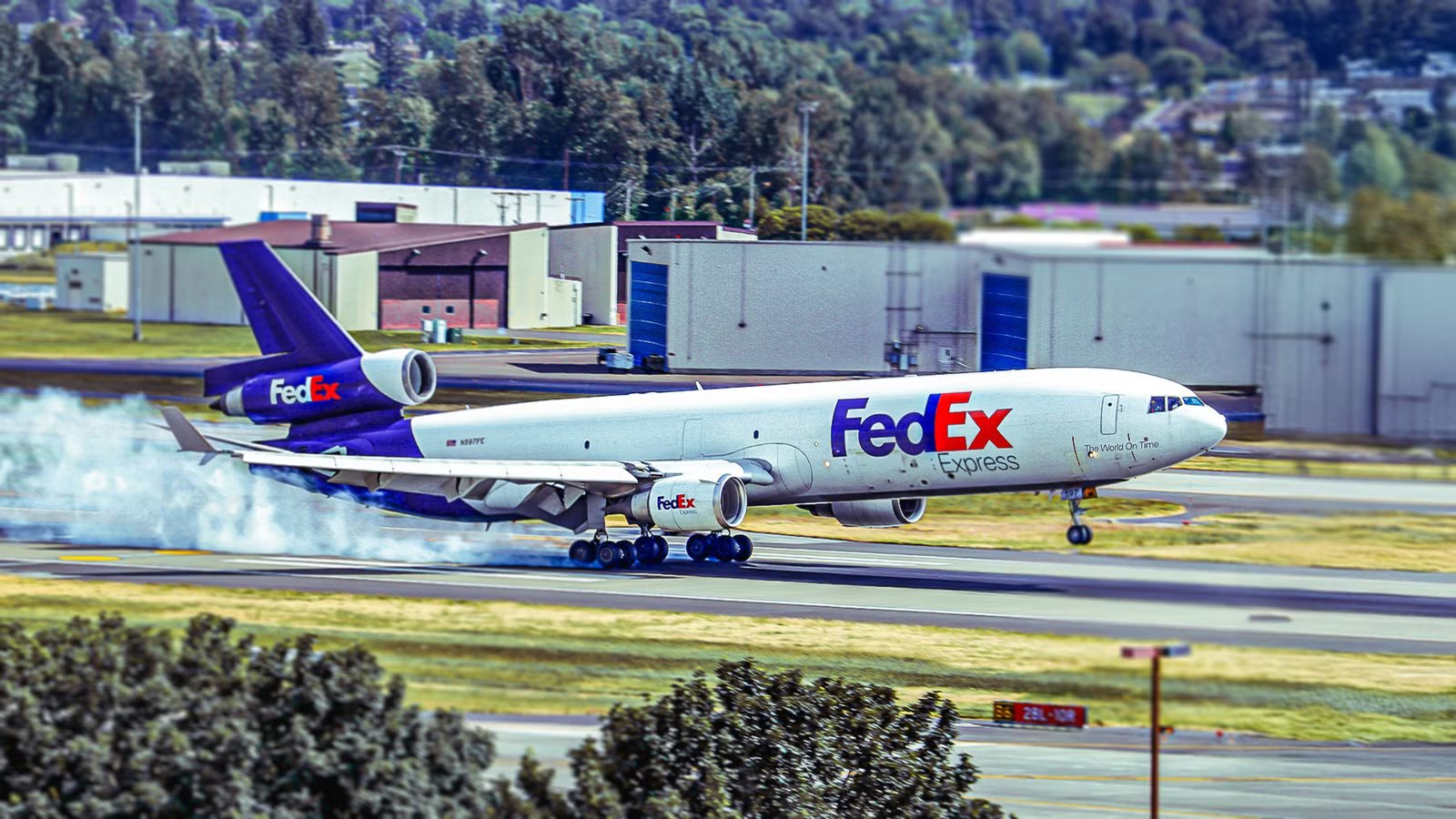
The McDonnell Douglas MD-11 currently occupies a strange and yet extremely fascinating place in aviation history. It was conceived as a modern long-haul widebody for the late 1980s and early 1990s, but its real legacy was written not in passenger terminals but in global cargo hubs. That is the principal reason why the question of how many MD-11 aircraft remain in service today is far more interesting than it sounds at first. This is a lot more than just a fleet-counting exercise. It is a way of tracing how a jet that once promised to be a flagship intercontinental airliner gradually became a specialist freighter, then an increasingly rare survivor of the three-engine era. Today, you will be hard-pressed to find a jet flying with paying passengers onboard outside some very odd edge cases.
Only around 200 MD-11 jets were built before production ended, and the type’s last scheduled passenger flight took place with KLM in 2014, ultimately leaving the plane’s remaining life tied almost entirely to freight operations. That freight niche still happens to matter, primarily because global air cargo demand is projected to continue expanding over the long term even as operators modernize toward newer, more efficient aircraft. When we ask how many McDonnell Douglas MD-11s remain in service, the important question is how long an older generation of widebody cargo jets can continue to serve in a market that increasingly values lift, range, and volume.
What Exactly Is The McDonnell Douglas MD-11?

The first thing that is important for us to analyze is what exactly the MD-11 is and identify its unique place within the industry. The next two sections will attempt to ground both of those. The McDonnell Douglas MD-11 is a long-range widebody trijet built by McDonnell Douglas and later by  Boeing after the two massive contractors merged in 1997. In basic terms, the company attempted to take the proven DC-10 concept and evolve it into the aircraft manufacturer’s lineup as a more capable aircraft for an entirely new era of long-haul flying.
The result was an airliner that retained the dramatic and immediately-identifiable three-engine layout and widebody proportions of its predecessor, but was positioned as a more advanced and more flexible jet for intercontinental operations of all kinds. In service, that flexibility became one of the defining features of the model itself. The aircraft, with three massive engines, was immediately identifiable as such, and it could avoid pretty much any regulations that related to twin-engine flying.
Some of these jets entered service as passenger jets, while others served in mixed passenger-and-cargo roles, and many either entered service as freighters or were later converted for freight work. That overall adaptability helps explain why the McDonnell Douglas MD-11 endured longer in cargo than it ever did in passenger service. In broader industry terms, the aircraft represents one of the final major commercial three-engine jets, a product of an era when airlines still saw value in three engines for long-range flying, just before twin-engine widebodies became the dominant economic and operational choice for most international routes.
What Purpose Does This Jet Serve In The Market?

The McDonnell Douglas MD-11 was built to fill an extremely specific market role. The manufacturer wanted an aircraft that could offer airlines more range, additional payload, and more advanced systems than earlier DC-10 variants, all while still avoiding the size and complexity of a Boeing 747. In other words, it was aimed at carriers that needed a true long-haul widebody aircraft, but not necessarily the largest one that might be on the market at that particular moment in time.
From the start, the program itself was designed with passenger, combi, and freighter applications in mind, all of which show that McDonnell Douglas saw the aircraft not as a one-dimensional airliner, but rather as a platform that could serve several kinds of operators. That was a smart instinct, as the freighter mission ultimately proved to be the place where the McDonnell Douglas MD-11 really defined itself.
As passenger airlines shifted toward more efficient twin-engine models, the jet found a second life in express freight and heavy cargo, places where cabin comfort mattered significantly less than internal volume, range, and acquisition costs. That transition also fits the wider cargo market, where Boeing forecasts continued long-term fleet growth and strong demand for dedicated freighters. In that sense, the MD-11’s market purpose evolved from premium long-haul passenger transportation into a practical cargo workhorse for integrators and freight specialists of all kinds.

Here’s Why The McDonnell Douglas MD-11’s Tail Engine Is Different Than Other Trijets
The aircraft offers some impressive capabilities.
A Look At The MD-11’s Development Process

The McDonnell Douglas MD-11 did not emerge as a clean-sheet design, but it rather grew out of years of study around how to modernize and extend the life of the DC-10 family. McDonnell Douglas formally launched the program on December 30, 1986, backed by 52 orders from 12 customers, a promising start that suggested there was still room in the market for a new long-haul three-engine model. There were, however, some additional signs that order flow could dry up, but that did not halt the jet’s early development.
The jet first took to the skies in 1990, and it achieved certification later that year before entering service with Finnair in December 1990. But the development story quickly became much more complicated. Soon after entering service, the aircraft was found to be short of some advertised performance targets, especially in areas like fuel burn and overall range performance. Here are some specifications for the type, according to technical documents from Boeing:
|
Category |
MD-11 Specification |
|---|---|
|
Cockpit Crew: |
2 |
|
Maximum Takeoff Weight (MTOW): |
602,500 lbs (273,300 kg) |
|
Range: |
6,725 nautical miles (12,455 km) |
That forced McDonnell Douglas and its partners into a continuing performance-improvement effort that involved drag reduction, weight changes, and other refinements intended to recover capability and improve overall operating economics. Those fixes helped, but they did not fully change the commercial trajectory of the program. As Boeing and Airbus advanced newer twin-engine and four-engine competitors, the MD-11 itself lost momentum. Production of the type ended in 2000, and the last example of the jet was delivered in 2001, closing the production line with just 200 aircraft built.
A Look At The Jet’s Orders And Operators

The McDonnell Douglas’ MD-11 order book reflected the manufacturer’s hope that the aircraft would succeed both as a long-haul passenger jet and as a dedicated production freighter. When the plane was launched in December 1986, the program already had 52 firm orders from 12 customers, an encouraging start for what was advertised as more of a successor to the DC-10. Over the life of the program, that translated into 200 aircraft built, including passenger, combi, extended-range, and freighter variants.
The customer list was notably extensive and included many international operators. Major passenger operators included American Airlines, Delta Air Lines, Swissair, KLM, Japan Airlines, Finnair, Garuda Indonesia, Korean Air, and Alitalia. This gave the type a presence across North America, Europe, Asia, and Latin America. The MD-11’s operator’s story changed significantly over time. While many airlines initially bought it for intercontinental passenger service, the plane’s long-term home proved to be the cargo market.
FedEx placed the largest individual dedicated freighter order, while Lufthansa Cargo also served as an important production customer. Later operators such as UPS, Martinair, EVA Air, and several cargo specialists kept the type active after passenger airlines moved on. In that specific sense, the MD-11’s orders and operators tell pretty much the same story. The aircraft began as a global passenger widebody, but ended up finding its most durable value in freight operations.

The Striking Differences Between The McDonnell Douglas DC-10 & MD-11
Discover how the DC-10 and MD-11 reshaped wide-body design, defined the trijet era, and why their legacy still lingers in today’s skies.
Who Currently Operates This Aircraft?

As of March 2026, the McDonnell Douglas MD-11’s operator base has narrowed to a relatively small cargo-only niche, and that area is under pressure. FedEx is the only remaining operator of the type in large numbers. The airline operated over 20 MD-11s before the November 2025 grounding and has said it is working with Boeing and the FAA to return the aircraft to service, with May 31, 2026, as its target date.
Western Global Airlines also still presents the MD-11 as part of its operational fleet, but deploys it at a much smaller scale and uses the jet in the ad hoc charter and cargo market almost exclusively. It is not an integrated freight network operator like a player as large and diversified as FedEx.
The biggest recent change is UPS’s exit from the type. In January 2026, UPS announced that it had retired its MD-11 fleet following a deadly crash in Louisville. This has sharply shrunk the aircraft’s overall global footprint. The result here is that the MD-11 is no longer a broadly used freighter and now mostly exists as a specialized and aging cargo platform whose relevance depends overwhelmingly on FedEx and a small secondary operator base.
What Is our Bottom Line?

At the end of the day, the MD-11 is an incredibly capable long-haul aircraft, one which, back in its day, sat at the front lines of both technology and overall innovation. Today, however, that is absolutely not the case, and pretty much any analysis of the jet discusses its crashes first.
There are fewer than a handful of these jets in the skies today, none of which are key pieces of any major passenger airline fleet. Only one real cargo integrator (with a decent-sized network) actually operates the type, and otherwise, it pretty much just appears on lists of out-of-operation or niche-use-case models.
That being said, the jet does leave behind it a fairly solid operational legacy, especially in the key markets where it served as a cargo and passenger workhorse for years. The aircraft is very much on its way out of the skies today, but that does not mean that operators will not have relied on it for decades.