dailynewsnblog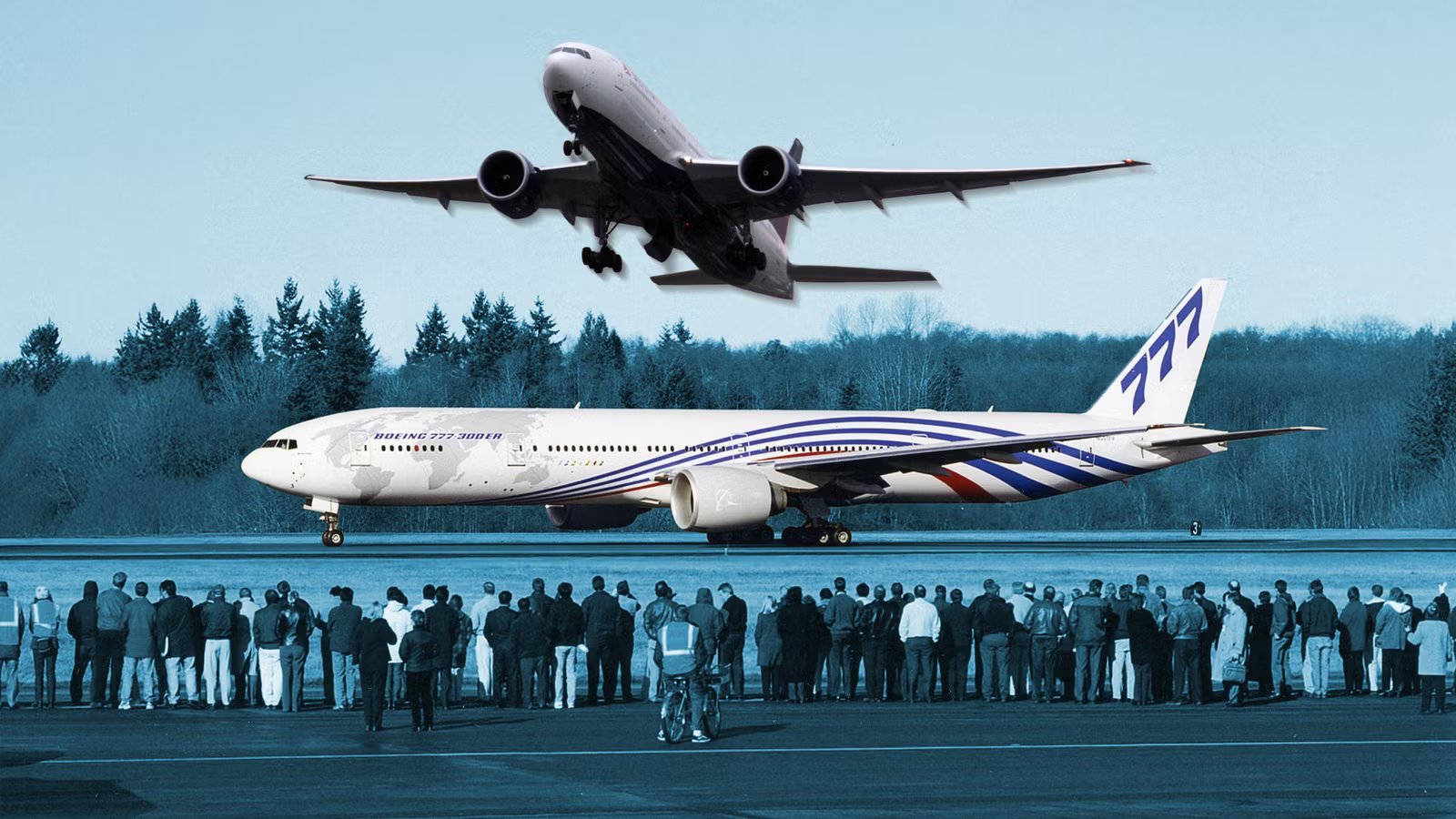
 Boeing’s longest-range aircraft in active service now exceed 8,500 nautical miles (15,843 km), enabling nonstop flights that can stretch beyond 17 hours. Based on manufacturer specifications, airline fleet data, and real-world performance, range remains one of the defining factors in modern aviation, shaping which cities can be connected directly and how efficiently airlines can operate long-haul routes. Aircraft such as the Boeing 777-200LR and Boeing 787-9 Dreamliner sit at the top end of this spectrum, combining endurance with improved fuel efficiency compared to older widebody designs.
At the same time, advances in engines, aerodynamics, and lightweight materials have pushed even smaller aircraft further than before. Narrowbodies like the Boeing 737 MAX 8 now cover distances that were once considered long-haul, giving airlines more flexibility to operate direct routes with lower costs. This ranking breaks down the top 10 longest-range Boeing aircraft currently in service, moving from shorter-range narrowbodies to ultra-long-haul widebodies, and highlighting how range, capacity, and real-world usage define each aircraft’s role.
10
Boeing 737-900ER
3,200 nautical miles (5,900 km)

The Boeing 737-900ER represents the upper limit of the Next Generation Boeing 737 family in both size and capability. Introduced as an improved version of the earlier 737-900, it features additional exit doors, higher maximum takeoff weight, and most importantly, optional auxiliary fuel tanks to extend its range. These upgrades allowed it to better compete with newer narrowbody aircraft entering the market.
In airline operations, the 737-900ER is typically used on medium-haul routes such as transcontinental flights across the United States or intra-European services. While it cannot match the endurance of widebody jets, its range still allows airlines to connect distant city pairs efficiently without the need for a larger aircraft. Its seating capacity, often around 189–215 passengers, makes it particularly useful on busy routes.
Although many airlines are transitioning to the newer MAX family, the 737-900ER remains relevant due to its reliability and fleet commonality. Pilots trained on other 737 variants can easily operate it, reducing training costs. This, combined with its solid performance record, ensures it continues to fly widely today.
9
Boeing 737 MAX 9
3,300 nautical miles (6,110 km)

The Boeing 737 MAX 9 builds on decades of 737 evolution by incorporating more efficient CFM LEAP-1B engines and advanced winglets. These improvements reduce fuel burn and increase range compared to earlier generations. The aircraft also features updated avionics and improved cabin options, enhancing both operational efficiency and passenger comfort.
Airlines typically deploy the MAX 9 similarly to the -900ER, on routes where demand slightly exceeds what other 737 variants, like the MAX 8, can handle. Its increased length allows for more passengers, usually around 178–193 in typical configurations, without significantly compromising range. This makes it a flexible aircraft for both domestic and short international routes.
While it is less popular than the MAX 8, the MAX 9 plays an important strategic role in airline fleets. It enables carriers to fine-tune capacity on key routes while benefiting from improved economics. Its range also allows it to operate longer sectors, including some transcontinental and near-transoceanic flights.

The Complete Guide To The Boeing 737 MAX Family
Boeing has already built more than 1,700 aircraft from its next-generation narrowbody series.
8
Boeing 737 MAX 8
3,550 nautical miles (6,574 km)

The Boeing 737 MAX 8 is the most widely adopted aircraft in the MAX family and a cornerstone of modern short to medium-haul aviation. It combines improved aerodynamics, lighter materials, and highly efficient engines, like the MAX 9, to deliver significantly better fuel efficiency than earlier 737 models.
With its extended range, the Boeing 737 MAX 8, offering approximately 3,550 nautical miles (6,570 km), over 435 nautical miles (805 km) more than the Boeing 737-800, is capable of operating routes that were once reserved for larger aircraft. This includes transcontinental flights and even select transatlantic services, such as routes between Western Europe and the East Coast of North America. This capability has helped airlines expand point-to-point networks.
Its popularity stems from its versatility and economics. Typically, seating between 162 and 189 passengers, it strikes a balance between capacity and operating cost. As a result, it has become one of the best-selling commercial aircraft in history and a key driver of airline profitability.
7
Boeing 787-10 Dreamliner
6,330 nautical miles (11,730 km)

The Boeing 787-10 Dreamliner is the largest member of the 787 family, designed to maximize passenger capacity while retaining the efficiency benefits of the Dreamliner platform. It features a longer fuselage than the 787-9, allowing it to carry up to around 330 passengers in typical configurations.
However, the increased size comes with a trade-off in range. Compared to its smaller siblings, the 787-10 has reduced endurance, making it better suited to high-density routes rather than ultra-long-haul missions. Airlines often deploy it on busy regional and medium-to-long-haul routes between major hubs.
Despite this limitation, the 787-10 remains highly efficient thanks to its composite construction and advanced systems. It offers lower fuel burn per seat than many older widebodies, making it attractive for airlines looking to reduce operating costs while maintaining high capacity.
6
Boeing 777-200ER
7,065 nautical miles (13,084 km)

The Boeing 777-200ER was a groundbreaking aircraft when it entered service over 29 years ago, and still offers airlines a highly efficient twin-engine alternative to older four-engine jets. Its extended range capabilities allowed carriers to operate long-haul routes with lower fuel consumption and maintenance costs.
The aircraft seats between 300 and 400 passengers, which helped the 777-200ER become a workhorse for international travel. It is capable of flying routes such as Europe to Asia or North America to the Middle East, making it one of the most versatile long-haul aircraft of its era.
Even as newer aircraft like the 787 have entered service, the 777-200ER continues to operate with several airlines worldwide. Its durability, cargo capacity, and strong performance have ensured its longevity in an increasingly competitive market.

Here’s How Much More Range The Boeing 777X Has Compared To The 777-300ER
While the 777-300ER has more range than the larger 777-9, the similarly sized 777-8 can fly 1,375 NM further, while carrying a few more passengers.
5
Boeing 787-8 Dreamliner
7,305 nautical miles (13,530 km)

The Boeing 787-8 Dreamliner introduced a new generation of long-haul travel, emphasizing fuel efficiency and passenger comfort. It was the first commercial aircraft to use a majority of composite structure, approximately 50% composite materials by weight, reducing weight and improving performance.
Its range allows airlines to open new routes that were previously not economically viable, particularly between smaller cities. This has contributed to the rise of direct long-haul flights that bypass traditional hub airports, reshaping global air travel networks.
With typical seating for around 200 and 275 passengers, the 787-8 strikes a balance between size and capability. It remains popular for “long thin” routes, where demand is not high enough to justify larger aircraft but still requires significant range.
4
Boeing 777-300ER
7,370 nautical miles (13,649 km)

The Boeing 777-300ER is one of the most successful long-haul aircraft ever produced, known for its combination of high capacity and long range. It can typically carry between 350 and 400 passengers, making it ideal for busy international routes.
Its range enables it to operate some of the world’s longest flights, including major transpacific and intercontinental routes. Airlines rely on it for high-demand services between global hubs, where both capacity and range are critical.
The aircraft’s efficiency and reliability have made it a cornerstone of many airline fleets. Even as newer models emerge, the 777-300ER continues to be widely used due to its proven track record and strong operational performance.
3
Boeing 787-9 Dreamliner
7,565 nmi (14,010 km)

The Boeing 787-9 Dreamliner is often considered the most versatile aircraft in Boeing’s long-haul lineup. It offers increased range and capacity compared to the 787-8, while maintaining excellent fuel efficiency.
Airlines frequently use the 787-9 for ultra-long-haul routes, including flights exceeding 15 hours. Its ability to connect distant cities directly has made it a key enabler of modern global travel, reducing the need for stopovers.
With seating typically ranging from 250 to 290 passengers, the 787-9 provides an ideal balance of size and performance. Its popularity continues to grow as airlines prioritize efficiency and flexibility in their long-haul operations.

Comparing The 2 Boeing 787 Dreamliner Engines
The Boeing 787 comes with both GE and Rolls-Royce engine options, although GE’s engines have become more popular in recent times.
2
Boeing 747-8 Intercontinental
8,000 nautical miles (14,816 km)

The Boeing 747-8Intercontinental represents the final and most advanced version of the iconic 747 family, which traces its roots all the way back to when the 747-100 entered commercial service in January 1970 with Pan Am. It features improved aerodynamics, more efficient engines, and increased range compared to earlier variants.
Although passenger operations are now limited, the aircraft remains a symbol of long-haul aviation. Its distinctive hump and large capacity, often over 400 passengers, make it ideal for high-density routes between major global hubs.
In addition to passenger service, the 747-8 continues to play a vital role in cargo operations. Its ability to carry large and heavy loads over long distances ensures its continued relevance in global logistics.
1
Boeing 777-200LR
8,555 nautical miles (15,843 km)

The Boeing 777-200LR is the longest-range commercial aircraft currently in Boeing’s lineup in active airline service. Designed specifically for ultra-long-haul missions, it can connect almost any two cities in the world without refueling.
It gained global attention through record-breaking flights, including one of the longest nonstop flights ever conducted by a commercial airliner. These demonstrations highlighted its exceptional endurance and capability.
With typical seating for around 300 passengers, the 777-200LR combines range with efficiency and cargo capacity. Even as newer aircraft are introduced, it remains the benchmark for long-distance performance within Boeing’s operational fleet.