dailynewsnblog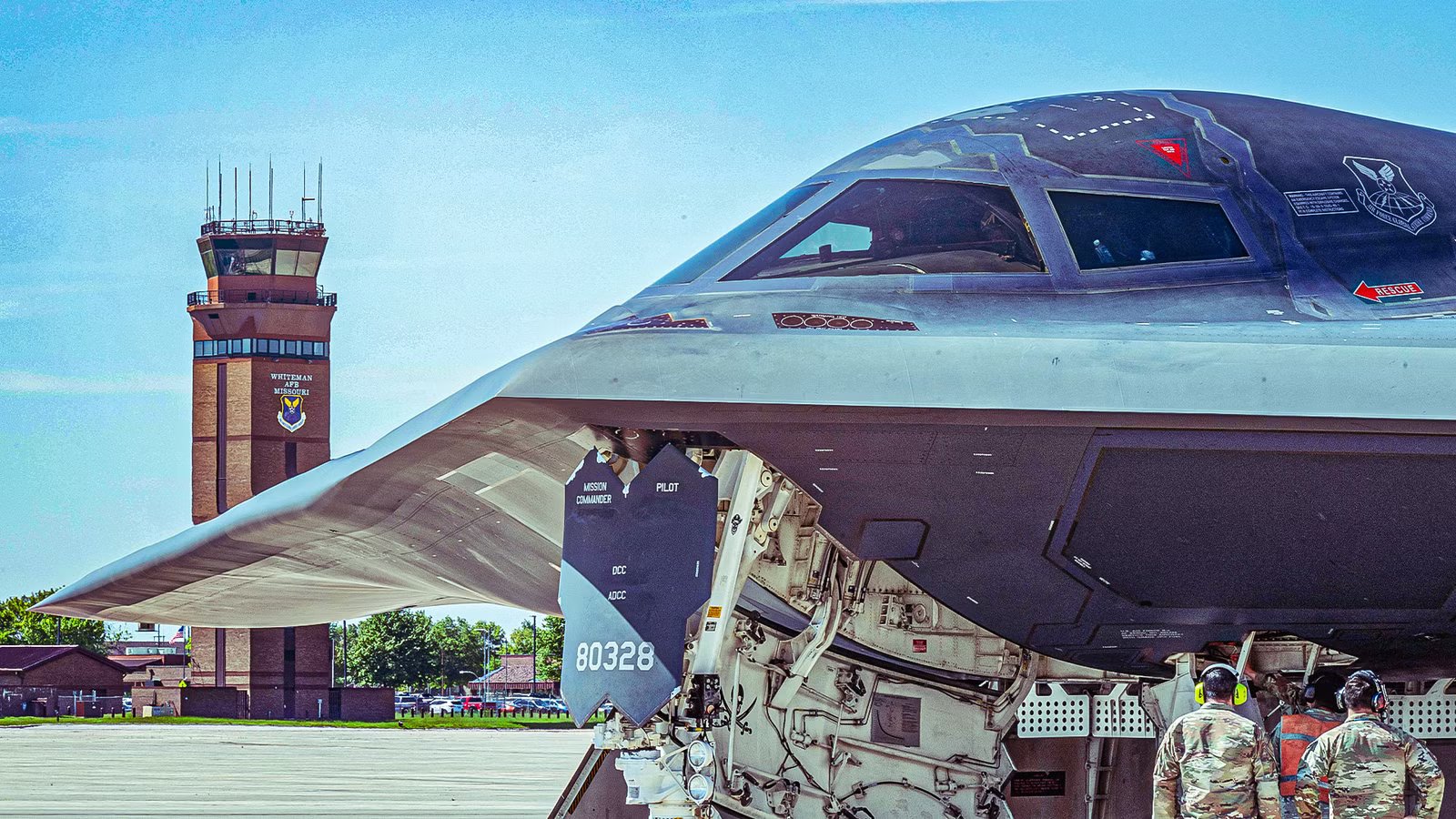
Northrop Grumman B-2 Spirit air crews in the United States Air Force are well-known for flying some of history’s longest missions. While a fighter jet measures a mission in minutes, the B-2 measures them in days. When a crew lifts off from Missouri, they aren’t just heading to a target: they are entering a 40-hour physiological endurance test. One of the reasons that the pilots of this fearsome stealth bomber are able to perform the longest marathon combat sorties in the world is that the unique flying wing was designed for it from the outset.
First and foremost, the heavy automation that makes it possible for this flying wing to even remain in the sky means that it actually only needs one pilot to safely operate most of the time. The aircraft is engineered to be a stable platform, meaning it doesn’t fight the pilot. Because the flying wing has no tail, it would naturally be impossible to fly, but the onboard computers handle the millions of tiny adjustments needed to keep it level. This creates a smooth, ship-like ride that prevents the physical beating pilots usually take in smaller, more turbulent aircraft.
That technology in the B-2 Spirit Bomber allows the aircrew to share workload on long cruises that take dozens of hours, keeping their alertness as high as possible. The unique shape of the aircraft also allows for the flight deck to have a bulbous shape and enough space to stand behind the main area of control in avionics. Looking inside, there are a myriad of features to help the crew stay in peak performance for however long their mission lasts. From a portable bed to a tiny microwave, the stealth bomber has everything its crew needs.
The Air Force’s Two-Billion-Dollar Lodging In The Sky

The B-2’s stealth, or low observability, isn’t just about hiding. It is the technical enabler for its extreme endurance. Without it, a 40-hour mission would be a suicide run. In a traditional bomber like the B-52, the crew is in a constant state of high alert because they can be seen from hundreds of miles away. They rely on speed, jamming, or escorts to survive. The B-2 survives by non-interaction: because it is invisible to most long-range sensors, the crew doesn’t have to perform aggressive defensive maneuvers or constant electronic warfare jamming.
The US Air Force designed the B-2 Spirit for the worst-case missions in the Cold War arms race. For that reason, the plane was designed to be airborne as long as possible and deliver its nuclear payload completely alone in a doomsday scenario. One of the ways in which it was engineered to succeed was to make it possible for the air crew to remain airborne for the longest possible time. That included provisioning the plane with the basic amenities for a person to live day to day.
|
Aircraft |
RCS Area Estimate |
Visual Equivalent |
|---|---|---|
|
B-52 Stratofortress |
100 square meters |
A large building |
|
F-4 Phantom II |
10 square meters |
A large truck |
|
F-117 Nighthawk |
0.003 square meters |
A small bird |
|
F-35 Lightning II |
0.001 square meters |
A golf ball |
|
B-2 Spirit |
0.0001 square meters |
A honeybee |
|
F-22 Raptor |
0.0001 square meters |
A marble |
Only roughly 25 square feet make up the entire livable crew compartment. At least the ejection seats are made to be extremely adjustable, reclining up to 180 degrees. Since there is no real bed, there is a designated space for a customized folding cot. When deployed, it bridges the gap between the aft bulkhead and the side-by-side ACES II ejection seat rails. The B-2 also features a convection microwave oven and a dedicated hot cup for dining, if you can call it that.
This allows the crew to eat hot, high-protein meals, which are essential for physical and cognitive readiness during the circadian rhythms of a multi-day mission. To manage the biological demands of a 40-hour sortie, the aircraft incorporates a specialized galley and waste management suite. Behind the pilot’s seat is a permanent, stainless-steel chemical toilet. It lacks a door, but its integration into the environmental control system ensures that odors are vented externally, maintaining the cabin’s high-altitude pressurized atmosphere.

Why The B-2 Spirit Remains Critical To US Defense
Northrop Gumman’s B-2 Spirit has unmatched stealth, power, and global reach that make it an irreplaceable asset in US defense strategy.
The Power Of Teamwork: Crew Resource Management

During the 44-hour strikes of Operation Enduring Freedom, the B-2 cabin layout allowed crews to fly from Whiteman AFB to Afghanistan, orbit for hours, and return, all while maintaining the mental acuity required to deliver 16 precision-guided munitions. The design philosophy is clear: the airframe can stay airborne as long as it has fuel, and the cockpit is the only thing keeping the human component from failing before the machine does.
The goal of crew resource management on the B-2 Spirit flight deck must maximize human performance on missions that frequently last more than forty hours. B-2 crews go through rigorous simulator-based training, including 24-hour nonstop simulations. This enables them to practice CRM while fatigued, allowing them to better understand how their individual decision-making and communication styles change after long flights.
Pilots spend weeks planning not only their flight route, but also who will do what and when. This includes thoroughly reviewing protocols for critical mission phases such as aerial refueling and meticulously planning sleep rotations. To keep the aircraft safe in high-stress situations, such as blind nighttime refueling with the tanker boom out of direct sight, pilots rely on constant verbal communication and memorized visual cues.

This Is How Powerful The B-2 Spirit Bomber Is
The B-2 is famous for its stealth, but how much punch does it pack? Let’s find out.
Engineering Excellence Powers Unprecedented Endurance

To understand how the B-2 Spirit sustains a crew for 40+ hours, you have to look at the symbiosis between its quad-redundant fly-by-wire system and its ‘management by exception’ avionics logic. The jet uses a quadruple redundant avionics system, which guarantees a level of safety and automation that enables one pilot to safely monitor the aircraft while the other rests.
The system uses four separate flight control computers that vote on every control surface movement. If one computer fails or provides data that disagrees with the others, it is automatically bypassed without any pilot input. These computers process data hundreds of times per second, manipulating split-drag rudders and elevons to maintain pitch, yaw, and roll stability.
|
Metrics |
Northrop Grumman B-2 Spirit Specifications |
|---|---|
|
Powerplant |
Four General Electric F118-GE-100 engines |
|
Thrust |
17,300 pounds (7,847 kilograms) each engine |
|
Wingspan |
172 feet (52.12 meters) |
|
Length |
69 feet (20.9 meters) |
|
Height |
17 feet (5.1 meters) |
|
Weight |
160,000 pounds (72,575 kilograms) |
|
Maximum takeoff weight |
336,500 pounds (152,634 kilograms) |
|
Fuel capacity |
167,000 pounds (75,750 kilograms) |
|
Payload |
40,000 pounds (18,144 kilograms) |
|
Speed |
High subsonic |
|
Range |
Intercontinental |
|
Ceiling |
50,000 feet (15,240 meters) |
|
Unit cost |
Approximately $1.157 billion (fiscal 1998 constant dollars) |
Glass displays, also known as the Vertical Situation Display, reduce complex data to understandable visuals. This allows a resting pilot to quickly regain situational awareness when returning to the seat. By handling the twitchy nature of a flying wing, the fly-by-wire system reduces the physical and mental effort of flying to nearly zero during cruise. This allows one pilot to safely unbuckle and rest while the other merely monitors the automation.

How Many B-2 Spirit Bombers Are Left?
The US’ B-2 stealth bomber is an awesome warplane, but how many are there?
The B-2 Spirit By The Numbers

The B-2 Spirit is a long-range, stealthy heavy bomber capable of penetrating advanced enemy air defenses, and it remains an important part of the United States‘ strategic nuclear triad. To preserve its stealth profile, the B-2 stores all weaponry, like the B61 and B83 nuclear gravity bombs, inside two weapons bays. The B-2 Spirit’s weapon employment is a high-stakes mechanical ballet, where the aircraft’s role shifts from a silent ghost to a precision strike platform in a matter of seconds.
The Rotary Launcher Assembly is akin to a giant six-shooter pistol cylinder. When the pilot selects the ordnance to be deployed, the entire rack rotates and positions the designated weapon over the bomb bay doors. Officially rated at 40,000 pounds (18,144 kilograms), tests have demonstrated capabilities of up to 60,000 pounds for especially large conventional payloads. The B-2 is also the only aircraft capable of delivering the GBU-57 Massive Ordnance Penetrator bunker buster in battle.
|
Ordnance Type |
B-2 Spirit Payload Capacity |
|---|---|
|
Nuclear munition, B61-7 |
16 |
|
Nuclear munition, B61-12 |
16 |
|
Nuclear munition, B83 |
16 |
|
Nuclear munition, B61-11 |
Eight |
|
Mk. 62, 500 lb sea mines |
80 |
|
Mk. 82, 500 lb bombs |
80 |
|
GBU-38 JDAMs |
80 |
|
CBU-87/89 cluster munitions |
34 |
|
GB-31 JDAMs |
16 |
|
Mk 84, 2,000 lb bombs |
16 |
|
AGM-154 JSOWs |
16 |
|
AGM-158 JASSMs |
16 |
|
GB-28 LGBs |
Eight |
For high-volume strikes, the bays use vertical racks. These allow the B-2 to carry up to 80 JDAMs, enabling it to target 80 individual GPS coordinates in a single pickle or pass. For heavy gravity bombs, spin-rocket motors on the weapon itself may stabilize its fall. For precision JDAMs, the bay’s computer talks to the bombs until the millisecond of release, passing final GPS updates.
While the aircraft is highly automated, the ‘two-person rule’ is strictly enforced for weapon employment. Here, the mission commander operates the weapon control system, selects the munitions, and validates the target aimpoints. Meanwhile, the pilot manages the aircraft’s flight path to ensure the bomber stays within the ‘drop basket’ while maintaining the optimal stealth heading to keep the wing’s leading edges angled away from enemy radar.