dailynewsnblog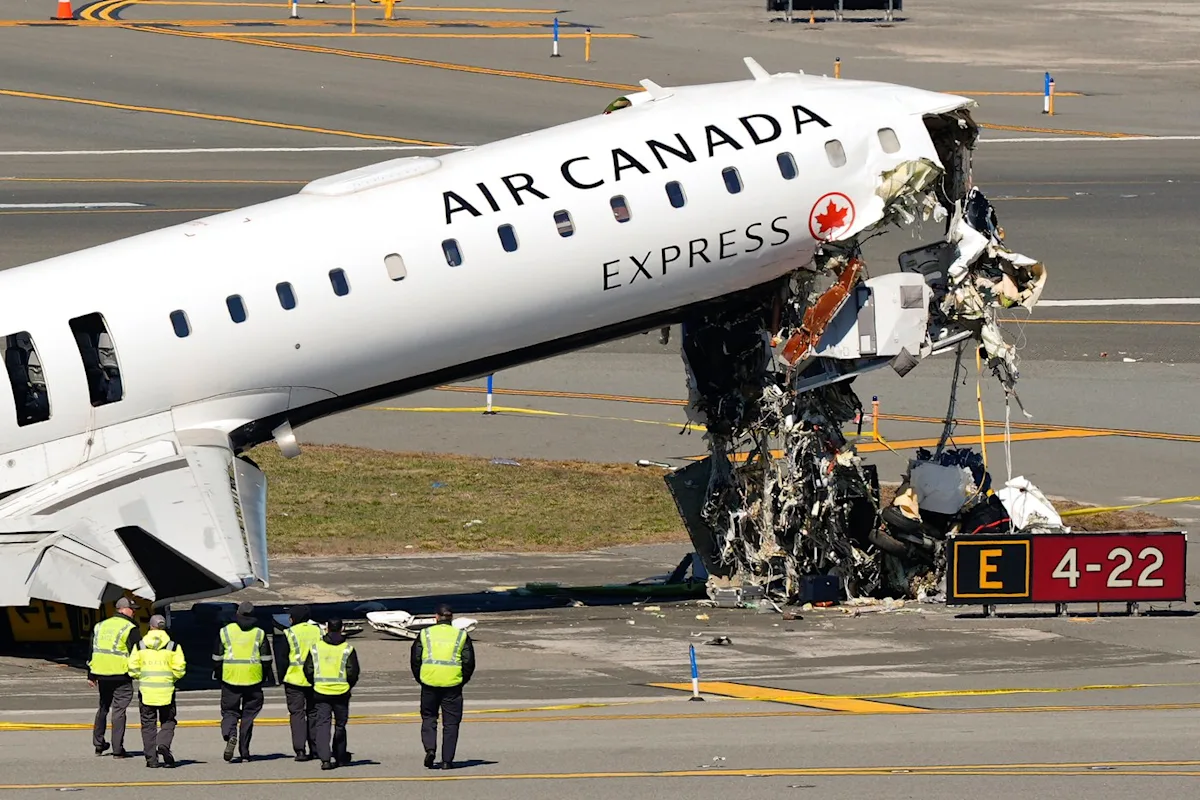
NEW YORK (AP) — Investigators are working to determine what caused a deadly collision between a jet and a fire truck on the runway at New York City’s LaGuardia Airport. Here’s what to know about the crash and the investigation:
What happened on the runway?
An Air Canada regional flight arrived from Montreal around 11:37 p.m. Sunday and struck an airport fire truck, which was crossing the runway to check on an unusual odor reported on another plane.
It was busier than a typical Sunday night at LaGuardia. Because of flight delays, the airport saw nearly 70 takeoffs and landings after 10 p.m. — more than double the 31 that were scheduled, according to data from aviation analytics firm Cirium. No planes took off after 11:09 p.m., but planes continued to land every few minutes in misty, somewhat foggy conditions.
About 20 seconds before the collision, air traffic control cleared the truck to cross the runway — but then, about 11 seconds later, a controller started repeatedly telling the truck to stop, National Transportation Safety Board investigator Doug Brazy said Tuesday. It’s not yet clear whether the truck’s driver heard the call.
Audio recordings from the airport control tower later captured an unnamed controller saying: “I messed up.”
The impact crushed the cockpit, sheared the nose off the plane and rolled the mangled fire truck onto its side. Passengers worked together to open emergency exit doors, slide off the plane’s wings and help others to safety.
What happened to the people aboard?
The pilot and co-pilot were the only confirmed fatalities among the roughly six dozen people aboard the flight, operated by Jazz Aviation on behalf of Air Canada. Officials haven’t released the victims’ names, but a family member identified one of the dead as Antoine Forest.
About 40 people were taken to hospitals, where some sustained serious injuries. Two emergency responders traveling in the fire truck were also injured.
Most of the injured people were quickly released, but some remained hospitalized, including a flight attendant who was thrown from the plane and found, still buckled into her seat, many yards (meters) away, according to her daughter.
What is to blame for the crash?
Federal investigators don’t know yet. They’re planning to analyze the plane’s cockpit and flight data recorders, interview the air traffic controllers and firefighters, and look into issues that range from control tower staffing to electronics meant to prevent runway collisions, according to NTSB Chair Jennifer Homendy.
“We rarely, if ever, investigate a major accident where it was one failure” instead of a cascade of problems, she noted at a news conference Tuesday.