dailynewsnblog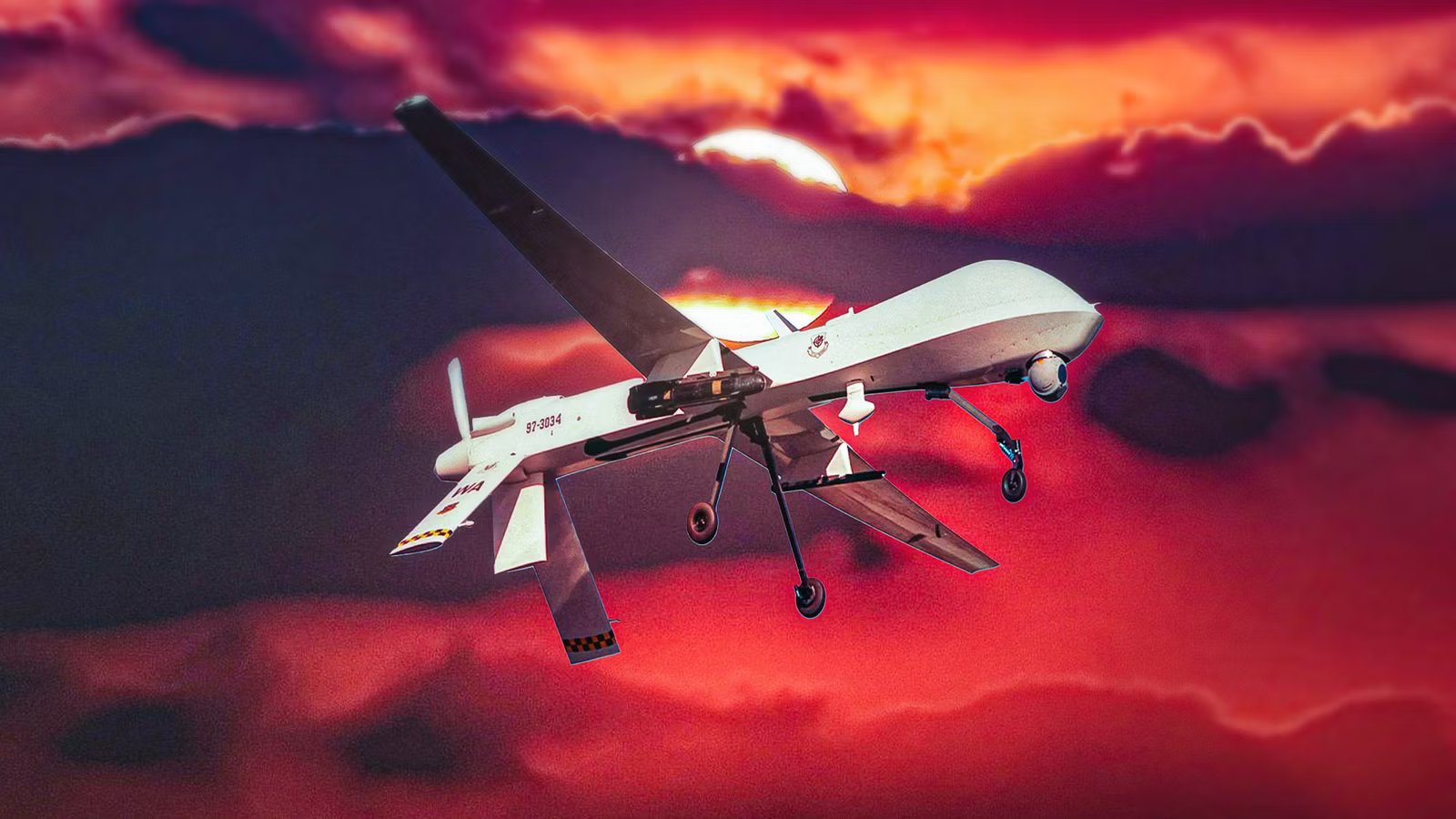
The US Department of War, as restylized by Secretary of ‘War’ Pete Hegseth, announced on February 6 that it was pushing ahead with plans to build a drone force of 300,000 units by 2027. Presently, the US Armed Forces have a combined total of just over 16,000 unmanned aerial vehicles (UAVs) of varying sizes and complexity, according to Warpower. The ambitious ‘Drone Dominance’ program aims to multiply the current inventory by nearly 19 times over.
The vast majority of that number will not be large and complex drones but rather small, man-portable, expendable units. Hegseth stated last year that he intends to see tens of thousands of small drones delivered this year, with hundreds of thousands to follow in 2027. The first round of contractor competition is underway, with 25 companies entered into what he dubbed the ‘gauntlet,’ focused on making devices for the US Army and Marines.
At the same time, the US Air Force and Navy are pursuing separate programs to develop Collaborative Combat Aircraft (CCAs), or Loyal Wingman drones, that can operate autonomously alongside fifth- and sixth-generation stealth fighters or bombers. The services plan to eventually reach a combined total in the thousands of these large, jet-powered UAVs as well. Should all of these programs come to fruition in the next two or three years, the US will be the unquestioned world leader in drone combat forces both qualitatively and quantitatively.
Rewriting US Drone Doctrine: Lessons Learned From Ukraine’s Defenders

Ukraine has experienced an average of more than 100 attacks by Russian drones per day since the invasion began in 2022. The Russian invasion force has launched mass attacks with as many as 800 drones in a single widespread onslaught. Even more impressively, Ukraine has made almost four million drones in 2025 and aims for seven million this year, according to CFR. Iran has employed a similar strategy since the US and Israel began Operation Epic Fury, targeting nearly every nation in its region with 2,000 drone strikes so far.
To date, the US lacks sufficient reserves of expendable and attritable unmanned aircraft to deploy a similar offensive strategy or counter such an attack with a defensive swarm of ‘one-way’ drones. The invasion of Ukraine showed the DOD that drones are now the dominant battlefield weapon, even at the squad level of infantry tactics, according to Military.com reporting. Secretary Hegseth ordered the US military to arm every US Army squad with unmanned systems by the end of 2026 in response to this evidence.
The war in Iran has further accelerated these initiatives, particularly as the US faces the same low-cost drone swarms it observed in Ukraine. The US recently debuted the LUCAS (Low-Cost Uncrewed Combat Attack System), a one-way attack drone modeled after Iran’s successful Shahed-136. America has also moved to draw on Ukraine’s expertise in fighting these exact systems for nearly four years to aid in advancing US programs.
Playing Catch Up: The Drone Dominance Plan

Under Hegseth’s stated procurement plan, he claims that the second round of competition will deliver 30,000 drones by July at an average price of $5,000 each. Then there will be two more rounds of contractor eliminations to ‘drive costs down and capabilities up’ with the goal to cut the unit cost in half. The intent is to fund the manufacture of 340,000 drones in total over a two-year period.
Preceding the newly announced DDP were the Pentagon’s Replicator One and Replicator Two initiatives. The first program was focused on the same goal as the current initiative announced by Hegseth, to rapidly field thousands of ‘all-domain autonomous’ systems to overcome an adversary’s advantage in mass. The second program, which only recently began, is focused on detecting and destroying small drones from adversaries.
The new LUCAS drone costs between $30,000 and $60,000 per unit but matches the striking capability of a $2.5 million Tomahawk missile. It was officially confirmed to have debuted in combat on the first day of Operation Epic Fury. The DDP is an open architecture approach designed to dramatically improve the supply chain resilience and significantly lower the cost of UAVs like LUCAS by sourcing very similar or even identically designed drones from multiple vendors.

Sikorsky’s Rotor Blown Wing UAS Flies In Airplane & Helicopter Mode
VTOL X-Plane showcased ambitious goals for vertical flight and speed, yet program cancellation exposed new directions in aviation research.
SkyFoundry: The Army’s Drone Factory

The SkyFoundry is a new flagship industrial initiative designed to mass-produce small drones at a scale never before seen in American history. It aims to transform traditional military depots into high-tech manufacturing hubs capable of churning out one million drones annually. The program aims to reach a capacity of 10,000 drones per month by late 2026.
Congressman Pat Harrigan was one of the key lawmakers who supported the establishment of the US Army’s new drone assembly line. He went on the record, giving this statement in his remarks after its approval:
“China and Russia are flooding the battlefield with millions of drones while America has sat on its hands. More than 80% of casualties in modern war now come from drones, yet we still have no capacity to build them at scale. That failure is reckless, and it leaves our troops exposed.”
SkyFoundry provides the physical manufacturing backbone for the broader strategic goals of the DDP and Replicator. Through SkyFoundry, the Army plans to field at least one million drones within the next three years. This new doctrine will treat drones as expendable munitions rather than a reusable platform like conventional aircraft. The federal government will own the rights to the drone designs and can reallocate production to different sites or vendors as needed to sustain output.
The program is led by the Army Materiel Command and utilizes a Government-Owned, Government-Operated Contractor Augmented model. A key element of the plan is also decoupling the supply chain from China, ensuring that components like rare earth materials and brushless motors are sourced domestically or from allied nations. The main production facility will be at the Red River Army Depot in Texas, with supporting facilities at the Bluegrass Army Depot in Kentucky and Rock Island Arsenal in Illinois.

The Pentagon Sidelined the F/A-XX, But The US Navy Is Still Pushing For The Stealth Fighter
The next-gen strike fighter goes on hold.
Collaborative Combat Aircraft: The Ultimate Loyal Wingman

While the new DDP is focused on bringing autonomous air power to troops on the ground, the CCA program of the USAF and USN aims to provide a similar low-cost, attritable UAV on a larger scale. The loyal wingman is slated to cost no more than $30 million per unit, or about one-third to a quarter of the price of a modern fighter jet. For example, the price of Lockheed Martin’s stealth, 5th-Gen F-35 Lightning II varies between $90 and $120 million, and the Boeing 4.5-Gen F-15EX strike fighter also costs around $90 million per airframe.
The Air Force plans to approve up to 20 companies for the second phase. This will broaden mission sets from phase one beyond air-to-air combat, which is ongoing now, potentially including electronic warfare and advanced sensing. In early 2026, contracts were awarded to Beehive Industries, Honeywell, and Pratt & Whitney to develop specialized low-thrust engines for Increment 2 drones, according to IDGA. The Air Force plans to buy between 100 and 150 aircraft in Phase 1 with a final Target of over 1,000 units by the end of the program.
The Navy is reportedly aiming for a lower price point of around $15 million per Loyal Wingman drone, according to USNI. The Navy is aiming for interchangeability with the Air Force drones but using shared software and architecture, and is developing airframes tailor-made for carrier-based operations. According to USNI, the Navy issued contracts for development to Anduril, Boeing, General Atomics in Northrop Grumman in late 2025. The Navy has not yet committed to a total estimated procurement volume, but it will likely be a lower number of airframes than the Air Force, although still in the hundreds.

5 Fast Facts On The US Army’s Latest Drone
The US Army has an exciting new drone that will bring a new level of battlefield endurance and versatility to the frontline.
Global Hawk And Triton: Eye In The Sky

Currently, two of the most important drones in the US Military are not low-cost or expendable, but they are invaluable sources of intelligence and a persistent Battlefield presence. These aircraft provide wide area surveillance both overland and in the maritime environment. The RQ-4 Global Hawk is used by the Air Force to survey massive areas for potential targets at over 60,000 feet. The MQ-4C Triton performs the same mission for the Navy to identify maritime targets.
These higher-performance and higher-cost platforms would find and identify targets for smaller expendable drones to engage. In the layered information loop of the drone structure, these large drones would be supported by medium altitude assets like the MQ-9 Reaper or upcoming CCA. These platforms would be able to engage directly or ‘hand off’ targets to ‘kamikaze’ style low-cost drones in swarm attacks.
The hierarchy is a product of the shift in how the DOD balances its budget and risk. The doctrinal shift is pivoting toward overwhelming adversaries with small and cheap drones that are just smart enough to accomplish the mission, but their combat loss is acceptable. The conflict in Ukraine and Iran has shown that relying on low-volume ‘exquisite’ platforms like the Triton and Global Hawk creates a vulnerability that is exploitable with low-cost, high-volume assets using asymmetric tactics.