dailynewsnblog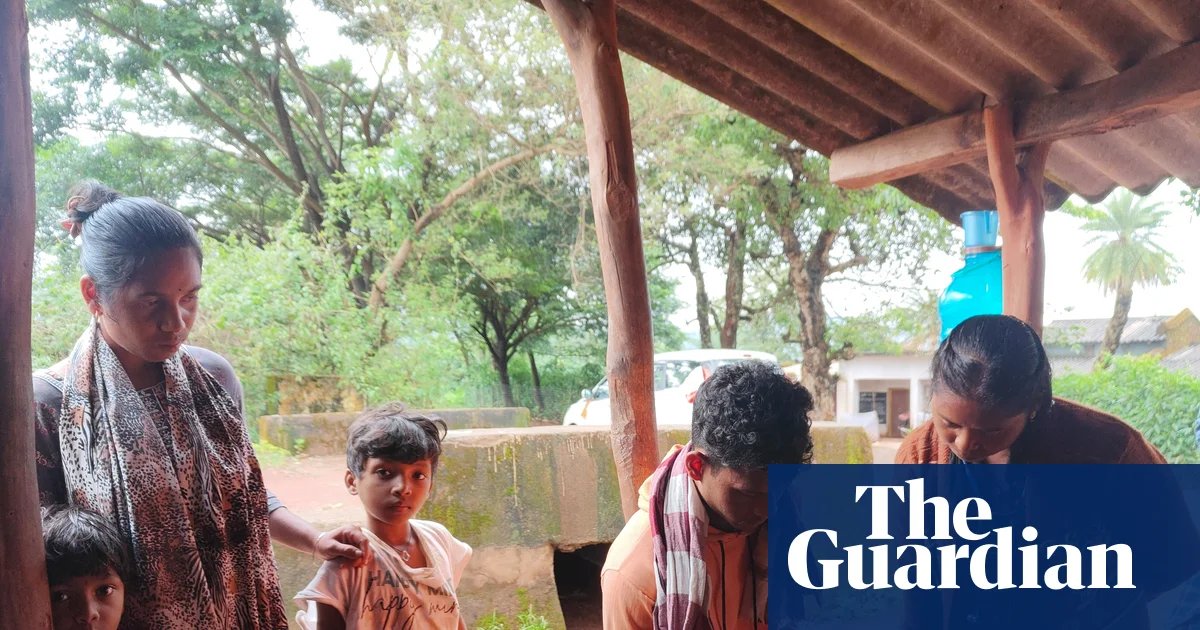
Raja Pradhan is sitting cross-legged, scrolling on his phone in his village in eastern India when a green WhatsApp chat bubble pops up on the screen. “Namaskar! Apana bahare kama pain jauthibe? Apananka suchana diaantu.” (Hello! Are you going outside for work? Please share your information.)
He reads the message twice, unsure whether to respond. “I don’t know where this information would go,” he says. “Would someone use it against me? The internet can be tricky at times. Why should I even share my details in the first place?”
A volunteer from a nonprofit organisation explains it is a chatbot called Bandhu (friend) that aims to connect the largely undocumented migrant workforce of the state of Odisha to emergency services and keep their families updated on their location. “Your details will not be shared publicly. It is only to help you in case of emergencies,” says field worker Subhalata Pradhan.
India has an estimated 140 million migrant workers, according to nonprofit organisations and researchers who point to large gaps in data on their numbers and locations. This has led to inadequate and delayed responses during emergencies such as the Covid-19 pandemic, when tens of thousands of workers were forced to walk home after the central government imposed a nationwide lockdown.
More than a million migrant workers returned to Odisha during the pandemic. But in the absence of any reliable data on who they were or where they were travelling from, the authorities struggled to coordinate their return. Lack of data also affects access to and delivery of welfare and aid, researchers and campaigners have repeatedly flagged.
More than 400 migrant workers from Odisha have died over the past nine years while working in other states, according to a written reply to the state assembly by the labour and employees’ state insurance minister, Ganesh Ram Singhkhuntia, in December 2024. But neither local administrations nor nonprofits have a clear way of knowing the exact location of those who die.
Bandhu, the WhatsApp chatbot rolled out by Gram Vikas, a nonprofit organisation working with migrants, aims to bridge this gap. It has, so far, covered 620 villages in Odisha, one of India’s poorest and most migration-prone states, where half of the 30 districts record migration, government data shows.
Over the past two months, Gram Vikas staff have been helping migrants visiting Petumaha village in Kandhamal district, where Raja is from, to complete the digital form, while also reaching out to workers already at their destination.
The details in the form include the person’s name, source district and village, date of birth, emergency contacts in Odisha and the destination state, as well as location via Google Maps.
For Gram Vikas, the idea behind such village-level registries is to make the information available during times of crisis. “Families often know only the state to which a worker has travelled. Precise details are rarely available. That absence of information becomes critical during emergencies,” says Liby Johnson, executive director at Gram Vikas.
“Cyclones, floods, industrial accidents … these disasters affect mobile populations more than stationary ones. In that context, simply knowing where citizens are working at any given time can significantly shorten response time and improve coordination with destination states,” Johnson says.
Raja currently lives in the Angamaly municipality area of Ernakulam district in the southern state of Kerala, his third destination in the past two years.
“My family just remembers Kerala, they can’t remember any other names. I just tell them I am in Kerala,” he says.
But with Bandhu, they would know.
So far, 1,196 people across 22 districts of Odisha have registered through the chatbot. Migrants can update their location if they change workplaces or cities, which happens frequently in sectors such as construction, hospitality and brick kilns, say campaigners.
In future, they may also be able to seek help using the chatbot, which will allow them to register grievances against employers or ask for help in emergencies.
Gram Vikas aims to expand the initiative in Kandhamal and to three other districts in Odisha in the next year, with the long-term aim of getting the government to make the migrant registry a state programme.
“We will develop the model and process, and demonstrate how gram panchayats [village councils] can do this. Our experience will also suggest what tech platforms can help with the scaling up. The data will have to be with the gram panchayats,” Johnson says, adding that this would then be taken to the government.
For now, the scheme faces the challenge of penetration in rural Odisha where about 64% of all households have smartphones, according to 2022 data from the Annual Status of Education Report (Rural), a nationwide household survey.
Gram Vikas says it is easier to get younger migrants to register as they usually own smartphones, unlike the older generation who also migrate but most often use basic mobile phones with more limited functions.
The oldest of three siblings, Raja left for Kerala two years ago to work at a restaurant, where he chops vegetables and cleans tables, a job he found through a friend. “I have two siblings who are still in school to take care of. So, I decided to migrate for work,” he says.
In Kerala he earns 15,000 rupees (£121) a month and says he manages to send more than half his salary home.
In Jadatoga, a few kilometres from Raja’s village, 22-year-old migrant worker Lintu Pradhan is home for a few days because his wife is unwell. As a private taxi driver, he earned 12,000 rupees a month in Bhubaneswar, Odisha’s capital. He now makes 26,000 rupees as a heavy vehicle driver in Kerala’s Kochi district.
His older brother also works in Kerala though he is unsure where. “Who remembers the name of the city? I know he is in Kerala. We stay in touch by phone,” he says.
Migration researcher S Irudaya Rajan, chair of the International Institute for Migration and Development, says the challenge is ensuring that any collected data informs decisions.
“Just collecting data has no implications unless it feeds into policy,” he says.
“The same data could also help enrol workers into social protection schemes, including accidental insurance or health coverage, and ensure they are linked to benefits … Dialogue between data collectors and policymakers is crucial. Otherwise it remains just an exercise,” he says.
In February, a few months after he first filled in the form, Raja’s phone buzzes again. The chatbot asks where he is now. He types “Kochi”. Another question follows, asking whether his work is going well. He replies yes.
The exchange lasts barely a minute. But in that minute, his location is updated in the database, and his contact information remains active. And for the first time, his journey becomes traceable.
Aishwarya Mohanty is special correspondent with the Migration Story where this story first appeared