dailynewsnblog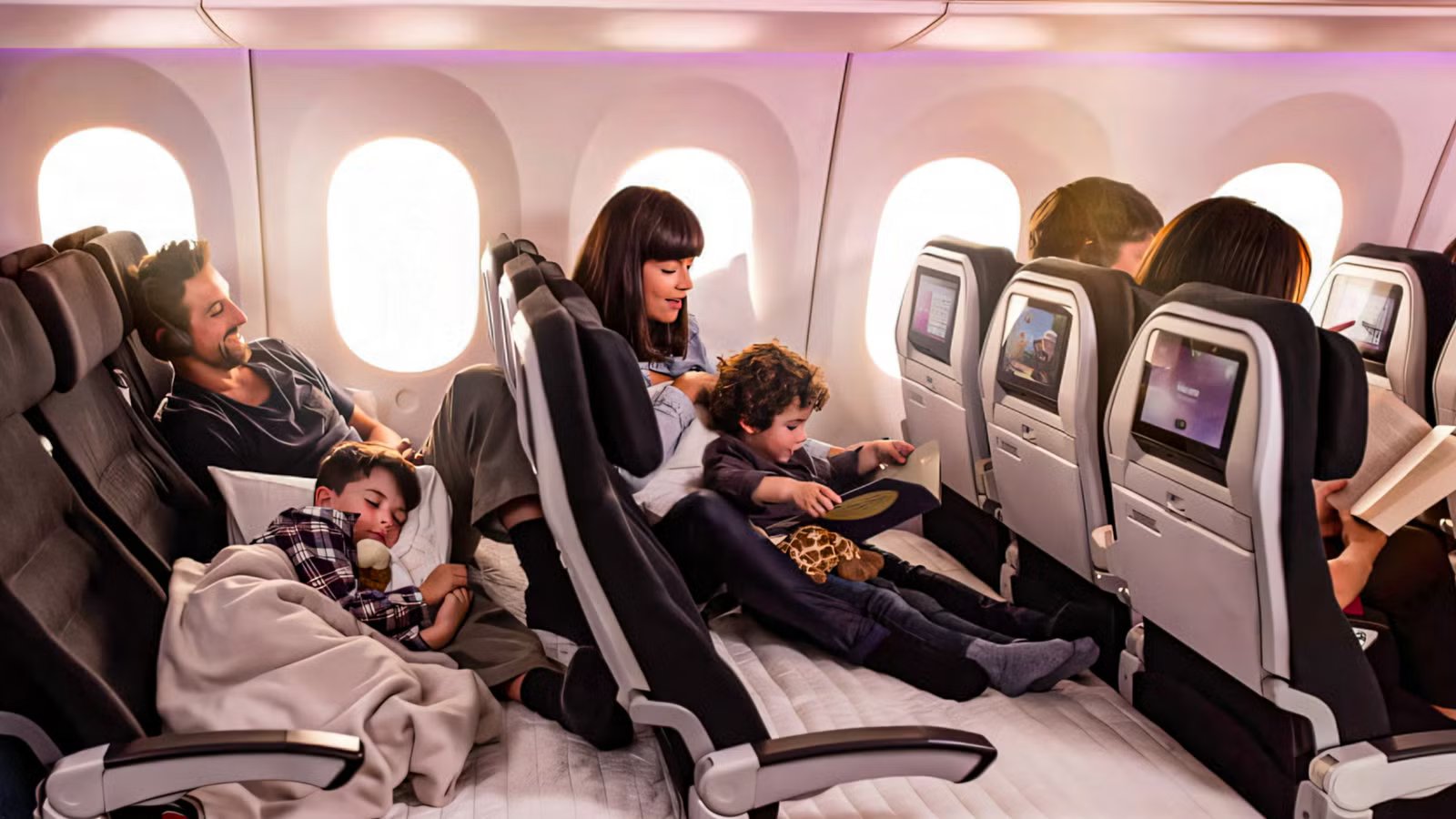
While airlines are highly competitive in the experiences offered in their premium cabins, considering the majority of passengers fly in economy, carriers tend to be as innovative as possible in this space to differentiate their product and gain a competitive advantage. This is particularly true for full-service carriers that operate long and ultra-long haul flights, where comfort in economy cabins becomes mandatory.
This guide dives into the economy cabin experience of three carriers that primarily focus on the Asia-Pacific region: Air New Zealand, Fiji Airways, and Hawaiian Airlines. For reference, seat data from aeroLOPA will be used to compare the seat dimensions of the economy product of these three carriers.
Air New Zealand And Its Diverse Fleet

As the name suggests, Air New Zealand is an airline based in New Zealand, with major bases in Auckland and Christchurch. Because of its geographical location, the airline is limited to serving destinations within the Asia-Pacific and Australasia regions. The carrier does this by utilizing its fleet, which consists of an all-Boeing widebody fleet, which includes the Boeing 777-300ER and the Boeing 787-9 aircraft, an all-Airbus narrowbody fleet consisting of Airbus A320 family aircraft, along with a considerable number of ATR 72-600 and Dash 8-300 turboprop aircraft.
Therefore, it comes as no surprise that the airline’s economy cabin experience will entirely depend on the aircraft passengers fly. On the widebody side, the economy seats are configured in a 3-4-3 layout on the 777s and a 3-3-3 layout on the Dreamliners. According to the seat data, they tend to have a 31-32 inches pitch, 17.1-17.3 inches of width, and 4.7 – six inches of recline, depending on the aircraft and its configuration. However, all these seats are equipped with six-way adjustable headrests, seatback entertainment screens (nine to 13.3 inches), and USB-A sockets. Most aircraft have universal power sockets, while some of the latest Dreamliners also have USB-C.
As for the narrowbody Airbus A320 fleet, the seats are configured in a 3-3 layout and have 30-35 inches pitch, 18-inch width, and two inches of recline. Some of these aircraft offer adjustable headrests, seat-back entertainment screens and USB charging sockets. As for the Turboprop fleet, both aircraft types are configured in a 2-2 layout, with the ATR offering 30 inches of pitch and 16.8 inches of width, while the Dash 8s offer 31 inches of pitch, 16.8 inches of width, and three inches of recline. These aircraft also do not have seatback entertainment screens or power sockets.
Looking Beyond The Seat Dimensions

In terms of services, Air New Zealand, being a full-service carrier, offers meals and beverages to its economy passengers on all flights, except on its turboprop services lasting under 50 minutes, in which case passengers are only served water. Furthermore, select widebody and narrowbody aircraft are equipped with WiFi, which is complimentary for passengers. However, the airline also offers unique services, known as Economy Skycouch™ and the upcoming Economy Skynest™.
The Economy Skycouch™ are certain rows of seats within the economy cabin, which have leg rests that can be partially lifted to provide a better recline, but also fully lifted to create a flat “couch-like” surface across the three seats, allowing for a combination of a single passenger, a couple, or even three passengers to share a more comfortable travel space, elevating their flight experience. Passengers seated in these seats will receive additional mattresses and bedding.
The upcoming Economy Skynest™, however, elevates the economy experience a step further, especially on ultra-long haul routes, with the airline installing six bunk-style lie-flat bed pods within the economy cabin, where passengers will be allowed to rent this space for certain durations of the flight, where they can be away from their seats to rest and relax on these pods. The Economy Skynest™ is expected to be available starting this year on select long-haul routes the airline operates, such as Auckland to New York.

The Air New Zealand Aircraft That Feature A Cozy Skycouch In Economy
Find the best option for you to fly along Air New Zealand long-haul routes.
Fiji Airways With A Smaller But Equally Diverse Fleet

Connecting the islands of Fiji to the rest of the Asia-Pacific and Australasia regions is the nation’s carrier, Fiji Airways. The airline has a smaller fleet than Air New Zealand, but it is equally diverse. The airline operates an all-widebody fleet of Airbus aircraft, which includes the Airbus A330 and Airbus A350-900 aircraft types. On the smaller end of the spectrum, the carrier operates an all-narrowbody fleet of Boeing 737 family aircraft, along with ATRs and DHC-6 Twin Otter prop-aircraft.
Seat dimension data shows the carrier’s A330s configured in a 2-4-2 layout while the A350s feature a 3-3-3 layout in the economy cabins. The seats on the airline’s A330-200 and the A350-900s have a 31-inch pitch, a seat width of 18 inches, and a recline of six inches. However, the A330-300s, on the other hand, have similar dimensions but a larger 7.5-inch seat recline. Beyond that, all these seats offer seatback entertainment screens of up to 12 inches, along with adjustable headrests. All seats offer USB-A connectivity port, while all A350s and A330-200s offer shared universal power ports.
On the narrowbody side, the airline’s Boeing 737 MAX 8 aircraft have a 3-3 cabin layout with 32 inches of seat pitch, 17 inches of width, and five inches of recline, along with adjustable headrests, USB charging ports, and seatback entertainment screens. As for the regional prop aircraft, the carrier’s ATR 42-600 and ATR 72-600 both offer economy cabins in a 2-2 layout, with both aircraft offering 30 inches of pitch, 17 inches of seat width, and two inches of recline. The smaller DHC-6 Twin Otter aircraft is configured in a 1-2 layout (except the last row, which has three seats) and accommodates only 19 passengers, making it the smallest aircraft in the airline’s fleet.
How About The Inflight Services?

Fiji Airways is also a full-service airline, and as such, it offers catering in economy cabins. Onboard the carrier’s international services, the airline serves full meals with complimentary hot and cold beverages, including alcoholic drinks. Within regional services, the airline offers a simplified menu alongside hot and cold beverages.
Additionally, onboard the airline’s older Boeing 737-800s, the carrier does offer inflight entertainment services through passengers’ own devices, by allowing passengers to stream the carrier’s entertainment content directly to their own screens. Furthermore, as per the airline’s website, Fiji Airways also offers complimentary disposable headsets upon request. For economy passengers, the airline also offers complimentary full-flight WiFi for texting onboard its fleet of A350s and 737 MAX aircraft.
Furthermore, as per the airline’s website, the carrier provides complimentary access to over 7,000 top newspapers and magazines from over 120 countries, which can be viewed in over 60 languages. This content can be accessed via the PressReader application, which passengers should download before their flight.

Pride Of The Fleet: Where Does Fiji Airways Fly Its Airbus A350s?
Fiji Airways primarily introduced the Airbus A350 into its fleet for long-haul flights.
Hawaiian’s Relatively Simple Fleet

Compared with the other two carriers in this article, Hawaiian Airlines has a relatively simple fleet. Again, because of its geographical location, the airline primarily flies to nearby island destinations and then across the Asia-Pacific region with widebody aircraft. The airline’s fleet primarily consists of the Airbus A330-200 for the airline’s long-haul operations, along with the Airbus A321neo, and the Boeing 717-200 for the carrier’s short-haul and regional services.
With the A330s, the economy cabin is configured in a 2-4-2 layout, with (majority) seats offering 31 inches of pitch, 18 inches of seat width, and six inches of recline. A select number of rows within the economy cabin offer a more generous 36 inches of seat pitch. These seats are equipped with adjustable head rests, seat-back entertainment screens, and USB-A connectivity ports. On the narrowbody side, the economy seats on the airline’s A321neo aircraft offer 30-35 inches of seat pitch, 18 inches of seat width, and two to three inches of seat recline.
Meanwhile, the carrier’s 717, used for regional flights, has its economy cabin configured in a 2-3 layout. The economy seats on this aircraft, depending on the row, and certain seats can have seat pitches of 29 inches, 31 inches, or 39 inches. Furthermore, all these seats have a width of 18 inches, and these seats do not recline. While the A321neo seats provide adjustable headrests and USB-A connectivity, the seats on the 717 do not provide these features. Additionally, like the other two airlines, Hawaiian is also a full-service carrier and thus provides meal services in economy. However, Hawaiian is also the only carrier of the three airlines to offer complimentary Starlink WiFi connectivity onboard its A330s and A321neo aircraft.
And What About The Dreamliners?

Hawaiian Airlines used to operate a handful of Boeing 787-9 Dreamliner aircraft. However, these jets have been gradually transferred to Alaska Airlines since the airline acquired Hawaiian back in 2023. So what was the economy cabin experience onboard Hawaiian’s Dreamliners?
Seat data shows the cabin was configured in a 3-3-3 layout, with the majority of seats sporting 31 inches of pitch, 17.1 inches of seat width, and five inches of recline. A few rows of seats, however, had a more comfortable 36 inches of seat pitch. Additionally, these seats also feature adjustable headrests, seatback entertainment screens, USB-A and USB-C connectivity, along with universal plug points.
So, What Is The Conclusion?
Given all this information, which carrier offers the best economy class experience? This can only be answered based on research and figures in this scenario, whereas in reality, a number of factors and biases could affect the answer. When it comes to long-haul economy travel between the three airlines, a strong argument can be made for Air New Zealand, and more specifically, the innovative Skycouch product the carrier offers, along with the upcoming Skynest sleeping pods. Purely from a comfort perspective, these revolutionary products elevate long-haul economy travel.
On the short-haul and regional side, it is harder to differentiate. However, on one hand, Air Fiji does offer more in-flight services in terms of meals and entertainment than the other two carriers; meanwhile, Hawaiian, on their A321neo fleet, offers Starlink, which is highly sought after for passengers wishing to maintain in-flight connectivity. Similarly, a loyal Star Alliance passenger would possibly opt for Air New Zealand by default because it is a member of the alliance, while a oneworld passenger would prefer Fiji Airways (and soon Hawaiian too) for the same reason. Therefore, in the case of short-haul economy travel, passenger preferences among the three airlines will be largely determined by personal preferences, biases, and circumstances.