dailynewsnblog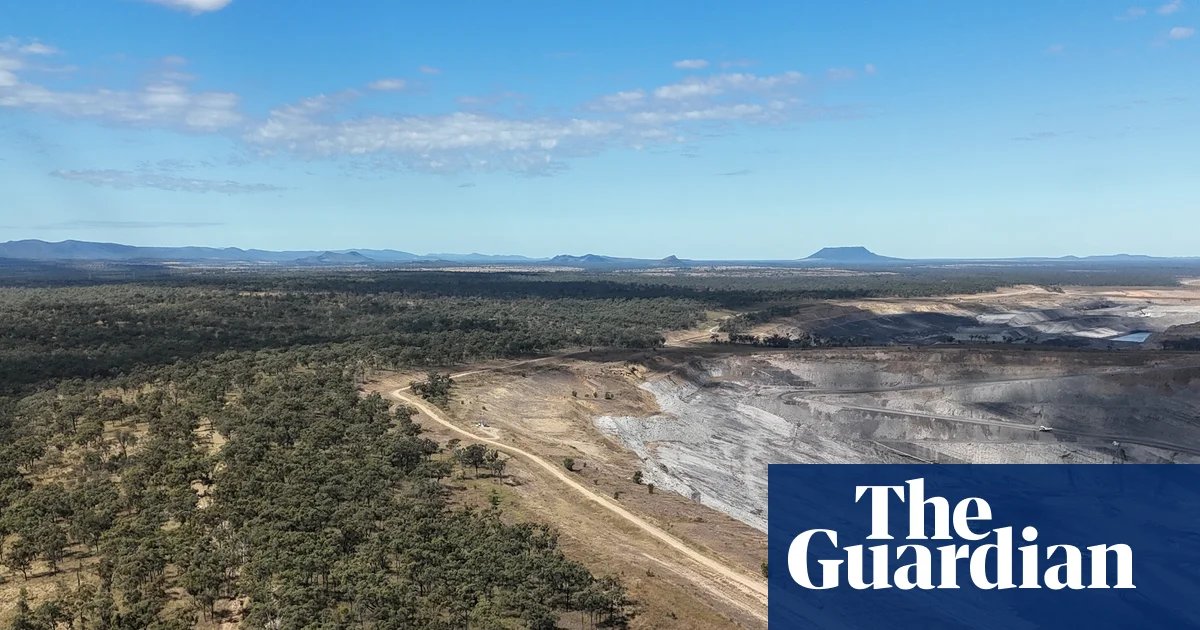
Environmental groups have called on the federal government to intervene after Australia’s most methane-polluting open-cut coalmine was approved for extension.
A proposed expansion of the Hail Creek coalmine in central Queensland, described by conservationists as a “carbon bomb”, was backed by the state’s government on Wednesday.
The mine, operated by multinational Glencore, has been approved to expand its footprint and extend its lifespan for three years, to 2038. The extension project will mine an additional 24m tonnes of coal.
The approval will allow Glencore to clear 600 hectares of koala habitat described by experts as “nationally significant”, to expand the mine west of Mackay.
In granting the approval, the Queensland environment department deemed “the risk to the long-term conservation of biological diversity and ecological integrity” as low, and the project’s influence on the climate crisis also as “low by comparison to global emissions”.
Hail Creek is Australia’s most methane-intensive open-cut coalmine. It is responsible for about 20% of Australia’s coalmine methane, while only producing 1% of the country’s coal, according to Freja Leonard, a climate campaigner at the Australian Conservation Foundation.
“Queensland is the biggest contributor to greenhouse gas emissions nationally and the Hail Creek carbon bomb is a huge part of the problem,” she said. UN-backed research found in 2025 that the mine’s methane emissions were likely between three and eight times higher than officially reported.
“At a time while we’re seeing an escalation of climate impacts directly affecting Queensland communities, through flood risk … and unseasonal bushfire events, it just absolutely beggars belief that the Queensland government is walking back from their commitments to the climate,” Leonard said.
“We call on federal environment minister Murray Watt to reject Glencore’s proposal to make climate change even worse by expanding Hail Creek.”
The expansion has been referred to the federal government, with the environment department considering whether it will require an assessment under national environment laws.
Emeritus Prof Peter Rayner, an atmospheric physicist and chief scientist of the Superpower Institute, said: “Methane is a super-pollutant – 80 times more potent than carbon dioxide, and is responsible for a third of recent global warming.”
“Extending Hail Creek locks in significant emissions for decades to come – which are currently under-reported. This endangers pathways to net zero and hence Australia’s compliance with the Paris Agreement.”
Dr Claire Gronow, central Queensland coordinator for the Lock the Gate Alliance, said the approval “condemns Queenslanders to more climate chaos which drives up the cost of insurance, repairs and food prices”.
“The area contains nationally significant koala habitat, and we found a high density population in the footprint of Glencore’s proposed coalmine using thermal drone technology. Glencore should not be allowed to destroy wildlife refuges for their own polluting profits.”
Queensland Conservation Council campaigner Charlie Cox said: “Disappointingly, the Crisafulli government is willing to bulldoze the home of a nationally significant koala population, but the final decision now sits with federal environment minister Murray Watt.”
“Queensland communities are still mopping up after some of the worst floods on record. Approving Glencore’s Hail Creek coalmine does not help them, it makes the next disaster more severe.”
Glencore said in a statement: “Hail Creek mine continues to manage and reduce its greenhouse emissions in compliance with the national safeguard mechanism.”
It said the mine, as part of the extension project, had committed to “implementing a greenhouse gas abatement plan, undertaking a gas pre-drainage study, as well as conducting ongoing reviews of existing and emerging emission reduction technologies”.
Murray Watt’s office was approached for comment, as were the Queensland and federal environment departments.