dailynewsnblog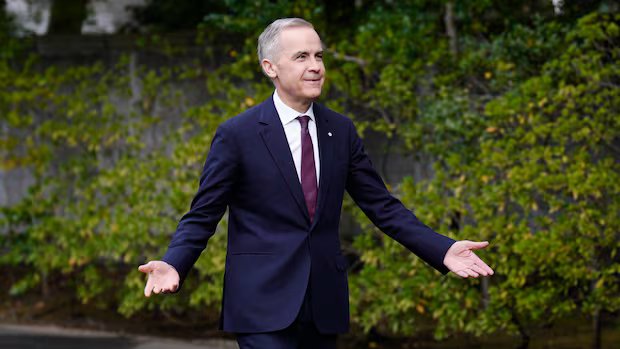

Listen to this article
Estimated 5 minutes
The audio version of this article is generated by AI-based technology. Mispronunciations can occur. We are working with our partners to continually review and improve the results.
The Carney government’s strategy to protect nature is expected to be released in the coming weeks — and some nature advocacy groups worry it won’t come with any new funding.
Billions of federal dollars earmarked for conservation are set to expire at the end of March. If they aren’t renewed, the groups say Canada will not meet its 2030 targets.
For months, several national nature groups have been sounding the alarm that previous investments in biodiversity projects are in jeopardy. They tell CBC News they haven’t received any assurances that long-term funding would be extended.
“We keep hearing the prime minister cares deeply about nature. And, you know, we’re just not seeing the results of that,” said Sandra Schwartz, the national executive director of the Canadian Parks and Wilderness Society.
Prime Minister Mark Carney ended the consumer carbon tax on his first day in office, and has since weakened the federal commitment to an oil and gas emissions cap, abandoned the Trudeau government’s promise to plant two billion trees and ended the EV sales mandate.
“We recognize that it could seem very tone deaf right now, given what’s happening geopolitically. But these are also commitments that are important to our long-term survivability as a species,” said Schwartz, who is concerned that sustained federal nature funding is at risk.
Extinction not seen ‘since the dinosaurs’
The most recent wild species report compiled by federal, provincial and territorial government researchers warns that in Canada more than 2,000 plants, insects and mammals face a high risk of being wiped out.
More than 100 of those species can only be found in this country, including the Vancouver Island marmot, face the risk of being wiped out.
“The fact of the matter is that Canadian nature is in crisis and nature globally is in crisis,” said David Wallis, a policy and campaign manager for reforestation with Nature Canada.
“We are seeing the highest rates of extinction that we’ve seen since the dinosaurs, and that is happening as a result of human action.”

Funding for projects meant to halt and reverse species loss is set to soon expire. The enhanced nature legacy program earmarked $2.3 billion over five years, ending March 31.
As The Hill Times recently reported, there was no mention of renewing the fund in the November federal budget and the main estimates tabled in February showed a sharp drop in conservation funding — from $953 million in 2025-26 to $366 million in 2026-27.
In the 2021 federal budget, the government also committed nearly $1 billion over five years for marine conservation.
CBC News reached out to Finance Canada for comment.
Market-based solutions
A senior federal source with knowledge of the government’s plan said within weeks Canadians should see the Carney government’s vision to protect nature, something it’s calling a nature strategy.
Sources outside of government who have heard about what the government is considering, but were not authorized to speak publicly, also spoke to CBC News.
They say that Liberals are contemplating ways to attract more private and philanthropic capital to fund nature initiatives, with the thinking that the government alone cannot deliver the finances necessary to stop and reverse biodiversity loss.
An initiative on Canada’s West Coast offers a glimpse of what the government may have in mind.
British Columbia’s Great Bear Rainforest is one of the largest remaining coastal temperate rainforests in the world. With an area the size of Ireland, the 6.4 million hectares is home to the white spirit (Kermode) bear and features old-growth forests.

An Indigenous-led conservation financing mechanism pools public and private funds into a long-term endowment for the rainforest.
According to the Canadian government, the endowment has attracted a total investment of $404 million to date.
The initiative is what the nature investment world calls project finance for permanence, or PFPs.
Through measures such as PFPs and the federal government’s green bond program, the Liberals have been exploring a broad suite of tools to encourage nature-focused investments since 2024.
But advocates worry the government is handing over the care of nature to private investors whose motive is profit.
“Our government has to view nature protection as a public service that requires investing in,” said Schwartz. “There’s a role for private capital, but it can’t replace the public capital required.”
Is another nature strategy needed?
Ahead of the imminent release of a new nature strategy, conservation groups are questioning if it’s really needed. The Trudeau government released a roadmap to protect nature just over a year ago.
“All [the government] needs is to provide the appropriate funding to actually implement this strategy,” Wallis said.

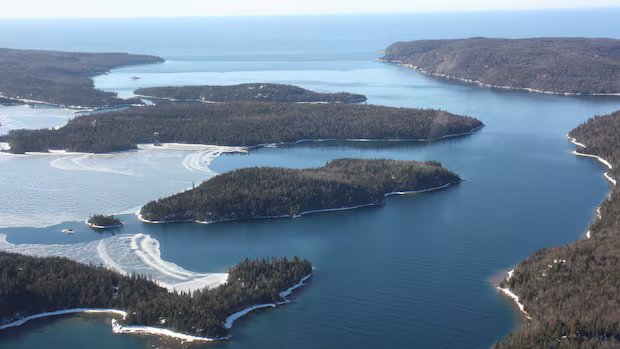
Ottawa also has set goals to conserve 30 per cent of lands and waters by 2030. But as of December, less than 14 per cent of Canada’s land and freshwater and less than 16 per cent of its marine areas were designated as protected areas or protected through other measures.
Canada is home to 20 per cent of the world’s total freshwater, 25 per cent of wetlands and nearly 25 per cent of boreal forests. With the world’s longest coastline, it is also home to one of the largest marine territories.