dailynewsnblog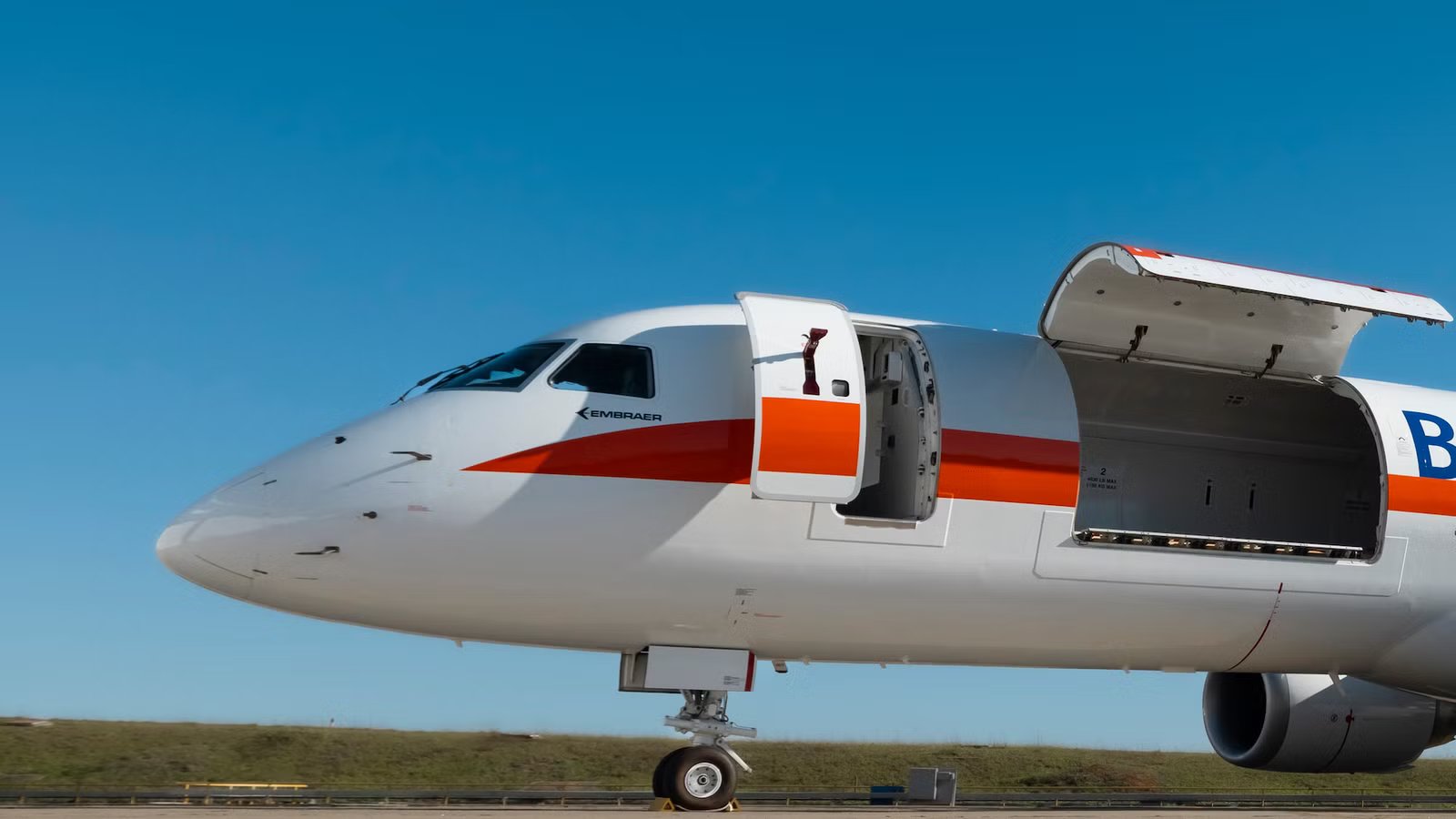
Embraer’s new E190F E-Freighter matters because it targets one of air cargo’s most unique and awkward gaps. Specifically, it aims to cater to routes that are too time-sensitive and too long for turboprop aircraft but far too thin to justify filling a larger  Boeing 737 Classic-derived freighter daily.
The aircraft has not entered European commercial service with Bridges Air Cargo, which launched operations on a route from Cologne to Larnaca for express freight services across Europe, the Middle East, and Africa. That matters because it shows that the E190F is no longer a concept but that it is now proving itself on exactly the sort of secondary middle-market route where right-sizing beats raw overall market size.
A Capable Mid-Range Freighter In Its Own Right

The Embraer E190F is the manufacturer’s passenger-to-freighter conversion of its popular E190 regional jet, designed specifically for the rapidly-growing express and e-commerce market. Embraer has said that the aircraft combines main-deck and underfloor cargo capacity for an impressive maximum structural payload. This allows the aircraft to provide more freight capacity than short-range turboprop freighters while being lighter and much more versatile than the more traditional Boeing 737 Classic.
The program has now attained certification from regulators in Brazil, the United States, and Europe, ultimately clearing it for broader global operations. In practice, that gives operators a modern converted jet that is sized well below traditional 737 freighters but with enough speed, range, and payload to handle regional and cross-border cargo flying efficiently. That combination is the whole point of the E-Freighter concept.
Why Does This Aircraft Offer Impressive Capabilities?

What makes the E190F impressive is not brute strength but overall fit. Embraer says that the jet offers an impressive 40% greater volume capacity than large cargo turboprops, which currently dominate most short and medium-haul overnight cargo routes. The jet, at the same time, can fly roughly three times as far as leading turboprop competitors, all while maintaining up to 30% lower operating costs than larger narrowbody freighters. The following table includes some specifications for the type, according to the manufacturer:
Category: | E190F Specification: |
|---|---|
Maximum Payload: | 13,500 kg (29,760 lbs) |
Range: | 3,700 km (2,300 miles) |
This is a very strong value proposition for operators that are tasked with moving parcels, express shipments, and other time-sensitive freight through decentralized networks. Boeing’s own cargo outlook highlights how e-commerce and express logistics are reshaping air freight, with multi-node supply chains needing fast, reliable lift rather than simply the biggest aircraft available.
Bridges Air Cargo’s decision to begin service with the type highlights a relatively useful proof point, as this is exactly the kind of secondary city pairing where an operator wants jet speed and overall reach. At the same time, these kinds of mid-sized cargo operators typically operate on somewhat slimmer profit margins. This may make them not want to pay for the excess capacity of a much larger freighter. At the same time, the E190F’s strength is that it makes those kinds of thin routes look significantly more commercially viable. Very few production freighters are even remotely capable of coming near matching this impressive blend of capacity and performance capabilities.

Embraer E175 Production Plagued By GE CF34 Engine Shortages, CEO Says
Embraer still has a substantial backlog of E175 orders, particularly with regional airlines in the United States.
The Boeing 737 Freighter Has Legitimate Competition

The Boeing 737 Classic freighter is still a proven regional workhorse, but that does not make it commercially invulnerable. The aircraft is known for offering materially higher lift capabilities than the newer-generation Embraer freighter, with 737-300SF and 737-400F models both being core components of global cargo operations.
However, the fact that the E190F offers a lower cargo payload is not a liability but rather a commercial advantage. On routes where cargo demand consistently falls short of a 737 Classic’s capacity, operators are paying to fly unused aircraft. The E190F attacks that overall inefficiency directly by offering a lower-capacity jet that is still fast, long-legged, and built for express schedules.
The threat, then, is not that Embraer will replace every Boeing 737 Class mission. Rather, the bigger concern is that it can skim off the thinner, lower-density sectors where the Boeing 737 Classic is clearly oversized and thus significantly less economical. This has all the hallmarks of a new aircraft proving a competitive challenge to an established platform.