dailynewsnblog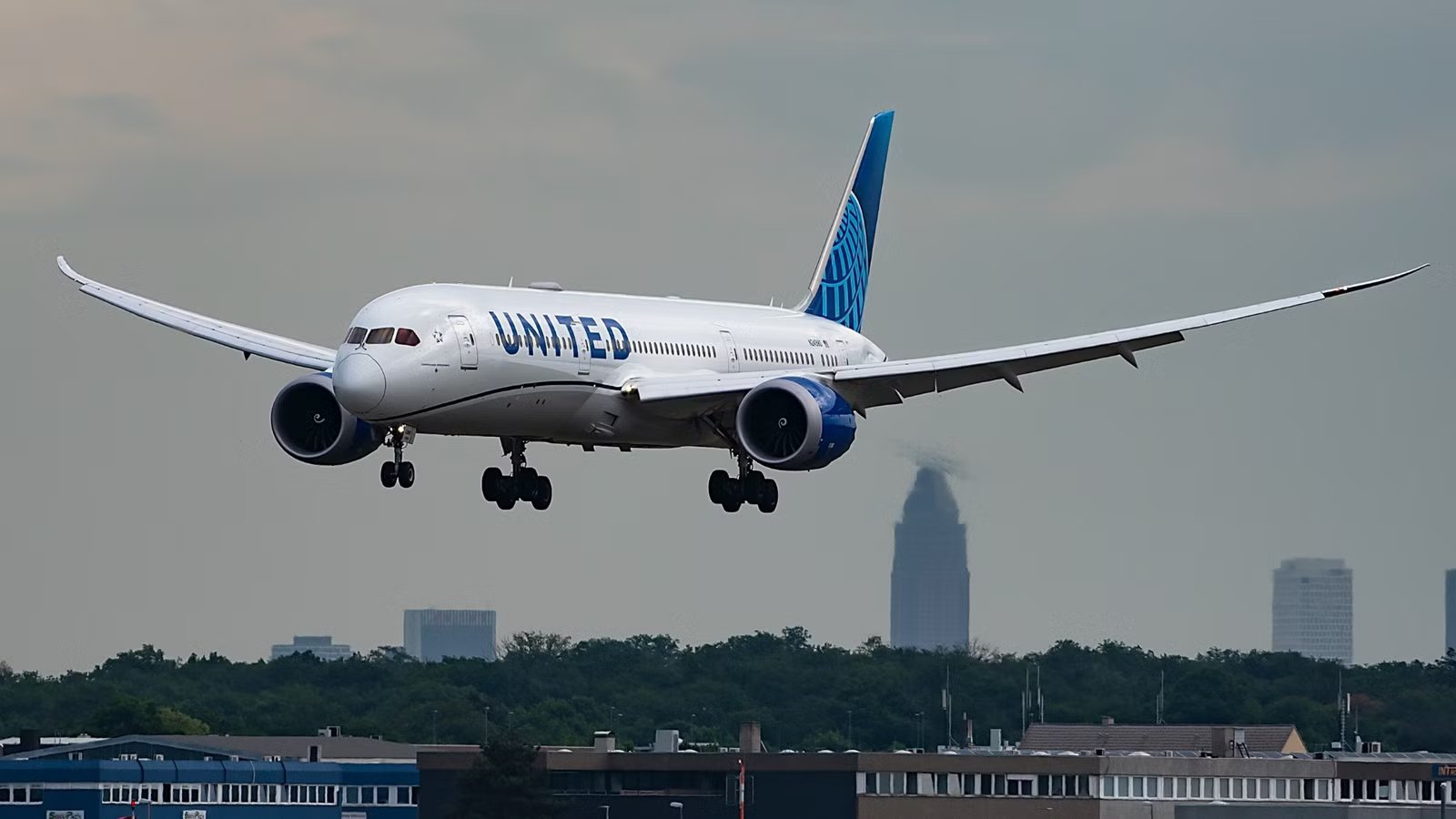
A close call earlier this week saw a United Airlines Dreamliner aircraft initiate a high-speed take-off rejection due to another aircraft entering the runway during its take-off roll. Swift communication from the controller averted the situation from becoming a disaster, as the aircraft that entered the runway without clearance was asked to expedite its exit from the said runway, while the departing aircraft had its take-off clearance cancelled.
Due to the high-speed rejection, the aircraft’s brakes had overheated, resulting in the aircraft having to return to the gate and only departing later after a delay of eight hours.
Take-off Rejection At 106 Knots

According to One Mile At A Time, the incident occurred earlier this week on Monday, March 2, at  Los Angeles International Airport (LAX). The departing aircraft was a United Airlines Boeing 787-9, which was on its way to Hong Kong Airport (HKG), departing from Runway 24L at LAX. The other aircraft involved was an Airbus A321neo, also belonging to United, which had just landed on the parallel Runway 24R. As per the report, the inbound aircraft had landed at the designated 24R and was asked by the ATC to hold short of 24L, for which the flight crew responded with the correct read-back.
Unfortunately, the A321, after landing, turned off the runway at the designated taxiway, but failed to hold short of Runway 24L, resulting in the runway incursion. At the same time, the 787, after receiving its take-off clearance, had begun its roll on Runway 24L, and this was when the ATC asked the A321 to exit without delay and cancelled the 787’s take-off clearance. Data from FlightRadar24 shows that the Dreamliner had achieved speeds of up to 106 knots before rejecting its take-off. Despite the close call, no passengers or crew members were hurt.
As per the reports, this resulted in a high-speed take-off rejection, which ended up overheating the brakes on the 787’s landing gears, ultimately requiring the aircraft to taxi back to the terminal gate. Simple Flying has reached out to United to know any further details.
Back In Action After An Eight-Hour Delay

Despite the rejected take-off and the overheated brakes, flight data shows that the same aircraft was back in action about eight hours later, on its way to Hong Kong. The flight in question, UA-152, is usually scheduled to depart LAX at 11:10 AM (local time Los Angeles) before flying across the Pacific Ocean for an average flight time of about 15 hours, before arriving at HKG at 07:15 PM (local time Hong Kong) on the following day. Considering the eight-hour delay, the aircraft ended up departing at 07:13 PM (local time Los Angeles) and arriving in Hong Kong at 01:35 AM (local time Hong Kong), the day after the flight was scheduled to arrive.
Rather interestingly, this is one of United’s fifth freedom services in the region, and the service, UA-152, continues to operate onwards to Ho Chi Minh City International Airport (SGN), in Vietnam. Considering the inbound flight to Hong Kong was severely delayed, the onward service was subsequently delayed by over six hours. As per the flight data, the following was the revised itinerary:
N29984 – Boeing 787-9 | UA-152 | UA-153 | ||
|---|---|---|---|---|
Journey Legs | LAX – HKG | HKG – SGN | SGN – HKG | HKG – LAX |
Scheduled (Departure – Arrival) | 11:10 AM – 07:15 PM (+1) | 09:15 PM – 10:55 PM | 06:00 AM – 09:35 AM | 11:25 AM – 08:05 AM |
Actual (Departure – Arrival) | 07:13 PM – 01:35 AM (+2) | The following morning 03:45 AM – 04:43 AM | 07:01 AM – 09:57 AM | 12:00 PM – 08:03 AM |
While the departure from LAX was significantly delayed, because of the significant time the aircraft was scheduled to be on the ground in Vietnam, the aircraft’s return legs to Hong Kong and onward to Los Angeles did not face any significant delays.

Unusual: United Airlines Has 11 Routes That Do Not Involve The US
United uniquely operates routes within Asia. Here’s why it does this.
What Exactly Is High-Speed Rejection?

Going back to the incident, it is important to understand the importance of high-speed take-off rejection and how it differs from rejecting a take-off at low speeds. While the speed ranges vary depending on the aircraft type, according to SKYbrary, the speed range in which an aircraft transitions from low speeds to high speeds is around 80-100 knots.
As to the question of how it differs from low speeds, is that, when an aircraft achieves high enough speeds on the ground, the aerodynamic forces are now actively working on the aircraft’s control surfaces, such as rudders, ailerons, and elevators, which allow the flight crew to control the aircraft. This is also why tail-strikes happen when a pilot tries to take off before achieving the relevant speeds. Because while the aerodynamics acting on the elevators at that speed allows the aircraft to rotate, the aircraft is not fast enough to produce sufficient lift, resulting in a tail-strike.
High-speed rejections are usually initiated in case of emergencies, which is the case in this incident. Because the aircraft had already achieved speeds of 106 knots, and the aircraft was presumably heavy with passengers and fuel required for a 15-hour flight, the brakes would have naturally overheated, working to slow down the aircraft and stop it as soon as possible. However, considering the level of safety systems onboard aircraft these days, the landing gears and brake systems are equipped to prevent other hazards such as tire blowouts.

![Southwest’s Massive Expansion: 25 New Nonstop Routes Unveiled [Full List]](https://dailynewsnblog.com/wp-content/uploads/2026/05/1779209886_889-southwest-airlines-boeing-737-max-8-harrisonkim1-_-shutterstock.jpg)