dailynewsnblog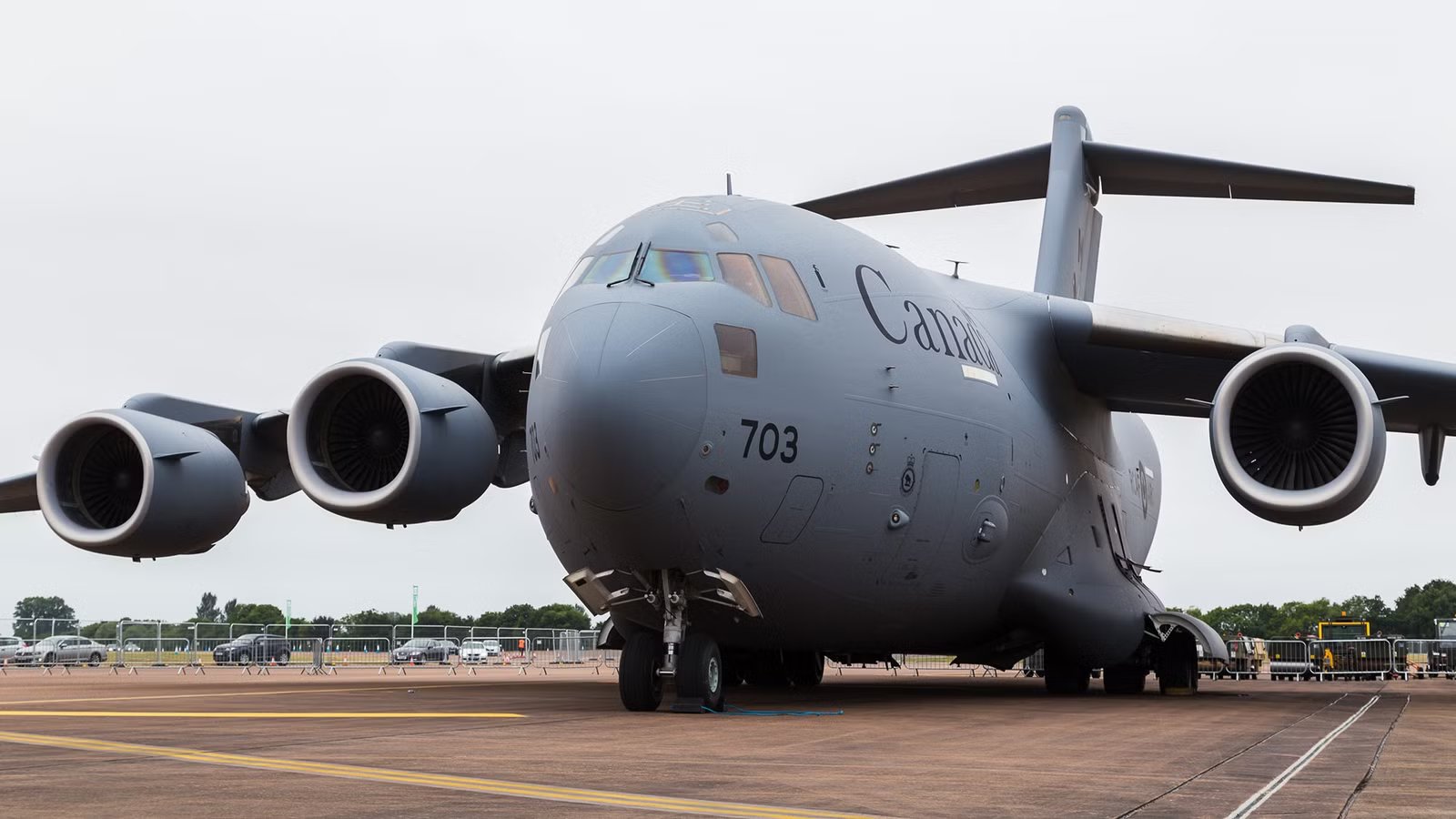
When it comes to military logistics and global mobility, the Lockheed C-5 Galaxy and the Boeing C-17 Globemaster III play critical roles in supporting US defense operations. These platforms are not just about moving cargo: they are key pieces in the puzzles of rapid response, force projection, and sustained military presence across the globe. Though both serve the overarching goal of transporting personnel and equipment, they reflect distinct approaches to meeting logistical demands.
The C-5 Galaxy, introduced in the late 1960s/early 1970s, was designed to support large-scale, long-range missions by delivering equipment directly to strategic hubs. Its vast capacity supports global supply chains and long-haul operations critical to sustaining forward-deployed forces. The C-17, which entered service in the mid-1990s, was built with flexibility in mind, and it supports missions ranging from humanitarian relief to frontline resupply.
Strategic Purpose And Mission Role

The C-5 Galaxy and C-17 Globemaster III were both designed to meet the need for rapid global mobility, but they fulfill different roles within that mission. The C-5, introduced during the Cold War, was built primarily to move massive amounts of equipment and cargo across intercontinental distances. Its primary mission is strategic airlift, delivering oversized and heavy cargo from US bases to major logistical hubs around the world.
In contrast, the C-17 was conceived during a period of changing military needs. With a range of regional conflicts, humanitarian crises, and peacekeeping operations emerging in the 1990s and 2000s, the military needed an aircraft that could operate with greater agility. The C-17 was designed to fill the gap between strategic and tactical airlift, providing the ability to deploy rapidly into forward operating areas with minimal infrastructure.
This distinction shapes how each aircraft is used. The C-5 is often tasked with the initial large-scale deployment of assets, such as tanks, helicopters, or major components, into secure and well-developed airfields. Meanwhile, the C-17, on the other hand, is more frequently used to support ongoing operations, missions, and quick-response deployments where versatility and access to smaller, more austere airfields are essential.
Cargo Capacity And Load Types

The C-5 Galaxy remains unmatched in terms of raw cargo volume and payload. It can carry up to 270,000 pounds (122,500 kg) of cargo, including the largest vehicles in the US military inventory, such as M1 Abrams tanks, CH-47 Chinook helicopters, or multiple armored vehicles. Its cavernous interior includes both upper and lower decks, and the nose can be raised for ‘drive-on/drive-off’ loading through the front and rear.
While the C-17 carries less than the C-5, its maximum payload of around 170,000 pounds (77,500 kg) is still substantial. It can transport a wide variety of cargo, such as one M1 Abrams main battle tank, one M3 Bradley armored personnel carrier, up to four Bushmaster vehicles, up to three Black Hawk helicopters, and 102 fully armed paratroopers.
Importantly, the C-17 was designed with modularity and speed in mind, allowing rapid reconfiguration between cargo, troop transport, and medical missions. It also has a rear cargo ramp that supports aerial delivery of supplies and equipment.
In practical terms, the C-5 is often reserved for loads that simply won’t fit in other aircraft, and it’s the aircraft of choice for oversized or unusually shaped cargo. The C-17, while slightly smaller, is far more flexible in terms of mission profile and can handle most day-to-day transport needs with fewer infrastructure demands and faster turnaround.
How Do They Measure Up?

In terms of sheer physical presence, the Lockheed C-5 Galaxy dwarfs every aircraft in the US Air Force inventory. Measuring over 247 feet (75.3 meters) in length with a wingspan of 222.9 feet (67.9 meters), the C-5 is one of the largest military aircraft in the world. Its towering tail stands at 65 feet (19.8 meters), giving it a commanding profile on any flight line.
The aircraft’s upper deck, which houses the flight deck and troop seating, runs the full length of the fuselage, while the massive lower cargo bay stretches the majority of the fuselage length. The Boeing C-17 Globemaster III is significantly smaller but still ranks as a large cargo aircraft. It is utilized by a number of military outfits across the world and consistently ranks as one of, if not the largest, aircraft in their respective fleets.
|
Specification |
Lockheed C‑5 Galaxy |
Boeing C‑17 Globemaster III |
|---|---|---|
|
First Flight |
1968 |
1991 |
|
Length |
247 feet (75 m) |
173 feet (53 m) |
|
Wingspan |
222 feet (67 m) |
169 feet (51 m) |
|
Wing Area |
6,243 ft² (580 m²) |
3,767 ft² (350 m²) |
|
Fuselage Width |
18 feet (5 m) |
22 feet (6 m) |
|
Height |
65 feet (19 m) |
55 feet (16 m) |
|
Cargo Capacity |
281,000 lb (127,000 kg) |
170,900 lb (78,000 kg) |
|
Max Takeoff Weight |
840,000 lb (381,000 kg) |
585,000 lb (265,000 kg) |
|
Range (Max Load) |
2,300 nm (4,260 km) |
2,419 nm (4,480 km) |
It measures 174 feet (53 meters) in length with a wingspan of 169.8 feet (51.75 meters). Its height is about 55 feet (16.8 meters) at the tail, making it more compact and easier to maneuver in tighter airfield spaces. Its cargo bay is smaller but optimized for quick operations, designed to maximize usable space with fewer internal support structures and efficient loading systems. The data in the table above from WebFlite shows a size comparison between the two aircraft.
The differences in size impact where and how each aircraft can be used. The C-5’s massive footprint limits it to established bases with large aprons and high-capacity hangars. Meanwhile, the C-17’s smaller dimensions allow it to operate in more constrained environments and smaller airfields. These physical differences reinforce their respective roles, strategic for the C-5, and flexible or expeditionary for the C-17.
Operational Figures

Speed-wise, the C-17 Globemaster III typically flies at a cruising speed of around 450 knots (about 520 mph or 830 km/h). This speed, combined with its quick loading systems, contributes to its strength in rapid deployment missions. The C-5 Galaxy, despite its larger engines and size, achieves the same cruise speed at about 450 knots (around 520 mph or 830 km/h).
The Lockheed C-5 Galaxy has a service ceiling of approximately 35,000 feet. In comparison, the Boeing C-17 Globemaster III has a higher service ceiling of around 45,000 feet. Both aircraft can typically operate closer to 28,000–33,000 feet during loaded missions. While the C-17 is capable of reaching higher altitudes in some configurations, both aircraft are designed to optimize performance and fuel efficiency within similar operational altitude ranges.
Crew requirements also reflect their mission profiles. The C-5 typically requires a flight crew of seven: two pilots, two flight engineers, and three loadmasters, reflecting the complexity of its systems and cargo operations. The C-17, in contrast, can be operated by a crew of just three: two pilots and one loadmaster, thanks to more advanced automation and streamlined cargo handling systems. This smaller crew footprint enhances the C-17’s ability to deploy quickly and operate in leaner, more agile settings.
Runway & Airfield Requirements

The C-5 Galaxy and the C-17 Globemaster III are both strategic airlifters designed to operate in challenging environments, but they differ significantly in terms of runway performance. Data from AeroCorner suggests the C-5, being much larger and heavier, typically requires around 8,300 feet (2,530 meters) of runway for takeoff at operational weights, while its landing distance can be as short as 2,600 feet (792 meters).
In contrast, the C-17 has been optimized for tactical flexibility and can take off in as little as 7,600 feet (2,316 meters) and land in just 3,500 feet (1,067 meters), and reportedly sometimes less, depending on weight and conditions. Despite the C-5’s more limited takeoff performance, it holds a clear advantage in cargo volume and payload capacity, capable of carrying outsized cargo such as tanks, helicopters, and even other aircraft components.
|
Feature |
Lockheed C-5 Galaxy |
Boeing C-17 Globemaster III |
|---|---|---|
|
Typical Takeoff Distance |
8,300 feet (2,530 m) |
7,600 feet (2,316 m) |
|
Typical Landing Distance |
2,600 feet (792 m) |
3,500 feet (1,067 m) |
|
Maximum Payload |
281,000 lb (127,460 kg) |
170,900 lb (77,500 kg) |
|
Short/Unprepared Runway Capable |
Limited (can land but not take off fully loaded) |
Yes (designed for short and austere fields) |
|
Reverse Thrust |
All four engines |
All four engines |
|
Operational Flexibility |
High capacity, requires longer runways |
Moderate capacity, high field access |
|
Primary Strength |
Payload and intercontinental range |
Short-field operations and tactical access |
However, this capability comes with the trade-off of requiring longer, better-prepared runways to get airborne again. The C-17, while carrying less (roughly half the maximum payload of the C-5), is designed for short-field and austere operations. Both aircraft can land on poor surfaces, but the C-17 is better suited for short, unprepared runways, making it more versatile in forward or tactical environments.
The C-5, on the other hand, excels in high-capacity, intercontinental logistics but is more dependent on longer, more stable runways for departure. In summary, the C-17 prioritizes flexibility and access, while the C-5 maximizes payload and range, with runway performance reflecting those mission priorities.
The Battle Of The Giants: Is There A Winner?
![3144811 - C-17 Lands at McMurdo Station [Image 1 of 2]](https://static0.simpleflyingimages.com/wordpress/wp-content/uploads/2024/12/3144811.jpg?q=49&fit=crop&w=500&dpr=2)
While the Lockheed C-5 Galaxy and Boeing C-17 Globemaster III may appear to compete on the surface, both being heavy-lift cargo aircraft, the reality is that they are designed to serve distinct yet complementary roles within the US Air Force’s global mobility strategy. The C-5 brings unmatched capacity and strategic reach, ideal for transporting outsized cargo across continents without stopping.
The C-17, by contrast, offers versatility, speed, and the ability to operate in more challenging environments closer to conflict zones or disaster areas. Rather than being redundant, these aircraft work in tandem to create a layered and responsive logistics system. The C-5 can deliver the ‘heavy punch’ by moving tanks, helicopters, and large equipment to established bases.
Meanwhile, the C-17 can then push that cargo forward to tactical locations, support rapid response efforts, or pivot quickly to meet emerging needs. Their combined capabilities ensure that the US military can respond effectively to a wide range of operational scenarios, from major combat deployments to humanitarian crises.
In today’s complex and fast-moving global environment, logistics flexibility is as critical as firepower. The relationship between the C-5 and C-17 demonstrates how a diverse airlift fleet is essential not only for military success but also for maintaining a sustained global presence. By playing to their respective strengths, these aircraft together form a powerful backbone of air mobility that enables the US and its allies to project strength, provide aid, and adapt to whatever challenges lie ahead.