dailynewsnblog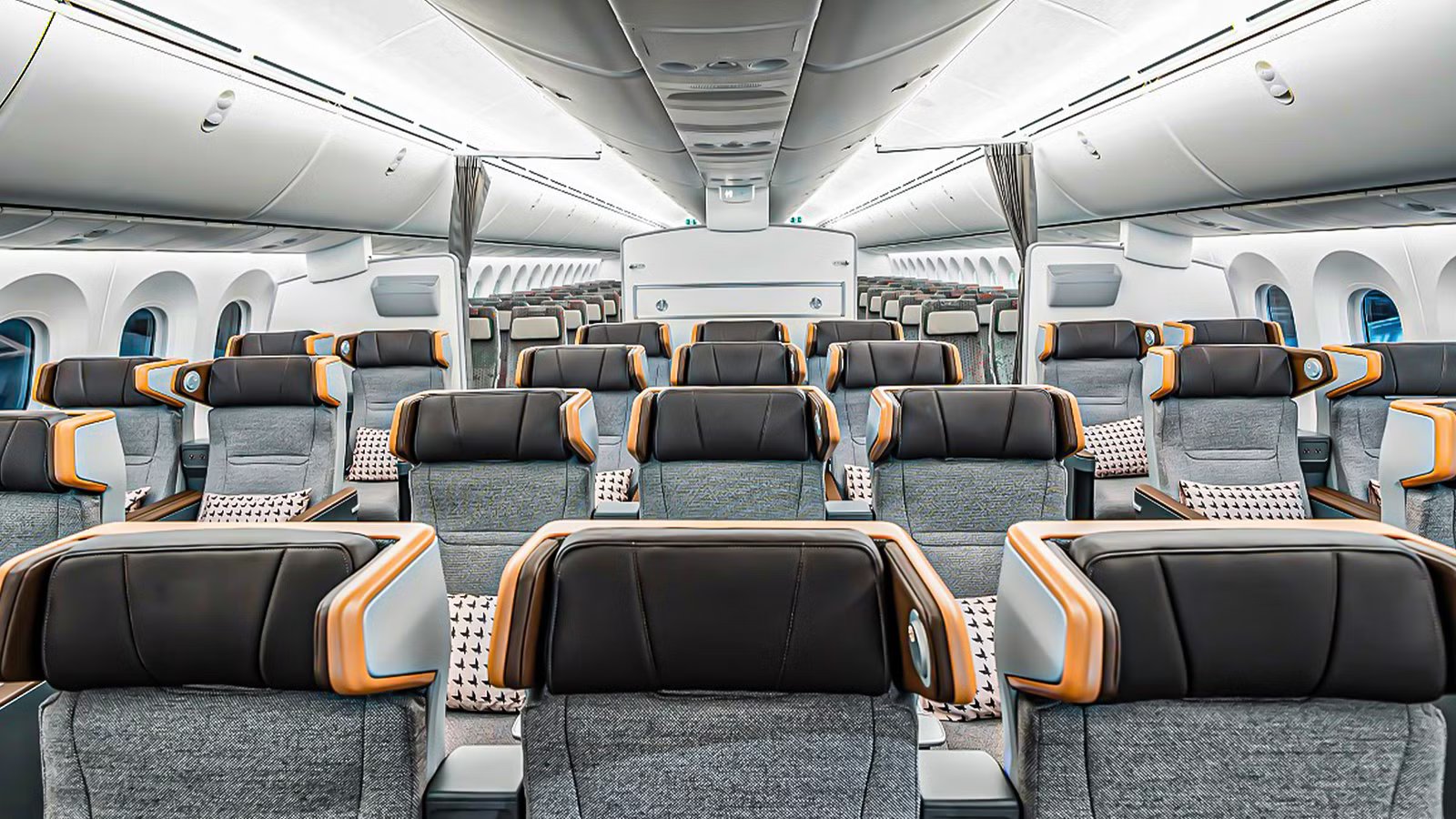
Premium Economy is now a permanent fixture in long-haul cabins, so familiar that it is easy to forget it was once a radical and completely new idea. Positioned firmly between economy and business class, the cabin type has reshaped how airlines design aircraft, price tickets, and segment passengers. It offers a solution to one of aviation’s oldest problems: how to provide meaningful comfort on long flights without charging the eye-watering fares traditionally associated with premium cabins. Today, premium economy is not just an upgrade option; it is a core pillar of airline strategy worldwide.
That reality can be traced back more than three decades to a single airline willing to challenge the industry’s rigid class structure. In 1992, EVA Air, the Taiwanese-based carrier founded in 1989 by the Evergreen Group, introduced a cabin that deliberately sat between economy and business, offering space, passenger comfort, and service that passengers could feel immediately. What began as a quiet experiment would go on to redefine long-haul travel, influence fleet design worldwide, and establish premium economy as one of the most significant product innovations in modern commercial aviation.
The Birth Of A New Cabin Concept

In 1992, EVA Air made a decision that would quietly rewrite the rules of long-haul travel. On its newly delivered Boeing 747-400 aircraft, the airline introduced a cabin called Economy Deluxe, positioned physically and conceptually between economy and business class. At first glance, the changes seemed incremental: slightly wider seats, noticeably more legroom, enhanced meal service, and upgraded in-flight entertainment, but taken together, they represented a clear departure from how airline cabins had traditionally been designed and sold.
At the time, airline class hierarchies were relatively rigid and quite straightforward. Economy class prioritized density and lower fares, business class was tailored to corporate travelers with generous travel budgets, and first class catered to a diminishing luxury market. There was little nuance between these layers, particularly for passengers paying their own way. EVA Air recognized that this approach failed to reflect how people actually traveled, especially on ultra-long-haul routes between Asia and North America, where comfort became a physical necessity rather than a luxury.
Economy Deluxe was therefore not a token improvement or a marketing exercise. It was a deliberately positioned product with its own pricing logic, dedicated cabin zone, seat design, and service standards. By carving out a distinct space between economy and business, EVA Air created an entirely new cabin category, one that directly addressed unmet passenger needs and would later be adopted, refined, and standardized across the global airline industry under the name premium economy.
Why Premium Economy Solved A Market Problem

For decades, passengers faced a stark choice when flying long distances: accept discomfort in economy or pay a steep premium for business class. This binary model ignored the reality that many travelers valued comfort but were unwilling, or unable, to pay multiples of an economy fare. The result was widespread dissatisfaction, particularly on flights lasting 10 hours or more, where sleep deprivation, fatigue, and physical strain became unavoidable parts of the journey rather than acceptable trade-offs.
EVA Air identified this gap not as a niche, but as a mass-market opportunity hiding in plain sight. Economy Deluxe offered tangible improvements that mattered both physically and psychologically: increased seat pitch, greater seat width, leg rests, and enhanced meal service. These upgrades directly addressed circulation, rest, and personal space, issues that a standard economy class could not solve within its high-density constraints, regardless of service quality.
Equally important was pricing discipline. The cabin was positioned as a rational upgrade rather than a luxury splurge. Passengers felt they were paying for real value, not prestige. This balance of comfort, affordability, and clarity created a new willingness to pay and proved that airline cabins could be segmented more intelligently than before.

42 Inches Of Pitch: Inside This Transpacific Airline’s Breathtaking Premium Economy Cabin
This Taiwan-based carrier operates a variety of routes across the Pacific.
How Other Airlines Followed EVA Air’s Lead

The idea of a cabin between economy and business did not come from one airline copying another. In the early 1990s, EVA Air and Virgin Atlantic reached similar conclusions at about the same time. Both saw that many long-haul passengers wanted more comfort than economy offered, but could not justify the price of business class. Each airline introduced an upgraded economy-style product in the same period, showing that the market gap was widely recognized rather than discovered by a single carrier. While the timing was similar, the way the products were handled differed.
EVA Air’s Economy Deluxe was introduced as a clearly defined cabin with consistent seating and service, making it easy for passengers to understand what they were buying. Virgin Atlantic’s early “Mid Class” changed more over time and combined seat improvements with service and airport benefits. Although it showed clear intent, the product was less fixed in form and took longer to settle into a stable, long-term offering.
By the early 2000s, however, premium economy began to solidify as a global standard rather than a curiosity. Airlines such as British Airways, Qantas, and Air New Zealand launched clearly branded premium economy cabins with dedicated seats, enhanced catering, and distinct service flows. What had once been a quiet innovation pioneered by EVA Air evolved into an industry expectation, reshaping long-haul aircraft layouts and permanently embedding premium economy into global airline strategy.
Continuous Evolution Over Three Decades

A key reason for EVA Air’s success has been its ongoing approach to improving premium economy rather than treating it as a finished product. Instead of keeping the cabin fixed at its original design, the airline updated seat construction, spacing, cabin layout, and materials as new aircraft entered the fleet. These changes were guided by passenger feedback, basic ergonomic research, and shifts in travel habits, ensuring the product evolved in line with expectations rather than falling behind them.
The airline also placed strong emphasis on the non-physical aspects of the experience. EVA Air recognized that comfort is shaped as much by service and presentation as by seat design. Upgraded meal presentation, better tableware, higher-quality amenity kits, and a calm, attentive service style helped clearly differentiate premium economy from standard economy. At the same time, these improvements were carefully controlled to avoid overlapping with business class, preserving a clear and sustainable gap between the cabins.
Over time, this consistency built trust. Frequent flyers know what to expect from EVA Air’s premium economy regardless of route or aircraft. In an industry where product inconsistency often undermines brand loyalty, this reliability has become a quiet but powerful differentiator.

5 Airlines With The World’s Newest Premium Economy Seats
These airlines’ premium economy products are among the most modern offerings available in 2026.
The Fourth-Generation Premium Economy Leap

The launch of EVA Air’s fourth-generation premium economy cabin in the mid-2020s represents the culmination of more than three decades of refinement. Introduced on the Boeing 787-9, the new seat design prioritizes personal space through a fixed-shell recline mechanism that slides forward rather than backward, directly addressing one of premium economy’s most persistent frustrations: loss of knee and work space when the seat ahead reclines.
With approximately 42 inches of seat pitch, large high-definition entertainment screens, integrated privacy wings, and thoughtfully designed storage areas, the cabin feels purpose-built for contemporary long-haul travel rather than adapted from older economy concepts. The layout reinforces a sense of separation and calm, ensuring premium economy remains a distinct experience rather than an extension of economy class.
Equally important are the technological and ergonomic details. Universal power outlets, multiple USB ports, and intuitive seat controls reflect modern passenger habits, particularly among travelers who work, stream content, or use multiple devices in flight. Together, these features demonstrate how EVA Air has evolved premium economy from a simple comfort upgrade into a carefully engineered long-haul product, while staying true to its original mission of offering meaningful value between economy and business class.
A Lasting Legacy In Global Aviation

Today, premium economy is no longer experimental; it is essential to long-haul aviation. Aircraft interiors, pricing strategies, and revenue forecasts are now built around the assumption that a significant share of passengers want something clearly better than economy but meaningfully less expensive than business class. This structural shift did not happen by accident; it can be traced directly back to the early insight shown by EVA Air in 1992, when the airline proved that another cabin class could be both commercially viable and operationally sustainable.
The rise of premium economy has fundamentally reshaped airline economics. By smoothing demand curves between economy and business class, airlines have been able to improve overall yield while offering passengers more rational choices. Rather than forcing travelers into extreme price jumps, premium economy captures incremental willingness to pay, increasing revenue without alienating cost-conscious customers or over-discounting premium cabins.
Just as importantly, premium economy has reshaped passenger psychology. It normalized the idea that comfort should increase progressively across cabins, not abruptly at the business-class curtain. EVA Air’s legacy, therefore, extends far beyond a single product launch. By introducing, and then relentlessly refining, premium economy, the airline demonstrated that some of aviation’s most enduring innovations arrive quietly, driven not by spectacle but by a deep understanding of passenger needs and a long-term commitment to serving them well.