dailynewsnblog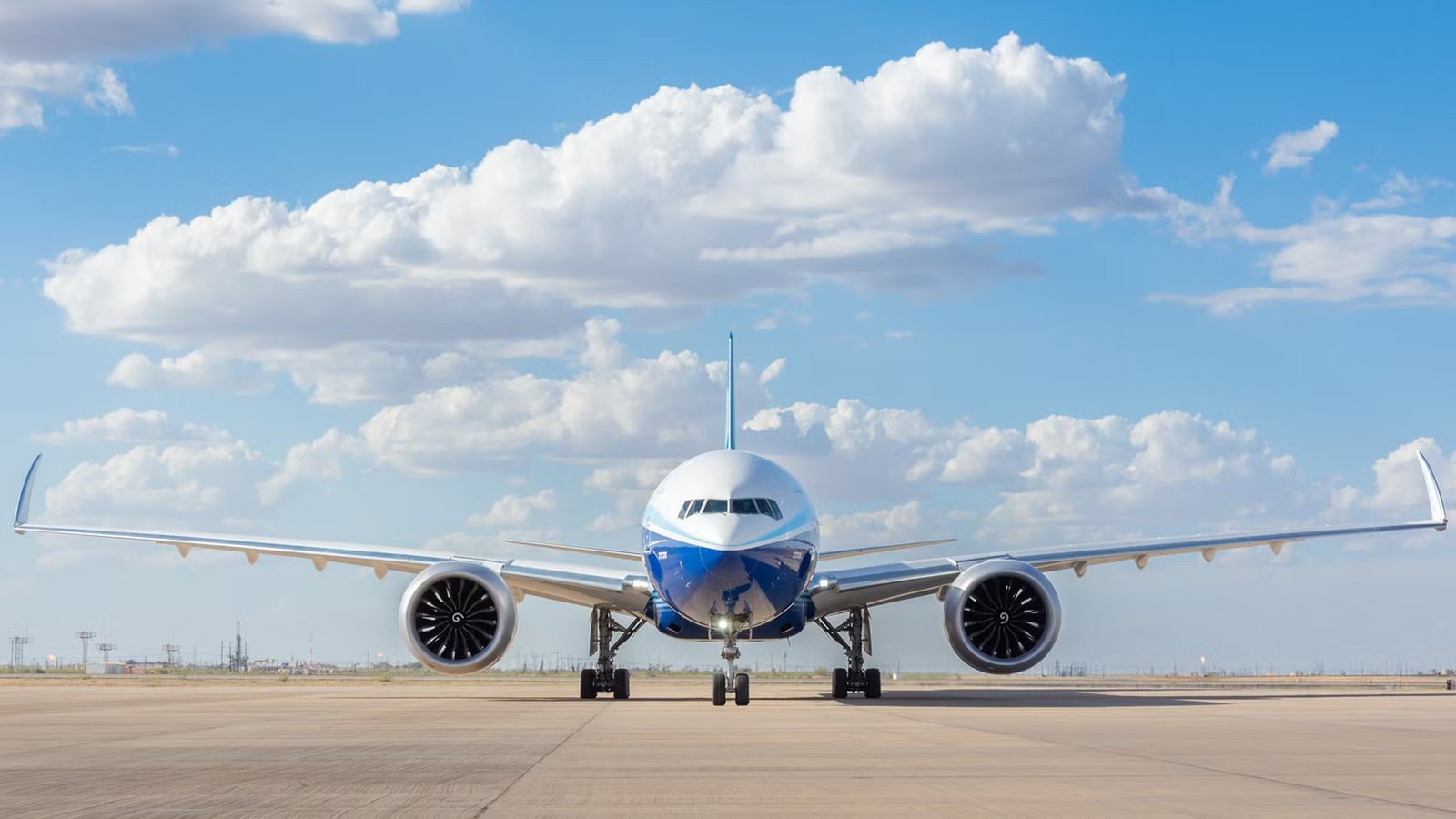
The Airbus A350 XWB is the European firm’s flagship aircraft. Consisting of three variants, the smaller A350-900, the larger A350-1000, and the A350F sized in between the two, the A350 has received more than 1,500 orders. While it appears similar in size to the Airbus A330, its extra width means that it seats more passengers overall while being more comfortable than the Boeing 787, which seats the same number of passengers per row in economy but has a narrower fuselage.
The A350 is the widest single-deck aircraft that Airbus has produced, but it’s not the widest airliner on the market today. That would be the  Boeing 777X series, which consists of the 777-8, 777-8F, and 777-9. While Airbus markets the A350 as the XWB (for eXtra Wide Body), it’s designed to only fit nine passengers across in economy. The Boeing 777X, meanwhile, is designed to fit ten passengers per row in economy. Here’s why this is a problem for Airbus.
Why Making The A350 Was A Good Idea

The Boeing 787 promised to revolutionize the airline industry with its design and the markets that it would open up. During its development in the 2000s, the Dreamliner gained significant traction from airlines, and it made Airbus’s A330 look like yesterday’s news. However, Airbus had enough on its plate as it focused on developing the equally ambitious A380, so it initially responded to the 787 by adding a new composite wing and 787 engines to an A330 fuselage.
While the initial A350 concepts attracted some orders, several of Airbus’s biggest customers publicly criticized it, seeing it as a half-baked attempt to counter the 787. As such, Airbus was sent back to the drawing board and would return with the A350. Not only was the A350 a fully clean-sheet design to better match the 787 on fuel efficiency, but Airbus made the aircraft larger than the Dreamliner, instead targeting the Boeing 777.
Boeing had a head start with the 787, so making the A350 larger established a unique niche for the A350. The A350 variants are sized almost identically to the original 777 variants, meaning that the A350 and 787 don’t directly compete. Furthermore, given that the Boeing 777 is the most successful widebody program of all time in terms of deliveries, positioning the A350 as a direct replacement gives the type even more of a market.
Boeing’s Response To The Airbus A350

The 777 was outclassed by the A350, so Boeing gave the type a thorough refresh. First announced in 2013, the 777X features a new composite wing, General Electric GE9X engines, as well as a stretch for both models. The 777-8, the successor to the 777-200LR, is now sized between this variant and the 777-300ER, while the 777-9 is longer than the Boeing 747-8 and features a wider wingspan.
Not only do both variants of the 777X feature a longer fuselage than the competing A350 variants, but they feature a wider cabin as well. The 777 was originally designed to seat nine passengers per row in economy, but airlines in the 2000s and 2010s began to install an extra seat. Today, only a small handful of airlines still configure their 777s with nine-abreast economy, opting for the superior economics of a ten-abreast layout instead.
|
Economy Layout |
Aircraft |
|---|---|
|
Seven-abreast (2-3-2) |
Boeing 767 |
|
Eight-abreast (2-4-2) |
Airbus A300, Airbus A310, Airbus A330, Airbus A340, Airbus A380 (upper deck), Boeing 767 (uncommon), Boeing 787 (uncommon) |
|
Nine-abreast (3-3-3) |
Airbus A350, Boeing 787, Lockheed L-1011 (2-5-2 more common), McDonnell Douglas DC-10 (2-5-2 more common), McDonnell Douglas MD-11, Airbus A330 (uncommon), Boeing 777 (uncommon) |
|
Ten-abreast (3-4-3) |
Airbus A380 (lower deck), Boeing 747, Boeing 777, Airbus A350 (uncommon) |
Unfortunately for passengers, this makes for a tight travel experience. Ten-abreast 777s often feature seats that are 17 inches wide or less, and, perhaps even more importantly, these configurations have notoriously narrow aisles. This makes it more difficult for cabin crew to perform services and makes it harder for passengers to travel through the aircraft. With the 777X, Boeing introduced a thinner sidewall design that added four inches to the aircraft’s cabin width.
Why The 777X Is Making Airbus Concerned

The Airbus A350 is a successful program, and the A350-900 is especially popular. It targets the 777-200ER replacement market, but while the 777-200ER sold 422 units, the A350-900 has received over 1,000 orders. Both the A350-900 and 787 seat nine-abreast in economy, but the A350-900 is significantly longer than the 787-9. Furthermore, the A350 can be configured eight-abreast in premium economy, whereas the 787 can only seat seven guests per row in this class.
The 777-8 has only received 35 orders from one customer: Emirates. Although this variant does technically compete with the A350-900, it poses little threat as the A350-900 mainly competes with the 787. The 777-9 is intended to compete with the Airbus A350-1000, and both target a similar market: replacing the Boeing 777-300ER. However, although the A350-1000 is sized closely to the 777-300ER with a narrower fuselage, the 777-9 is larger than both.
While the A350-900 is holding its own against the Dreamliner and outcompeting the 777-8 to the point that its development is paused, the A350-1000 has not fared as well. The Boeing 777-9 has received 521 orders since the 777X’s launch in 2013. The Airbus A350-1000, meanwhile, an aircraft that was launched years beforehand, has landed 367 orders in total, over 100 fewer than its Boeing counterpart.
How The Width Of The 777X Contributes To Its Success

The Airbus A350-1000 is an excellent replacement for the 777-300ER, and it has gained more traction in recent years. The reason why the 777-9 is so long is that this helped lower the per-seat operating costs of the jet to a figure competitive with the A350-1000, as a 777-300ER with new wings and engines wouldn’t be competitive. However, while the size of the 777-9 was intended to make the jet more competitive with the A350, it also gave the aircraft its own market.
Most prior-generation Boeing 777s feature ten-abreast seating in economy, but, given how tight these layouts can be, Boeing added four inches of interior cabin width through a new sidewall design. This likely wouldn’t be enough for wider seats, but adding this width to the aisles makes service more efficient and still improves passenger comfort. Most Airbus A350s fly with nine-abreast economy, as the plane is too narrow for ten-abreast to become mainstream.
The result is that ten-abreast becomes significantly more appealing for an airline that flies nine-abreast Boeing 777s, such as  Singapore Airlines, and the 777-9 would seat significantly more passengers than a nine-abreast 777-300ER. The increased size also positions the 777-9 as a replacement for Boeing 747s and Airbus A380s, given that it is the largest airliner on sale today. Given how much smaller the A350-1000 is, it’s less optimal for this role.
How This Impacts The Widebody Market

The 777-9 rarely steals orders from the A350. In fact, all but one customer for the 777-9 is also an operator of the A350. However, the A350-900 is typically operated in larger numbers than the A350-1000, which is often used as a direct capacity upgrade on the A350-900. Meanwhile, most airlines intend to operate the 777-9 as a premium flagship with first class, with some ordering significantly more 777-9s than A350-1000s. The A350-1000 slots in between, and this is a relatively narrow slice of the market.
Etihad and British Airways are two 777X customers that only operate the A350-1000, but the rest of the airlines in the 777-9’s customer list have more A350-900s in service or on order than A350-1000s. Emirates and Singapore Airlines, meanwhile, do not have any A350-1000s on order, opting for the 777X and the A350-900. Ultimately, the A350-1000’s demand is limited at the lower end of the market by the excellent economics of the smaller A350-900, while the 777X is squeezing it from the top.
|
777-9 customers |
Do they fly the A350? |
|---|---|
|
Air India |
A350-900, A350-1000 (on order) |
|
All Nippon Airways |
No |
|
British Airways |
A350-1000 |
|
Cathay Pacific |
A350-900, A350-1000 |
|
China Airlines |
A350-900, A350-1000 (on order) |
|
Emirates |
A350-900 |
|
Ethiopian Airlines |
A350-900, A350-1000 |
|
Etihad Airways |
A350-1000 |
|
Korean Air |
A350-900, A350-1000 (on order) |
|
Lufthansa |
A350-900, A350-1000 (on order) |
|
Qatar Airways |
A350-900, A350-1000 |
|
Singapore Airlines |
A350-900 |
Rumours have circulated for years that Airbus would stretch the A350-1000 to directly rival the 777X. However, the trouble for Airbus is that Boeing could simply respond with its own ‘777-10,’ and the ten-abreast cabin means that any 777X variant will always have a higher capacity than a comparable A350 order. As its operating costs are competitive with the A350-1000, this means that the 777X will be more suitable for the top end of the widebody market for most airlines.
How Should Airbus Respond To The 777X?

Currently, only two airlines fly Airbus A350s with ten-abreast economy seats: Air Caraïbes and French bee. However, Airbus is now selling A350s with a ‘New Production Standard’ (NPS), which includes a bump in Maximum Takeoff Weight, empty weight reductions, and a more efficient interior layout. Part of the interior change includes a new, thinner sidewall design, which Airbus advertises allows for ten-abreast economy seating with 17-inch wide seats.
Philippine Airlines is the first (and so far) only full-service airline to order the NPS A350 with ten-abreast seating. An Airbus A350 with ten-abreast economy seating would have extraordinarily low per-seat costs, and the A350-1000 with this layout could potentially eviscerate a future market for the 777-9. What remains to be seen is whether the market accepts this as a mainstream configuration, but so far, it has not.
What Airbus could also focus on is gradually improving other aspects of the jet, such as with the comprehensive NPS program. Multiple carriers have selected the A350-1000 as a flagship aircraft, such as Japan Airlines and Delta Air Lines. It remains one of the most fuel-efficient and capable airliners on the market, so while it can’t always compete with the 777-9 in size, it might not need to, given that it has still been relatively successful.