dailynewsnblog
“This uncritical support of the American Israeli strikes on Iran feels much more consistent with that kind of automatic uncritical alignment than it does with thinking in a clear eyed way for ourselves about what our interests actually are,” Greaves said
Liberal MPs are offering varying perspectives on Prime Minister Mark Carney’s decision to voice his support for U.S. and Israeli attacks on Iran that threaten to spill into a wider regional war.
One Liberal MP told iPolitics the prime minister is in a “very difficult place” where he needs to manage his relationship with U.S. President Donald Trump with support for the rules-based global order.
The MP, who asked not to be identified to share their concerns freely, said it’s clear the U.S. and Israel are “not following the UN Charter rules or international law,” but Carney is likely “very nervous about saying something that would get the ire of President Trump.”
This is especially important as the review of the North American free trade deal is set for later this year.
But as Iran retaliates by targeting U.S. bases, the MP said Carney’s new challenge becomes ensuring that Canada isn’t drawn into this conflict, especially if Trump makes a direct appeal for Canadian involvement.
Article 5 of the NATO Treaty treats an armed attack against one member as an attack against all. It has only been invoked one time in its history — by the United States after the Sept. 11 terror attacks.
Canada joined the U.S. in the invasion of Afghanistan after it was invoked, but refused to participate in their war against Iraq because it wasn’t provided proof that the country was building weapons of mass destruction.
The MP said Canada would be faced with a challenging decision if Trump invokes Article Five now.
“Iran doesn’t have the missile capacity and capability to reach U.S. soil, but there’s a very real possibility that the U.S. could say if their bases are being attacked, or their military personnel are being attacked, they invoke Article Five,” they said.
“That will be really difficult for us because then we could potentially be drawn into a conflict we don’t want to be part of. ”
The MP added that the Liberal caucus has “mixed feelings” on Carney’s response to the U.S. attacks, with some worried about the precedent it sets for future intervention.
“I think there are a lot of people who maybe disagree with the U.S. invasion on a principled basis when it comes to international law, but they don’t like the Iranian regime, and they don’t like what they’re doing to the Iranian people or to Iranians in Canada,” they said, comparing it to the U.S.’ controversial capture earlier this year of Venezuelan president Nicolas Maduro, who Canada regarded as an undemocratic dictator.
Hanging over everything is the PM’s much-discussed speech at the World Economic Forum in Davos earlier this year.
In that speech, the prime minister said Canada would take a pragmatic approach to an increasingly volatile global environment and aim to partner with other middle powers to resist bullying from hegemons.
Carney said Canada would still be guided by core fundamental values, including sovereignty and territorial integrity, and the prohibition of the use of force except when consistent with the UN Charter and respect for human rights.
The MP said Carney needs to explain to Canadians what that looks like in action.
“I think that’s kind of the question that we have to answer now, and that the prime minister has to answer is what does our pragmatism mean? Because I think a lot of people heard the Davos speech and they heard like we’re going to double down on Canadian values and we’re going to be a middle power, and we’re going to stand up for human rights and the things that we traditionally have, even if that’s not what the prime minister said,” the MP explained.
“But I think that’s where a lot of people went with their pride in Canada, and what he might be demonstrating right now is actually big departure from what we’ve typically done as Canada, and that will be a really interesting and I think difficult conversation to negotiate with.”
Liberal MP Will Greaves agreed that Carney needs to clarify to Canadians how the move squares with the Davos speech.
“I would need more clarification as to how our statement of the weekend on Iran is consistent with those principles that the PM has outlined [in his speech in Davos],” he said in an interview with iPolitics.
“I think that inconsistency, or at least the perception of inconsistency, is something that the government has a responsibility to address, and that Canadians need to better understand how this action — if this is the government’s policy — can be made consistent with the broader vision that he laid out.”
Greaves, who first raised the issue in a post on social media over the weekend, said he hasn’t been in touch with the prime minister since the start of the U.S. operation in Iran. He said he’s spoken his Liberal caucus colleagues and officials at Global Affairs and the Prime Minister’s Office, but hasn’t received a “formal response or an actual answer” to his questions.
Carney is in the midst of a week-and-a-half of a globetrotting tour of the Asia-Pacific region.
He spoke to reporters on Tuesday for the first time since he released a statement on Saturday signalling support for the attacks.
In his opening remarks, Carney attempted to square his Davos speech with his support for the attacks, saying the international order failed to stop Iran’s nuclear ambitions but noting the U.S and Israel acted without the UN or consulting their allies.
He condemned Iran’s strikes on “civilians and civilian infrastructure across the Middle East” and said Canada was urging “all parties, including the United States and Israel, to respect the rules of international engagement.”
“Canada calls for a rapid de-escalation of hostilities and is prepared to assist in achieving this goal,” he said.
“Resolution of this crisis will require commitment to a broader political solution and diplomatic engagement is essential to avoid a wider and deeper conflict.
At an event in India over the weekend, Carney said Canada wouldn’t get directly involved in the conflict and in his statement, called Iran the “principal source of instability and terror throughout the Middle East” and said it must never be able to develop a nuclear weapon.
Since the initial attacks, Israel and Iran have traded missile fire, disrupting energy supplies and travel, and Israel hit Beirut with airstrikes and moved additional troops into southern Lebanon.
The American embassy in Saudi Arabia also came under drone attack and Iran has hit many countries deemed safe havens in the Mideast in retaliation for the U.S.-Israeli strikes, including Amazon data centres in the United Arab Emirates and Bahrain.
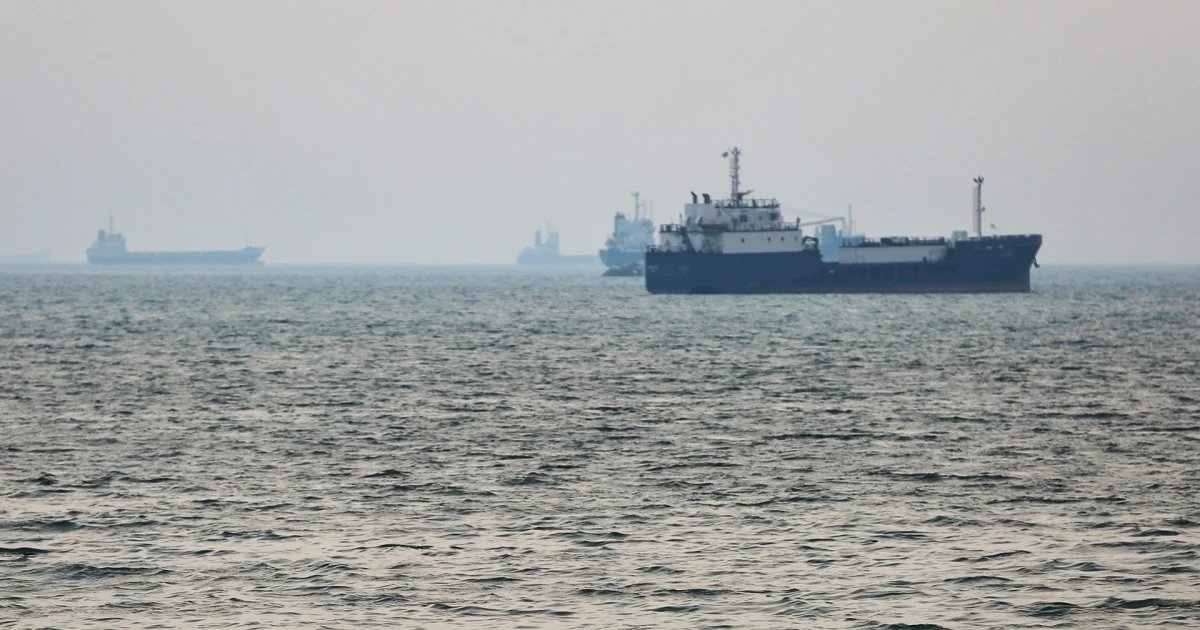
Iran has also attacked energy facilities in Qatar and Saudi Arabia, and several ships in the Strait of Hormuz, the narrow mouth of the Persian Gulf through which a fifth of all oil traded passes, sending global oil and natural gas prices soaring.
Looking for answers
Greaves, a former international relations professor, said Carney’s support of the U.S. attacks does appear on the surface to contradict his speech in Davos, though he’s looking forward to hearing an explanation on the PM’s rationale.
In the Davos speech, Greaves said Carney acknowledged that the word was entering into an era of “great power politics,” where superpowers were “increasingly behaving as though they were unbound by rules and norms.” He said Carney understands that this would leave smaller countries like Canada vulnerable to “predation and coercion,” and that underscored his whole push for Canada to chart out a different path forward to pursue its interests.
This path, Greaves explained, includes not supporting the “actions of other countries that we might historically have been close to and might have reasons for wanting to support, but which are doing things that are not actually in our interest.” Although the U.S. wasn’t named in the speech, he said it’s clear the “broad theme” of Carney’s speech was Canada shouldn’t be “automatically aligning itself with American hegemony.”
That’s why he said he was so confused about the PM’s support of the Iran attacks.
“This uncritical support of the American Israeli strikes on Iran feels much more consistent with that kind of automatic uncritical alignment than it does with thinking in a clear eyed way for ourselves about what our interests actually are,” Greaves said.
But another Liberal MP told iPolitics that Carney’s support for the attacks aligned with his Davos speech.
The MP, who asked not to be identified to speak freely, called Iran the “epicentre of state sponsored terrorism” and agreed with the prime minister that its dictatorship is “one of the greatest threats to global peace and security.”
The MP said that Canada’s support for the attacks is “very consistent” with Carney’s vision laid out in the Davos because it was based on the need to contend with the Iranian threat and shouldn’t be read as broad backing for U.S. and Israeli foreign policy.
“[It] does not equate to support for every decision they make,” the MP explained.
“It was a time for moral clarity from our government and the prime minister could not have been more clear. Iran is a state sponsor of terrorism and we cannot let them get access to a nuclear weapon.”
Asked about criticism over Carney’s decision to side with the U.S., the MP said the Davos speech was clear in that Canada needed to “deal with the world as it is, not the way we wish it to be,” and would have to “engage with countries… where we may not agree on everything.”
The MP said that criticism over the statement on Iran comes from the same voices that don’t believe Canada should be doing business with China, India, Israel, Qatar or the United Arab Emirates, which they said wasn’t a realistic approach to foreign policy.
“So, who are we going to trade with? Who are we going to have relations with if we listen to some of these some of these people in my caucus and outside of my caucus, who never had to negotiate anything in their life?” the MP asked.
“What I would say to them is ‘grow up.’”
with files from the Canadian Press and Associated Press