dailynewsnblog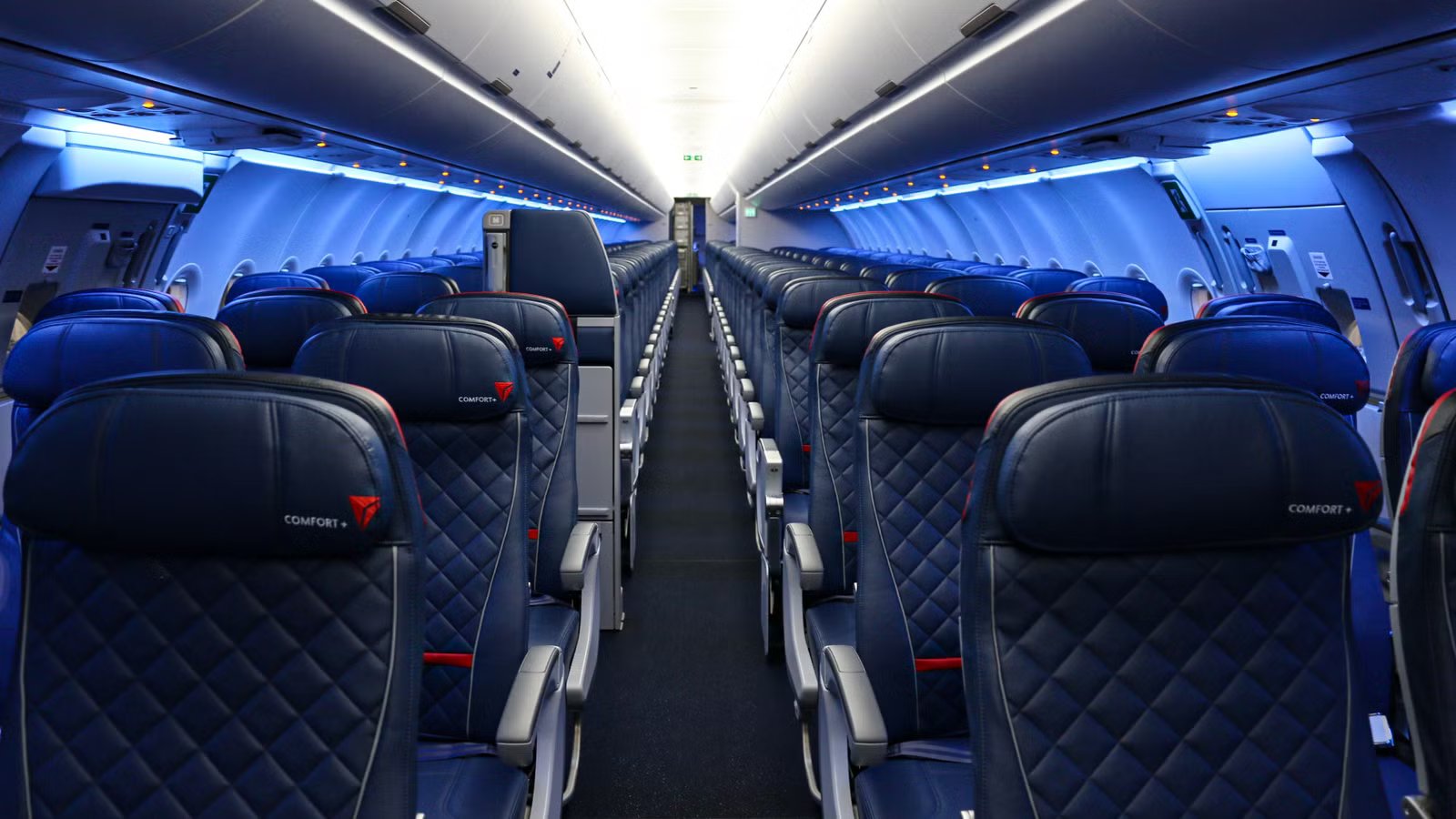
Airline seat comfort has become an increasingly important factor for travelers, especially as aircraft cabins have grown denser over the past decade, with many airlines squeezing every last bit of revenue they can from their aircraft. Many US airlines are reducing seat pitch to maximize capacity; even small differences in legroom can significantly affect passenger comfort, particularly on flights lasting more than two or three hours. As a result, economy-class spacing has become a major point of comparison among carriers.
Recent industry data and passenger surveys highlight notable differences in the amount of personal space airlines provide in standard economy. While some carriers prioritize lower fares and higher seat counts, which is a trade-off, to an extent, a lot of passengers are willing to accept, others compete by offering more generous legroom and enhanced onboard amenities. Understanding these distinctions can help travelers make informed decisions when choosing between comfort, cost, and convenience. Join us as we explore the US airlines offering the most spacious economy seats, as well as a glance at the operators who fall short of that list.
JetBlue Airways Sets The Standard For Economy Legroom

JetBlue consistently ranks at the top among US airlines for economy-class legroom, offering an average seat pitch of approximately 32 to 33 inches (81.3 cm to 83.8 cm) across much of its approximately 190-strong fleet of Airbus aircraft. Seat pitch, the distance from a point on one seat to the same point on the seat in front, is the primary industry measurement of legroom. While a one-inch difference may sound minor, aviation studies show that even small increases significantly improve circulation and comfort on flights longer than two hours.
In addition to a generous pitch, JetBlue typically offers seat widths around 17.8 to 18.4 inches (45.2 cm to 46.7 cm), depending on aircraft type, which is competitive within the industry. Many of its Airbus A320 and A321 aircraft also feature adjustable headrests and modern slimline seats designed to maximize knee space. The airline further differentiates itself by offering “Even More Space” seats with up to 38 inches of pitch for an additional fee.
Beyond physical dimensions, JetBlue enhances comfort with free high-speed Wi-Fi (branded as Fly-Fi), complimentary name-brand snacks, and seatback entertainment screens on many aircraft. These amenities contribute to its frequent placement near the top of passenger satisfaction rankings for economy travel within the United States.
Southwest Airlines Delivers Consistency And Value

 Southwest Airlines offers an average seat pitch of roughly 31 to 32 inches (78.7 cm to 81.28 cm), placing it above most legacy carriers in standard economy spacing. Because the airline operates an all-Boeing 737 fleet, the largest Boeing 737 fleet in the world, the cabin layout is relatively consistent across its route network, which means passengers can generally expect similar legroom regardless of destination.
One unique feature of Southwest is its open-seating boarding process. Rather than assigning seats in advance like the majority of other carriers, Southwest operates in the ”old-school’ way whereby passengers choose any available seat upon boarding. While this does not increase physical space, it provides the opportunity to select exit-row seats that offer up to 39 inches (99 cm) of pitch. As of early 2026, Southwest Airlines is transitioning to assigned seating with a standard, fleet-wide seat pitch of 31 inches (78.74 cm), reduced from their previous 32-inch (81.3 cm) standard to accommodate new extra-legroom options.
Southwest also adds value through customer-friendly policies, including two free checked bags, a rarity among airlines today, specifically in the world of low-cost carriers (LCCs), with Southwest generally considered the world’s largest. Combined with respectable legroom and no change fees, this makes the airline a strong choice for passengers prioritizing both comfort and flexibility.

The Airlines With The World’s Longest Legroom In Premium Economy In 2026
Which airlines go above and beyond with their premium economy offerings?
Delta Air Lines Excels In Overall Economy Comfort

 Delta Air Lines offers a standard domestic economy seat pitch that typically averages between 30 and 31 inches (76.2 cm to 78.74 cm), placing it in line with most major US network carriers. While it may not dramatically exceed competitors in pure legroom measurements, this range provides noticeably more space than ultra-low-cost airlines and is generally comfortable for typical domestic flights. Delta balances seat density with comfort in a way that supports both operational efficiency and a more premium overall feel compared to budget-focused carriers.
Beyond basic dimensions, Delta differentiates itself through cabin features and onboard amenities. Many of its aircraft are equipped with seatback entertainment screens, USB charging ports, and standard power outlets, even in economy class, which enhance convenience and make longer flights more enjoyable. The airline has also invested significantly in modernizing its fleet, introducing newer aircraft such as the Airbus A220 and Airbus A321neo with updated interiors, improved lighting, larger overhead bins, and quieter cabins. These upgrades contribute to a more contemporary and spacious cabin feel, reinforcing Delta’s reputation for comfort and reliability within the US aviation market.
Operational reliability also contributes to comfort with Delta Air Lines. According to People Magazine, Delta was the most on-time US carrier in 2025, with about 80.9% of its roughly 1.8 million flights arriving within 15 minutes of schedule, a top ranking among North American airlines for the fifth year in a row.
Alaska Airlines Offers Balanced Cabin Space

 Alaska Airlines, the fifth-largest airline in North America by passengers carried, offers approximately 31 inches of seat pitch in standard economy, placing it solidly within the mid-tier range of US carriers. This level of legroom is generally considered comfortable for most domestic flights and compares favorably with other major network airlines. Seat width typically ranges from 17 to 18 inches (43.18 to 45.72), depending on the aircraft type, providing adequate shoulder space for short and medium-haul travel.
The airline operates primarily Boeing 737 family aircraft across its mainline network, supplemented by Embraer E175 regional jets that serve smaller markets and feeder routes. In recent years, Alaska has refreshed many cabin interiors with slimmer, lighter seats designed to preserve or slightly improve usable legroom while enhancing fuel efficiency. For travelers seeking extra space, Alaska’s Premium Class offers up to 35 inches (88.9 cm) of pitch along with priority boarding and complimentary drinks, providing a cost-effective upgrade option that delivers noticeably greater comfort without the price of first class.
Customer service consistently ranks as one of Alaska’s strengths. Particularly strong on West Coast routes, the airline benefits from high repeat customer loyalty due to its friendly onboard culture and operational consistency.

Delta Air Lines Vs. United Airlines Vs. American Airlines: Which Carrier Wins Basic Economy Value?
The differences between the budget fare type offered by the three legacy carriers.
American Airlines And United Airlines

 American Airlines and
  United Airlines both provide standard economy seating with an average seat pitch of approximately 30 inches on many domestic narrowbody aircraft, including the Boeing 737 and Airbus A320 families. While slightly below the 32 inches (81.28 cm) offered by carriers such as JetBlue or Southwest Airlines, this is still within the typical range for large network airlines. Standard seat widths generally fall between 16.5 and 17.5 inches (41.91 cm to 44.45 cm), providing reasonable shoulder room for domestic travel, although taller passengers may find long-haul comfort limited without upgrading.
Both airlines have densified certain aircraft in recent years, adding additional rows to increase passenger capacity and improve revenue efficiency per flight. While this allows the airlines to operate more cost-effectively and offer competitive fares, it can result in slightly tighter seating arrangements for standard economy passengers. To enhance comfort, American offers Main Cabin Extra and United provides Economy Plus, which increases seat pitch to approximately 34 to 37 inches (86.36 cm to 93.98 cm). These upgraded options often include additional amenities such as priority boarding and complimentary beverages, giving travelers the ability to balance cost with comfort on longer flights.
Beyond legroom, many passengers choose American and United for their extensive domestic and international route networks. Both carriers operate major hubs across the US and offer strong frequent flyer programs, AAdvantage for American and MileagePlus for United, that reward loyalty and provide benefits such as lounge access, priority boarding, and elite status perks. Membership in the Oneworld and Star Alliance alliances further expands their global connectivity, making them attractive to travelers for whom network breadth and consistent service are often more important than modest differences in standard legroom.
Spirit Airlines And Frontier Airlines Maximize Capacity With Tighter Seating

Spirit Airlines and Frontier Airlines typically offer the most compact standard seating among major US airlines, averaging about 28 inches (71.12 cm) of seat pitch. Seat pitch directly affects legroom and overall comfort. By reducing pitch compared to the 31 to 32 inches (78.74 to 81.28) common on larger network airlines, these carriers can install more seats on their Airbus A320-family aircraft. This higher-density configuration lowers the cost per passenger, which supports their ultra-low-cost business model and allows them to advertise very low base fares.
Seat width on these airlines generally ranges from approximately 16.5 to 17.75 inches (41.91 cm to 45.1 cm), depending on the aircraft layout. Many standard seats have limited or no recline, which reduces weight, minimizes maintenance, and helps avoid passenger conflicts over personal space. The streamlined cabin design also contributes to faster boarding and deplaning times, improving aircraft utilization. In addition to charging for extras like carry-on bags and seat selection, both airlines rely on ancillary revenue to keep ticket prices competitive while maintaining profitability.
To accommodate travelers who want more comfort, both carriers offer paid upgrades. Spirit’s “Big Front Seat” provides substantially more legroom, similar to domestic first class on many traditional airlines, while Frontier’s “Stretch” seating offers additional pitch in select rows. For short-haul flights, many passengers find the tighter 28-inch (71.12 cm) pitch manageable in exchange for lower fares. However, on flights longer than three hours, the difference between 28 inches and 32 inches (71.12 cm and 81.28 cm) can become more noticeable, particularly for taller travelers, making seat upgrades a more appealing option.