dailynewsnblog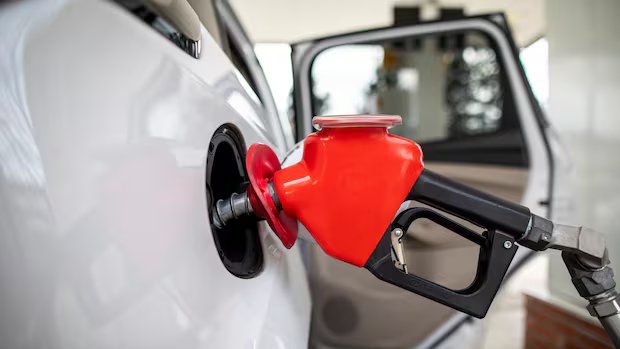

Listen to this article
Estimated 4 minutes
The audio version of this article is generated by AI-based technology. Mispronunciations can occur. We are working with our partners to continually review and improve the results.
Gas prices inched up a few cents overnight in Canada as the North American oil market reacts to escalating tensions in the Middle East, where the U.S. and Israel launched a joint attack on Iran Saturday that threatens to destabilize the rest of the region.
If you’re filling up a gas tank this week, higher gas prices could last as long as the conflict continues to disrupt oil tankers from accessing the Strait of Hormuz, one of the world’s busiest and most important naval shipping routes, according to experts.
“The question with Hormuz is not just whether it’s closed but, most importantly, how long it would be closed,” said Rory Johnston, a Toronto-based oil markets researcher and the founder of Commodity Context. “If we’re talking hours or days, this is mostly a blip and the market can get over it. Weeks or months, this is obviously a much more serious factor.”
Johnston said that the Canadian oilpatch tends to gain from higher prices because Canada’s relative stability during geopolitical-driven volatility is “considered a benefit” to buyers.
As of 12:30 p.m. ET. on Monday, the price of Brent crude, the global oil benchmark, was pushed to $78.04 US overnight before settling at $75.79 US. West Texas Intermediate crude oil, the U.S. standard, remained elevated at $70.60 US by midday.

CBC’s senior business correspondent Peter Armstrong explains what’s happening around the critical shipping lanes in the Strait of Hormuz on Monday as conflict escalates following U.S. and Israeli attacks on Iran.
How much have gas prices gone up?
By Monday morning, retail pump prices had ticked up to 135.3 cents per litre — higher than the 128.8 cents per litre seen a month ago and lower than the 151.4 cents per litre seen a year ago, according to data from GasBuddy.com.
While there hasn’t been any immediate disruption to supply, the U.S.-Iran conflict could lead to further volatility and higher premiums given the geopolitical risks at play, according to Patrick De Haan, head of petroleum analysis at GasBuddy.
If there are any threats to the regional production of oil in Iran (the Middle Eastern country is among the world’s top producers of the commodity), or if disruption to shipping continues, that could drive gas prices higher.
“In the week ahead, gasoline prices are likely to face heightened upward pressure as seasonal trends continue and markets navigate this evolving geopolitical landscape,” De Haan wrote in a blog post published Monday.
What does the Strait of Hormuz have to do with it?
The price of crude oil shot up when Iran’s revolutionary guard warned shippers away from the Strait of Hormuz, a narrow waterway on the country’s southern border through which about 20 per cent of the world’s crude oil passes.
“This makes it the most critical oil chokepoint in the world. Any sustained disruption, formal or de facto, would remove a substantial portion of globally traded crude from the market,” wrote Jorge Leon, senior vice president and head of geopolitical analysis at Rystad Energy, in a note to clients.
Several oil tankers passing through the strait were hit by projectiles and drones over the weekend, though it isn’t clear from which side of the conflict. As of Sunday, more than 150 commercial vessels had dropped anchor in the Persian Gulf to avoid collateral damage.
Those preventative measures are stopping about 15 million barrels per day of crude oil from reaching their markets, said Leon.
“Alternative infrastructure in the Middle East can be used to bypass the Strait’s flows, but the net impact remains an effective loss of 8-10 million [barrels per day] of crude oil supply,” Leon explained, noting that unless the conflict is deescalated, higher prices will sustain.