dailynewsnblog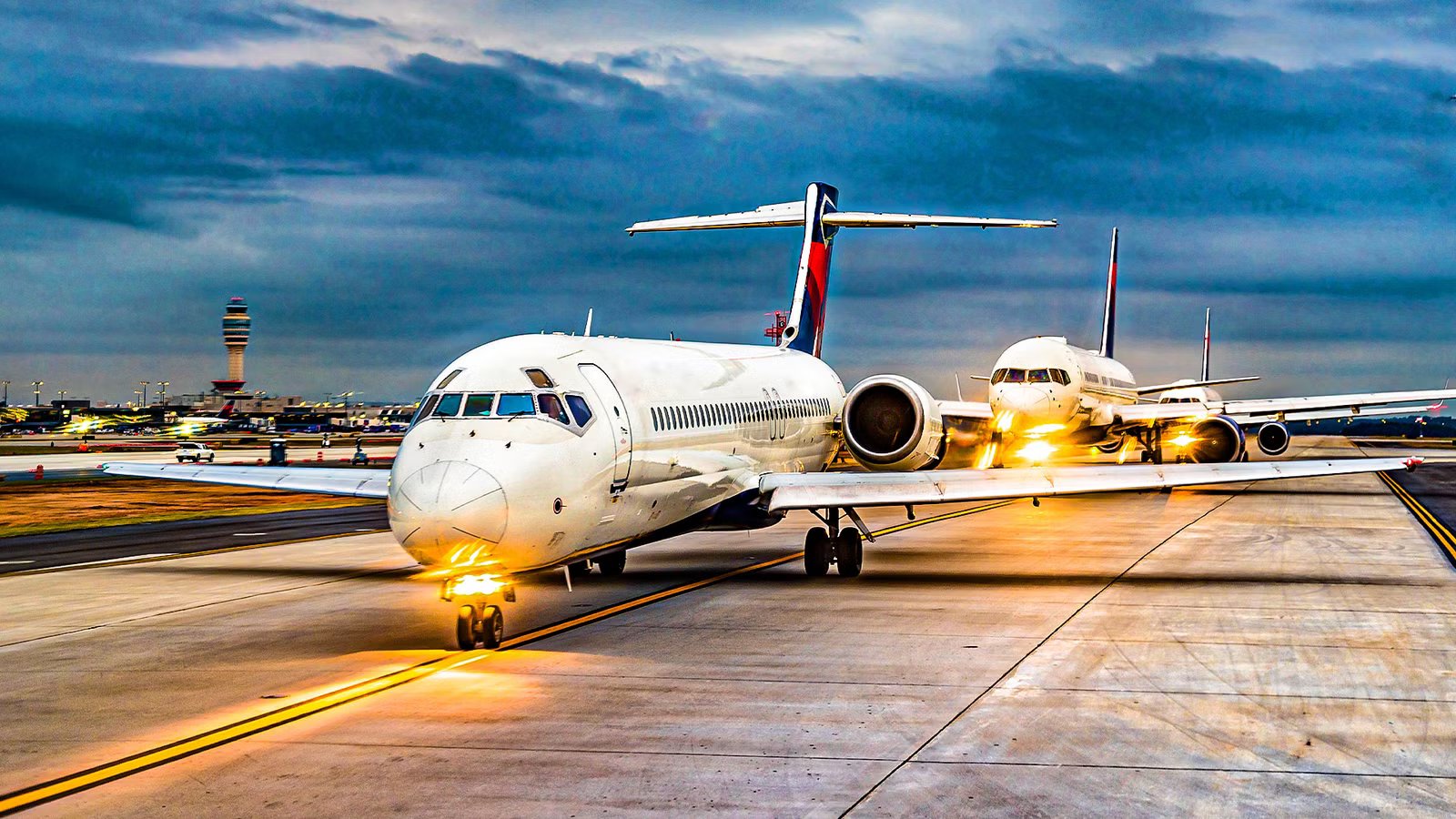
Just like airlines around the world, airports are also extremely competitive when it comes to being the best, the largest, the busiest, and more, and this article looks at which airport is the busiest in the North American region. Since there are multiple metrics that can be used to determine what makes an airport the busiest, this article will look at the busiest airport in North America in terms of capacity and number of flights available.
This guide will look into the operations, route network, and dominant airlines operating out of Chicago O’Hare Airport and Atlanta Hartsfield-Jackson Airport, which are home to and major hubs for two of the largest carriers in the US, United Airlines and Delta Air Lines, respectively.
The Most Number Of Flights: Chicago O’Hare

When considering the number of aircraft movements to determine the busiest airport in North America, the honors go to  Chicago O’Hare International Airport (ORD) in the United States, with the latest data published by FlightsFrom showing the airport handles 1,045 flights (excluding freight and charter flights) on a daily basis. Based on this number, it would mean that on average, the airport handles about 43 to 44 flights an hour.
Furthermore, when looking at the broader context, ORD achieves a spot within the top ten on several other lists. According to OAG, this includes coming in at number three on the list of US airports that had the most number of seats available in 2025 (50.6 million), and securing the eighth spot on the list of the busiest global airports in terms of seat capacity provided in January.
This would mean that the airport must have a substantial route network and subsequently host a variety of airlines from around the world. Both factors are true, with the airport acting as a hub for a major US carrier, but also airlines providing the airport with an extensive regional network and long-haul international network spanning five continents.
Extensive And Global Route Network

As per the scheduled route network data from Flightradar24, like most major US hubs, ORD has a very strong domestic route network, with routes to airports all across the country, but with a denser network to the Eastern US. Beyond the US, when considering the broader region, the airport sees flights to and from a few destinations in Canada, Central, and South America.
However, when it comes to longer flights, Chicago is well-connected to Europe and East Asia, while seeing a limited number of services to the Middle East and a single route to Africa. Among the longest routes operated to and from ORD are services to Delhi, India, operated by Air India, a daily service operated by Cathay Pacific to and from Hong Kong, and services to and from the airport’s sole African destination, Addis Ababa in Ethiopia, served by Ethiopian Airlines.
Considering the global connectivity offered by ORD and the high volume of aircraft movement, it is worth noting that a considerable part of the airport’s operational capabilities is dependent on the airport’s infrastructure, which includes eight runways. The runways, along with the terminals, allow the airport to maintain a high number of aircraft movements with clockwork precision.

Why The Busiest Airport In The World Might Not Be The One You Think
The phrase ‘the busiest airport in the world’ sounds definitive, but there is more to it than meets the eye.
Dominated By United Airlines

While ORD hosts a diverse number of airlines from around the world, the airport has, for several years, remained the stronghold of the major US carrier,  United Airlines, for whom Chicago O’Hare Airport is a major hub. The airline, along with its regional brand, United Express, accounts for over half the flights in and out of the airport.
The airport remains one of the largest hubs for United Airlines, and the carrier has based a diverse fleet of widebody and narrowbody aircraft at this hub and operates domestic, regional, and long-haul international routes from ORD. While United has faced significant competition at Chicago from American Airlines, in the past ten years, it has increased its market share at ORD significantly, and the airline continues to invest in increasing its presence at the hub.
As an added advantage of United’s dominance in ORD, the airport also acts as a hub for Star Alliance in the US, attracting several other Star Alliance members from around the world, including the likes of Lufthansa, Air Canada, Turkish Airlines, Air India, Ethiopian Airlines, avianca, ANA, and more.
The Most Number Of Seats: Atlanta Hartsfield-Jackson

When looking at the alternate metric of seat availability, things change, as  Hartsfield-Jackson Atlanta International Airport (ATL) takes the spot as the busiest airport in North America in this regard. With the airport having 63.1 million seats available throughout 2025, Atlanta handled 12.5 million seats more than Chicago despite having fewer daily aircraft movements. This indicates that Atlanta sees higher-capacity aircraft more frequently when compared to ORD.
Beyond North America, Atlanta is also the second-busiest airport in the world in terms of overall seat capacity, with 4,598,491 seats* available in January, which is 886,842 more seats than the capacity available at ORD. Furthermore, Atlanta is one of the only two airports in the US that is part of the TSA’s One Stop Security (OSS) program, which would provide easier passenger connectivity by allowing them to skip the need for additional TSA checks upon landing in ATL.
*It is worth keeping in mind that seat capacity does not equate to the actual number of passengers travelled.
In terms of Atlanta’s route network, it is quite similar to that of Chicago when it comes to the Americas. A substantial number of domestic US airports (with emphasis on the East) are served from ATL, along with routes across Central and Latin America and Canada. However, when it comes to the long-haul network, it differs from Chicago.

Transatlantic Revolution: How TSA’s ‘One Stop Security’ Is Slicing Connection Times In Half
American Airlines says it has reduced connection times for passengers flying from London by over 50%.
ATL Route Network Is Less Diverse

As stated above, Atlanta does offer substantial connectivity, especially within the North American and European region, while serving more destinations in South America and Africa than ORD. However, when it comes to other regions, Atlanta lacks the connectivity that Chicago has. While Atlanta narrowly falls behind Chicago in terms of the number of European destinations it serves, a more noticeable disparity between the two hubs can be seen when evaluating their connectivity to Asia and the Middle East regions.
Atlanta is only connected to two destinations in East Asia, which include an airport in Japan and one in South Korea. Chicago, on the other hand, is connected to one destination in South Korea and multiple destinations across China and Japan, offering passengers more connectivity to the region. Furthermore, Atlanta does not have any connectivity to India, and only sees two routes to the Middle East region, while Chicago sees five. Although this is the current network, it is worth noting that plans to launch a considerable number of regional and long-haul routes from ATL later this year have been announced. Therefore, in a few months, the airport should be able to offer passengers more connectivity.
Despite this, Atlanta having more capacity through fewer flights is an indication of the demand seen by the destination. Much like Chicago, ATL runs a tight and extensive operation, and is a major hub in the US and home to one of the other major US carriers, Delta Air Lines, which is responsible for the majority of capacity and connectivity available at the airport. While the airport’s operations are aided by its extensive infrastructure, perhaps a reason why ATL falls short in terms of the number of aircraft movements could be the fact that the airport only has five runways.
Home And Hub Of Delta Air Lines

Just like Chicago is a major hub for United, Atlanta is dominated by fellow US carrier,  Delta Air Lines. Over the decades, the airline and the airport have grown, complementing each other. While other major US carriers do operate flights to and from ATL, the number of flights and subsequently the seat capacity offered is dwarfed by the frequencies and the capacity offered by Delta Air Lines.
For context, the schedule data for ATL in September 2025 showed that Southwest Airlines and Frontier Airlines were the second and third-largest carriers at the airport, offering 252,198 seats through 1,594 flights and 310,376 seats through 1,428 flights, respectively. Delta Air Lines, in comparison, offered over four million seats across nearly 25 thousand flights that month. This stark disparity between the carriers’ market share shows the operational presence of Delta at Atlanta, where the carrier is dominant with over 50% market share. It is worth keeping in mind that these numbers include Delta’s mainline operations, as well as the carrier’s regional brand, Delta Connect, operated by Envoy Air and other regional airlines.
Naturally, Atlanta, being a Delta hub and the airline being a key member of the SkyTeam Alliance, the airport also acts as an alliance hub in the US, just because of the sheer connectivity Delta offers to its alliance members. As such, the airport hosts a number of SkyTeam alliance airlines from around the world, including carriers such as SAS, KLM, Air France, Virgin Atlantic, and Korean Air.