dailynewsnblog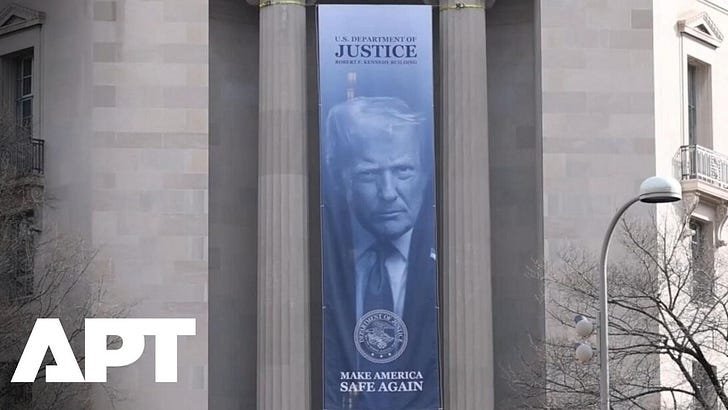
Canada never properly dealt with Brian Mulroney, even after he admitted to accepting $75,000 in cash from Karlheinz Schreiber while still holding elected office. As unprince Andrew Mountbatten-Windsor joins a growing list of figures facing arrest overseas for various forms of corruption, we need to ask: would we have what it takes to do something similar?
In 2025:
Brazil sentenced Jair Bolsonaro to 27 years for plotting a coup after losing the 2022 presidential election.
France sentenced former president Nicolas Sarkozy to 5 years for corruption.
Peru sentenced two former presidents the same week, Pedro Castillo for attempting to disband Congress to hold on to power and Martin Vizcarra for corruption.
The Philippines arrested former president Rodrigo Duterte and extradited him to the Hague to face prosecution for crimes against humanity at the International Criminal Court.
South Korea sentenced Yoon Suk Yeol, their former president, to life in prison for attempting to invoke martial law to seize absolute power in a self-coup.
It is a positive sign that many countries are willing to prosecute former leaders, even if Canada and the United States are visibly reluctant to do the same.
As the Epstein files slowly trickle out, naming ever more people in what should be seen as the trifecta of the world’s most significant pedophile, sex-trafficking, and corruption scandals, we are seeing numerous countries opening official investigations, but precious few arrests or prosecutions. Where they exist, they are largely for the corruption rather than the exploitation exposed.
Earlier this month, Norway arrested Marius Borg Høiby on suspicion of rape. He is the son of the country’s Crown Princess Mette-Marit but it is the princess who has been under scrutiny for her appearances in the Epstein files.
King Charles’s brother Andrew Mountbatten-Windsor’s arrest last week and Lord Mendelson’s arrest over the weekend would suggest that more is coming. A closer look, though, shows that the defrocked prince and the British Lord are charged with misconduct in public office for sending state secrets to Epstein. It is for crime against the state exposed in the Epstein files, not related to the allegations of child rape that have been floating around the prince for over a decade, nor the rape or human trafficking at the centre of the scandal.
President Bill Clinton was impeached by Congress for lying about whether or not he had an affair with a White House intern, while Donald Trump’s well-documented history of admitting to far more serious offences has garnered him the support of the same congressional caucus that voted to impeach Clinton. Sexual misconduct of any degree is not the offence, in the eyes of the Republicans, but to be ashamed of such misconduct is so egregious as to warrant impeachment.
Trump should have been charged for fomenting a coup on January 6th, 2021. Coupled with estimates of over one million references to Trump in the unredacted Epstein files, there is likely more than enough evidence to charge him with more crimes than we can even begin to imagine.
The Department of Justice simply did not have the courage of their convictions to take down a former president, in spite of overwhelming and prosecutable evidence showing that he was an active and existential danger to their country and its democratic institutions.
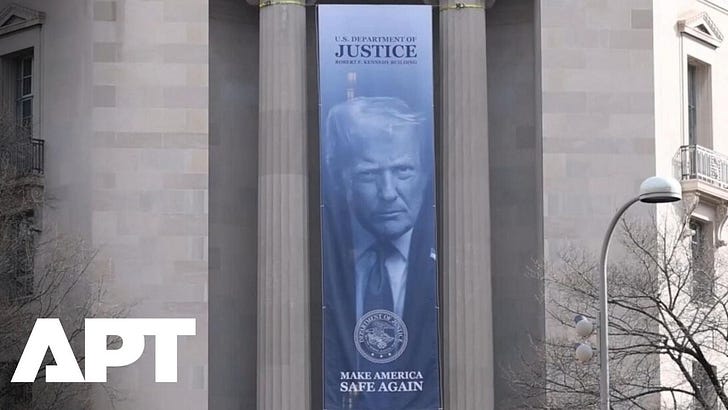
While Americans have taken to calling their president TACO — Trump Always Chickens Out — it is consistently the justice system itself that has chickened out. That is how he has managed to stay in office, where he mocks the whole premise of the rule of law by affixing a banner with his image to the Department of Justice building in Washington, DC.
Trump getting away with these crimes amid so few arrests and prosecutions around the world is an authoritarian trend. Vladimir Putin and Benjamin Netanyahu, like Trump, know that they cannot afford to lose office lest they face prosecution for their assortment of alleged crimes, so they remain by any means necessary. As long as they keep their status and roles, they will maintain their practical immunity.
Unprince Andrew had reason to believe his status, too, would keep him out of handcuffs. History is definitely on his side. One need only look back a decade to the release of the Panama Papers in April of 2016. That massive document leak revealed in spectacular and specific detail how the wealthy and powerful around the world move and hide their money, committing fraud, bypassing sanctions, and evading taxes.
In spite of overwhelming evidence in those files, few were charged, even fewer convicted. After that story petered out, the most significant outcome was the murder of Daphne Caruana Galizia, the Maltese journalist who broke the story.
We must, then, return to Canada and the Airbus affair, where a former Prime Minister declared cash gifts while in office on his taxes many years after the fact, and at that only when the one who gave him those funds, Karlheinz Schreiber, was extradited to Germany on tax evasion charges.
He faced no consequences for his actions in spite of well-documented corruption, by journalists like Stevie Cameron, and even extracted over $2 million from the government in a defamation settlement when word got out that he was being investigated — after he received but before he declared the generous amount of cash he received in office.
It all suggests that Canada, as it stands, will not have the courage to address any crimes found in the Epstein files that could otherwise be prosecuted here.
While we could follow the examples of the United Kingdom, South Korea, the Philippines, Peru, France, Brazil, and possibly Norway, history would suggest that we are far more inclined to follow the American lead in (not) dealing with our Epstein class.
We can only hope that Canada’s own Department of Justice shows the spine needed to counter this history.