dailynewsnblog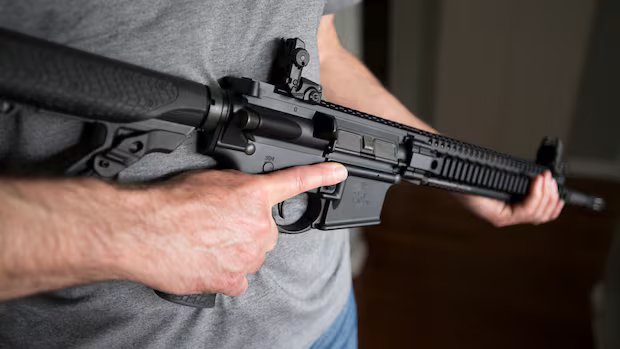

Listen to this article
Estimated 4 minutes
The audio version of this article is generated by AI-based technology. Mispronunciations can occur. We are working with our partners to continually review and improve the results.
British Columbians have declared a total of 7,368 assault-style firearms in the first month of a national buyback program aimed at eventually collecting and destroying guns that have been banned by Ottawa.
According to data released by the Assault-Style Firearms Compensation Program, B.C. trails only Ontario’s 13,219 declarations. Quebec has the third-highest declaration total at 5,539.
The 10-week declaration period opened on Jan. 19 and closes on March 31.
Since 2020, Ottawa has banned over 2,500 makes and models of what the federal government calls “assault-style” firearms, arguing they are designed for warfare, not for hunting or sport shooting.

So far, 32,000 declarations have been submitted nationwide, accounting for 23 per cent of the estimated 136,000 outlawed firearms the program aims to buyback. Public Safety Canada has committed $250 million in funding for the program.
After the March 31 deadline, firearm owners who declare won’t receive compensation.
If a firearm owner does not participate in the program, they can permanently deactivate their firearms at their own expense, turn in their firearms to local police for no compensation, or export their firearms if they hold a permit, the government said.
The amnesty period for possessing banned firearms ends on Oct. 30, 2026.
“While participating in the program is voluntary, compliance with the law is not,” says the government on the buyback website.
“Individual firearm owners must safely dispose of or permanently deactivate their assault-style firearms before the amnesty period ends on Oct. 30, 2026, or risk criminal liability for the illegal possession of a prohibited firearm.”
Eric Beer, a firearms instructor with the B.C. Firearms Academy, says the program has received mixed reviews because the government keeps moving the goal posts on the amnesty period.
According to Beer, the amnesty period has been extended three times since the government first started banning assault-style firearms in 2020.
“I don’t know if people are fully aligned with the idea that this program and this legislation will actually follow through to the point of making them criminals,” he said.
“It’s the risk, but I think most of the firearms community members that I speak with feel that they’re just going to extend the amnesty, as they have done so many times.”
Sgt. Kris Clark, spokesman for the B.C. RCMP, declined an interview request saying that the program is only in the initial declaration phase and that no guns have been collected. The RCMP is a partner in the program.
Compensation rates listed by Public Safety Canada range from $150 to almost $10,000, depending on the type of firearm.
Several jurisdictions have opted out of the program altogether, including provincial governments in Manitoba, Saskatchewan and Alberta, although individuals in those provinces can still apply to participate.
But Beer says lack of broad support raises logistical issues when it comes to executing the program’s next steps.
“With the number of individual police departments and even entire provinces and territories that don’t want to contribute resources to it, I think it’s very difficult,” he said.
“Who’s going to get the gun, and who’s going to put it somewhere, and where are you going to put it? And what are they going to do with it afterwards? I think a lot of people in the firearms community feel that the government doesn’t know the answer to those questions.”