dailynewsnblog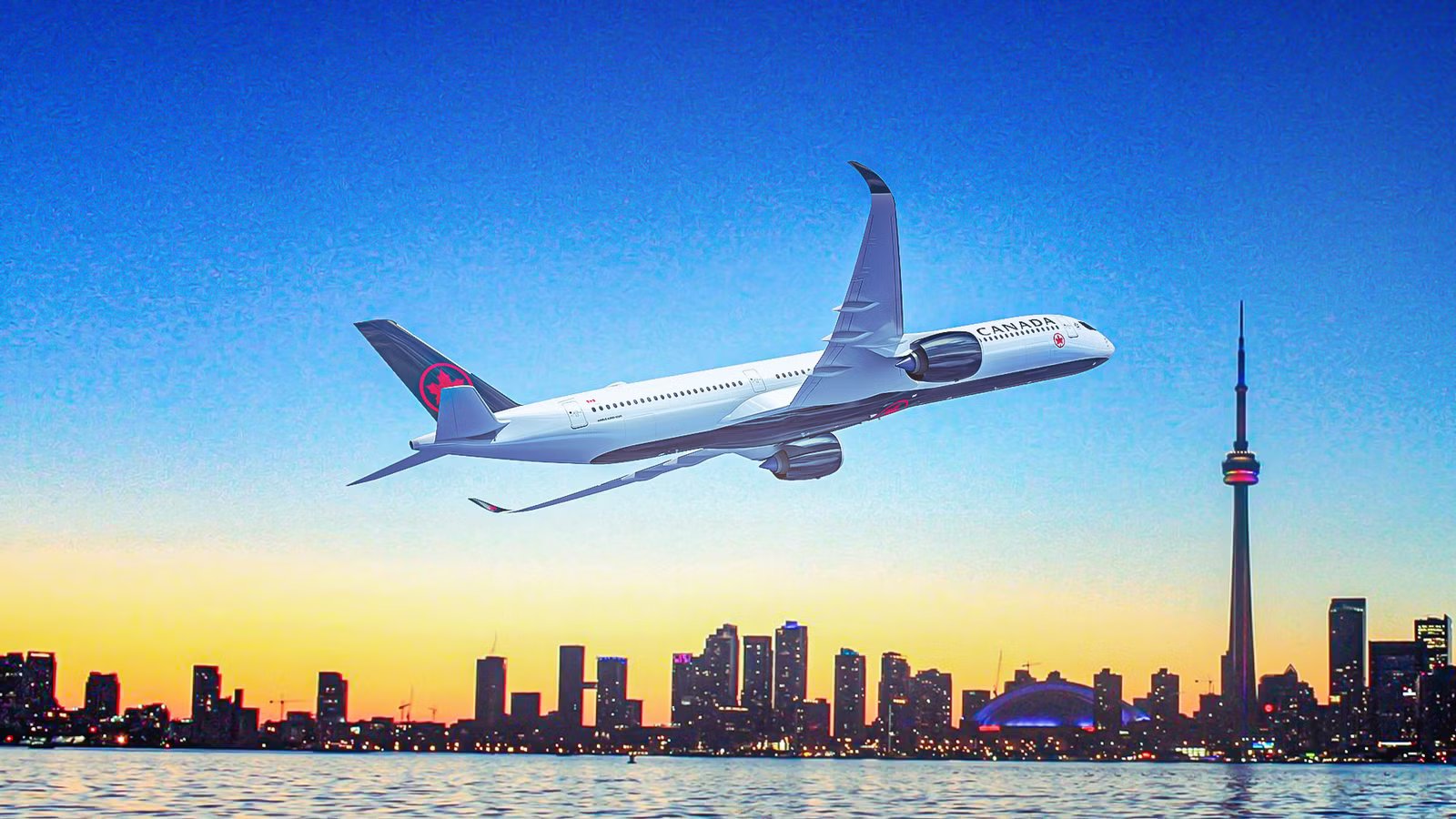
Air Canada’s recent decision to place a firm order for eight Airbus A350-1000 aircraft marks a defining moment in the airline’s long-haul strategy. This is not just another fleet announcement; it signals a deliberate shift toward a more capable, efficient, and future-ready long-haul operation. With these new widebody aircraft expected to enter service starting in 2030,  Air Canada is positioning itself to compete more effectively on the world’s longest routes, take advantage of emerging markets, and raise the bar on passenger experience.
The move also reflects broader trends in global aviation, with airlines modernizing their fleets with next-generation aircraft that offer significant improvements in range, fuel efficiency, and comfort. For Air Canada, the Airbus A350-1000 is not just a replacement for its aging aircraft; it is a strategic decision, enabling the  Star Alliance carrier to fly further, more profitably, and with a product that passengers will want to choose again and again. Let’s take a closer look…
All About The Airbus A350-1000

The Airbus A350-1000 is the European manufacturer’s largest member of the A350 family. Designed from the outset as a long-range, fuel-efficient widebody aircraft, it uses cutting-edge aerodynamics, composite materials, and the latest Rolls-Royce Trent XWB-97 engines to push the boundaries of what long-haul aircraft can do. The carbon-fiber-reinforced fuselage and wing structures help reduce weight significantly compared with older designs, which in turn lowers fuel consumption and emissions.
The first Airbus A350-1000 entered service in February 2018 with  Qatar Airways. The oneworld carrier inaugurated the aircraft, registered as A7-ANA, on a flight from its hub at
  Doha Hamad International Airport (DOH) to
  London Heathrow Airport (LHR). Ever since, the Airbus A350-1000 has become a favorite for carriers that need to connect distant city pairs without compromising payload or performance. With a maximum range of around 10,300 miles (16,600 km), it opens up non-stop opportunities that were previously impractical or economically marginal.
|
Airline |
Airbus A350-1000 |
|---|---|
|
Qatar Airways |
24 |
|
Cathay Pacific |
18 |
|
British Airways |
18 |
|
Virgin Atlantic |
12 |
|
Japan Airlines |
10 |
Passenger comfort was also a core design priority for Airbus, with quieter cabins, lower pressurization altitude, and improved environmental systems all helping to reduce fatigue on flights that can exceed 16 hours. Today, Qatar Airways is the world’s largest operator of the Airbus A350-1000, with a total of 24 in its fleet, followed by Cathay Pacific and British Airways, as outlined in the table above.
Unlocking New Global Routes

For an airline like Air Canada, geography is a fundamental challenge. Its three major hubs at Toronto Pearson International Airport (YYZ), Montréal Trudeau International Airport (YUL), and Vancouver International Airport (YVR), all sit far from many high-growth markets in Asia, Australia, and South Asia. But the range performance of the A350-1000 changes that equation. With up to 10,300 miles (16,600 km) of range, Air Canada could pursue nonstop flights to cities that would otherwise require one or more stopovers.
Examples of routes that Air Canada could technically operate with the Airbus A350-1000 are outlined in the table below:
|
Departure Airport |
Arrival Airport |
|---|---|
|
Toronto Pearson International Airport (YYZ) |
Sydney Airport (SYD) |
|
Toronto Pearson International Airport (YYZ) |
Mumbai Chhatrapati Shivaji Maharaj International Airport (BOM) |
|
Montréal Trudeau International Airport (YUL) |
Manila Ninoy Aquino International Airport (MNL) |
|
Montréal Trudeau International Airport (YUL) |
Singapore Changi Airport (SIN) |
|
Vancouver International Airport (YVR) |
Johannesburg O. R. Tambo International Airport (JNB) |
This capability isn’t just about the good PR of operating ever-longer flights, as every time an airline can eliminate a connection with nonstop service, it improves the economics of that route. No intermediate fuel stop means lower operational costs, simpler scheduling, and a stronger value proposition for business and leisure travelers alike. The A350-1000 gives Air Canada the flexibility to test and sustain routes that might have been out of reach with older widebodies.

Why Don’t Any US Airlines Fly The Airbus A350-1000?
/usa-airlines-no-airbus-a350-1000/
Greater Fuel Efficiency

Modern aircraft engines and advanced design are not just engineering buzzwords, they translate directly into money saved. The Airbus A350-1000 offers around a 25% reduction in fuel burn and emissions compared to previous-generation aircraft in its class, which makes a great difference at a time when fuel costs are one of the biggest single expenses an airline faces. These efficiency gains that go hand-in-hand with the Airbus A350-1000 will give Air Canada a meaningful competitive edge.
Lower fuel burn helps the airline protect margins on thin long-haul markets, while also reducing the carbon footprint of each flight. In a world where sustainability is increasingly part of airline branding and regulatory frameworks, being able to publicize a newer, cleaner aircraft is valuable both financially and reputationally. At the time of the order, Air Canada’s Executive Vice President and Chief Commercial Officer, Mark Galardo, celebrated the news, saying,
“Air Canada’s continued global ambitions are solidified by the selection of the Airbus A350-1000, a natural next step in the evolution of our fleet. The aircraft brings state-of-the-art capabilities and improved efficiencies to Air Canada, unlocking new long-haul opportunities around the globe. With the Maple Leaf adorning the tail, the Airbus A350-1000 will play a central role in defining Air Canada’s next era, connecting our customers, our hubs, and our country to the world.”
Meanwhile, Airbus’ Executive Vice President of Commercial Aircraft Sales, Benoit de Saint-Exupéry, added,
“Air Canada’s selection of the A350-1000 to lead its long-haul fleet strategy is a strong testament to the most technologically advanced widebody on the market. This decision is not only about fleet modernization, it is also about Air Canada’s ambition to set new standards in range, performance, and customer satisfaction which we are proud to support.”
Increased Passenger Comfort

In the crowded commercial aviation markets we see in 2026, long-haul flying is about more than just getting from point A to point B – it is also about how passengers feel while they are en route, and how they feel when they land. This is where Airbus’ Airspace cabin concept really shines, with the A350-1000’s cabin environment having been engineered to reduce noise and vibration, maintain lower effective cabin altitudes, and improve humidity levels, all helping to reduce fatigue on long intercontinental flights.
Air Canada has indicated that these new aircraft will showcase its next-generation cabin standard, including upgraded entertainment and connectivity systems that bring the onboard experience into line with modern expectations. Although the exact designs are yet to be revealed, bigger windows, mood lighting, and thoughtfully configured seating will all help to make the carrier’s ultra-long-haul flights feel more comfortable and less tiring.
Using one of the largest Airbus A350-1000 operators as an example, Cathay Pacific, the oneworld carrier’s business class passengers benefit from fully lie-flat seats arranged in a reverse herringbone configuration, offering direct aisle access and generous privacy. Premium economy provides a noticeable step-up in space and recline, while the airline’s economy class onboard the A350-1000 features ergonomic seating and one of the most comfortable cabin environments in its category, with high-definition in-flight entertainment screens, Wi-Fi connectivity, and thoughtfully designed mood lighting that adapts throughout the flight.

Airbus A350-900 Vs. -1000: Which Aircraft Do Airlines Prefer More?
Delivery figures reveal a clear favorite in the A350 family. But what drives airlines to pick one over the other?
A Strategic Fit For Air Canada’s Fleet Renewal

Air Canada’s long-haul network has been served for many years by Boeing widebody aircraft like the Airbus A330-300, Boeing 777-300ER, and Boeing 787-9. The former two are less efficient than current-generation aircraft, and the Airbus A350-1000 is seen by many aviation analysts as the natural successor to those older aircraft, offering similar capacity but vastly improved economics, payload performance, and range.
The table below illustrates how the Airbus A350-1000 will fit into the rest of Air Canada’s fleet, incorporating data from ch-aviation:
|
Aircraft |
Number In Fleet |
Number On Order |
|---|---|---|
|
Airbus A220-300 |
42 |
23 |
|
Airbus A320 |
16 |
2 |
|
Airbus A321 |
21 |
13 |
|
Airbus A321XLR |
– |
30 |
|
Airbus A330-300 |
20 |
– |
|
Airbus A350-1000 |
– |
8 |
|
Boeing 737 MAX 8 |
47 |
2 |
|
Boeing 777-200LR |
6 |
– |
|
Boeing 777-300ER |
19 |
– |
|
Boeing 787-8 |
8 |
– |
|
Boeing 787-9 |
32 |
– |
|
Boeing 787-10 |
– |
14 |
Furthermore, this order deepens Air Canada’s relationship with Airbus and complements a broader fleet strategy that includes the Airbus A321XLR for long, thin routes and the Airbus A220-300 on shorter sectors. Having a modern, mixed fleet allows Air Canada to match the right aircraft to each route, reducing operating costs and improving revenue outcomes across its network.
Environmental Considerations

Sustainability has become a central consideration for airlines worldwide, and Air Canada is no exception. The Airbus A350-1000’s ability to operate with up to 50% Sustainable Aviation Fuel (SAF) today, coupled with Airbus’ goal to make it capable of 100% SAF by 2030, aligns with industry decarbonization ambitions.
That makes the aircraft not just a good fit for today’s long-haul flying, but also for the regulatory and market expectations of tomorrow. Beyond fuel and emissions, modern aircraft like the Airbus A350-1000 tend to have lower maintenance costs and longer service intervals than their predecessors.
Over the life of the aircraft, these factors compound into real savings and operational reliability improvements, and for a network that thrives on punctuality and consistency, having aircraft that deliver on all fronts helps Air Canada remain competitive in a challenging global marketplace.