dailynewsnblog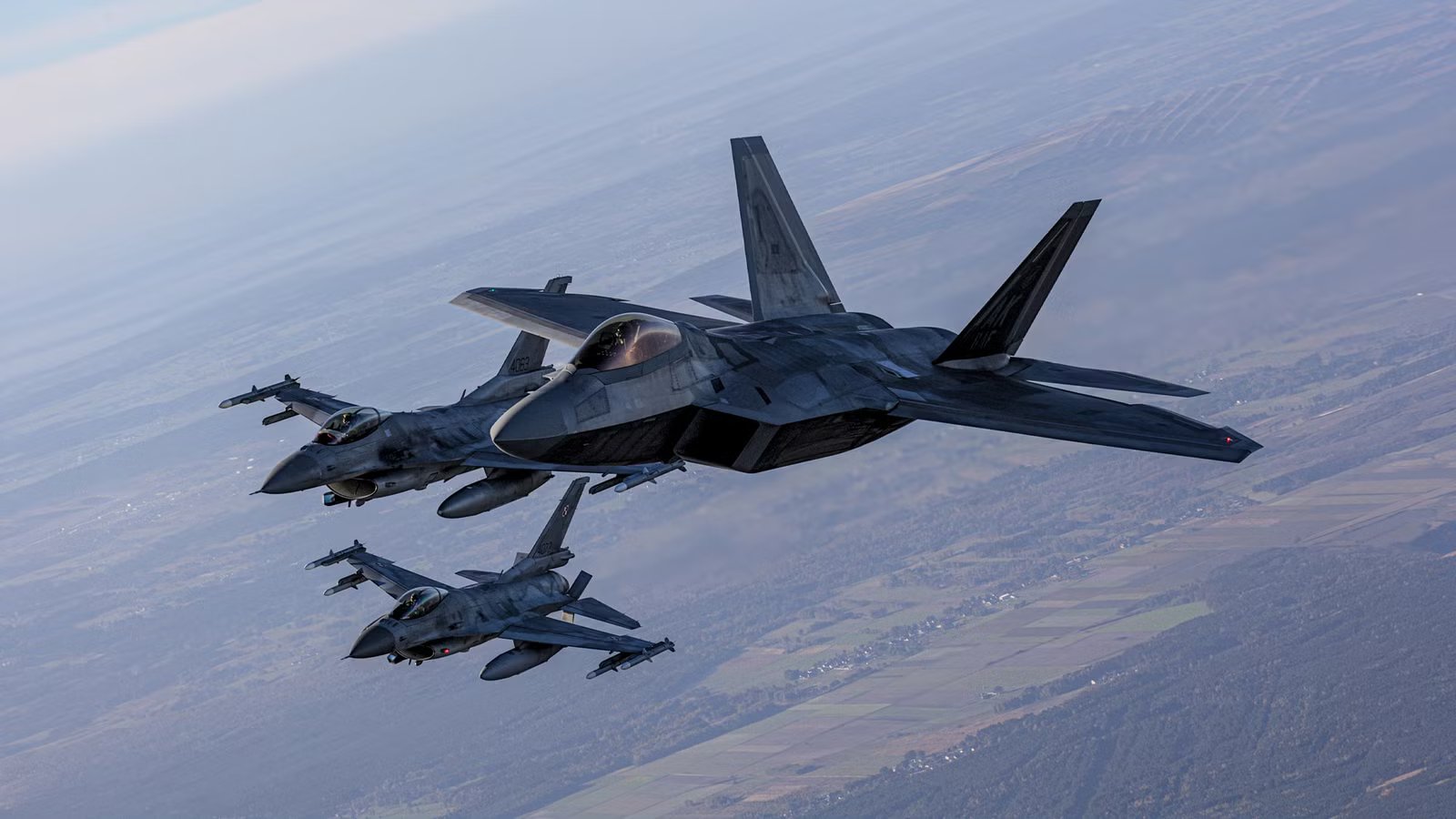
The United States Air Force uses a complex, multi-layered system that approaches airspace management with a number of tactics to ensure that military operations are safe, in peacetime or in conflict. The simplest way military air traffic avoids collisions is through airspace separation. The US military has a large number of Military Operations Areas (MOAs) that are specifically designated to ensure training can be conducted without endangering the public.
Technology is crucial to the safety of flight for both commercial and military aircraft. Stealth and other tactical planes all operate with ADS-B Out in civil airspace to ensure they are visible to everyone else. This makes it safer and easier to integrate with other civil aircraft and work with civilian air traffic controllers (ATC). When it comes to low-flying helicopters, of which the American military has the most in the world, similar approaches apply to ensure that the skies over America remain safe.
Staying Inside The Lines

The Federal Aviation Administration (FAA) and the Department of Defense (DOD) have cooperated for decades to divide the sky into different areas of responsibility using vertical altitude and horizontal boundaries throughout airspace across the Nation. This ensures that high-performance military aircraft and airborne munitions, like missiles and rockets, are well clear of commercial and general aviation traffic.
The most common way to separate traffic is to assign different altitude blocks to vertically deconflict flights across all airspace. The US specifically has Military Training Routes (MTRs), which are high-speed corridors that allow for military jets to fly at exceptionally high speeds even in low visibility, when rated for instrument flying (IR). These are also complemented by visual routes (VR), which require clear weather for use.
Military Operations Areas (MOAs) are designated sections of airspace designed to separate non-hazardous military training. That includes air combat maneuvers, intercepts, and low-altitude tactics. This ensures that civilian traffic operating under Instrument Flight Rules (IFR) is well clear. Notably, civilian air traffic is not prohibited from entering an active MOA, but it is generally avoided and discouraged, with exceptions granted only when safe separation can be ensured and it is justifiably necessary.
Safety Through Technology

In 2026, fighter jets use a multi-layered suite of onboard technology to prevent midair conflicts with civilian airliners. These systems range from standard transponder-based alerts to advanced automated maneuvers and next-generation tracking systems. The most critical technology for visibility is Automatic Dependent Surveillance-Broadcast (ADS-B).
Military aircraft broadcast their precise GPS position, altitude, and speed to civilian ATC and nearby aircraft with ADS-B Out. Newer systems allow fighter pilots to see civilian traffic on their cockpit displays, providing better situational awareness than radar alone. Most military aircraft also carry versions of the Traffic Alert and Collision Avoidance System (TCAS) used by airliners now.
The TCAS system monitors nearby transponders and provides Resolution Advisories (RA) with vocal instructions to ‘Climb’ or ‘Descend’ to avoid a specific threat. If both the fighter and the airliner are equipped with TCAS II, their systems communicate to prevent both from climbing or descending into each other.
At the same time, on fighter jets like the General Dynamics F-16 Fighting Falcon and Lockheed Martin F-35 Lightning II, the US Air Force has moved beyond simple alerts to automated flight controls. These jets are equipped with Automatic Ground Collision Avoidance System (Auto GCAS) and are expected to receive Collision Avoidance Manual Deconfliction (CAMD) in the near future.
Auto GCAS was originally intended to prevent Controlled Flight Into Terrain (CFIT) but has since been proven as an effective technology in avoiding air-to-air collisions. Meanwhile, CAMD is currently being tested on the F-35 at Edwards Air Force Base and is expected to roll out in the near future to help enhance midair collision avoidance between military and civil traffic.
AI-Enhanced Situational Awareness

The rapidly expanding application of artificial intelligence (AI) is now reaching airspace deconfliction as well. The US Military is developing AI algorithms and analyzing the trajectories of all civil and military air traffic in real time. The goal is for these AI assistants to predict potential near-miss scenarios before they occur and give the pilots minutes to make a decision rather than seconds.
The F-35 stealth fighter is one of the best-equipped platforms to employ this technology, thanks to its 360° camera system, the Distributed Aperture System (DAS). This equipment is a sensor fused with radar, as well as its ABS-B data to create a full picture using a spectrum of data sources, creating a nearly perfect image of the surroundings.
On top of that, the pilot of an F-35 also has a helmet-mounted display system (HMDS), which replaces the heads-up display (HUD) and provides all real-time flight data directly in front of the pilot’s eyes, wherever they look. The system is so advanced that it can actually allow the pilots who look through the floor of the cockpit in what is dubbed ‘God’s Eye View’ to see things that are obscured by weather or other objects.

US Lawmakers Block Cancellation Of Boeing E-7 Wedgetail Program
US lawmakers block Pentagon plans to cancel the Boeing E-7 Wedgetail, preserving funding for the Air Force’s next-generation surveillance aircraft.
De-Stealthing Fighter Jets

To make stealth (low-observable) aircraft visible to civilian ATC, the military uses physical hardware to intentionally ruin the jet’s stealth profile. When a stealth jet enters civilian airspace, like flying from a base to a training range, they follow specific protocols. Often, a non-stealth escort or a ‘Lead’ aircraft with a high-power transponder will lead a group of stealth jets. ATC sees the lead plane and gives the entire formation a large safety block of airspace.
To avoid potential issues with civilian air control during routine transit, they attach Luneburg Lenses. These are small devices that can be bolted onto the exterior of the fuselage and reflect radar waves to the source. Stealth jets can also use high-intensity strobe and navigation lights that are often kept retracted or flush during combat but are fully visible during civil transit.
A Luneburg Lens is a radar-reflective device that takes incoming radar energy and reflects it directly back to the source with massive amplification. On a civilian controller’s screen, these lenses make a tiny stealth fighter appear as large and bright as a Boeing 747. These are removed before combat missions or ‘stealth-required’ training, so the aircraft can return to its invisible state.
In addition to mounting this equipment on the exterior of the plane to make it visible to normal radar systems, stealth fighters use their internal equipment and ‘squawk’ ATC codes that make them identifiable to both controllers and commercial aircraft. This equipment transmits the GPS position, altitude, and speed of the planes even if they are not visible on radar for whatever reason.

What Is The EOTS In The F-35 Lightning II?
Precision and stealth converge in the EOTS of the F-35 Lightning II, in a new approach for air-to-air and air-to-ground targeting.
Safe Flying On The Battlefield

Naturally, all of this changes when a military aircraft enters an active battle space. In these incredibly dynamic small bubbles of airspace, there can be hundreds of aircraft actively flying at max performance and deploying ordinance at multiple altitudes with varying areas of effect, creating a complex web of hazards. The most critical tool for combat deconfliction is Link 16, a military tactical data link network.
Every aircraft on the network automatically broadcasts its precise 3D position, heading, and fuel status. This data is fused into a single Common Tactical Picture (CTP) displayed on the pilot’s cockpit screens. The system mirrors how air traffic control works in civil airspace, but uses a secure network that only shares information with platforms that are part of the Coalition Force.
Similar to airspace management in the normal course of civilian flying, the Air Operations Center (AOC) creates the Airspace Control Order (ACO). This doctrine assigns specific floors and ceilings to aircraft types based on their mission and performance. For example, A-10 Warthogs might operate below 10,000 feet for ground support, while F-22s provide top-cover air superiority above 30,000 feet.

How Auto-GCAS Can Save Fighter Pilots During G-LOC Events
Auto-GCAS takes command of an aircraft as a measure of last resort if the computer assesses it is about to hit the ground.
Eye In The Sky

To manage all of this, instead of a ground control tower at an airport, the US Armed Forces has radar stations at land bases and on naval vessels, in addition to Airborne Warning and Control System (AWACS). Unlike civilian ATC, which focuses on safety, AWACS controllers focus on mission flow. For older aircraft or drones not equipped with high-end data links, the AWACS provides verbal warnings and vectors to keep them clear of high-speed strike packages.
Sometimes referred to as ‘the eye in the sky,’ AWACS is a crucial element of the US military and its allies’ air dominance doctrine. The broader category of AEW&C (Airborne Early Warning and Control) aircraft includes a range of aircraft from helicopters to quadjets. The Boeing E-3 Sentry is the classic AWACS, identified by its massive radar dome on its back. Similarly, the US Navy operates the Grumman E-2 Hawkeye, a smaller turboprop aircraft capable of landing on a carrier.
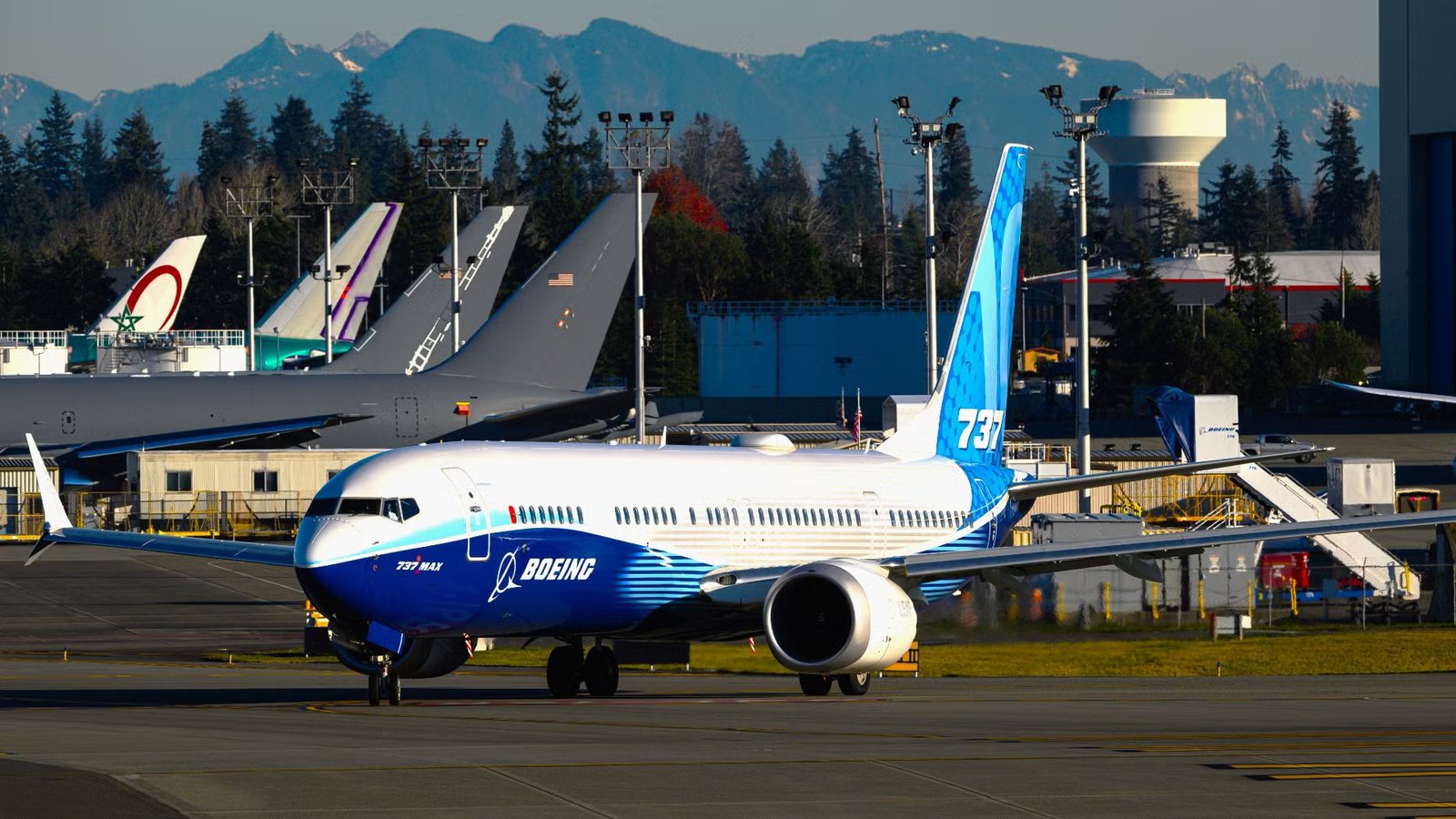
The Boeing E-7 Wedgetail is the designated successor for the USAF. It replaces the heavy rotating dome with a fixed, fin-like Multrole Electronically Scanned Array (MESA) radar. Many European and international allies use smaller, more efficient AEW&C platforms based on business jet airframes. The Saab GlobalEye is akin to a mini E-7 and was built on a Bombardier Global 6000. The E-9A Widget is also a USAF ‘mini-AWACS’ that is used to monitor sea lanes and missile test ranges.