dailynewsnblog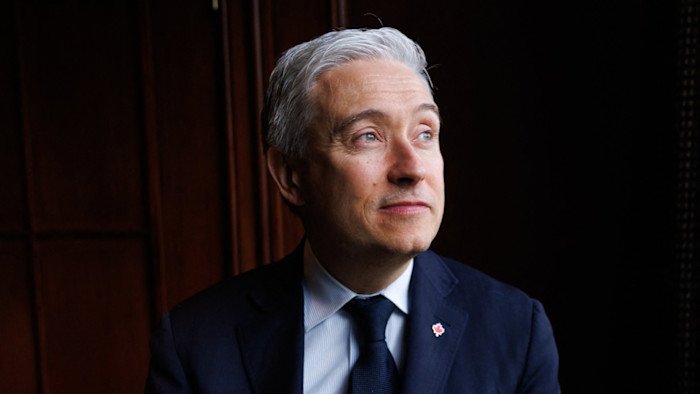
This article is an on-site version of our Europe Express newsletter. Premium subscribers can sign up here to get the newsletter delivered every weekday and fortnightly on Saturday morning. Standard subscribers can upgrade to Premium here, or explore all FT newsletters
Good morning. News to start: Brussels wants electric-vehicle manufacturers benefiting from state support to ensure that at least 70 per cent of their cars are made in the EU, according to a draft of its “Buy European” proposals aimed at better protecting the bloc’s industries from intense Chinese competition.
Today, Canada’s finance minister tells our correspondent that the country is an open shop for Europeans seeking new suppliers of energy, weapons or raw materials, while the EU’s cyber security agency tells us that sophisticated digital weapons typically used by state security services are now being wielded by cyber gangs.
We got what you need
Canada is positioning itself as the “supplier of choice” to cover Europe’s strategic needs — be it energy, defence or critical raw materials, its finance minister tells Paola Tamma.
Context: The pitch follows a speech by Canadian Prime Minister Mark Carney in Davos, in which he urged “middle powers” to deepen co-operation in response to increasingly adversarial attitudes from global superpowers — particularly the US under President Donald Trump.
“There’s more for us to do than there’s ever been before. That’s why I see Canada as a supplier of choice in this new world economic order,” François-Philippe Champagne, Canada’s finance minister, told the FT during a visit to Brussels yesterday.
“The world has changed . . . we probably saw the shape of things to come faster than others,” Champagne said.
Ottawa is offering Europe liquefied natural gas as a way to diversify away from US supply. “We are so close to Europe that we become almost that natural partner,” Champagne said.
The government is walking a fine line between climate ambitions and continued fossil fuel extraction. “It’s a moment for the world to be pragmatic,” Champagne added.
Beyond energy, Canada is also promoting its reserves of critical raw materials and its aerospace industry. “We have industries which can support the rearmament of Europe,” Champagne said, pointing to companies such as Bombardier and CAE.
Canada is currently the only non-EU country with access to the bloc’s €150bn defence loan scheme, known as Safe, and a €90bn Ukraine support package.
But while Ottawa is pursuing a “buy Canadian” strategy at home, Champagne cautioned Europe against adopting strict “made in Europe” rules for public procurement. “We’re part of the same family . . . we gain more by working together than otherwise,” he said.
Canada is also offering to headquarter the Defence, Security and Resilience Bank, a global bank designed to pool sovereign guarantees and help finance rearmament.
“It’s a way to do more with our balance sheet while helping small and medium-sized companies scale at the speed required,” Champagne said. Whether European governments will sign up to the bank remains uncertain — the UK has already ruled it out.
Chart du jour: Hungary for change

Hungary’s state media is intensifying its anti-Ukraine rhetoric ahead of elections on April 12, when the ruling Fidesz faces its most credible challenge after 16 years in power from opposition group Tisza.
Transferring skills
Cybercriminals are increasingly using the more sophisticated tools of state security services to attack countries in Europe, the head of the EU’s cyber security agency Enisa tells Laura Dubois and Barbara Moens.
Context: European countries are upping their cyber defences, as attacks targeting public infrastructure and services have risen in several countries. Pro-Russian hackers this month targeted the Winter Olympics in Italy.
Juhan Lepassaar, the chief of Enisa, told the FT that cyber attacks were becoming more sophisticated as state actors were sharing knowledge with “hacktivists” that were not sponsored by any government.
“You see a spillover of technologies, procedures, tactics from state-aligned actors to non-state actors,” he said, calling the trend “worrisome”.
“There seems to be more collaboration and co-operation among these threat actors. They are no longer distinct groups; the lines between the different actors are blurry,” Lepassaar said.
He pointed in particular to “Russian-aligned, Chinese-aligned actors, either engaging in cyber espionage or long-term positioning into our network”.
Among the most important threats were ransomware attacks that among other things target businesses, which are then forced to pay a ransom payment in exchange for the release of their stolen or encrypted data.
The Estonian official, however, also said that new cyber security legislation, which was tabled last month, would help analyse risks along supply chains and identify companies or vendors that posed a potential security risk.
This was important particularly for sectors such as space or rail, “that perhaps we did not think were so critical before [but] now have become really, really essential”.
What to watch today
Trilateral peace talks between Ukraine, Russia and the US take place in Geneva.
French President Emmanuel Macron visits India.
Now read these
Recommended newsletters for you
Free Lunch — Your guide to the global economic policy debate. Sign up here
The AI Shift — John Burn-Murdoch and Sarah O’Connor dive into how AI is transforming the world of work. Sign up here
Are you enjoying Europe Express? Sign up here to have it delivered straight to your inbox every workday at 7am CET and on Saturdays at noon CET. Do tell us what you think, we love to hear from you: europe.express@ft.com. Keep up with the latest European stories @FT Europe