dailynewsnblog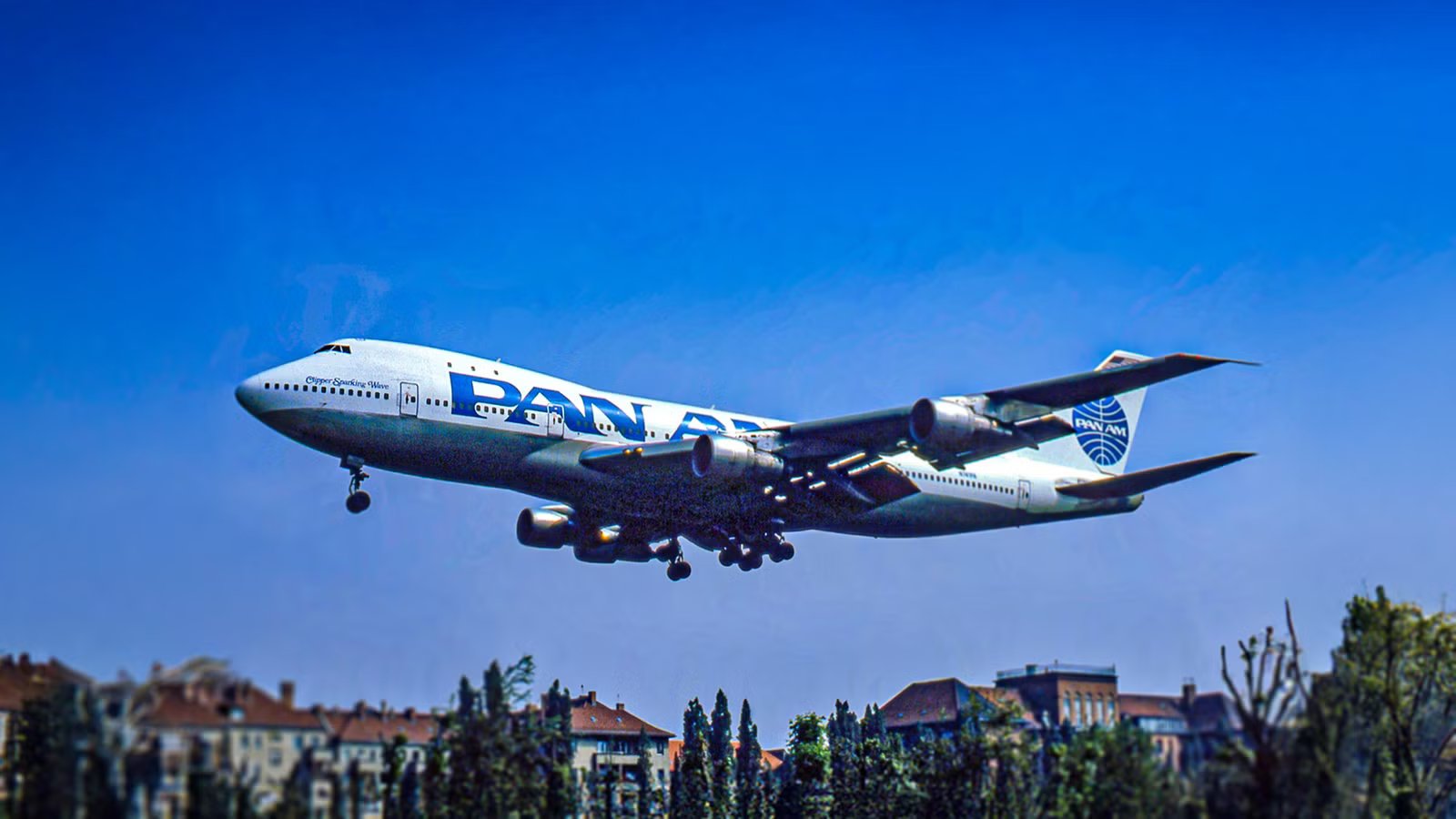
The Boeing 747 is one of the most recognizable aircraft ever created, symbolizing the golden age of long-haul travel and international tourism. With its distinctive upper-deck “hump” and gigantic size, the 747 transformed the aviation industry by making long-distance travel more accessible. When it entered service in 1970, the aircraft immediately set new standards for passenger capacity and reliability.
Although production of the 747 ended in 2023 after more than five decades, the aircraft’s legacy continues to shape aviation today. While the 747 has evolved tremendously since its original iteration in the late 1960s, the story of the jumbo jet began with the Boeing 747-100, the variant that changed commercial air travel forever.
177 Airframes Produced

Over the Boeing 747’s production history, a total of 1,574 Boeing jumbo jets were built across all variants, making it one of the most successful widebody aircraft families ever produced. However, only a relatively small portion of these aircraft belonged to the very first version of the jumbo jet, the Boeing 747-100. The early production run focused on proving the economic and operational viability of ultra-large commercial aircraft, and while successful, it was quickly followed by improved variants such as the 747-200 and later models.
According to production and fleet data from ch-aviation, approximately 177 Boeing 747-100 airframes were produced in total. This figure includes standard passenger aircraft, early test airframes, and certain subvariant, such as early cargo conversions and special configurations. These aircraft were primarily built during the late 1960s and early 1970s, coinciding with the rapid expansion of global air travel and the introduction of widebody aircraft into airline fleets worldwide.
Later variants of the 747 would soon greatly outpace the production of the 747-100. The Boeing 747-200, launched less than five years after the -100, sold more than twice that of the 747-100. Even later, the 747-400, which became the best-selling variant of the 747, sold 694 aircraft before production ceased and switched to the newest 747-8.
What Airlines Operated The 747-100?

As the first Boeing 747 variant, the 747-100 served with many of the world’s major airlines during the early jumbo jet era. Pan Am was the launch customer and operated its 33 examples extensively on international routes, helping grow its long-haul networks during the 1970s. The airline used the 747-100 on major transatlantic and transpacific routes, transporting hundreds of passengers on each flight between large metropolitan areas.
In addition to Pan Am, another 20 airlines owned and operated the 747-100. While Pan Am was by far the largest operator of the type, in the United States,  American Airlines operated the biggest 747-100 fleet with 16 aircraft.
  Delta Air Lines and Eastern Air Lines both also operated the type with five and four aircraft, respectively, while
  United Airlines, TWA, and Northwest Airlines came closer to matching the scale of Pan Am’s 747-100 operation. These three airlines flew 22, 15, and 10 747-100s, respectively, meaning U.S. airlines accounted for around 45% of all 747-100s built.
Outside the US,  British Airways,
  Air France, and Japan Airlines were the only three airlines who operated more than ten examples of the 747-100, with British Airways owning 18 aircraft, Air France at 16 and Japan Airlines coming in at 20 aircraft. Interestingly, however, the Islamic Republic of Iran Air Force operated 11 747-100s, and continues to fly the type in 2026. Nevertheless, the success of the 747-100 spearheaded later variants, including the 747-200, 747-300, and 747-400 and 747-8, both of which can still be found in commercial operation today.

Boeing’s Forgotten Jumbo Jet Is Now Worth Less Than $150 Million
Despite its falling monetary value, the Queen of the Skies will leave a lasting legacy on the commercial aviation industry.
The Storied History Of The Boeing 747

The Boeing 747 is perhaps the most iconic commercial airliner ever produced. With its signature double-decker hump, the Queen of the Skies revolutionized commercial aviation. At the time, Boeing’s flagship aircraft was the 707, but airlines like Pan Am put pressure on  Boeing to produce a larger aircraft. Introduced in the 1960s when demand for air travel was rapidly increasing, the 747 aimed to serve dense long-haul routes, doubling passenger capacity compared to previous aircraft. In 1966, Pan American World Airways , or Pan Am for short, placed a landmark order for 25 Boeing 747 aircraft, becoming the first airline to order the world’s first jumbo jet.
On February 9, 1969, the first Boeing 747 took off for its maiden flight. Dubbed “The City of Everett,” paying homage to Everett, Washington, the location for Boeing’s 747 manufacturing facility, this 747-100 impressed spectators, airlines, and regulators alike. By the end of the same year, despite some minor hiccups during the certification process, the 747 achieved FAA type certification and commercial service soon began on January 22, 1970, with Pan Am operating the first passenger flight onboard the 747.
The design of the 747 itself was revolutionary for the time. Its wide fuselage allowed for two aisles, a first in commercial aviation, which improved passenger movement and increased seating capacity. Meanwhile, the 747’s four engines provided the power needed for long intercontinental routes, complying with the strict ETOPS regulations in place. The 747’s distinctive upper deck, while originally intended to serve as a lounge area, was later used as additional space for more premium seating. Over time, the 747 family expanded into multiple variants, ranging from the first 747-100 to the latest 747-8, each offering improvements in efficiency, capacity, and range. Across its 54-year production run, Boeing built 1,574 747 aircraft of all variants, highlighting its massive impact on aviation history and legacy as the Queen of the Skies.
The First-Ever 747: The Boeing 747-100

The Boeing 747-100 was the original production version of the 747 family and set the standard for future jumbo jets. Designed primarily for long-haul passenger travel, the 747-100 later also found use as one of the world’s largest cargo jets. Compared with later models, the 747-100 did have less powerful engines and a shorter range, but it still represented a big step forward compared to jetliners from the 1950s, like the Boeing 707 or McDonnell Douglas DC-8.
Physically, the 747-100 was enormous for its time. It stretched for over 225 feet (68.6 meters) and had a wingspan of 195 feet, eight inches (59.6 meters), dwarfing the 707 which was only 152 feet (46.6 meters) long with a 142 feet (43.4 meters) wingspan. In flight, the 747-100 flew at a maximum speed of 602 miles per hour (970 km/hr) and had a service ceiling of 45,000 feet (13,700 meters). Additionally, the 747-100 could fly over 5,000 miles (8,050 km), with a range sometimes extending to almost 6,000 miles (9,660 km). This was made possible by the four Pratt & Whitney JT9D-7F turbofan engines, each generating over 46,000 pounds of thrust, enabling the 747 to fly.
However, what truly set the 747 apart was its capacity. While the 707 typically carried fewer than 200 passengers, the 747-100 could easily carry over 400 passengers in multiple configurations, from all-economy class layouts to mixed ones with first class and economy seats. For example, Pan Am operated its 747-100s with 25 first-class seats in the nose of the aircraft, 50 “Clipper Class” business-class seats located both on the main and upper decks, and 304 economy seats. The high passenger capacity of the 747-100 dramatically reduced the cost per seat for airlines and helped expand global travel to middle-class passengers. The 747-100 laid the foundation for every future widebody aircraft. Even modern twin-engine jets still follow the same basic design philosophy introduced by the 747: spacious cabins and high passenger density with long-haul global connectivity.

A Look Back At Boeing’s Classic 747-100
Boeing’s -100 mockups were made 1967–1968 and displayed possible diverse but luxurious configurations for the new jet.
Only 1 Remaining: The Final 747-100 Still Flying Today

In 2026, almost none of the early 747 variants remain in active service, with the 747-100, 747-200, and 747-300 all retired from commercial airline service. As of February 2025, only one 747-100 remains listed as active. This 56-year-old 747-100 is currently flown by the Islamic Republic of Iran Air Force and represents an incredible story of survival in an age that the 747-100 was never expected to live into.
Originally delivered to TWA on October 22, 1970, the surviving 747-100 is now registered as 5-8103. After flying with TWA for around 20 years, this aircraft was eventually sold to the Iranian government in the 1990s before the tightening of US sanctions. While little is known about this specific aircraft, it is likely used for military transport or VIP usage around the Middle East. As for why this specific 747-100 has survived in an age when no other 747-100 is still flying, the reason is likely due to Iran’s geopolitical challenges, which severely restrict the country’s access to new aircraft.
As for the other 170+ 747-100s that were produced, most have been scrapped, either for spare parts or to make space for other aircraft in storage that have a chance of flying again. Most airlines had retired the 747-100by the early 200s, given the aircraft’s increasing age and the presence of newer, quieter, and more economical widebody aircraft designed for the 21st century. There are still, however, numerous 747-100s that are on display around the world, including the first 747 ever produced, which can be found on display at the Museum of Flight located at Boeing Field in Seattle.

![6-Hour Flights: Southwest Airlines Launches Exciting New Route To Hawaii In August [Map]](https://dailynewsnblog.com/wp-content/uploads/2026/06/imua_one_departs_santa_barbara_-53981372594-_cropped.jpg)