dailynewsnblog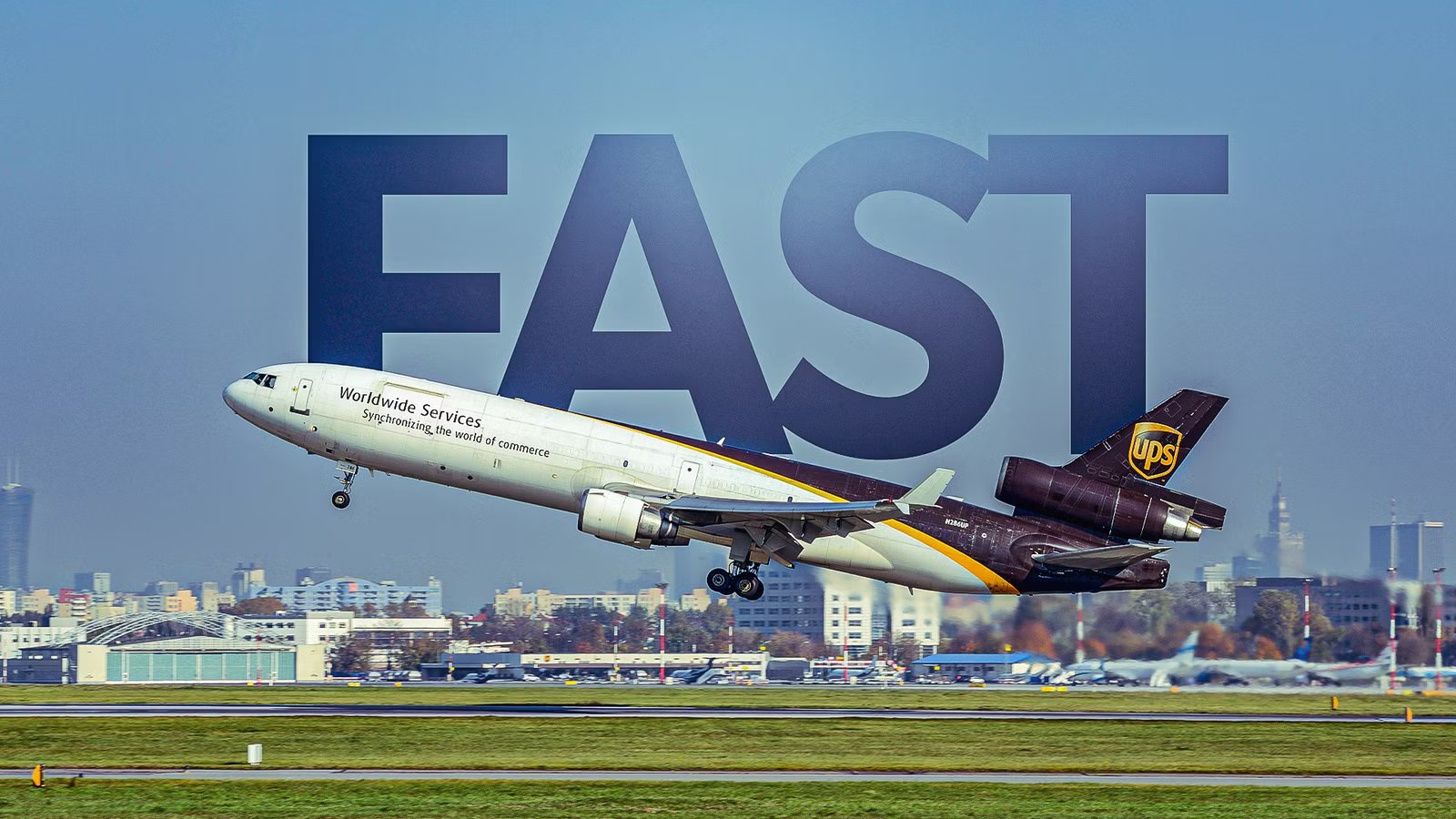
The McDonnell Douglas MD-11 represents one of the final chapters in the evolution of the widebody trijet. Entering service in 1990, the aircraft was designed as an improvement on the McDonnell Douglas DC-10, complete with updated aerodynamics, avionics, and a longer range, allowing it to compete with emerging long-haul twinjets. While the MD-11 never became a dominant passenger aircraft and retired from commercial service less than 25 years after entering service, the MD-11 built a reputation for strong range performance and unique handling characteristics.
Understanding how fast the MD-11 can fly requires looking beyond simple cruise numbers. Like most widebody aircraft of its era, the MD-11 was designed to balance speed, efficiency, and payload rather than push performance limits. However, its design choices, particularly those aimed at improving cruise efficiency, also helped create one of the most distinctive landing profiles of any modern commercial airliner.
40 Years Strong: The MD-11’s Background

The MD-11 was developed as an advanced evolution of the DC-10, incorporating improved aerodynamics, modern avionics, and three new engines. Launched at the end of 1986, the MD-11 was intended to compete in the long-range widebody market, offering an alternative to new twinjets like the Boeing 767 and, later, the Boeing 777 and Airbus A330. After its first flight on January 10, 1990, the first MD-11 was delivered to Finnair on December 7 of that year, with 200 aircraft eventually built over 10 years of production.
Physically, the MD-11 measured around 200 feet in length (61 m), with a wingspan of just over 167 feet (51 m). This represented a stretch of 11% compared to the DC-10, allowing the MD-11 to accommodate 298 passengers in a three-class configuration. As a long-haul aircraft, the MD-11 also had a substantial range of 7,130 nautical miles (13,200 km). For comparison, the Boeing 787-9 advertises a range only slightly longer than the MD-11 at 7,565 NM (14,010 km), making the MD-11 a true competitor on the global stage even against today’s more advanced aircraft.
Despite being designed as a passenger aircraft, the MD-11 ultimately found its greatest success as a freighter. Major cargo carriers like FedEx and  UPS Airlines became long-term operators, and the aircraft remains a backbone of some cargo fleets today. Its combination of payload capacity and durability made it perfectly suited for global freight networks even decades after its introduction to service.
How Fast Can The MD-11 Fly?

For its time, the MD-11’s operational cruise speed was fairly standard and in some cases, slightly higher compared to other widebody aircraft of its era. According to airliners.net, the MD-11 had an economical cruising speed of around 473 knots (876 km/hr or 544 mph). In terms of maximum cruising speed, the MD-11 could top out at around 510 knots (945 km/hr or 587 mph), an impressive but standard speed for an aircraft designed in the late 1980s. Notably, however, the MD-11 was designed to achieve better cruise performance. For McDonnell Douglas, this meant reducing the size of the horizontal stabilizer to lower drag, and in turn, lower fuel burn. In reality, however, the MD-11 fell short of its promise of improved efficiency, with design changes such as the horizontal stabilizer actually decreasing controlability and increasing the speed of the MD-11 in critical phases like landing, and increasing the MD-11’s speed in critical phases like landing.
For comparison, in terms of cruise speed, the MD-11’s direct predecessor, the DC-10, had a maximum of 490 knots (908 km/hr or 564 mph). This small difference in speed between the DC-10 and MD-11 makes sense, given the refinements made to the MD-11 as well as its improved engines, which typically generated about 50 kN more thrust per engine than those on the DC-10. However, even when compared to twin-engine competitors like the Boeing 767, the MD-11 again does not stand out as particularly fast. The Boeing 767-200, the earliest of the 767 variants, typically cruises at around 461 knots (854 km/hr or 531 mph).
In practical terms, the MD-11’s cruise performance was in line with the broader industry at the time. By the late 1980s and early 1990s, aircraft manufacturers were prioritizing more fuel efficiency, range, and better operating costs. While speeds of jet aircraft have been steadily increasing since the start of the jet age, most aircraft produced since the MD-11, even much more technologically advanced ones like the Boeing 787 and Airbus A350, have typical cruise speeds around 500 knots (926 km/hr or 575 mph), only marginally higher than the MD-11 and similar aircraft.

Is The McDonnell Douglas MD-11 Done Flying For Good?
The aircraft was once a long-haul workhorse.
The MD-11’s Extremely High Landing Speed

While the MD-11’s cruise speed was typical for a long-haul widebody of its era, its landing speed is where the aircraft truly stood apart. The MD-11 developed a strong reputation for requiring higher approach speeds than many comparable aircraft, with typical Vref speeds, or the speed at which the aircraft crosses the runway threshold at 50 feet during landing, usually falling between about 150 and 165 knots, depending on weight and configuration. This is noticeably higher than many other widebodies, including the Boeing 747, which typically has a Vref speed between 145 and 160 knots. This higher speed means the MD-11 carries more energy into the flare and touchdown phase of flight, reducing the room for error for pilots in the final seconds of landing.
Much of this behavior comes down to design tradeoffs made to improve cruise efficiency. The MD-11 features a much smaller horizontal stabilizer compared to the DC-10 and operates with a better aft center of gravity envelope. While these changes reduce drag and improve long-range efficiency, they also reduce pitch stability at low speeds. The aircraft’s relatively high wing loading also means it must maintain higher speeds to generate enough lift during approach. Together, these factors create a narrower margin for error during landing. If the aircraft is slightly fast, it can float; if slightly slow, the sink rate can increase quickly. Accident analyses and training materials have consistently emphasized that the MD-11 requires extremely precise speed control and stabilized approaches well before reaching the runway.
The MD-11’s trijet configuration also plays a small but important role. With one engine mounted in the tail, thrust changes can produce slightly different pitch effects compared to twin-engine aircraft, especially during power reduction in the flare. Over time, airlines adapted by emphasizing strict, stabilized approach criteria and specialized training for MD-11 crews. With proper technique and procedures, the aircraft remains safe and predictable, but its landing characteristics clearly reflect the design priorities of its era, where long-range cruise efficiency was often prioritized over low-speed handling margins.
What Are The Fastest Commercial Aircraft?

Like most commercial airliners today, the MD-11 is not among the fastest commercial aircraft historically. That distinction belongs to military and high-speed jet aircraft like the Concorde, whose design was largely based on speed rather than efficiency. In terms of the fastest manned aircraft ever built, the North American X-15 recorded the fastest speed ever in 1967. Operated by William “Pete” Knight, the X-15 reached speeds over 4,500 miles per hour (7,270 km/hr), or Mach 6.7.
Among modern subsonic aircraft, cruise speeds remain remarkably similar across manufacturers. Most modern widebody jets cruise around Mach 0.8 or Mach 0.85. This similarity actually proves to make air traffic control operations easier. If newer planes flew significantly faster, controlling long enroute sectors, like that over the Atlantic Ocean, would become more complicated as faster aircraft would overtake slower ones much more often. Private jets do, on average, typically fly faster than commercial airliners, although they do so at higher altitudes, usually above 40,000 feet.
Looking to the future of speed in commercial aviation, American manufacturer Boom Supersonic is seeking to bring back the supersonic days of the Concorde. With its flagship aircraft, the Boom Overture, Boom promises cruise speeds of Mach 1.7, slightly below the Concorde, which sometimes passed Mach 2.0. This will cut travel time to many destinations in half, like New York to London, down from seven hours to just three hours and forty minutes.

Farewell Tri-Jet: UPS Is Retiring Its Iconic MD-11 Fleet
The move comes after a fatal crash in November 2025.
What Does The Future Hold For The MD-11?

Up until the end of 2025, the MD-11 was still flying strong, although it was only in service with cargo operators, as the last passenger operator of the type, KLM, retired it in 2014. With its high maximum takeoff weight and reasonable costs, the MD-11 became a workhorse for cargo operators around the world. However, since the tragic November 2025 crash of UPS Flight 2976, which claimed the lives of 15 individuals, the MD-11’s future is up in the air.
At UPS, previously one of the two largest operators of the MD-11 with 43 examples in its fleet, the events of November 4, 2025, led the company to finalize its decision to permanently retire its remaining 26 MD-11 airframes. This decision, finalized in December 2025, leaves UPS operating only Boeing 767-300Fs and Boeing 777Fs. While UPS’s MD-11s had just passed an average age of 31 years and were expected to be retired in the coming years in favor of newer cargo jets, the departure of the iconic trijet marks the beginning of the end of the MD-11’s era as a mainstay cargo workhorse.
While UPS has already retired its MD-11 fleet, FedEx, the only other sizable operator of the type, continues to keep its MD-11s. Although these aircraft are not currently flying due to FAA emergency airworthiness directives and investigations, FedEx has reaffirmed its commitment to keep them flying until the early 2030s, if possible. The MD-11’s long-term legacy will likely be as the final major trijet airliner and as an aircraft that bridged the transition between older analog flight decks and modern digital glass cockpits. For aviation enthusiasts and industry observers alike, the MD-11 remains an aircraft defined not by raw speed, but by its combination of range, payload, and operational flexibility.