dailynewsnblog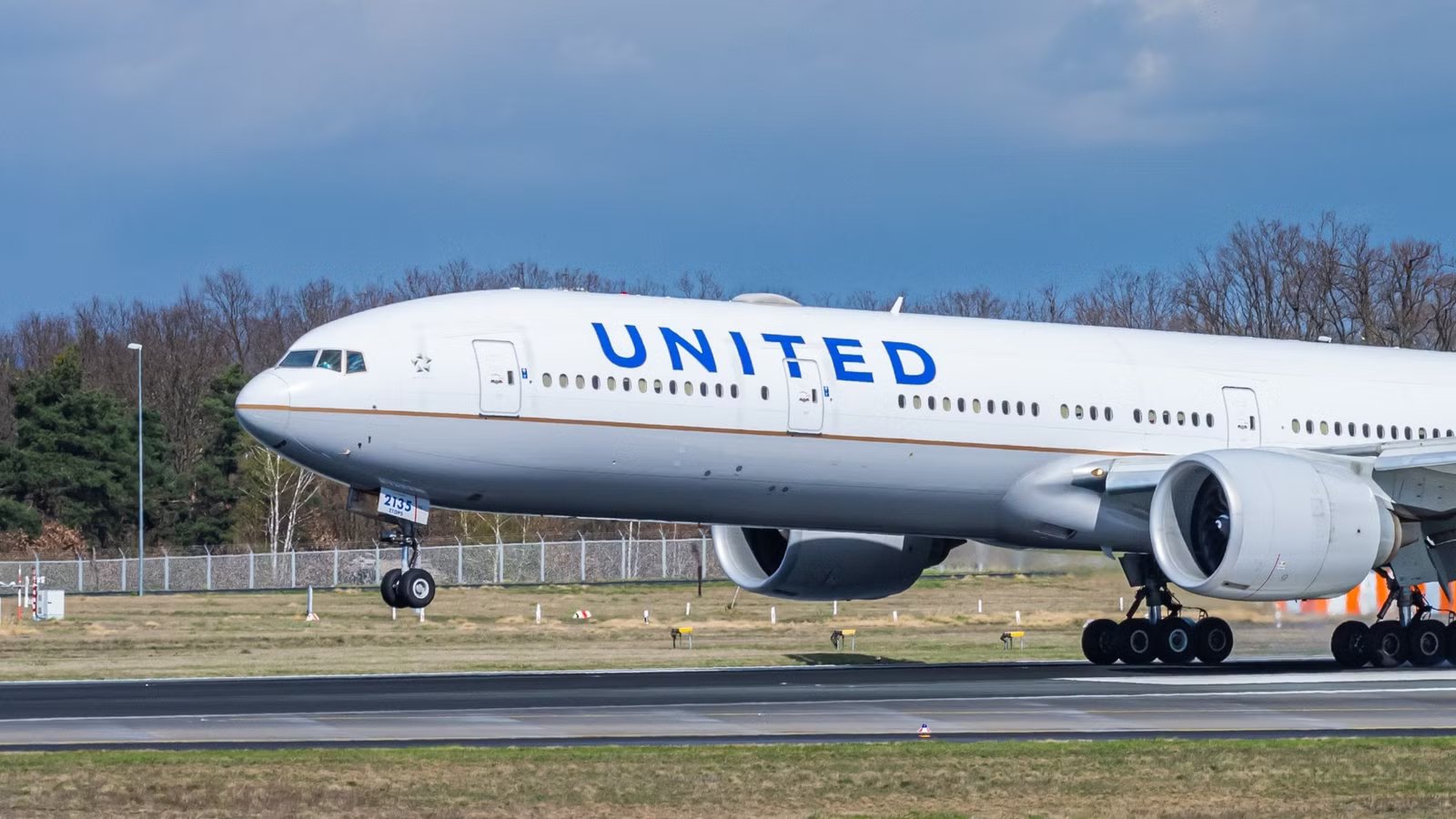
The  Boeing 777-300ER is the largest widebody twinjet in the United Airlines fleet, with current fleet data made available by Aviator Joe showing that the aircraft clocks in at 73.9 m (242 ft 5 in) in length. While primarily associated with long-haul missions, did you know that the type also serves a trio of key domestic corridors for United Airlines? The opulent premium seating options enabled by its large cabin make it perfect for these routes.
Interestingly, despite being the largest aircraft type at United Airlines in terms of length, the Boeing 777-300ER is not the Chicago-based US ‘big three’ legacy carrier and Star Alliance founding member’s highest-capacity jet. Indeed, that title falls to its more densely configured 364-seat 777-200s, which specialize in high-demand domestic operations. Still with 350 seats, the 777-300ER flies many more passengers than a typical US domestic flight.
A Long Way From Home

According to present scheduling data made available by Cirium, an aviation analytics company, United Airlines is set to operate a grand total of 166 domestic flights with the Boeing 777-300ER, compared to 514 international services. This capacity is spread across three different routes, and, as seen in the map above, only one of these is confined within the US mainland, with the most distant of these corridors linking Guam with Honolulu.
This February, United will fly the 777-300ER on one round trip a day between the former’s Antonio B. Won Pat International Airport (GUM) and the latter’s Daniel K. Inouye International Airport (HNL), over a distance of 3,801 miles (6,117 km). These flights have block times of between seven and eight hours. United Airlines plans to upgrade its facilities in Guam, with David Kinzelman, its Chief Customer Officer, explaining last year that:
“A complete refresh of our lobby in Guam will deliver the premium experience our customers expect of United and is part of our broader commitment to elevating the customer experience.”
Two More Key Domestic Links

While Guam is located to the west of Honolulu, and, indeed, is situated on the other side of the International Date Line to Hawaii’s state capital and most populous city, United Airlines also operates an eastbound domestic route with the Boeing 777-300ER from the Aloha state. This corridor links the facility with San Francisco International (SFO), with this airport in northern California serving an important role as one of its key West Coast hubs.
Much like the route from Honolulu to Guam, United’s 777-300ERs will fly to and from Daniel K. Inouye International Airport every day this month, with block times on this route typically coming to between five and six hours. This is actually a route on which United Airlines operates a grand total of four return flights a day, with the other three being operated by other Boeing twinjets, namely the 737 MAX 9, the 757-300, and the 364-seat 777-200.
The third and final domestic route being served by United Airlines’ Boeing 777-300ERs this February, and the only one confined within the mainland, links San Francisco with Newark Liberty International Airport (EWR) 27 times. Located in the federal state of New Jersey, this East Coast hub serves as United’s gateway to New York City, and, given the value of transcontinental routes, the 777-300ER’s premium-heavy layout is a key asset here.

How Much Does It Cost To Upgrade To United Polaris?
United Polaris is the premium service offered by United Airlines, and the cost of upgrading varies massively, and sometimes, unpredictably.
What’s It Like Onboard?

As previously mentioned, United Airlines’ Boeing 777-300ER widebody twinjets have a grand total of 350 seats on board. The fact that they have a lower capacity than its 777-200s and some 777-200ERs despite being larger reflects their more premium-heavy layout, with Seat Maps noting that 84 of their passengers (24%) are accommodated in non-economy cabins. This figure is split between 60 in business and 24 in premium economy.
Business class passengers enjoy direct aisle access in every seat, with the ‘Polaris’ cabin being laid out in a four-abreast 1-2-1 configuration. Behind them, the 24 premium economy recliners are laid out in three eight-abreast (2-4-2) rows, while the 266 coach passengers have a tighter 3-4-3 setup to contend with.