dailynewsnblog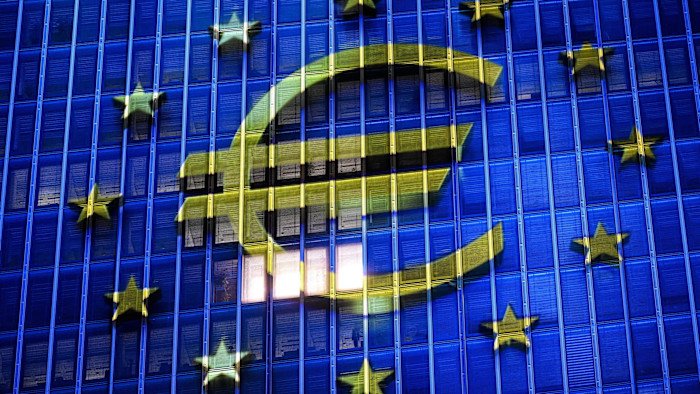
This article is an on-site version of our Chris Giles on Central Banks newsletter. Premium subscribers can sign up here to get the newsletter delivered every Tuesday. Standard subscribers can upgrade to Premium here, or explore all FT newsletters
On January 1, Bulgaria became the 21st country to join the Eurozone. It was the culmination of a process that some might argue started in 1997, when the country entered a currency board that pegged its domestic currency, the lev, first to the German Deutsche mark and then to the euro.
That IMF-backed arrangement aimed to stabilise the economy, which had been in turmoil since the fall of the communist bloc. A year earlier, Bulgarian policymakers’ attempts to solve a banking sector crisis through liquidity injections had fuelled a spell of hyperinflation.
Officials sought to use the currency board to bring inflation under control. They succeeded, and in the decade that followed Bulgaria underwent structural reforms that enabled it to join the EU in 2007. It was then that its goal of adopting the euro first became concrete. Momentum stalled in the 2010s, but in 2020 Bulgaria was finally let into the European Exchange Rate Mechanism (ERM II). Six years on, monetary integration is complete.
The transition is going smoothly so far: Bulgaria has already converted around half of its old currency, according to Petar Chobanov, deputy governor of the Bulgarian central bank, who spoke at FT Live’s CEE securitisation summit in Vienna last week.
However, many Bulgarians are opposed to Eurozone accession. The lev was already fully backed by euro reserves via the currency board, and Bulgaria’s monetary stance was already, in effect, set in Frankfurt. So the standard argument in favour of joining a currency union — removing exchange-rate risk — does not apply.
So what exactly will Bulgaria get out of being a full member of the Eurozone that it wasn’t getting before?
From policy taker to policymaker
Currency boards severely limit a domestic central bank’s policy discretion. That is what happened to the Bulgarian National Bank (BNB), which from 1997 was forced to mirror the Bundesbank and, later, the European Central Bank.
This set-up works when the domestic business cycle is well synchronised to the anchor currency’s economy. When it is not, problems arise.
Fortunately, over the past three decades Bulgaria’s economy has moved broadly with the Eurozone’s. EU accession in 2007 helped by lowering trade and investment barriers.
There were exceptions, note European Commission researchers. In 2022, inflation in Bulgaria rose well above Eurozone peaks. Because supply-side factors, such as greater exposure to Russian energy imports, explain most of the excess, whether more robust monetary tightening would have helped is ambiguous. In any case, the BNB’s hands were tied.
To be clear, this problem exists within the Eurozone as well. Member states’ inflation trajectories do not always look similar, and monetary conditions set by the ECB are not appropriate for all euro-area countries. In 2022, for instance, inflation in Estonia, a Eurozone member, was even higher than in Bulgaria.

But now, the BNB is able to exert direct influence over the monetary policy decisions it is subject to via a vote on the governing council. It did not have that power before.
Sceptics of the common currency often argue that adopting the euro is tantamount to losing sovereignty. For Bulgaria, given the arrangement it was in before, quite the opposite is true.
Cheaper and more plentiful credit
Eurozone membership is also set to produce dividends for the real economy. While the currency board had already removed most of the exchange-rate risk, euro membership is set to enhance the country’s standing with international investors, while new banking sector rules could make credit more widely available.
These promise to boost investment, fuelling stronger growth in the near term and potential productivity improvements in the long run.
Credit-rating agencies had already upgraded Bulgaria when the Commission formally announced the country’s Eurozone accession last July, noting that further upgrades would be likely with additional institutional reforms.
Eurozone membership is also set to make Bulgarian banks more willing to lend for two reasons. First, the lender of last resort function will now be shared between the BNB and ECB. The latter has a lot of firepower and a broad range of tools at its disposal. This should boost banks’ risk appetite at the margin.
Second, banks’ reserve requirements have fallen sharply. Before joining the euro, the BNB had set the minimum-reserves ratio at a conservative 12 per cent. With Eurozone membership, that has fallen to 1 per cent. All else equal, that will free up capital for banks to lend out to households and businesses.
Signs of heightened investor interest in the country are not limited to credit markets. The Bulgarian stock index has skyrocketed since January 1, gaining an eye-watering 21 per cent in less than three weeks. This makes it the global top performer so far this year.
I asked Nikolay Markov, lead CEE economist at Pictet Asset Management, how his view of the country as an investment destination had changed. “Bulgaria has definitely risen up the ranks of our investment universe. We are probably more bullish on it now than we are on the rest of Europe,” he said.
Geopolitics
Bulgaria’s euro entry comes exactly one year after the country was included in the Europe-wide Schengen border-free travel zone. Reaching these two milestones in just 12 months has created a sense of real progress in Bulgaria’s journey to full European integration.
With Russia stepping up its influence operations since invading Ukraine and trade disruptions constantly at risk of flaring up since President Donald Trump retook the White House, analysts say that deeper links to the EU could not have come at a better time.
“Leaving the euro is very complicated and has never been done before, so Eurozone membership is a real signal of commitment to the European project,” said Yasen Georgiev, executive director at the Economic Policy Institute, a Sofia-based think-tank.
“It takes us one step closer to being at the heart of the EU. The geopolitical benefits of that are just as significant as the economic gains — in these turbulent times, maybe even more so,” he adds.
What I’ve been reading and watching
-
Scheherazade Daneshkhu’s moving piece revisits her memories of the 1979 Iranian revolution, drawing parallels to the protests in the country today. The regime seems to be surviving for now, though how long it has left is anyone’s guess.
-
Mary McDougall and a team of FT correspondents ask whether the death knell has sounded for generous European state pension systems.
-
On the subject of pensions, this interesting WSJ piece looks at how economics explains young Germans’ reluctance to join the armed forces.
One last chart
With the criminal probe against US Federal Reserve chair Jay Powell, the Trump administration appears to have overplayed its hand in its attempts to take control of the central bank.
At least, that was Polymarket traders’ conclusion on Friday after the US president appeared to cast National Economic Council director Kevin Hassett out of the contest for Fed chair. “I actually want to keep you where you are, if you want to know the truth,” Trump told his underling.
Hassett is a loyalist. Former Fed governor Kevin Warsh is independent-minded. My (and many others’) guess is that some Trump advisers fear a Hassett Fed announcement would spark a big US Treasury sell-off that the Powell probe alone failed to ignite.
It remains to be seen what Trump will do. Still, for those who care about central bank independence, Warsh is a much better choice than Hassett. If one was looking for a silver lining in last week’s Fed drama, this might be it.

Central Banks is edited by Harvey Nriapia
Recommended newsletters for you
Free Lunch — Your guide to the global economic policy debate. Sign up here
The Lex Newsletter — Lex, our investment column, breaks down the week’s key themes, with analysis by award-winning writers. Sign up here