dailynewsnblog
If you’re a Simple Flying regular, you likely already know the basics of air travel. You know that TSA PreCheck is essential, you have figured out that it’s better to wear slip-on shoes, and you’ve probably heard “drink more water” enough times to float a battleship. The standard travel advice ecosystem is saturated with tips that are meant for the once-a-year vacationer, not the savvy traveler looking for a genuine edge.
True travel mastery isn’t just about getting through the airport faster. Rather, it’s about understanding the complex ecosystem of airline operations, aircraft engineering, and travel regulations to make the system work for you. It’s about knowing which seat on a Boeing 787 has a misaligned window, knowing exactly what paperwork to demand when a flight is delayed, and understanding the physics of turbulence to choose a smoother ride.
1
Leverage Airline Alliances For Lounge Access
Sometimes, The Best Lounge Is Not The Most Obvious One

If you’re a regular traveler, you probably already hold status with at least one airline and the alliance it is a part of —  Star Alliance,
  SkyTeam or
  oneworld. However, a common mistake among status holders is blindly heading to the lounge operated by the airline they are flying on that day.
If you hold top-tier status with a major alliance (Star Alliance Gold, oneworld Emerald, or SkyTeam Elite Plus), your boarding pass and/or elite status can unlock multiple lounges across the terminal. The quality of these lounges can vary greatly, so the secret is knowing which partner airlines operate the superior lounges in a given terminal and then plan your ‘lounge-hopping’ accordingly.
The best example of lounge-hopping opportunities is Terminal 3 at  London Heathrow Airport. If you’re a oneworld Emerald member flying
  American Airlines to
  New York JFK Airport, you’ll be directed to the airline’s International First Class Lounge. But clustered along the same concourse are no fewer than seven lounge choices.
|
Lounge-Hopping Example: oneworld Lounges At London Heathrow Terminal 3 |
|
|
American Airlines Admirals Club |
This standard business class lounge offers basic amenities, a self-serve bar, and functional seating areas, though it’s generally considered less impressive than other oneworld options in the terminal. |
|
American Airlines International First Class Lounge |
A quiet space providing an à la carte dining menu and premium beverages, but often criticized for being bland and lacking atmosphere. |
|
British Airways Galleries Club Lounge |
A vast business class lounge offering consistent hot and cold buffet options and numerous seating zones, providing a reliable but busy pre-flight experience. |
|
British Airways Galleries First Lounge |
A large lounge known for its exclusive “Concorde Dining” room for select travelers and a decent selection of self-pour wines and champagne, though it can get very busy. |
|
Cathay Pacific Business Class Lounge |
This lounge stands out for its well-regarded ‘Noodle Bar’ offering fresh Asian dishes in a stylish, calming environment with excellent runway views. |
|
Cathay Pacific First Class Lounge |
Often considered the best lounge in the terminal, it features elegant table service dining, luxurious decor, and private “solus” chairs for a highly relaxing experience. |
|
Qantas London Lounge |
A vibrant, contemporary lounge praised for its extensive self-service buffet, signature gin bar, and high-quality barista coffee service. |
Cathay Pacific offers two great options — it’s business class lounge has delicious noodles with a great view, while its First Class lounge has a warm, living room-like design and a superb dine-in restaurant. Perhaps Qantas‘ two-story London Lounge is more your thing, with a gin bar, barista station, and exceptional à la carte dining. In any case, you’ll find lounge-hopping opportunities at most large hubs.
 Singapore Changi Airport is noteworthy because its terminals are linked, and within specific terminals (like T3 for Star Alliance), multiple options are available for passengers to explore.
  Bangkok Suvarnabhumi Airport is another, as it has a vast number of lounges (more than 30) and offers excellent opportunities for Star Alliance members to hop between the many Thai Airways lounges and those of partners like
  Turkish Airlines and EVA Air.

These US Airports Have Lounges You Can’t Find Anywhere Else
Premium lounges have been popping up all over the US, offering a higher level of exclusive luxury and comfort.
2
Avoid A Common Trap In Trip Insurance
Ensure You Always Get Your Statement Of Delay

If you traveled within the US in the past month, chances are that you experienced an extensive delay or even a flight cancellation. Most of us also know that our premium credit cards offer fantastic trip delay insurance that kicks in after a 6 to 12-hour delay, covering meals, hotels, and necessities up to $500, depending on the card.
Travelers know they have this perk, yet millions of dollars go unclaimed every year. Why? Because travelers fail to secure the one mandatory document while they are still at the airport. Insurance claims adjusters will likely deny your claim if you only provide a screenshot of a flight tracker app or a generic email saying your flight is delayed. They require an official ‘Statement of Delay’ from the airline, stating the reason for the delay (such as ‘airline operations’ or ‘maintenance’).
|
Credit Card Trip Delay Insurance Checklist |
||
|---|---|---|
|
Required Item |
When To Get It |
Common Mistake |
|
Official Statement of Delay |
At the airport during the delay event. |
Assuming a screenshot of an app or a boarding pass is sufficient proof. It is not. |
|
Itemized receipts |
Immediately upon purchase of food/hotel. |
Keeping only the credit card slip showing the total, rather than the itemized breakdown of expenses. |
|
Proof of round-trip purchase |
Before travel (save your e-ticket receipt). |
Not paying for a portion of the ticket with the specific card that offers the insurance. |
|
Policy reason verification |
Before claiming, check your Benefits Guide. |
Claiming for a weather delay when your specific card only covers mechanical/operational delays. |
Gate agents are busy during a delay and likely won’t volunteer this document. You must politely but firmly ask for a printed statement confirming the delay reason before you leave the airport to book that insurance-covered hotel. Trying to get this document days later via customer service channels can be nearly impossible, so being alert during the delay event can save you hundreds of dollars.
3
Pre-Order A Special Meal
The Meal Is Typically Fresher, And You Get Served First

Let’s face it, unless you’re sitting up at the sharp end of the aircraft, the dining experience on a long-haul flight is rarely memorable, as plane food is often just plain food. As such, a useful tip is to pre-order a special meal, something that anyone can do, regardless of their dietary requirements. However, you should note that you will typically need to do this at least 24 hours in advance of your flight with most airlines.
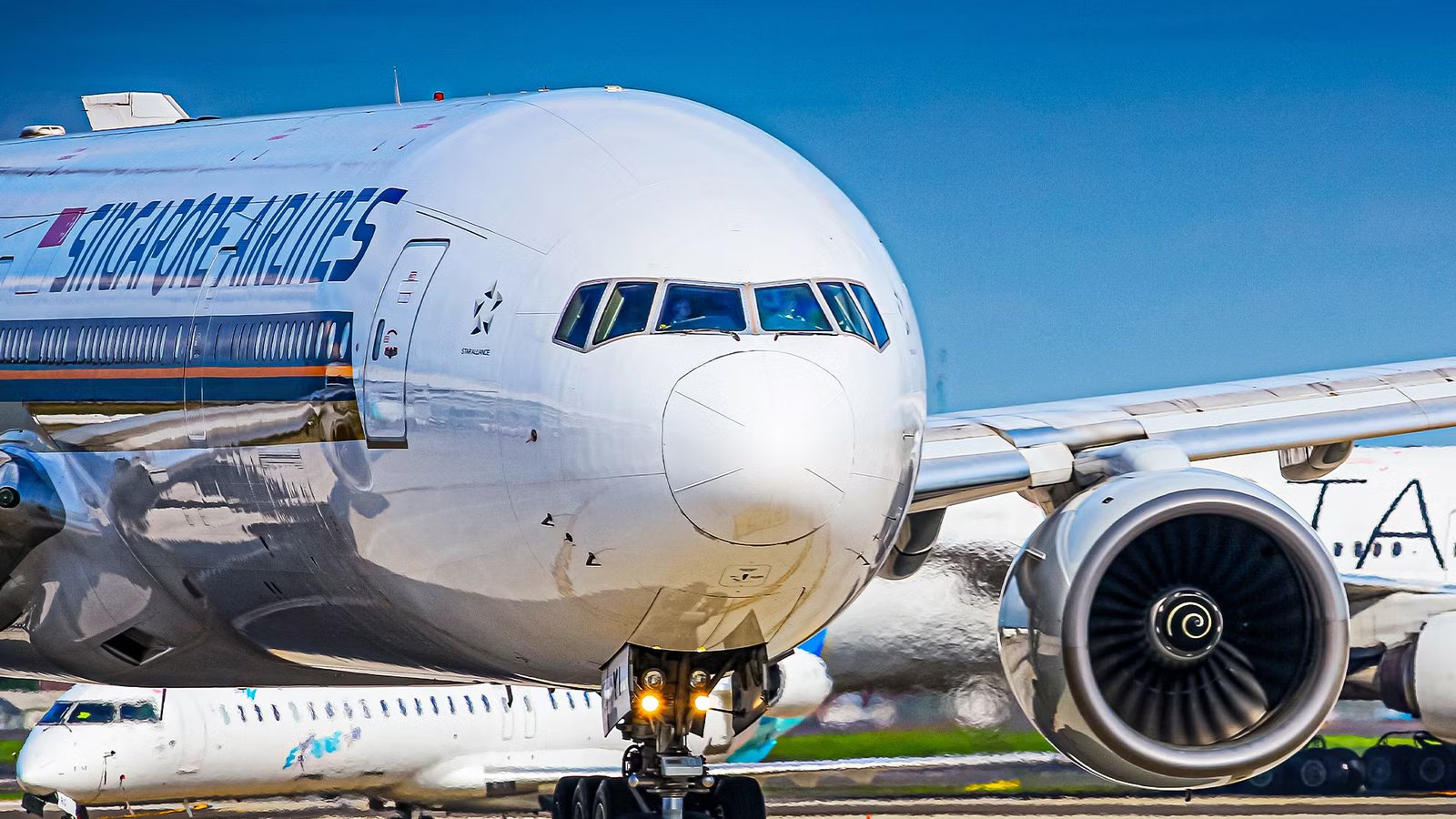
There are multiple reasons for doing this. A special meal ensures you get exactly what you want, rather than encountering shortages of standard meal choices, leaving you with yesterday’s fish. They are also typically higher-quality and made fresh the day of the flight, versus a regular meal that might have been frozen a few days prior. Most large international carriers, such as  Singapore Airlines, also offer a wide range of special meal choices (see below).
|
The 23 Different Special Meal Choices On Singapore Airlines |
|
|
Vegetarian meals |
Seven different options, including Indian, Chinese, and Western-style, as well as vegan. |
|
Religious meals |
Three options: Hindu (non-vegetarian), Kosher, and Muslim meals. |
|
Medical/dietary meals |
Ten different options, including peanut-free, gluten-free, low-sal,t and diabetic meals |
|
Children’s meals |
Three options for babies, infants, and children |
However, perhaps the best benefit of special meals is that they are served first. Airline caterers load special meals separately, and cabin crew distribute them before regular service to ensure accurate delivery. This allows you to finish eating sooner, visit the restroom before lines form, and get to sleep sooner on that overnight flight.
Still, there is one potential snag to this tip. Special meals can restrict your access to complimentary upgrades, particularly with legacy US carriers. Airlines prioritize upgrades for passengers without specific meal requests, as catering is prepared in advance based on seat assignments. As such, by skipping the special meal, you keep flexibility for last-minute upgrades to premium cabins.

Goodbye To Extra Fees: flydubai Offers Complimentary Meals On All Flights
Free meals for everyone? Find out which airline is shaking up its service model.
4
Gaming The Overbooked Flight Auction
Leverage The Airline’s Fear Of Involuntary Denied Boarding

We have all witnessed it: the gate area is crowded, boarding is delayed, and then the gate agent announces that the flight is overbooked. Some passengers are going to get bumped, but they will start by offering a $300 voucher for volunteers who are willing to take a later flight. The novice traveler ignores it. The average traveler takes the $300. The expert traveler knows this is just the opening bid in a high-stakes negotiation.
If airlines bump you, which is called Involuntary Denied Boarding, the US Department Of Transportation mandates that they have to provide you with same-day cash compensation. This can be up to 400% of your one-way fare (capped at $2,150), depending on the length of your delay. Airlines desperately want to avoid that cash payout and the associated DOT paperwork, so they will try to ‘buy’ volunteers with vouchers instead.
|
US DOT Compensation Rules For Involuntary Bumping |
||
|---|---|---|
|
Delay In Arrival At Destination |
Cash Compensation Amount |
Why You Need To Know This |
|
0–1 hours |
No compensation |
You have no leverage |
|
1–2 hours (domestic) or 1–4 hours (Int’l) |
200% of one-way fare, capped at $1,075 |
This is your baseline for negotiation. A voucher offer should exceed this value. |
|
2+ hours (domestic) or 4+ hours (Int’l) |
400% of one-way fare, capped at $2,150 |
This is the airline’s largest “pain point.” They will offer significant vouchers to avoid paying this cash amount. |
If your travel plans are flexible, negotiating a voluntary bump can be very lucrative, but the key is knowing that gate agents have escalating authority limits and the first offer is rarely their best. As such, you should go to the desk and let them know that you are willing, but $300 isn’t enough. As the pressure mounts, the offers skyrocket. From personal experience, it is not uncommon for a $300 opening bid to become a $2,000+ voucher plus a business class seat on the next flight just two hours later.
5
Scout For Optimal Security Checkpoints
Ideal Where Terminals Are Interconnected Airside

Long TSA security lines are a universal dread, but many large airports, like  Los Angeles International Airport, have lesser-used checkpoints that can cut your wait in half. The key is that you are looking for airports where multiple terminals are interconnected airside, meaning that you can clear security via a choice of checkpoints, and then easily travel to your gate via people movers or a short walk.
This hack is underutilized because most passengers head straight to the main lines nearest their check-in. More savvy travelers will take a different approach, and research their airport in advance to know where the available checkpoints are. You can also use apps like MyTSA or MiFlight to get a real-time view of checkpoint wait times, and, at major airline hubs, you should look for the terminals that serve the “non-resident” airlines, and consider international terminals in off-peak times.
|
Examples Of US Airports With Superior Security Alternatives |
||
|---|---|---|
|
Airport |
The Standard / Busier Option |
A Better Alternative |
|
Atlanta |
Main domestic checkpoint |
International Terminal (connects to all concourses via the Plane Train) |
|
Dallas/Fort Worth |
Terminals A-C (American Airlines) |
Terminal D (Int’l) — more security lanes, ideal during off-peak hours |
|
Houston |
Terminals C, D, and E (United and International |
Terminal A |
|
Miami |
North and Central Terminals (American/Oneworld) |
South Terminal — newer with more security lines. |
|
Los Angeles |
The terminal where your airline is based |
Terminal 1, home to budget carriers, typically has less traffic. |
|
Philadelphia |
Central B/C connector |
Terminal F (requires taking an airside shuttle) |
|
San Francisco |
Terminal 1 (Alaska) or Terminal 3 (United) |
Terminal 2 |
My personal favorite when flying  Delta Air Lines at my home base in Atlanta is to head to the North Terminal security. This checkpoint is used primarily by non-Delta passengers, but has a lane for Business Class and Sky Priority passengers. Nine times out of ten, you’re able to walk straight up to a TSA agent, quicker even than the most efficient TSA PreCheck or CLEAR lines at the airport.
6
Time Of Day Matters. A Lot.
Earlier Flights Are Far Less Likely To Be Delayed

The single most effective strategy to avoid flight delays, as noted by Thrifty Traveler, is to book the first flight of the day, typically departing between 6:00 am and 8:00 am. This period is often referred to as the ‘golden window’ for on-time departures, as morning flights usually use aircraft that landed the night before. They are already parked at the gate, fueled, and serviced, and crews are based at the airport.
As the day progresses, a ‘ripple effect’ occurs. A minor 10-minute delay in Miami at 10:00 am can snowball into a two-hour delay for that same plane’s leg in Denver by 6:00 pm. Weather is the single largest cause of delays and cancellations, and thunderstorms are much more common in the late afternoon and have the highest impact on airports in the South, such as Dallas, Atlanta and  Charlotte Douglas International Airport.
|
On-Time Departures By Time Of Day |
|||
|---|---|---|---|
|
Departure Time |
On-Time % At Hubs |
On-Time % At Non-Hubs |
Notes |
|
06:00–09:00 |
82-84% |
85-90% |
The golden window for departures |
|
10:00–15:00 |
75-80% |
82-85% |
Moderate risk of delay |
|
16:00–19:00 |
50-60% |
75-80% |
Afternoon peak, highest thunderstorm risk |
|
20:00–00:00 |
37-55% |
70-80% |
Highest delays; most cancellations |
It’s also worth noting that as the day progresses, it’s not only the risk of delay that increases, but also the length of delay and the risk of flight cancellation. Also, if you have a choice, flying from a non-hub is statistically proven to reduce the risk of delays. So, for example, when flying to Atlanta from the Bay Area, you’re far less likely to experience disruption when choosing an early morning flight from San Jose versus the last red-eye from San Francisco the night before.

Trump Officially Scraps Biden-Era Airline Passenger Compensation Bill
Several airlines offer assistance for the delays, but do not guarantee cash compensation.
7
The Hidden Hydration Health Strategy
Use Altitude Hydration Timing Instead Of Just Drinking More Water

We have all heard the advice to drink lots of water when flying. This is good advice, because proper hydration reduces fatigue, mitigates the impact of jet lag, and lowers the risk of health impacts such as deep vein thrombosis. However, few travelers know when hydration matters most, and this is where Altitude Hydration Timing comes in, as noted by Abbott Nutrition News.
Altitude hydration timing involves a proactive, consistent approach to fluid and electrolyte intake that has a profound impact on your body during and after travel. Novice travelers dismiss the advice as unimportant. Savvy travelers, especially long-haul regulars, know that proper hydration will materially impact how you feel in that meeting after you get off the plane, or whether you spend your first day in Paris exploring versus sleeping off the jet lag.
|
Typical Altitude Hydration Timing Plan |
|||
|---|---|---|---|
|
Flight Phase |
Cabin Effect |
Recommended Action |
Scientific Rationale |
|
3–4 hrs before departure |
The body absorbs water efficiently |
Drink 500–700 ml of water |
Builds pre-flight hydration reserve |
|
Boarding and taxi |
Rapid humidity drop |
Sip 150–200 ml |
Helps the body adjust before reaching cruising altitude |
|
First 90 minutes in cruise |
Dehydration accelerates |
Drink 250 ml + electrolytes |
Maintains blood plasma volume |
|
Last 90 minutes of flight |
Fluid retention risk |
Light sips only |
Reduces post-flight swelling |
|
Post-flight (first hour) |
Rehydration window |
Drink 300–500 ml |
Aids jet lag recovery |
You should also use bottled water, and avoid the water on the aircraft (even in tea and coffee). While the EPA requires airlines to test and disinfect their water systems periodically, the cleaning and maintenance of onboard water tanks is often inconsistent across airlines and individual aircraft. Consider also that the water comes from a wide variety of sources, raising the risk of contamination. Given the risks of harmful bacteria such as coliform and E. coli, it’s best to stick to bottled water.