dailynewsnblog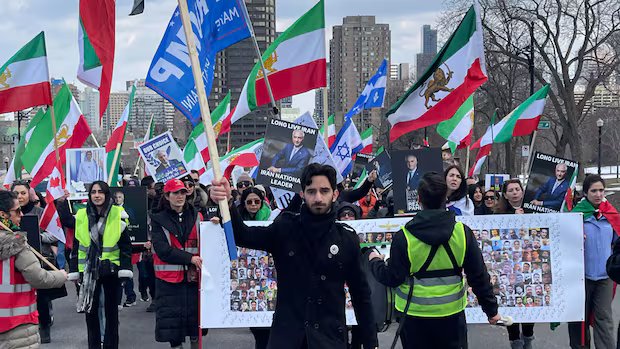
When Iran’s Supreme Leader Ayatollah Ali Khamenei was killed in a Feb. 28 attack by the U.S. and Israel, hundreds of Iranian Quebecers rejoiced in the streets.
Six weeks later, the conflict between the United States and Israel with Iran is drawing mixed response from the diaspora.
Iranian Montrealer Atena Barforoushi says she was relieved to hear of the two-week ceasefire last week. She never supported the war, but felt “very satisfied” to see Khamenei killed.
Barforoushi now wonders what the death of this leader will cost. “The regime in charge is even stronger,” she said.
While many political experts agree that Iran has the upper hand, in part because of its increased control of the Strait of Hormuz since the war started, Khashayar Hoseinzad disagrees with that take. He believes the U.S. and Israel “have done an amazing job weakening the regime’s forces.”
The 26-year-old Montreal resident, who left Iran when he was 17, didn’t believe the ceasefire would have much of an impact from a negotiations perspective. So far, based on the outcome of this weekend’s negotiations, his prediction on that front is panning out.
Hoseinzad thought the real purpose of the ceasefire was to buy the U.S. time to try and decrease tensions, along with the price of oil. While there was indeed a brief reprieve on the price of oil last week, the price had risen again on Monday, ahead of a U.S. blockade of the Strait of Hormuz.
‘No real reason to feel happy during a ceasefire’
In Maryam Dayani’s perspective, the potential consequences of the ceasefire could be deadly and detrimental.
“An Iranian has no real reason to feel happy during a ceasefire,” said the 33-year-old Montreal resident. “All Iranians know a ceasefire period means using the country’s remaining resources and capacity to rebuild missile infrastructure and continue the nuclear program.”
Dayani also worries a ceasefire will only buy the Iranian regime more time to carry out executions.

She’s scared for her family back home, whom she’s had little contact with because of the internet blackout, which as of Monday reached its 45th day.
“That is the longest internet blackout in history than any nation has ever seen,” Iranian political expert Vahid Yucesoy told CBC last week.
The concern for Iranians’ safety during the ceasefire are entirely valid, Yucesoy said. He argues the biggest war this regime has been waging is against its own population, and believes the regime is more afraid of Iranian resistance than bombs.

Human rights groups say Iran is speeding up executions of political dissidents and anti-regime protesters who took to the streets in January. Families and activists say any negotiations to end the war must be conditioned on ending the killings.
Iranians’ largest show of resistance to the country’s Islamist regime began on Dec. 28 and continued into January, as nationwide protests over Iran’s failed economy quickly evolved into demands for an end to the country’s repressive theocracy.
It’s not entirely clear how many thousands of Iranians were killed in the violent crackdown on protesters, but Hoseinzad’s 32-year-old cousin was among them.
Rallying for regime change
Hoseinzad has been attending rallies in Montreal for the past 14 weekends, with the aim of being “the voice of a nation whose voice is cut, and [where] thousands of prisoners … are at risk of execution.”

At the Montreal rally Hoseinzad attended this past Saturday, demonstrators carried Iran’s old lion-and-sun flag, a symbol of resistance to the Islamic Regime. It was replaced following the 1979 revolution, which toppled the monarchy of Shah Mohammad Reza Pahlavi.
The last shah of Iran’s exiled son, Reza Pahlavi, is touted by many demonstrators as the only legitimate leader of the opposition. However, political experts have questioned how much influence Pahlavi truly has.

“Regime change doesn’t look like a likely outcome,” said James Devine, a professor of political science and international relations at Mount Allison University in New Brunswick.
“Civil society has been ground down,” he explained. “There is no real organized political opposition to the regime.”
Devine also said the Iranian diaspora doesn’t necessarily represent the political perspective within Iran, where he’s seen signs of people recently rallying around the official state flag of Iran.

Another difference Devine has noticed is the degree of support for the U.S.-Israel intervention.
“We have a very divided diaspora with very different political ideas,” he said.
Fellow political expert Yucesoy has also seen Iranians questioning their stance when it comes to supporting the war out of fear that it may be “paving the way for more mayhem.”

U.S. President Donald Trump’s threat to wipe out Iran’s “whole civilization” and bomb the country “back to the Stone Ages” last week left many shaken.
“Hearing this sentence not only for Iranians but all the world, it feels … dangerous,” Parvin Ramezani, who moved to Quebec City from Iran in 2014, told CBC last Wednesday.
“Someone in power saying a thing like that — I don’t feel safe. Not only as an Iranian, but living in a world with that kind of [person in] power doesn’t feel safe.”

A lot’s changed since the 2024 U.S. federal election that saw President Donald Trump return to the White House. CBC’s Katie Simpson explains how some of Trump’s most vocal supporters — right-wing influencers and public figures — are turning their backs on the president amid his recent moves with the Iran war.
‘Make Iran Great Again’
There are those in the Iranian diaspora, though, who remain staunch supporters and defenders of Trump — even after his threat, which has been called “genocidal.”
“We trust Trump. He’s a genius. We know he’s going to help us,” said Montrealer Dayani.

Dayani, who’s been pictured wearing a “Make Iran Great Again” hat at Montreal rallies, feels Iran has been living in the Stone Ages for the past 48 years under the Islamic regime.
“We want to go back to the golden time of 1979. We were living in the future back then. The time of the shah was everything you could ever wish for. We want to be great again.”
Hoseinzad also brushed off the comments as, essentially: Trump being Trump.
He said it was the best day of his life when the airstrikes by Israel and the U.S. killed Khamenei. And despite the civilian deaths and damage to infrastructure, Hoseinzad vehemently believes the war has so far been “a blessing” for Iranians.

He also never expected the foreign intervention to fully overthrow the regime.
“It’s going to be our fight. The last blow is going to be done by our people.”