dailynewsnblog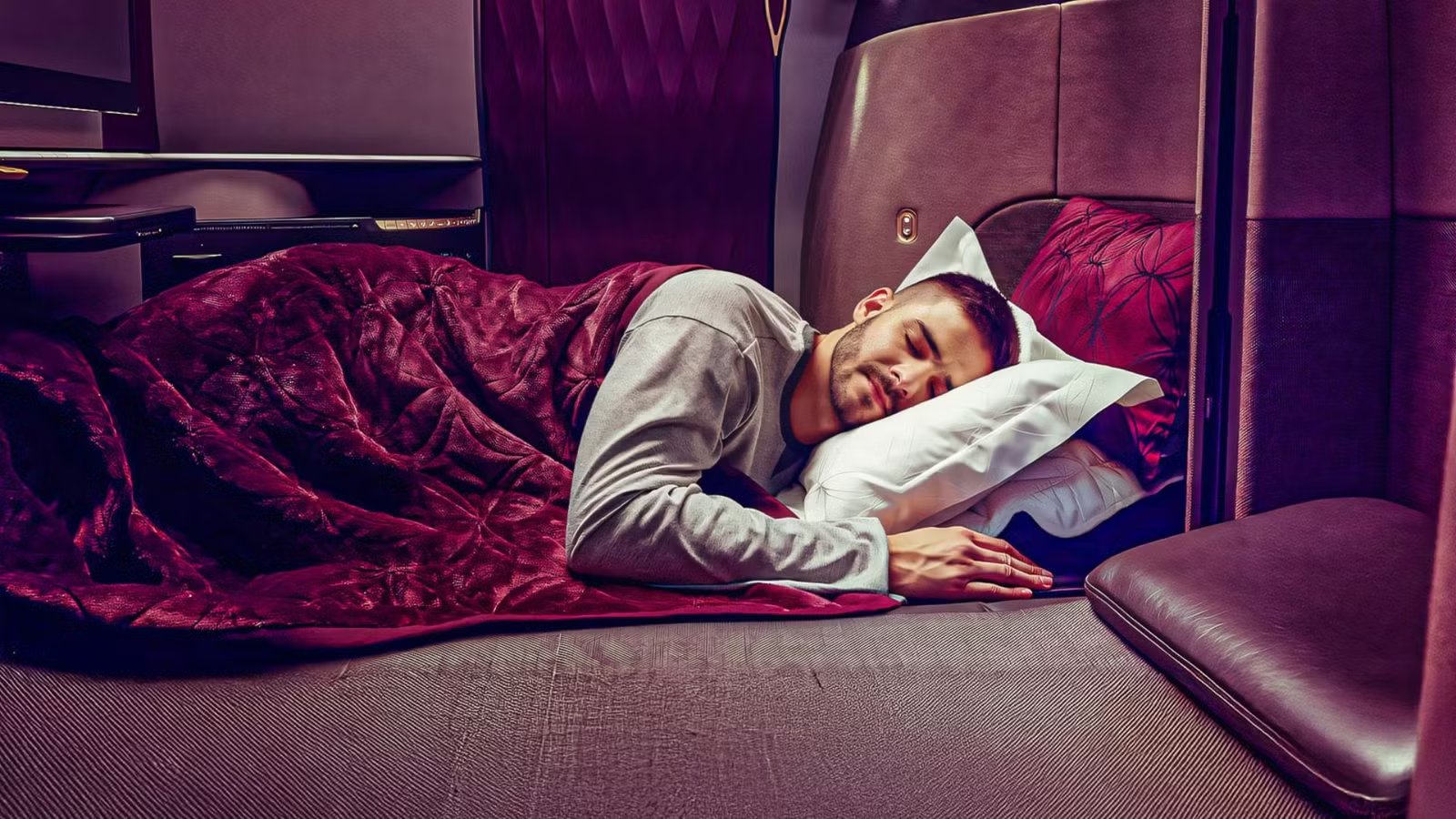
The modern business class cabin has undergone a dramatic transformation over the past decade, shifting from open-plan layouts with minimal separation to highly individualized suites with closing doors. This change has been driven by a combination of passenger expectations for privacy, advances in cabin design, and the competitive push among premium airlines to blur the line between business and first class. Today, the presence of a door is no longer a novelty; it is becoming the baseline expectation on many flagship long-haul aircraft, particularly in Asia and the Middle East.
Yet, “doors in business class” does not automatically translate to equal privacy. The effectiveness of these suites depends on multiple design factors: seat orientation, shell height, door coverage, staggered vs. parallel layouts, and even how close passengers sit to the aisle. Some airlines prioritize spaciousness and openness within the suite, while others focus on creating a tightly enclosed personal space. This ranking looks at six of the most private business-class suites you can actually book today, ordered from least to most private based strictly on real-world enclosure and isolation.
British Airways Airbus A350 & Boeing 787 Dreamliner
A major upgrade with a more restrained sense of enclosure

 British Airways’ Club Suite, introduced on the Airbus A350 and Boeing 787 fleet, represents one of the airline’s most significant product overhauls in decades. It replaces the older Club World yin-yang layout with a forward-facing, direct-aisle-access seat equipped with a sliding privacy door. The seat was designed by Collins Aerospace and includes a 1-2-1 configuration, ensuring every passenger has direct aisle access and a more modern personal space.
Despite the addition of a door, the overall sense of enclosure is still relatively moderate. The suite walls are lower than those found on leading Asian and Middle Eastern products, and the door itself does not fully extend to create a completely sealed “room” effect at shoulder height. The cabin also feels slightly more open due to British Airways’ denser seating layout and broader cabin design philosophy, which prioritizes consistency and capacity across long-haul fleets.
In practical terms, the Club Suite offers strong improvements in sleep quality and personal separation compared with older British Airways cabins, particularly on overnight transatlantic routes. However, when compared directly with newer competitors, it feels more like a semi-private pod than a fully enclosed suite, placing it at the lower end of true privacy-focused business-class experiences.
Etihad Airways’ Airbus A350
A refined and balanced approach to modern privacy

 Etihad Airways’ A350 business class suite reflects the airline’s broader strategy of delivering understated luxury with a focus on comfort and modern design. The seat features a sliding privacy door, high sidewalls, and a staggered 1-2-1 configuration that ensures every passenger has direct aisle access while still maintaining a sense of separation from neighbors. This configuration also helps reduce direct eye contact across the cabin, improving the sense of personal space without requiring a fully enclosed structure.
The suite itself is well-structured for long-haul travel, with carefully integrated storage compartments, a large entertainment screen, and a seat design that allows for multiple recline positions and full lie-flat conversion. On the A350, Etihad typically equips its business cabin with high-definition touchscreens and a seat pitch of around 44–45 inches in upright mode, which contributes to a noticeably spacious seated environment. The privacy door blocks most aisle-level movement when closed, although the upper partition stops short of full enclosure, leaving some exposure to overhead cabin activity.
While Etihad’s product feels calm, quiet, and premium, especially on newer A350 aircraft, it does not fully eliminate ambient cabin awareness. The cabin’s lighting design and open upper shell mean that movement in the aisle can still be detected indirectly, particularly during service. However, the quieter Rolls-Royce Trent XWB engines on the A350 significantly reduce background noise compared with older aircraft types, reinforcing a more serene onboard atmosphere even if absolute visual isolation is not achieved.
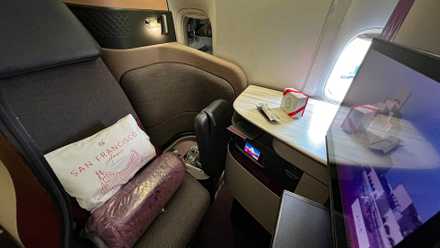
Emirates Vs. Qatar Airways Vs. Etihad: Which Carrier Has The Best Business Class?
These carriers all offer their own unique products.
STARLUX Airlines Airbus A350
Boutique luxury with strong visual and physical separation

STARLUX Airlines, often described as a “luxury boutique carrier,” has positioned its A350 business class as one of the most aesthetically refined premium cabins in the sky. The suite design emphasizes mood lighting, clean lines, and high-quality materials, combined with a sliding privacy door that provides meaningful separation from the aisle.
Each seat is arranged in a 1-2-1 configuration with a strong focus on personal space. The high shell design, large entertainment screen, and carefully engineered partitioning create a cocoon-like environment that feels more intimate than many legacy European and American business-class products. Window seats, in particular, benefit from additional side shielding that enhances the perception of privacy.
However, while STARLUX delivers an excellent sense of personal space, it does not quite reach the enclosure depth of the very top-tier suites. The door mechanism, while solid, is complemented by a slightly more open upper structure compared with the most privacy-optimized designs. Still, for a relatively new airline, it competes impressively at the upper end of global business-class standards.
Japan Airlines Airbus A350
Precision-engineered privacy with near-first-class separation

Japan Airlines’ (JAL) A350-1000 business class marks one of the most significant leaps in premium cabin design in recent years. Each suite includes a full sliding door and exceptionally tall sidewalls, creating a highly defined personal space that feels closer to a compact private room than a traditional business-class seat. The aircraft itself is part of JAL’s broader long-haul renewal strategy, with the A350-1000 positioned as a flagship widebody intended for ultra-long routes such as Tokyo–London and Tokyo–New York.
The layout is carefully engineered to maximize both privacy and usability. Seats are arranged in a 1-2-1 configuration with a strong emphasis on staggered positioning, ensuring direct aisle access while minimizing shoulder-level visibility between passengers. The seat width is notably generous for business class, allowing passengers to shift between working, dining, and sleeping positions without feeling constrained, and the suite integrates large personal storage areas to reduce clutter within the enclosed space.
Catch what other flight trackers miss
Emergency squawks, holds, NOTAMs — live signals, no signup.
Open tracker
Catch what other flight trackers miss
Emergency squawks, holds, NOTAMs — live signals, no signup.
Open tracker
What sets JAL apart is the consistency of its privacy design across the cabin. Unlike some products where privacy varies by seat location, the A350-1000 maintains a uniformly enclosed experience throughout. The door mechanism also feels more “full-height” than many competitors, reinforcing the sense of separation when closed. While still technically business class, it frequently draws comparisons to first-class suites in terms of personal isolation, attention to detail, and overall refinement.
All Nippon Airways
Exceptional personal space with unmatched width

All Nippon Airways’ (ANA) “The Room,” found on select Boeing 777 aircraft, is widely regarded as one of the most spacious business-class seats ever introduced. The defining characteristic of this product is its extraordinary width, which allows passengers to sit in a nearly first-class-level personal environment even before considering the privacy door.
The suite design prioritizes lateral space over tight enclosure, resulting in a seat that feels more like a private lounge than a traditional aircraft seat. High walls and a full-height door contribute to the sense of separation, but the most striking feature remains the sheer physical distance from neighboring passengers. Even without the door closed, the seat provides a strong psychological sense of isolation due to its scale.
However, this approach to privacy is fundamentally different from more enclosed competitors. Rather than creating a tightly sealed compartment, ANA focuses on expansive comfort and personal breathing room. The result is one of the most comfortable and individually spacious business-class experiences in the world, even if it is not the most “closed-in” architectural design.
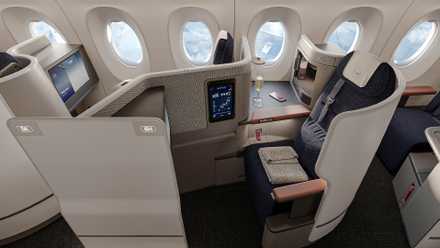
7 Airlines With The World’s Most Luxurious Business Class Seats In 2026
These carriers have been recognized for their superb business class products and seats.
Qatar Airways
The industry benchmark for fully enclosed business-class privacy

Qatar Airways’ Qsuite remains the definitive reference point for privacy in business class. Introduced on select Boeing 777 and Airbus A350 aircraft, the product combines a sliding privacy door with high surrounding panels and a staggered seating layout to minimize direct aisle exposure. It was first unveiled at the ITB Berlin travel trade show in 2017 and has since been progressively rolled out across multiple long-haul fleets, becoming one of the most widely recognized premium cabin products in the industry, winning the title of ‘World’s Best Business Class’ in 2025 by Skytrax.
The design is particularly effective because it integrates multiple layers of privacy rather than relying on a single feature. The door provides immediate physical separation, while the seat’s high shell blocks sightlines even when seated upright. In many configurations, passengers can also create double beds or quad-style social spaces, allowing up to four travelers in the center section to form a shared “social suite” when traveling together. At the same time, sliding partitions allow those same seats to be fully isolated when occupied individually.
Despite the arrival of new competitors, Qsuite continues to set the benchmark for its consistency, execution, and real-world effectiveness. It is deployed on a significant portion of Qatar Airways’ long-haul network, particularly on high-demand routes from Doha to Europe, Asia, and North America. Its enduring reputation comes not just from the door, but from how comprehensively the cabin design eliminates sightlines and reduces intrusion from surrounding passenger movement.