dailynewsnblog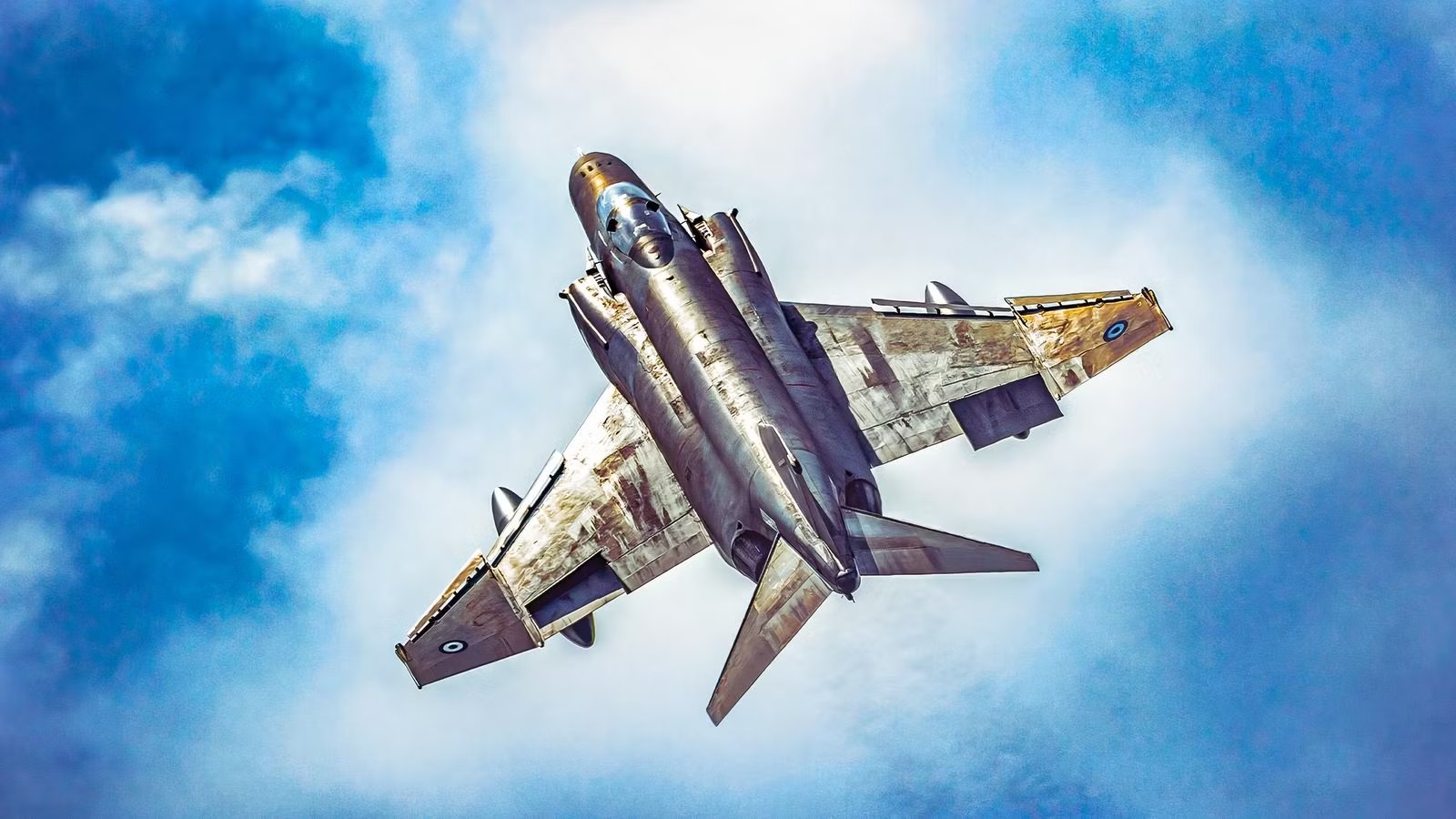
Warfare is the great laboratory for tactics and equipment; virtually nothing that enters combat remains the same. Strategy, tactics, and machinery evolve as deficiencies are discovered and remedied. This process is tedious, destructive, and tragic. However, the knowledge gleaned from warfare leads to advancements, and for the apt pupils of this process, future tactical successes and strategic lessons are learned and implemented.
This article looks at several aircraft that initially began their service lives with mechanical, technological or tactical issues that, once resolved, went on to achieve significant success in combat. In many cases, these early shortcomings did not spell the end of an aircraft’s career, but instead prompted engineers, pilots and tacticians to adapt, refine and ultimately unlock capabilities that had been obscured by their troubled beginnings.
P-39 Airacobra
An aircraft that started well, was butchered by engineers, then went on to prove itself on the Eastern front

The Bell Aircraft Corporation XP-39 prototype appeared in 1939 as a remarkably promising fighter. Powered by a turbo-supercharged Allison engine, it reached nearly 400 mph and climbed to 20,000 feet in just five minutes. Its performance suggested the Airacobra could have become one of America’s finest fighters as war approached; however, that reality was not to be.
Instead, testing at Wright Field led to sweeping changes by engineers at the National Advisory Committee for Aeronautics (NACA). The engineers at NACA removed the turbo-supercharger and replaced the engine with a less powerful Allison engine featuring only a single-stage mechanical supercharger, resulting in production P-39s with reduced high-altitude capability. The wings were also shortened by two feet (0.6 meters), the canopy was lowered, and the fuselage was lengthened by more than a foot (0.3 meters), sacrificing much of the prototype’s performance.
Fortunately for the nearly bankrupt Bell, the Soviet Union was in dire need of aircraft to fight the Luftwaffe and the P-39 was as perfect a match as possible given the circumstances. While the Airacobra had a dismal performance record at high altitudes, the war on the eastern front was fought largely below 20,000 feet, and more often than not, much lower than that, the perfect environment for the Airacobra.
Soviet pilots loved the nose-mounted 37mm cannon and its wing-mounted two .50-caliber machine guns. These weapons provided the firepower to challenge the German aircraft and more than enough weaponry to rip apart ground targets, a key use for the aircraft. The best example of this was the highest-scoring Soviet ace, G.A. Rechkalov, who scored 48 of his 54 confirmed kills in his P-39. By the time P-39 production ended in August 1944, Bell had manufactured 9,584 Airacobras, of which 4,773 were sent to the Soviet Union through lend-lease.
F4F Wildcat
How the wildcat turned the tables on the Zero

The F4F Wildcat, manufactured by Grumman Aircraft Engineering Corporation, was first flown in 1939 and went on to become the premier fighter of the United States Navy and Marine Corps until late 1942. The Wildcat’s chief nemesis was the lightweight and highly maneuverable Mitsubishi Zero. Early in the war, the Japanese fighter was unmatched, particularly at mid and low speeds due to its great agility, which often caused American aircraft to overshoot and be outmaneuvered.
However, following the Battle of Midway, United States (US) Navy and Marine Corps aviators developed effective tactics to counter Japanese fighters, including the “Beam Defense” maneuver. This involved two Wildcats positioned on opposite sides of a Zero, weaving toward and past each other to force the pursuing Japanese fighter across the path of the other Wildcat. The maneuver could be repeated until one of the Wildcats could successfully engage and destroy enemy aircraft.
Such tactics, combined with the fact that the Zero lacked armor and self-sealing fuel tanks, while the Wildcat had both and could absorb terrific punishment, allowed American aviators to turn the tables and wrest control of the air in the Pacific theater. To this point, the National Naval Aviation Museum stated: “… Navy and Marine F4F pilots had amassed a 9:1 kill ratio over the Japanese, despite the reputation of the vaunted Mitsubishi A6M Zero. By war’s end, the stubby Grumman design had accounted for 1,006 enemy aircraft, and listed 58 aces among its pilots.”
P-38 Lightning
The “Fork-Tailed Devil” that tore through enemy formations from Europe to the Pacific

The P-38 Lightning, manufactured by Lockheed Aircraft Corporation, flew operationally from 1942 to 1945. US Army Air Forces (USAAF) pilots flew the aircraft over Europe, the Mediterranean, North Africa, and the Pacific. While the aircraft proved highly successful, early model Lightnings experienced turbulent airflow over the tail and there were issues at high dive speeds, known as compressibility, which were later corrected with modifications.
By August 1943, the P-38J was introduced and featured considerable improvements over earlier models. Such modifications included enhanced cockpit heating (an issue plaguing earlier models), greater efficiency with engine cooling, a flat bulletproof windscreen, additional fuel capacity in the wings, and increased maneuverability.
The aircraft, originally designed as a high-altitude interceptor, proved more versatile than expected and was involved in a wide range of missions. This included dive-bombing, level bombing, cloud-penetrating bombing missions, strafing, photo reconnaissance, and long-range escort. In the Pacific Theater of Operations, USAAF P-38 pilots shot down 1,700 Japanese aircraft while its Lightning pilots, operating in the Mediterranean Theater, claimed 608 enemy aircraft destroyed in aerial combat, along with 123 probably destroyed and 343 damaged.
By the end of World War II, 10,038 P-38s had been built, supported by 22 subcontractors across the US, who shipped the various Lightning components to Burbank, California for final assembly. Finally, the P-38 was the only US fighter that was produced continuously from the Pearl Harbor attack on December 7, 1941, to V-J Day, August 15, 1945.
B-17 Flying Fortress
The lessons drawn from the bloody Schweinfurt Raid

In the early days of World War II, while USAAF bomber crews were fighting for daily survival in the hostile skies over Europe, the top brass was attempting to validate the air power doctrine which held that precision daylight bombing could achieve decisive results. Running contrary to the British philosophy of heavy saturation bombing missions over German cities, USAAF planners believed that precision raids targeting selected industrial targets would be the best way to utilize the bomber.
On October 14, 1943, the US Eighth Air Force deployed 378 bombers from 19 bomb groups to hit the Schweinfurt ball-bearing factories. However, inclement weather disrupted operations, leaving only 285 bombers available to initiate the attack. The first wave faced a heavily reinforced Luftwaffe, which had assembled more than 800 fighters to defend the target, in addition to three hundred 88mm flak guns from other areas of the city.
The resulting battle became known as “Black Thursday.” German fighters and flak destroyed 60 US bombers, while an additional five were lost near or over England. The disastrous mission cost the Eighth Air Force 642 airmen killed or captured, with an additional 121 bombers suffering moderate damage and another 17 damaged beyond repair. In sum, the USAAF lost 26 percent of its attacking force, making it the Eighth Air Force’s most costly mission of the war up to that point.
Due to the egregious losses incurred during the raid, USAAF planners suspended deep-penetration bombing missions against targets beyond the range of fighter escorts. The ability to escort bombers to their targets and back to their home bases came with the arrival of the North American P-51 Mustang in Europe in December 1943, initially with around 350 airframes. That number steadily increased by approximately 100 aircraft per month, eventually reaching around 2,500 Mustangs by the end of the war for escort and ground-strike operations.
F-111 Aardvark
From troubled beginnings to a formidable strike aircraft

The General Dynamics F-111’s early service was plagued by serious technical problems, particularly involving its flight-control and structural systems. During the 1968 Combat Lancer deployment to Vietnam, accidents and malfunctions resulted in the loss of three F-111As and four crewmembers over just 55 combat sorties, forcing the Air Force to terminate the combat evaluation.
Subsequent investigations uncovered deficiencies involving the aircraft’s flight-control and structural systems, while problems with its complex equipment, including the terrain-following radar, further complicated its early service. The Air Force eventually corrected these issues, allowing the F-111A to return to Southeast Asia in 1972 as a much more mature and effective combat aircraft.
Following these improvements, the revamped F-111s proved devastating during Operation Linebacker II and subsequent missions. Broadly speaking, F-111s flew approximately 4,000 combat missions during the Vietnam War while suffering only six losses. Despite its disastrous beginnings, the Aardvark ultimately developed an exceptional combat safety record.
In Operation Desert Storm, the F-111F further demonstrated its capabilities. Its Pave Tack avionics allowed crews to locate targets in complete darkness, track them, designate them with lasers, and destroy them with precision-guided bombs. Ultimately, the Aardvark became the best all-weather interdiction aircraft in history.
F-4 Phantom II
The Phantom’s missile-only doctrine is put to the test

The McDonnell Douglas F-4 Phantom II began its life as an all-weather fleet interceptor for the US Navy, designed around speed and the ability to launch missiles at hostile aircraft from beyond visual range. So confident were its designers that missiles would be sufficient to engage enemy aircraft, that the Phantom was not designed with an internally mounted cannon. This reflected the prevailing belief that subsonic dogfighting was a relic of the past; as a result, relatively little emphasis was initially placed on maneuvering combat in Phantom pilot training.
With its two powerful General Electric J79 engines, the F-4 could reach speeds exceeding Mach 2.2. Its payload of more than 18,000 pounds (8,400 kilograms), long-range missiles, and powerful radar made the aircraft a formidable interceptor and strike fighter, capable of engaging Soviet aircraft approaching US naval fleets.
However, it quickly became apparent that the Phantom was not ideally suited to the close-in, turning engagements that came to define many aerial battles over Vietnam. To further complicate the issue, the missiles that the aircraft was to rely on were notoriously ineffective, the National Defense University states:
“During [Operation] Rolling Thunder, about 330 AIM-7s were fired for about 27 kills, a success rate of less than 9 percent. The AIM-9B Sidewinder was slightly more effective: about 15 percent of its shots were kills.”
The problem became glaringly apparent between August 1967 and February 1968, when US fighters lost 18 aircraft to MiG-21s while shooting down only five enemy aircraft. North Vietnamese success was attributed to a combination of effective tactics, the MiG-21’s speed and small size, and its use of AA-2 Atoll infrared-guided missiles.
Following an investigation into these combat losses, the Navy established the four-week Navy Fighter Weapons School, nicknamed TOPGUN, at Naval Air Station Miramar in 1969. The school’s primary purpose was to enhance its students’ tactical and operational knowledge and professionalism. The result was a dramatic improvement in the effectiveness of Navy fighter pilots, with their kill ratio increasing from 2.4:1 to 12.5:1 between 1970 and 1973.