dailynewsnblog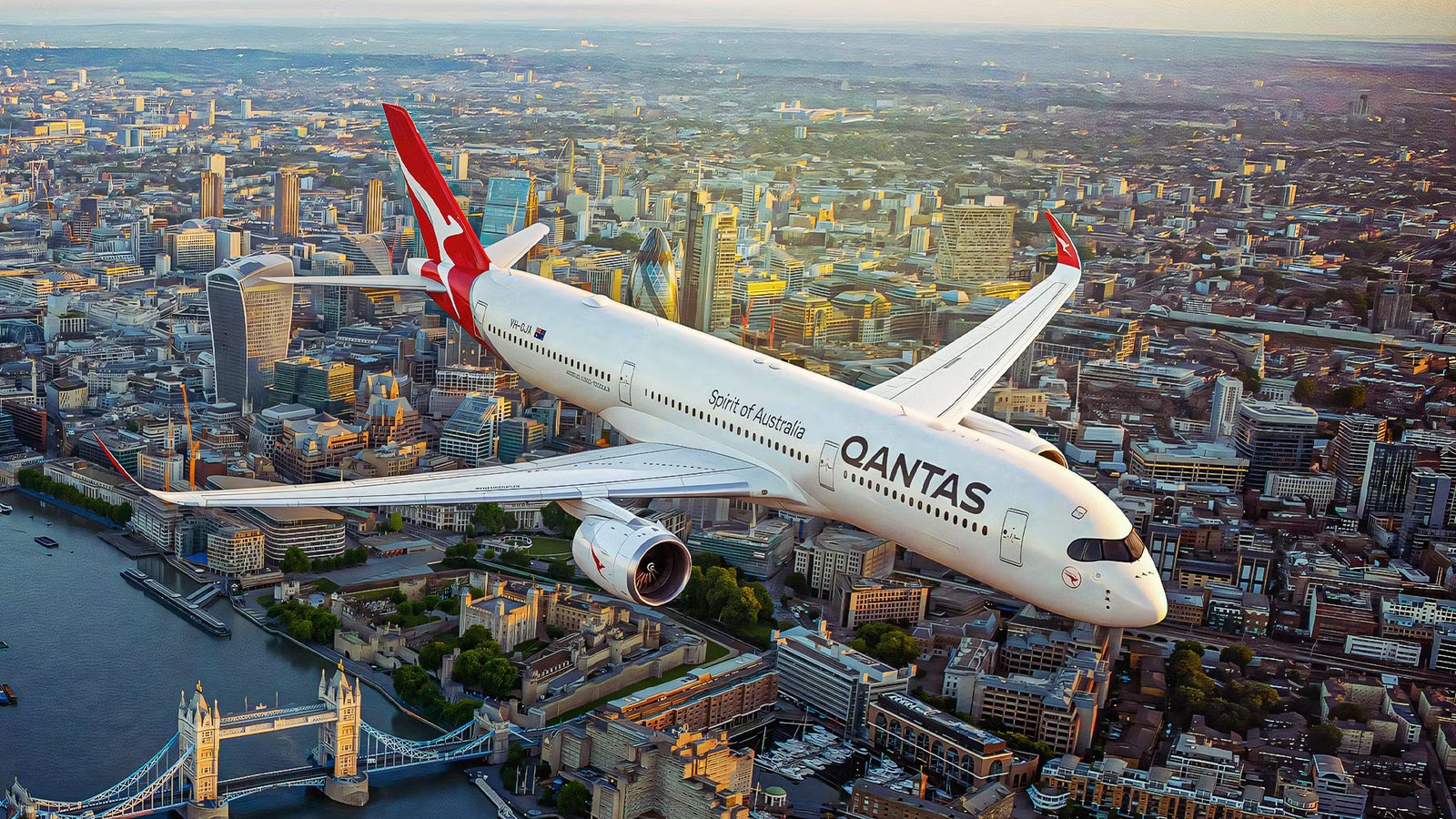
Ultra-long-haul routes are becoming more and more accessible for airlines with developments in aircraft technology. Qantas’ Project Sunrise, enabled by the impending deployment of the Airbus A350-1000ULR, will connect London and Australia’s east coast through regular nonstop flights from next year for the first time, for instance. In doing so, the route is set to become the longest on offer commercially across the world.
Carrying out such a service is no easy feat, however. Just a handful of regular commercial services today exceed 18 hours, and trade-offs have had to be made in each case to stretch the distance that can be covered by aircraft. From forgoing capacity to splashing out on ultra-specialized planes to even creating dedicated wellbeing areas on board, the lengths airlines have to go to in order to successfully offer such ambitious routes are great. So, what do these look like in practice?
Capacity Sacrificed On Longest Routes
Economy cabins stripped back

Perhaps the most obvious sacrifice that airlines have to make when attempting to take on the most ambitious routes is capacity. Despite having to ensure enough seats are offered to remain profitable, the simple fact is that weight and space have to be carefully managed.
Both the current longest nonstop flights and those in the future use and will use ultra-long-range (ULR) variants from the Airbus A350 family.  Singapore Airlines is the only operator of any such models thus far, using its Airbus A350-900ULRs for the world’s existing longest direct flight, which connects the city-state and New York. Similarly, Australia’s Qantas will be the sole operator of the -1000ULR from next year, and plans to use it to begin offering regular nonstop links between Sydney and London, as well as New York, from October 2027.
Airbus A350 XWB family capacities:
Variant | Airbus A350-900 | Airbus A350-900ULR | Airbus A350-1000 | Airbus A350-1000ULR |
Capacity (Typical) | 300 to 350 | 161 | 350 to 410 | 238 |
In each case, capacity has been slashed in favor of premium-heavy configurations. Singapore operates its -900ULRs with just 161 seats onboard, of which 67 are business class, and the remaining 94 are in the premium economy cabin. Its other A350 models, used for medium and conventional long-haul routes, house 303 and 253 seats respectively, for reference. At Qantas, a four-class layout on its -1000ULR will leave room for 238 passengers, against the 350 to 410 that the non-specialized variant typically carries and well off its 480 maximum capacity, based on Airbus’ figures. Unlike Singapore, though, Qantas is set to retain some basic seating on its ULR variant. Per the carrier’s website, six first class, 52 business, 40 premium economy, and 140 economy seats will be available, although 42 of those in the latter will be its Qantas Economy Plus offerings.
Payload Carefully Balanced
Fuel takes priority

Why capacity is stripped back on the longest commercial routes is simple. Both passenger comfort and weight have to be considered. In terms of passenger comfort, more space per person is allowed through the use of premium-heavy configurations, naturally leaving fewer seats on board. Indeed, 18 hours in the air in economy with little space would be enough to put many off even considering such a journey.
Weight is another matter and, in the case of both Airbus ULR variants, the key trade-off is an increased fuel allowance for a reduced passenger count. That means even if airlines wanted to operate ultra-long routes with solely economy cabins, they would not be able to. Balancing fuel usage is more convoluted than that, however, and both the -900ULR and -1000ULR are specifically geared for the ambitious flights they serve.
Airbus A350 XWB family select specifications:
Variant | Airbus A350-900 | Airbus A350-900ULR | Airbus A350-1000 | Airbus A350-1000ULR |
Approx range (nautical miles/km) | 8,500/15,750 | 9,700/18,000 | 9,000/16,700 | 9,800/18,150 |
Usable fuel capacity (Gallons/liters) | 36,456/138,000 | 43,589/165,000 | 41,949/158,790 | 48,893/185,076 |
Approx MTOW (lbs/tonnes) | 591,000/268 | 620,000/280 | 710,000/322 | -* |
*Yet to be published
Ahead of the -900ULR’s rollout to Singapore in 2018, Airbus went back to the drawing board to stretch the range of its existing offering. This saw its forward cargo hold deactivated in favor of extra fuel weight, as well as vent space inside existing tanks repurposed and associated sensors, pumps, and pipes relocated, for instance. The result was a huge jump in range, but also an aircraft that could be reconfigured back to standard Airbus A350-900 specifications if needed. When it came to the -1000ULR, the key tweaks made by Airbus were the addition of a built-in 5,283-US gallon (20,000-liter) rear center tank, structural improvements, and reinforced landing gear.
Aircraft Operational Flexibility
Ultra-long-haul jets ultra-specialized

For airlines opting to purchase specialized models like the -900ULR and -1000ULR, concessions have to be made around route flexibility. While Singapore’s -900ULRs could in theory be reconfigured to -900 specifications, the aircraft were bought with specific routes in mind. Namely, these include the longest today from Singapore Changi Airport (SIN) to John F. Kennedy International Airport (JFK) and Newark Liberty International Airport (EWR), but also Los Angeles International Airport (LAX) and San Francisco International Airport (SFO).
As such, Singapore only operates seven -900ULR variants to serve what is realistically a niche market. It does have a further 58 A350 models in its fleet for the purpose of serving a wider array of routes, alongside the likes of the Boeing 787. Behind the already-operational ULR variant, these serve a string of the remaining longest flights around the world, but also offer carriers far greater flexibility around route planning.
Current commercial flights that take over, or close to, 18 hours, from Flightradar24:
Flight | Route | Aircraft | Airline | Great circle distance | Average flight time |
SQ23 | New York (JFK) – Singapore (SIN) | Airbus A350-900ULR | Singapore Airlines | 8,288 nautical miles (15,349 km) | 18 hr 27 min |
SQ24 | Singapore (SIN) – New York (JFK) | Airbus A350-900ULR | Singapore Airlines | 8,288 nautical miles (15,349 km) | 18 hr 10 min |
SQ21 | Newark (EWR) – Singapore (SIN) | Airbus A350-900ULR | Singapore Airlines | 8,285 nautical miles (15,344 km) | 18 hr 45 min* |
SQ22 | Singapore (SIN) – Newark (EWR) | Airbus A350-900ULR | Singapore Airlines | 8,285 nautical miles (15,344 km) | 17 hr 58 min |
*Block time rather than average flight time provided
Qantas’ -1000ULRs are set to take route-specific specialization a step further, bringing flights lasting up to 22 hours within reach for the carrier. Some 12 of these are on order at Qantas as it stands, with current Project Sunrise plans incorporating just two connections from Sydney to London and New York. Unlike Singapore with its -900ULRs, though, the more extensive modifications made to the -1000ULRs will hamper the prospect of any reconfigurations to Airbus A350-1000 specifications, however unlikely the need for such a move may be.
Catch what other flight trackers miss
Emergency squawks, holds, NOTAMs — live signals, no signup.
Open tracker
Catch what other flight trackers miss
Emergency squawks, holds, NOTAMs — live signals, no signup.
Open tracker
Larger Crew And Stricter Requirements
More hands and longer rest periods required

Flying for so many hours at a time does not simply require an aircraft capable of doing so. Crew requirements change with the length of a route, and so at the most extreme end of ultra-long-haul travel, airlines have to closely bear the needs of their staff in mind.
According to Cathay Pacific, a minimum of three hours of rest is required for flight duty periods exceeding 14 hours. That is, from the point staff sign on to 15 minutes after engine switch-off. When this stretches past the 18-hour mark, airlines have to give their crews 4.5 hours to rest during the flight.
In practice, this means additional pilots, larger crews, and space to house them when not active. Such considerations have to be made anyway for flights that sit off the 16-hours-plus needed to be classed as ultra-long-haul by the likes of the International Air Transport Association. When it comes to the absolute longest today, Singapore schedules 13 flight attendants in the cabin, alongside two captains and two first officers. All of that goes to say, the logistics involved behind the scenes are extensive.
Wellbeing Zone On Future Longest Flight
Dedicated area for passengers to stretch legs

Wellbeing does not just stop at the crew, naturally. Qantas, on its -1000ULRs, is set to offer passengers a dedicated area for the purpose of getting out of their seats and stretching their legs. That means more space where seats could be, but arguably a necessary offering in light of the sheer amount of time spent in the air.
This Wellbeing Zone is set to be located between the premium economy and economy cabins and, importantly, be available to passengers in any class. As the Australian airline writes online, travelers will be able to get drinks and refreshments in the area, but also be able to follow guided movements shown on monitors and use purpose-built surfaces for stretching.
So long the flights will be, that focus even has to be placed on getting passengers up and moving while onboard by the airline. Given the aircraft is designed to fly for up to 22 hours nonstop, one could imagine that will be pretty vital in the absence of a layover.