dailynewsnblog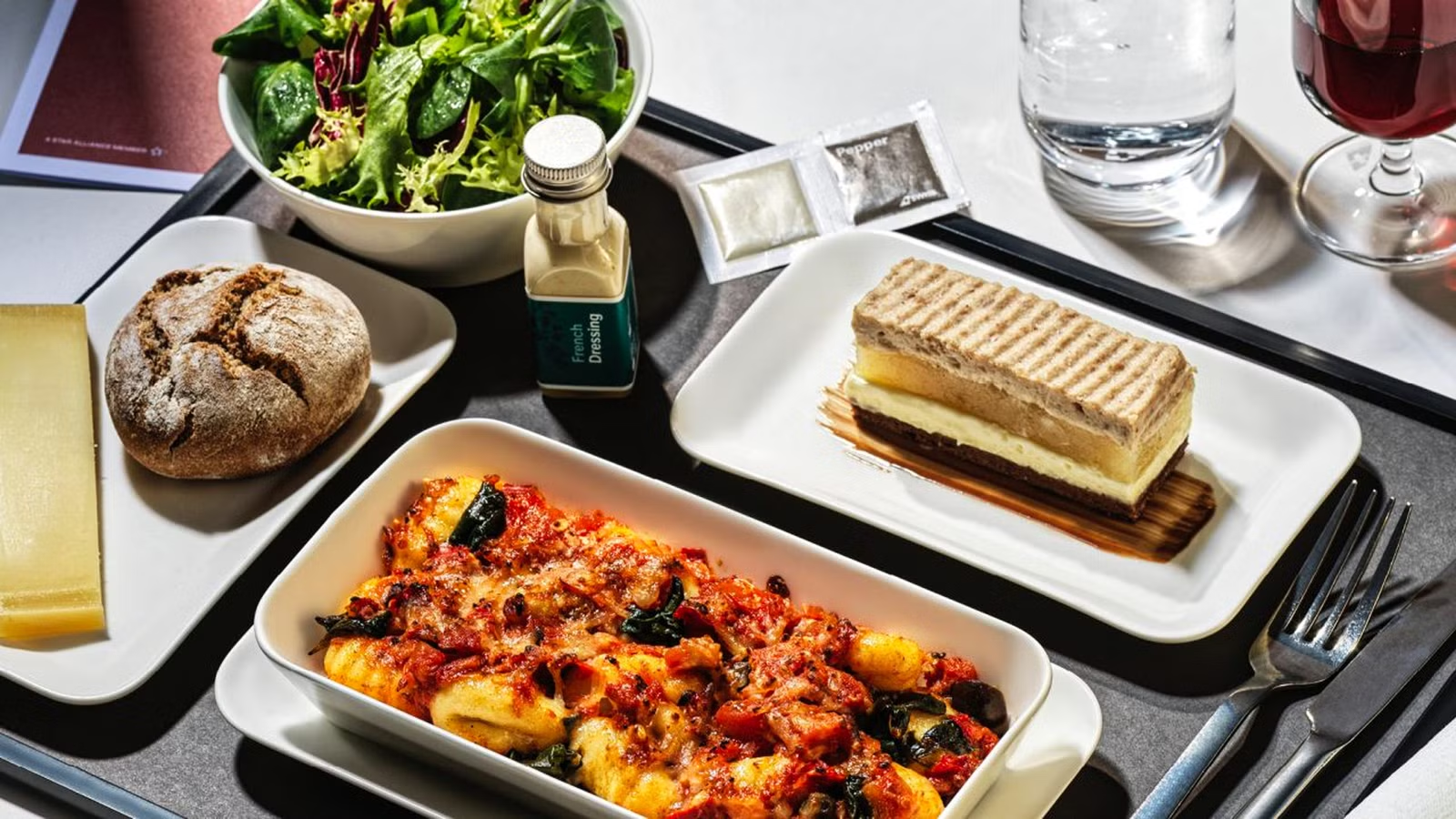
Premium Economy has become the engine of revenue growth for many mainline airlines, particularly on long-haul routes. For many years, airlines like Emirates were skeptical about a new premium economy class, fearing it would encourage their lucrative business class passengers to downgrade rather than encourage economy class passengers to upgrade. This would have been disastrous for airlines. But those fears have been largely dispelled, with airlines now racing to retrofit their airliners with premium economy cabins.
Recently, revenue from premium economy overtook Delta’s economy class receipts for the first time. As flying has become a standard mode of transport “something everyone does,” it has lost the glamor it once enjoyed in the Jet Age. Now, many passengers see business and especially first class as excessive and wasteful, while economy is just uncomfortable. For these passengers, Premium Economy has the “sweet spot.” As the chairs and spacing have adjusted to accommodate the new class, so too have the dining options.
Premium Economy Meals Are Not Economy
Averages 1.5-2.5x economy fare

Perhaps one of the biggest misconceptions about Premium Economy meals is that they are Economy meals just served with nicer cutlery. While this may be true for some airlines, it is certainly not true for all of them. It is true that the cutlery is nicer in premium economy, with Brussels Airlines stating in February 2026 that premium economy passengers can expect “New tableware, with premium Chinaware, steel cutlery and a premium napkin.” But it’s not all just window dressing; Brussels Airlines also states they will have “Three choices of hot meals during the main meal service, improved pre-landing meals on longer flights, an enhanced starter, paper menu cards”
In April 2026, Air France reported, “On flights lasting more than seven hours, the second meal served in the Premium cabin shortly before landing has been completely revised, replacing the former ‘Bon Appétit’ bag. Previously identical to the service offered in the Economy cabin, it now features a range specifically designed for this cabin, reinforcing the exclusive nature of this travel experience.” Put another way, until recently the meals were the same as Economy, but now, at least on Air France long-haul flights, they are not.
Japan Airlines is also expanding its menus for Premium Economy, as are some other airlines. Premium Economy passengers flying with Emirates (which has now enthusiastically embraced the class) can expect elevated dining and a range of alcohol options. As with many airlines, the exact options depend on the route. As a general rule, Premium Economy passengers can expect three-course meals with an appetizer, main course, dessert, as well as snacks and alcohol when flying on long-haul routes with leading legacy airlines.
Window Dressing Helps The Taste

While the above point stated that it’s not just window dressing, the meals are actually different; window dressing is also important. Superior Catering says that first impressions matter. “Before a single bite is taken, people have already formed an opinion about what they are about to eat,” it adds that the colors, layout, and organization of a catering spread can influence how appetizing it feels, how professional it appears, and even how enjoyable it tastes.
Airlines serving meals in a tube flying at 35,000 feet (10,700 meters) and pressurized to around 8,000 feet (2,400 meters) are operating with unfavorable constraints compared with their sea-level restaurant counterparts. Food has to be frozen and then reheated on the aircraft. While the cabin is pressurized to 6,000 to 8,000 feet (1,800–2,400 meters), the lower air pressure is enough to affect people’s taste perception. At the same time, cabin humidity reduces passengers’ sensitivity to food flavors.
To help compensate, airlines lean into the psychology of food tasting. premium economy’s better trays, metal cutlery, glassware, better drink choices, and more attentive service all combine to create a “mini-business class” experience for passengers. Passengers who feel like they are receiving something better than economy are likely to taste it as such. This approach is seen throughout the airport to keep people calm and patient. One example of where engineers lean into psychology is adding mirrors in elevators to make the enclosed space feel larger and ease people’s claustrophobia.
Alcohol Is Better In Premium Economy
$5-12 (up to $20) per passenger

One of the easiest ways for airlines to improve passengers’ experience and one of the areas that passengers take the most note of is beverages. Airlines generally provide Premium Economy passengers with complimentary wine and beer, with some providing a selection of spirits on many long-haul routes. The choices of non-alcoholic beverages like coffee and tea are also frequently upgraded. When airlines also offer complimentary wines and beers to economy passengers, the selection is generally greater for premium economy with better wines.
Catch what other flight trackers miss
Emergency squawks, holds, NOTAMs — live signals, no signup.
Open tracker
Catch what other flight trackers miss
Emergency squawks, holds, NOTAMs — live signals, no signup.
Open tracker
Some full-service carriers like Virgin Atlantic, Singapore Airlines, and Emirates frequently offer complimentary sparkling wine or Champagne, plus wines drawn from Business Class. For example, Virgin Atlantic writes of economy class that food and drink is included, “Enjoy soft drinks, fruit juices, fizzy favourites, alcohol-free Lucky Saint beer, and Fever-Tree mixers.” With Premium Economy, Virgin Atlantic says the beverages include “wine, prosecco and beers, spirits and mixers including our signature Redhead cocktail and award-winning Bloody Mary” as well as a mix of soft drinks and juices, tea, and coffee.
Industry standard for Premium Economy (per Air France, etc.) | |
|---|---|
Seat pitch | 38–42 inches (97–107 centimeters) |
Seat width | 18.5–21 inches (47–53 centimeters) |
Recline | 6–9 inches (15–23 centimeters) |
Meals | 2–3 main courses |
Average meal weight | 18–25 oz (500–700g) |
Average wines | 2–3 choices |
As a general rule on long-haul mainline carrier flights, economy passengers have a choice of a house red or white, sometimes with a sparkling wine or rosé. These are generally selected based on affordability, acceptable tasting at altitude, and reasonable pairing with meals. Premium passengers are given a better quality wine selection. Whereas an economy passenger may be asked, “red or white?” a Premium passenger may be asked, “Australian Shiraz, French Chardonnay, or sparkling wine?“
Focus On “Home Country” Flavors
Premium meal costs $20-45 (up to $60) per passenger

Airline food can often be heavily internationalized and gentrified. However, a major trend in 2026 is for airlines to offer premium economy passengers meals inspired by the airline’s home country. Some mainline carriers are increasingly highlighting local ingredients, national cuisine, partnerships with chefs, and destination-inspired menus.
British Airways helps cater to a British identity by providing British cheeses, seasonal British produce, and dishes inspired by British comfort food. For Air France, cuisine is extra important, being a part of the airline’s identity rather than just a service. It offers French cheeses, pastries, sauces, wines, and dishes inspired by different regions of France. Delta Air Lines has leaned into destination partnerships, offering Japanese and Chinese-inspired menus on relevant flights, among others.
Japan Airlines announced that from March 2026, it will expand “meal variations to expand with the introduction of destination-inspired menus to better reflect the diverse cultures of served regions.” For Air New Zealand, the regional Kiwi Cuisine is becoming a part of the airline’s personality. Passengers can expect New Zealand lamb, seafood, New Zealand wines, and more. It leverages New Zealand’s already strong international reputation for good wines, dairy products, lamb, and more. For Premium Economy, it says, “Our menus are full of fresh, high-quality ingredients, delivering deliciously satisfying flavors with a modern Kiwi twist.“
Business Class Limits Premium
Business fare is typically 2-4x premium fare

First class (or its forerunner) was once the standard for flying around the world, as flying was a pastime only the wealthy could afford, and it was considered a glamorous experience. Passengers were expected to dress up for the occasion. That said, economy class did develop early on. Business class was added later to bridge First and Economy class for businessmen who flew regularly and for whom First was considered excessive, and Economy was considered below the company.
Over time, Business Class improved and ate into First Class. As of 2026, it has all but driven First Class into extinction. Up to half of all the First Class seats in the world are found on Emirates’ A380s and 777s, while American Airlines was the final airline based in the Western Hemisphere to do away with the class. Now it is largely restricted to a few seats on select aircraft on mainline European and Asian carriers for specific routes.
Airlines do not want premium economy to start cannibalizing business class. To ensure it doesn’t, airlines are careful not to make the seats too comfortable, the meals too good, the wine selection too desirable, or the fares too cheap. The challenge is to make it comfortable and appealing to passengers looking to balance affordability and comfort, but not so much that it starts to take on the full business class dining ritual. For now, airlines appear to have found the winning formula, with more airliners being retrofitted with premium economy cabins in 2026.