dailynewsnblog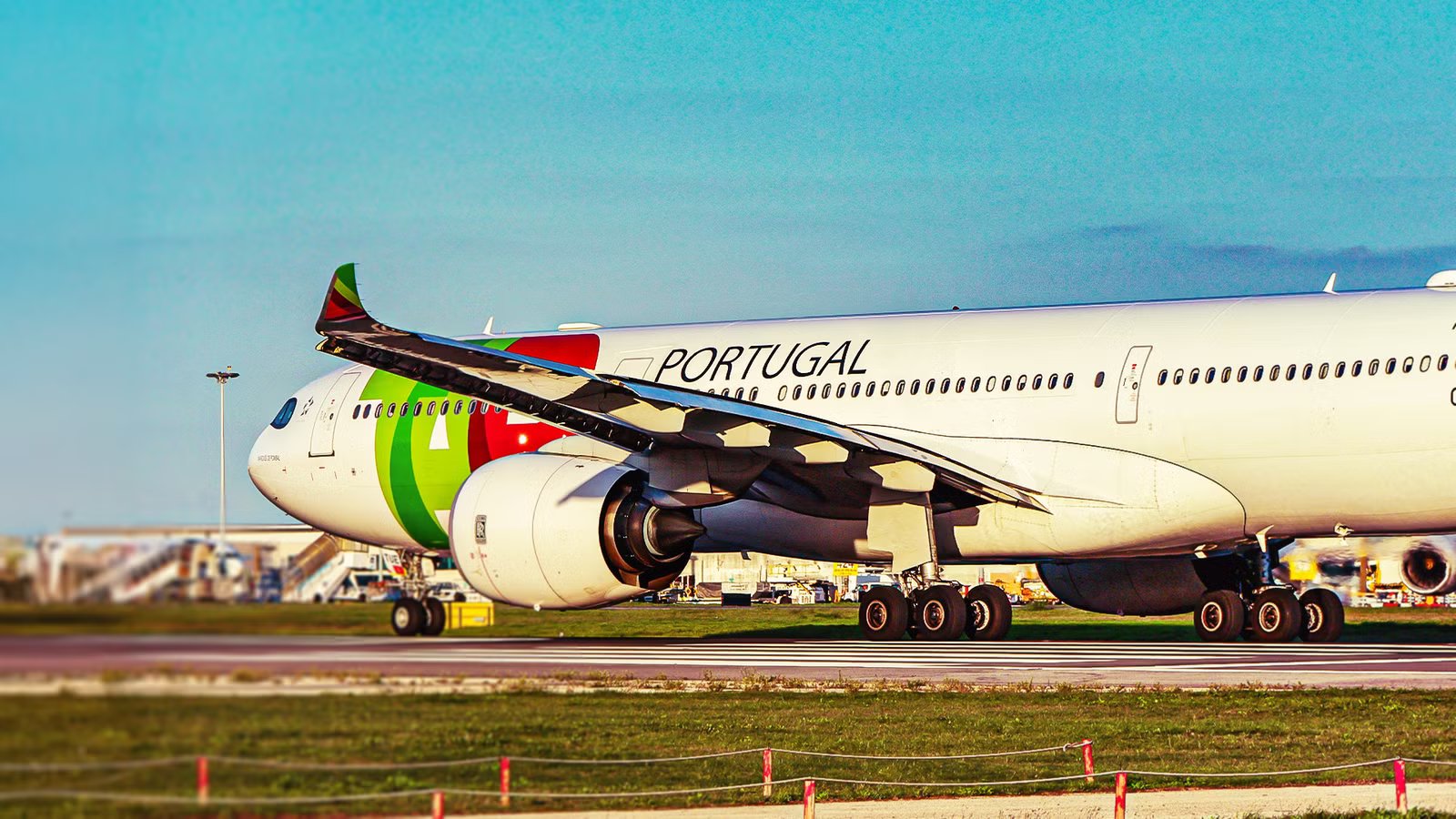
Aircraft wing designs have constantly been reworked over the years. From the Wright brothers mulling over the likes of aspect ratios in their bid to achieve the first flight in the early 1900s, to Bell Aircraft Corporation engineers searching for a wing capable of withstanding supersonic speeds in the 1940s, to a constant struggle by designers nowadays to improve fuel economy, requirements for airframes have evolved massively over the years.
Indeed, a key puzzle in the commercial aviation space today is reducing the environmental cost of flight without sacrificing performance. As such, wings themselves have faced repeated visits to the drawing board, prompting the emergence of winglets and new composite materials, to name a few, in recent years. Below are five notable features that plane spotters will notice on and around modern aircraft wings.
Winglets
Turning wasted drag into forward thrust

A massive factor in ensuring fuel is not simply being burned and converted into wasted energy is reducing drag. Every wing spills high-pressure air at its tip that heads upwards from its underside towards the low-pressure zone above. This is known as induced drag and appears as rotating vortices that trail behind aircraft.
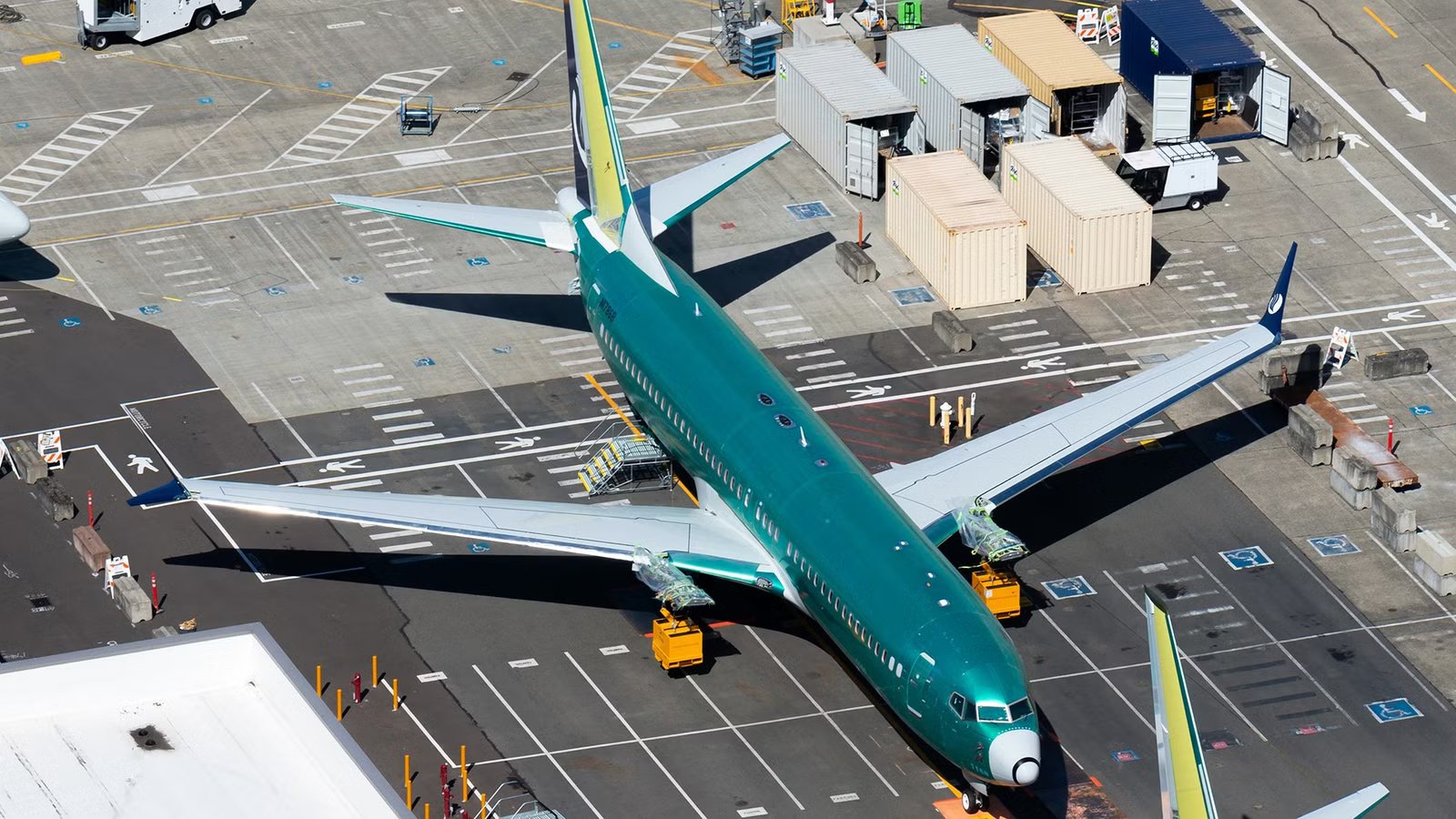
Winglets became the aviation industry’s answer to such induced drag, dating back to wind tunnel tests by NASA Langley Research Center engineer Richard Whitcomb in the 1970s. Here, raked tips on the end of wings were found to weaken that vortex and even worked to convert some of the would-be wasted energy into small amounts of forward thrust – much like a sailing boat tacking into the wind.
As Whitcomb found around half a century ago, these minor additions to aircraft wings had a significant effect. According to NASA Spinoff, the drop in fuel burn from the use of Aviation Partners Boeing Blended Winglets, as seen on Boeing’s 737s, translates to a 6% and 8% reduction in carbon dioxide and nitrogen oxide emissions, respectively. Other benefits have been found in the use of wingtips, such as reduced noise footprint, which is said to fall by 6.5% in the case of the Aviation Partners Boeing winglets mentioned here. Innovations since have moved the concept forward, with Airbus’ Sharklets curving smoothly into the wing to reduce drag compared to older designs with sharper angles.
The Supercritical Airfoil
The flat-topped wing that changed everything

Another means of cutting drag has come about with the development of the supercritical airfoil. Where conventional wing designs appear as having the same smooth curve on both the upper and lower sides, a supercritical airfoil cross-section shows a nearly flat top surface and cambered underside that angles downwards towards the back.
All told, the latter delays the process by which air is accelerated over the wing to the speed of sound before the aircraft itself nears that velocity. Known as wave drag, the phenomenon occurs when conventional wings push air to speeds where shockwaves form, ultimately slowing the aircraft down when operating near the sound barrier. As it turned out, the supercritical airfoil design was found to work incredibly well for boosting efficiency at subsonic speeds, making it a useful tool for commercial flight.
In practice, the use of the supercritical airfoil design is said to increase fuel efficiency at transonic speeds, being as low as Mach 0.8, by around 15%, per NASA Spinoff. In turn, efficient flight speeds can reach upwards of 0.84 times the speed of sound, up from 0.70 previously.

Here’s How Much More Efficient New Engines Are Compared To Older Generations
How engine design has evolved to boost fuel efficiency, and where it’s going from here.
Carbon Fiber Composite Structure
Lighter, stronger, and resistant to fatigue

Away from simply shape, the material used to build wings themselves has faced continuous development. Aluminum had become a favorite for commercial aircraft, making up in the region of 80% of a  Boeing 737’s weight. However, Boeing and peer Airbus have looked to change the game with their relatively recent 787 and A350 designs, respectively.
Both heavily feature lightweight carbon composites, including within their wing structures. The A350 XWB’s wing, stretching to the upper and lower covers, is mainly built from such composites, placing them among the largest single parts in the industry to have ever been made from carbon fiber. Approximately half of the weight of a Boeing 787 is then made up of composites, meanwhile, or 80% of its volume. This, in turn, provides an average weight reduction of 20% compared to equivalent aluminum structures.
|
Specifications |
Airbus A350-900 |
Boeing 787-9 |
Airbus A340-600 |
Boeing 767-300ER |
|
Capacity (typical) |
332-352 |
296 |
380 |
218 |
|
Range |
9,787 nmi (15,750 km) |
7,565 nmi (14,010 km) |
7,506 nmi (13,900 km) |
6,102 nmi (11,300 km) |
|
Cruise speed |
Mach 0.85 |
Mach 0.85 |
Mach 0.83 |
Mach 0.80 |
|
Weight (max takeoff) |
283 tonnes |
254.7 tonnes |
368 tonnes |
186.7 tonnes |
|
Weight (zero fuel) |
195.70 tonnes |
181.44 tonnes |
245 tonnes |
133.81 tonnes |
|
Length |
66.80 meters (219 feet) |
63 meters (206 feet) |
75.30 meters (247 feet) |
54.90 meters (180 feet) |
|
Wingspan |
64.75 meters (212 feet) |
60 meters (197 feet) |
63.45 meters (208 feet) |
47.60 meters (156 feet) |
|
Height |
17 meters (56 feet) |
17 meters (56 feet) |
17 meters (56 feet) |
15.80 meters (52 feet) |
The use of composites within aircraft actually provides several benefits. Not only do such materials allow lighter airframes and reduced fuel burn, but they are also stronger and tolerate repeated stress far better than conventional metal parts. This means “less maintenance when in airline operation,” as Airbus puts it.
Swept High-Aspect-Ratio Wings
The geometry of long-range efficiency

How wings shape up in comparison to an aircraft’s fuselage also plays a massive factor in matters of efficiency and performance. When designing aircraft, engineers must look at both wing sweep and aspect ratio.
Wing sweep is essentially what allows an aircraft to near the sound barrier without shock waves causing a risk of stalling, and is the angle at which the wing spouts from the fuselage. Aspect ratio then refers to how long and slender a wing is. The higher this figure, the longer and thinner a wing will be, in turn offering reduced drag—think gliders. Alternatively, lower aspect wings are developed for maneuverability and structural strength and are seen on aircraft such as fighter jets.
In terms of commercial aircraft, Airbus’ A330neo has the highest aspect ratio of any jet in the industry currently, with the figure sitting at 11. Per Airbus, the high aspect ratio allows “more lift at all speeds and flight phases”. Combined with the likes of a new winglet, tweaked wing twist, and reworked camber, the “design results in substantially improved wing loading and the best possible lift-to-drag-ratio,” the manufacturer adds. However, wings become more flexible as the figure increases, posing challenges that can stretch from handling to maintenance. These may one day be addressed by features such as movable control surfaces on wings themselves that can be fine-tuned, though these are the subject of recent tests by NASA and Boeing. “Higher aspect ratio wings […] tend to be more fuel efficient,” as NASA aerospace engineer Jennifer Pinkerton explained, “we’re trying to take advantage of that while simultaneously controlling the aeroelastic response […] When the flow over a wing interacts with the aircraft structure and the natural frequencies of the wing are excited, wing oscillations are amplified and can grow exponentially, leading to potentially catastrophic failure.“

The Boeing 777X’s Folding Wings: How It Works
The Boeing 777X’s innovative design feature has captured global attention. But how do these folding wings actually work?
Folding Wingtips
The 777X’s solution to a wingspan problem

Shutterstock | Simple Flying
Among the latest design features to emerge on modern jets is Boeing’s folding wing design, featured on its 777X. With a wingspan of 71.8 meters (235 feet) when extended, the next-generation jet is poised to boast exceptional fuel efficiency when it is finally certified after years of delay. This threatened to come at a cost, though, opening the door for the aircraft to be effectively unwelcome from airports that its 777 family predecessors could access. Boeing’s answer was to develop a mechanism whereby the 777X’s wings fold inwards, much like those on naval jets, to measure 64.9 meters (almost 213 feet) in total.
Such a feature means the 777X’s wingspan can match those of its predecessors when on the ground, allowing the use of taxiways, gates, and other features around the same airports. In technical terms, the interchangeable wingspan means the 777X can be effectively converted from a category F aircraft in flight into a category E aircraft before takeoff or after landing. This is key for airlines, given that most major airports around the globe today fit into the latter category.
The folding process itself occurs while the aircraft is taxiing. Before departure, pilots can extend and lock the Boeing 777X’s wingtips in place within 20 seconds whilst on the move. After landing, the folding mechanism automatically kicks in once the aircraft has slowed to below 50 knots. Per Boeing, the folding tip has been found to require 3% less block fuel than a wing with a blended winglet designed to fit the category E dimensions. As a result, Boeing’s folding wingtips offer not only versatility in terms of airports, but also huge cost advantages.